
 Published on
25 Jul, 2026
Published on
25 Jul, 2026 Updated on 25 Jul, 2026
 5064
5064Many women have experienced this at some point in their lives. You wake up perfectly fine, but by noon, you notice a strange, heavy pressure in your lower abdomen. You go to the bathroom, and suddenly, there it is, that unmistakable, agonising, fiery sting.
You immediately switch into panic mode. You start chugging gallons of water, you send someone to the pharmacy for over-the-counter pain relief, and you force down a bottle of tart, sugary cranberry juice, hoping to flush the problem away before it gets worse.
For many women, this isn't a one-time event; it is a relentless, recurring nightmare. You practice perfect hygiene, you wear the right clothes, and yet, exactly three times a year, the infection returns. When you ask why this keeps happening, you are often just told, "Women's urethras are shorter, so bacteria travel faster." While anatomically true, this brush-off leaves millions of women feeling completely powerless, treating their bodies like inevitable bacterial breeding grounds.
If you are keeping everything clean and doing everything right, why does your urinary tract keep rolling out the red carpet for infection? Let us break it down simply using the timeless wisdom our elders relied on long before antibiotics became a monthly prescription.
The Environment Over the Invader
Before we talk about how to stop the burning, we have to clear up a massive piece of confusion about how urinary tract infections (Mutrakrichra) actually take hold.
Modern medicine is hyper-focused on the invader: the E. coli bacteria. But in traditional Indian medicine, the focus is on the environment. Bacteria are everywhere, all the time. But a seed cannot sprout on a clean, smooth stone; it needs hot, damp, stagnant soil to take root.
When you look at recurrent UTIs through an Ayurvedic lens, the infection is rarely just bad luck. It is a sign that the subtle channels of your urinary system (Mutravaha Srotas) have become an overheated, stagnant wasteland due to an imbalance of downward energy (Apana Vata) and excess internal fire (Pitta). Your body isn't just catching a bug; it is screaming that its internal climate is out of control.
The Fiery Bladder: When Pitta Scorches the Tract
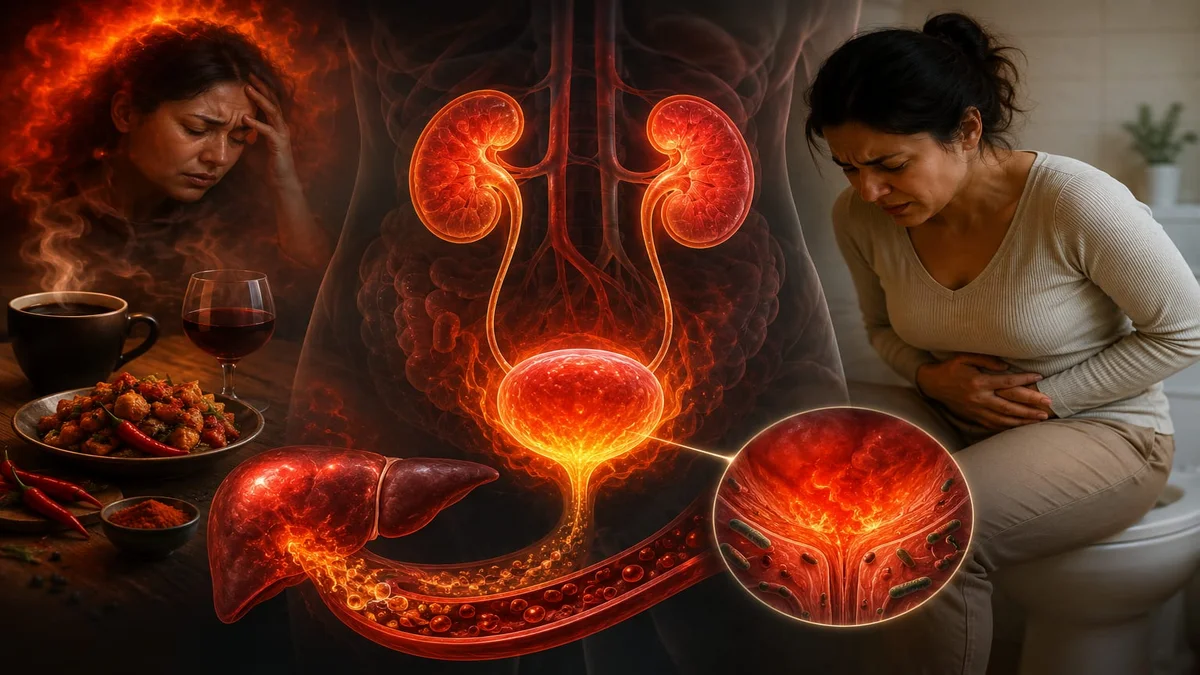
If your UTIs hit fast, hard, and feel like you are literally passing liquid fire, you are dealing with a severe Pitta (fire) overload.
- The feeling: Your urine is dark yellow or orange, smells incredibly strong, and the burning sensation is sharp and intense. You might also feel feverish, irritable, and generally overheated.
- The reality: When you consume too much heat (through extreme stress, excessive coffee, alcohol, or highly acidic/spicy foods), your liver becomes inflamed. To protect your major organs, the liver dumps this boiling toxic waste (Ama) into your bloodstream, and your kidneys are forced to filter it out. The urine becomes so highly concentrated and acidic that it physically scorches the delicate mucosal lining of your bladder and urethra. The bacteria didn't cause the initial damage; they just moved into the open wounds caused by your own acidic waste.
The Stagnant River: How Vata Traps the Toxin
What if you constantly feel the urge to go, but when you sit down, only a few painful drops come out? This is a classic disruption of Apana Vata, the downward-moving wind energy that governs elimination.
- The feeling: A heavy, cramping sensation in your pelvic floor, severe bloating, and the frustrating sensation that your bladder is never fully empty.
- The reality: Apana Vata is supposed to flow smoothly downward. But when it becomes aggravated, usually by stress, dehydration, or physically holding your urine, the energy reverses and moves upward, causing spasms in the urinary tract. This creates "dryness" and stagnation. Because the river isn't flowing forcefully enough to flush the system, bacteria are allowed to sit, multiply, and cling to the walls of the bladder.
The Antibiotic Cycle and Waning Immunity
While antibiotics are a modern miracle for an acute infection, relying on them every time you feel a twinge sets up a dangerous, self-fulfilling cycle.
The feeling: You take a strong course of antibiotics, the UTI clears up in two days, but exactly three weeks later, the exact same burning sensation returns with a vengeance.
The reality: In traditional medicine, your body's ultimate defensive shield is called Ojas (vitality or deep immunity). Repeatedly taking heavy antibiotics is like scorching the earth of your internal garden. It wipes out the invading bacteria, but it also completely destroys the beneficial, cooling flora that naturally protects your urinary tract. This leaves your Mutravaha Srotas (urinary channels) stripped, dry, and entirely defenseless against the very next bacteria that wanders in.
The Monthly Shift: Hormones and Heat
If you track your UTIs, you might notice they act like clockwork, arriving just in time to ruin your week.
The feeling: Your UTIs predictably strike a few days before your period begins, right when you are already dealing with cramps, cravings, and mood swings.
The reality: As your body prepares for menstruation, there is a natural, massive surge of Pitta (heat) and Apana Vata (downward movement) in the pelvic bowl. If your blood is already carrying excess heat from poor diet or high stress, this monthly convergence creates a boiling point in your lower abdomen. The local tissues become naturally inflamed, engorged, and highly sensitive, making the urethra far more susceptible to bacterial adherence just before your cycle begins.
The Emotional Toll: Stress and the Pelvic Floor
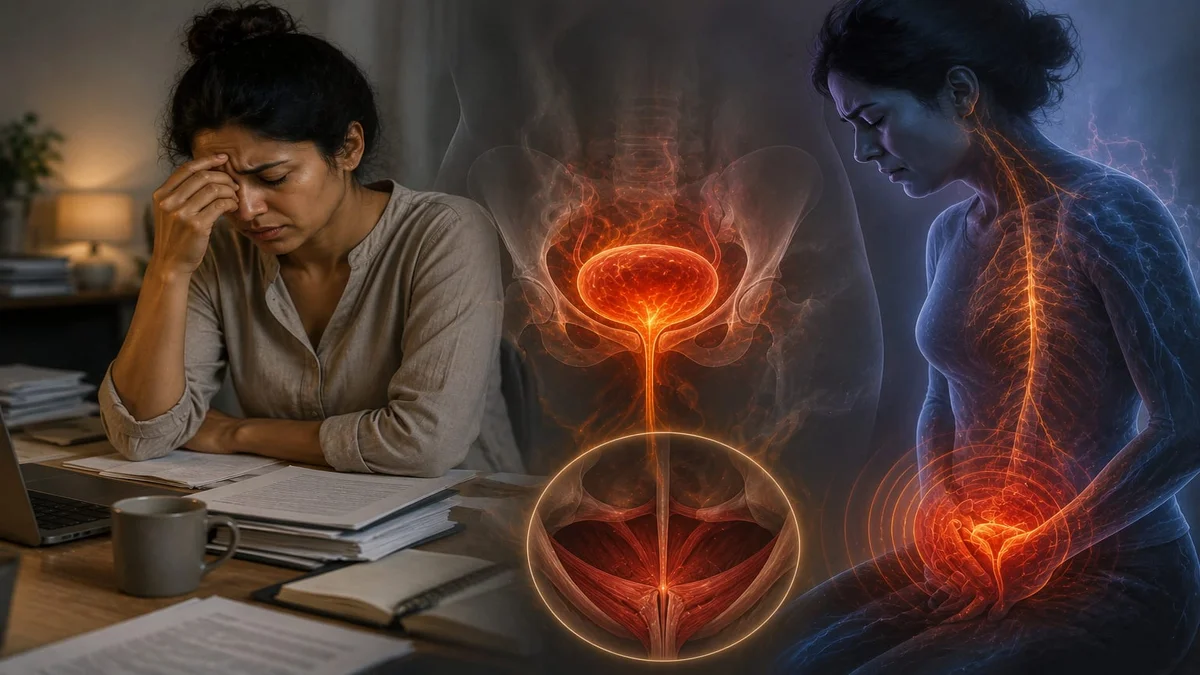
We rarely associate a bacterial infection with our emotional state, but your nervous system dictates the behavior of your bladder.
The feeling: You are going through an incredibly stressful period at work or home, and suddenly, a UTI appears out of nowhere, even though your diet, hydration, and hygiene have been flawless.
The reality: The urinary system is deeply connected to our emotions. In Ayurveda, chronic anxiety, fear, and emotional gripping directly aggravate Vata. When you are heavily stressed, you unconsciously clench your jaw, your shoulders, and most importantly, your pelvic floor muscles. This chronic tightness physically restricts the flow of the urinary channels, trapping heat and waste inside the bladder and creating the exact stagnant pools where bacteria thrive.
Daily Habits Fueling the Infection
If your urinary tract is constantly vulnerable, your daily routine might actually be perfectly designed to breed bacteria. Watch out for these subtle traps:
- Suppressing the Urge (Vegadharana): This is the number one cause of recurrent UTIs in working women. Holding your urine because you are on a long drive, in a meeting, or don't want to use a public restroom aggressively disrupts Apana Vata. It overstretches the bladder muscle, leaving stagnant pools of urine behind where bacteria multiply instantly.
- The Dehydration Illusion: Drinking four cups of coffee and one glass of water does not mean you are hydrated. Caffeine is a diuretic that forces water out of the body while deeply heating the liver. You are simultaneously dehydrating the urinary tract while pumping it full of acidic, irritating waste.
- Tight, Synthetic Clothing: Wearing tight, unbreathable synthetic underwear, wet swimsuits, or non-cotton workout leggings traps physical heat and moisture against the body. This directly spikes local Pitta and creates a literal greenhouse for bacterial overgrowth.
- The Sugar and Fermentation Trap: Bacteria feed on sugar. If your diet is high in refined sweets or heavily fermented foods (like wine, excessive vinegar, or heavy cheeses), you are actively sweetening your blood and urine, providing a massive buffet for the invading bacteria.
Ayurvedic Support to Cool and Flush the System
We do not always need to wait for the burning to start to protect our bodies. Our traditional kitchens hold powerful, cooling, and astringent tools designed to soothe the scorched urinary tract and flush out the stagnant heat.
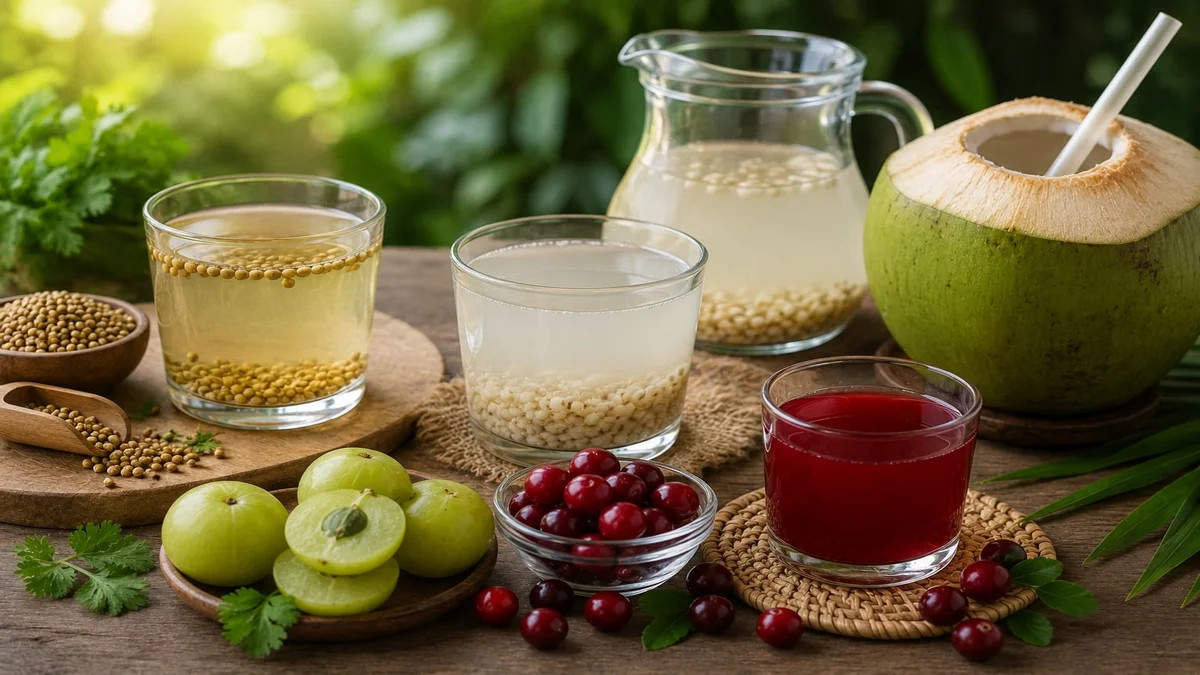
- The Coriander Seed Flush: Coriander (Dhaniya) is the ultimate urinary cooler in Ayurveda. Soaking two tablespoons of crushed coriander seeds in a glass of water overnight and drinking it first thing in the morning acts as a gentle, cooling diuretic. It puts out the Pitta fire in the kidneys and instantly reduces the burning sensation.
- Barley Water (Jau): Boiling pearl barley in water and drinking the strained liquid throughout the day is a time-tested kidney cleanser. Barley is cold (Sheeta) and naturally scrapes heavy, sticky toxins out of the urinary channels, promoting a strong, healthy flow that washes bacteria away.
- Unsweetened Amla or Cranberry: Both Indian Gooseberry (Amla) and cranberry possess deep astringent (drying and scraping) qualities. Without the added sugar, these tart juices prevent bacteria from adhering to the bladder walls, sweeping the tract clean.
- Tender Coconut Water: If you feel the early heat of a UTI coming on, fresh coconut water is like an internal fire extinguisher. It rapidly restores cooling electrolytes and dilutes the acidity of the urine, making it much harder for bacteria to survive.
Doctor’s Note
While balancing your internal heat and hydrating properly are incredibly effective for preventing recurrent UTIs, an active, raging urinary tract infection is a serious medical issue.
You cannot out-hydrate a severe bacterial infection once it has deeply embedded itself. If your UTI is accompanied by a high fever, severe lower back pain, nausea, chills, or visible blood in your urine, the infection may have traveled up into your kidneys (Pyelonephritis). This is a medical emergency that can cause permanent kidney damage or sepsis. You must seek immediate medical attention and take a full course of prescribed antibiotics. Once the infection is medically cleared, you can return to holistic practices to ensure the environment is balanced so it never comes back.
Conclusion
We spend so much time being annoyed by our bodies, treating a UTI like an incredibly inconvenient interruption to our busy lives, that we fail to hear the alarm bells ringing. Just because you can take a pill to numb the pain does not mean the underlying fire has been put out.
Your recurrent burning, your urgency, and your pelvic pressure are a living, breathing message. They are asking you to step away from your desk when you need the bathroom; they are begging you to cool down your fiery stress levels, and they are reminding you to properly water your own internal garden. Listen to your body carefully. Honor the delicate balance of your elimination channels, bring cooling, flushing liquids back into your daily routine, and remember that true healing means making your body a place where sickness simply cannot survive!
References:
Urinary tract infection in women - PMC
Urinary Tract Infection Basics | UTI | CDC
Urinary tract infections in women: diagnosis and management in primary care - PMC
Urinary tract infections (UTIs) - NHS
Recurrent Urinary Tract Infections in Women: Diagnosis and Management | AFP
What doctors want patients to know about UTI prevention | American Medical Association