 Published on
24 Jul, 2026
Published on
24 Jul, 2026 Updated on 24 Jul, 2026
 5071
5071It’s a common experience for most of us at some point. You are the person at the office who catches every single seasonal bug that goes around. The moment someone sneezes three desks away, you know you will be waking up with a sore throat tomorrow.
You try to do everything right. You pop Vitamin C pills, drink expensive green juices, use hand sanitiser religiously, and dress warmly. Yet, no matter how many supplements you swallow, your immune system feels like a paper-thin shield.
When you complain to your friends, they inevitably ask, "How are you sleeping?" You brush it off. "Oh, you know, the usual. I toss and turn, wake up a few times, get maybe five or six hours. But I function just fine on coffee!" We have normalised chronic exhaustion to the point where we treat sleep as an optional luxury rather than a biological necessity. But the frustration of getting sick over and over again, despite a perfect diet, leaves millions of people completely baffled.
Why Vitamins Cannot Replace Rest?
Before we talk about how to stop catching every cold, we have to clear up a massive piece of confusion about what immunity actually is.
Modern culture treats the immune system like a muscle that you can "pump up" instantly with a pill. But in traditional Indian medicine, immunity (Ojas) is considered the absolute final, golden essence of your digestion and your physical tissues. It is your life sap. And crucially, Ojas is primarily manufactured and replenished while you are deeply asleep (Nidra).
In Ayurveda, sleep is considered one of the three foundational pillars of life (Upastambhas), right alongside diet. Think of your body like a construction site. Your food and your vitamins are the bricks. But sleep is the builder. You can drop a million bricks (vitamins) onto the site, but if the builders never show up to work (because you aren't sleeping), the fortress of your immune system will never get built.
The "Vata" Insomnia: Running on Empty

Not all sleep problems are the same, and they damage your immunity in different ways. If your main issue is that you physically cannot fall asleep because your mind is racing, you are dealing with a severe Vata (wind) aggravation.
- The feeling: You are physically exhausted, but the moment your head hits the pillow, your brain turns on like a television. You worry about tomorrow, replay conversations, and toss and turn for hours. Your skin might feel dry, and your joints might click.
- The reality: This excess internal wind (Prana Vata) dries out your nervous system. Because your body is in a constant state of hyper-vigilance, it assumes you are in danger. It stops allocating energy to your immune system and instead burns through your existing Ojas just to keep you awake and alert. Your immunity becomes brittle and dry, leaving you highly susceptible to dry coughs and viral infections.
The "Pitta" Midnight Waking: The Overheated Liver

What if you have no problem falling asleep, but you consistently wake up between 2:00 AM and 3:00 AM, feeling hot, frustrated, or urgently needing the bathroom? This is a classic Pitta (fire) overload.
- The feeling: You wake up suddenly, often kicking off the covers, feeling an inexplicable sense of anger or intense mental sharpness in the middle of the night. It takes you an hour to cool down and get back to sleep.
- The reality: In traditional medicine, the hours between 10:00 PM and 2:00 AM are when the liver (Ranjaka Pitta) does its deepest detoxifying work. If you have eaten too much spicy food, consumed alcohol, or are holding onto intense unresolved anger, the liver overheats. This internal fire wakes you up. Because the liver couldn't properly clean your blood, your blood remains toxic (Ama), which directly suppresses your white blood cells and triggers inflammatory immune responses like hives or feverish colds.
The "Kapha" Lethargy: When Too Much Sleep Breeds Sickness
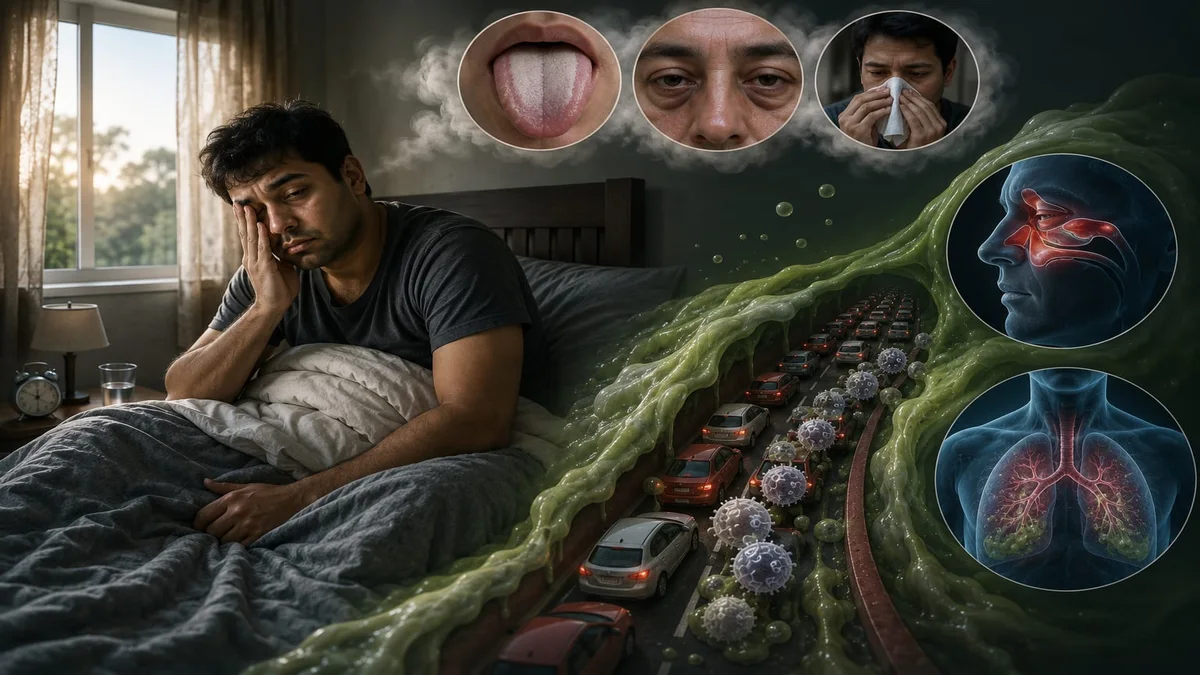
On the flip side, some people sleep for 9 or 10 hours a night but still wake up feeling like they were hit by a truck. If you struggle to drag yourself out of bed and feel groggy until noon, you are dealing with a Kapha (earth and water) stagnation.
- The feeling: You sleep heavily and deeply, but you wake up with a coated tongue, puffy eyes, a blocked nose, and a profound sense of heaviness.
- The reality: Sleeping too far past sunrise, or taking long naps during the day, slows down your metabolic fire (Agni). The heavy, cold energy of Kapha creates a sticky, mucus-like toxin in the body. This physical congestion literally blocks the subtle channels (Srotas) where immune cells travel. Your immune system isn't weak; it is trapped in a traffic jam of your own making. You become highly prone to deep sinus infections and wet, heavy chest colds.
The Hidden Gut-Sleep Axis: Where Immunity is Actually Born
We cannot separate our sleep from our stomach. The connection between how you digest and how you rest is the absolute core of your immune health.
- The reality: If you are sleeping poorly, your body produces excess stress hormones, which directly shut down your digestive fire (Agni). The next day, whatever you eat, even a healthy salad, will not be digested properly. It ferments into toxic waste. This toxic waste travels through your body and settles in your weak spots, becoming the breeding ground for bacteria and viruses. Poor sleep breaks your gut, and a broken gut destroys your immunity.
Daily Habits Fueling the Cycle
If you are constantly getting sick due to poor rest, your daily routine might actually be locking you into this cycle of fatigue. Watch out for these subtle traps:
- The 9:00 PM Heavy Dinner: Eating a massive plate of pasta or heavy meat right before bed forces your body to spend the entire night digesting instead of repairing. Your liver cannot detoxify if your stomach is still working overtime.
- The Doomscrolling Trap: Staring at the blue light of your phone while reading upsetting news completely halts your brain's natural melatonin production. It spikes Vata right when your mind should be cooling down.
- Working from the Bed: Answering emails from under the covers confuses your nervous system. In traditional practices, the bed is a sacred space only for sleep. If you work there, your brain associates the mattress with stress, preventing deep, immune-building rest.
Traditional Fixes for Deep, Restorative Sleep

We do not always need harsh sleeping pills that leave us groggy the next day. Our traditional kitchens hold powerful, grounding tools designed to soothe the nervous system, cool the liver, and allow the body to sink into the deep repair mode where immunity is built.
- The Golden Milk Anchor: For racing thoughts and anxiety (Vata), simmering full-fat milk (or almond milk) with a pinch of turmeric, nutmeg, and a dash of ghee provides dense, grounding nourishment. The nutmeg is a natural sedative, while the ghee lubricates the dry nervous system, pulling the energy out of your head and into your body.
- The Foot Massage (Padabhyanga): Before getting into bed, rub warm sesame oil onto the soles of your feet. This ancient practice actively draws the chaotic, fiery energy down from your busy brain, profoundly calming the nervous system and inducing heavy, deep sleep.
- The Coriander-Fennel Cooler: If you wake up sweating at 2 AM (Pitta), drinking a room-temperature tea made of steeped coriander and fennel seeds around 7:00 PM helps gently cool the liver, preventing the midnight heat spike that wakes you up.
Doctor’s Note
While balancing your internal energies and establishing a calming bedtime routine is beautifully effective for holistic health, chronic sleep deprivation is a serious medical issue.
If you are snoring loudly, waking up gasping for air, or experiencing extreme daytime sleepiness despite getting 8 hours of rest, you must consult a physician. You may be suffering from Sleep Apnea, a condition where you literally stop breathing at night, which severely strains the heart and crushes the immune system. Furthermore, if you are catching severe, lingering infections that do not clear up with basic rest, you must be evaluated by a doctor to rule out underlying clinical immunodeficiency disorders.
Conclusion
We spend so much time searching for the ultimate superfood or the perfect vitamin blend that we forget to look at the very foundation of our healing. Just because you can force yourself to function on four hours of sleep does not mean your body isn't keeping a strict, punishing ledger of that debt.
Your recurrent colds, your sore throats, and your constant fatigue are a living, breathing message. They are asking you to slow down, they are begging you to turn off the screens, and they are reminding you that you cannot out-supplement exhaustion. Listen to your body carefully. Honor the natural wisdom of the setting sun, bring warming, grounding routines back to your evenings, and remember that sometimes the absolute best medicine in the world is simply a good night's sleep!
References:
Sleep and immune function - PMC
Human sleep and immunity: The role of circadian patterns - ScienceDirect
Sleep and Immunity: A Growing Field with Clinical Impact - PMC
One day of sleep deprivation can alter your immune system and increase inflammation - AAI News