
 Published on
29 Jul, 2026
Published on
29 Jul, 2026 Updated on 29 Jul, 2026
 5081
5081We spend a huge portion of our day staring at screens, whether it is a smartphone, a laptop, or the TV. Because screen fatigue is so common, it is easy to brush off minor changes in our vision as simple tiredness. But your eyes often send subtle warning signs well before serious problems set in.
Many common vision conditions, from simple prescription changes to cataracts, glaucoma, and age-related diseases, build up slowly. Catching these early clues and getting your eyes checked can stop further vision loss and keep your eyes healthy for the long haul.
Here are nine signs that your eyesight might be changing, and what you should watch out for.
The 9 Warning Signs
Blurred Vision
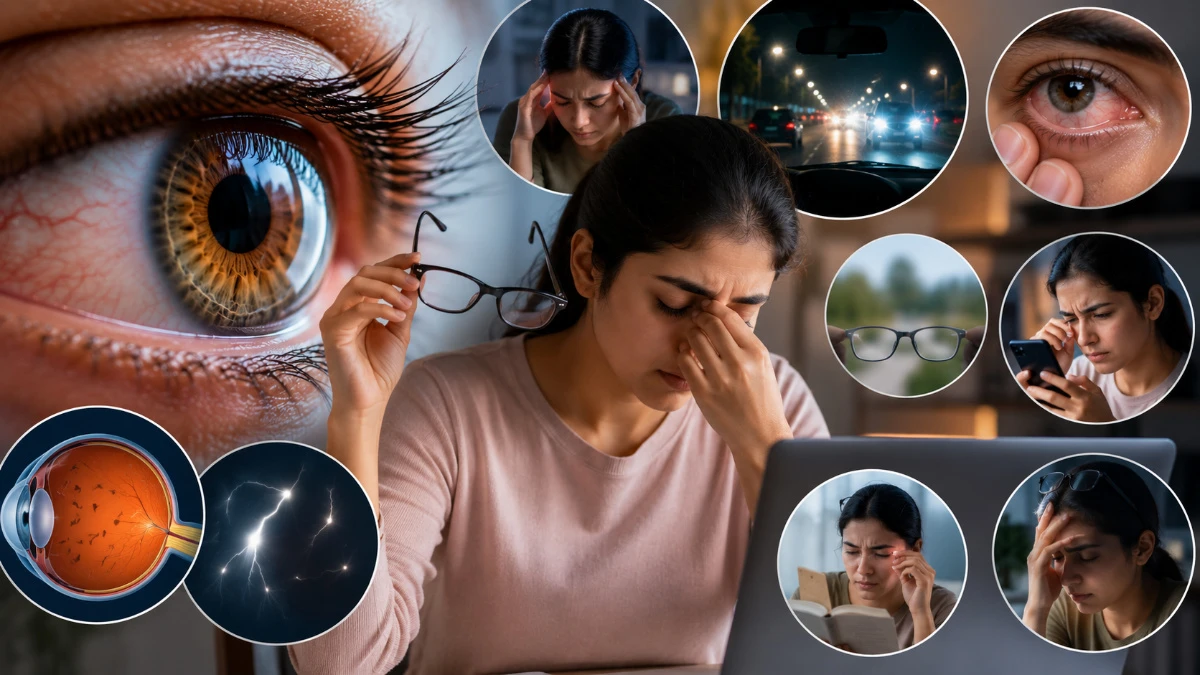
Objects close to you or far away becoming suddenly blurry, even if you blink your eyes, might mean that you are having refractive errors such as myopia, hyperopia, or astigmatism. Blurry vision can also be a symptom of developing cataracts.
Whereas occasional blurring after using computers is a common issue, constant blurring means you should visit an eye doctor.
Problems With Your Night Vision
Are you afraid of driving after sunset, or do you have difficulty seeing in poorly lit rooms? Impaired night vision is often the first symptom of:
- Cataracts
- Vitamin A deficiency
- Retinal diseases
Normal age-related eye problems
If your eyes have trouble adjusting in darkness, you should see an optometrist or ophthalmologist.
- Getting Frequent Headaches While Reading Or Working On A Computer
- Throbbing pain around your forehead and temples after you've read something or used a computer could mean that your eye muscles are working hard to focus the image.
These headaches are normally caused by:
- Vision changes that were not corrected
- Eyestrain from poor light conditions
- Outdated prescription of glasses
- Constant use of computers
Squinting to See Clear
If you find yourself squinting to see street signs, menu cards, subtitles in movies, etc., your vision is not as clear as before. The reason squinting helps in this case is that it allows less scattered light into the eye and helps it focus. However, it is just a temporary solution for which you need a proper prescription.
Double Vision
Seeing double instead of seeing one image is something that never is normal. Possible causes of double vision can include:
Unusual functioning of the muscles of the eye
- Corneal disease
- Nerve disorders
- Cataract
- Some neurological disorder
- Since double vision can sometimes be a sign of a severe medical issue, it must be assessed by a doctor without delay.
Increased Sensitivity to Light
If you start finding sunlight, headlights of an approaching car, or even room lights to be glaring and painful, it means that your eyes have become overly sensitive to light (photophobia).
It can occur due to dry eyes, eye infections, corneal disease, cataracts, or migraines.
Straining with Small Print
If you catch yourself holding books, product labels, or your cell phone far away from you to comfortably read them, then your near vision is starting to change.
This typically occurs when you hit 40 years old due to the condition called presbyopia, an absolutely natural process where your eyes' lenses gradually lose their elasticity. It can be easily corrected with reading glasses or multifocals.
Seeing Floaters or Flashing Lights
Small specks floating through your visual field are pretty much a normal thing that happens to us all as we age.
But you should consider it a matter of eye emergency if you experience:
- Sudden appearance of numerous floaters
- Flashing lights like lightning bolts
- Dark shadows or a veil moving over any part of your visual field
These symptoms may indicate a retinal tear or detachment, requiring immediate medical attention.
Persistent Eye Fatigue and Trouble Focusing
If your eyes feel heavy, dry, or exhausted after just a short period of reading or driving, they are under too much strain.
This often happens when you work in poor lighting, forget to blink during screen time, suffer from dry eyes, or have a subtle, uncorrected vision error. If taking breaks doesn't help, get a professional checkup.
Simple Ways to Protect Your Sight
Good vision care isn’t just about wearing glasses. Some simple practices will help improve your eye care in a big way:
- Get regular eye examinations: Don’t wait until you can't see anything on the eye chart; regular eye exams ensure that you detect potential issues as soon as possible.
- Follow the 20-20-20 rule: Take 20-second breaks from staring at the computer screen every 20 minutes and look at an object that is 20 feet away from you.
- Wear UV-resistant sunglasses: Your eyes should be protected from UV rays when you are outside.
- Eat the right things: Ensure that you get plenty of leafy greens, berries, nuts, and omega-3 fatty acids in your diet.
- Take care of your overall health: Illnesses such as diabetes and hypertension affect blood vessels directly.
- Don’t smoke: It increases your chances of developing cataracts and macular degeneration.
- Light up your working space: Make sure that you light up your reading and working space appropriately.
 Can Ayurveda Support Eye Health?
According to traditional Ayurveda, healthy eyesight has a connection with the proper nourishment of the body’s tissues and balancing the doshas, especially the Pitta dosha.
Several traditional Ayurvedic approaches may promote healthy eyes. Nonetheless, all those approaches have to be undertaken under the supervision of an experienced Ayurvedic doctor and should not serve as a replacement for traditional eye check-ups and evidence-based treatment of eye problems.
When to Seek Emergency Eye Care
Head to an urgent care clinic or emergency room immediately if you experience:
- Any sudden loss of vision
- Severe eye pain
- Sudden flashes of light paired with new floaters
- Sudden double vision
- An injury or trauma to the eye
- Sudden, painful redness with decreased vision
- A dark, curtain-like shadow over your field of view
Final Thoughts
Vision changes often creep up on us so gradually that we adapt to them without noticing. But whether it is a lingering headache, a little extra glare at night, or the need to hold your phone further away, these signs are your body’s way of asking for help.
Instead of waiting for minor annoyances to turn into daily struggles, schedule a comprehensive eye exam if you notice any of these warning signs. Early detection and a proactive routine are the easiest ways to protect your sight for life.
References
7 Warning Signs of Declining Eyesight You Should Never Ignore Warning signs of a serious eye problem - Harvard Health
About Common Eye Disorders and Diseases | Vision and Eye Health | CDC