 Published on
28 Sep, 2026
Published on
28 Sep, 2026 Updated on 28 Sep, 2026
 5044
5044One of the ways to make your meal look instantly “healthy” is to add seed mixes to your food. You can have them when you feel like munching or having snacks, or add them to your oats or to your smoothie bowl.
And yes, it's nutritious to consume seeds. But the thing we have to look out for is that, even though they are healthy, we can forget that you can still have too much of them.
So, the real question is: is it really worth adding to your diet, or just another trend to follow?
Why Are Seed Mixes Considered Healthy?
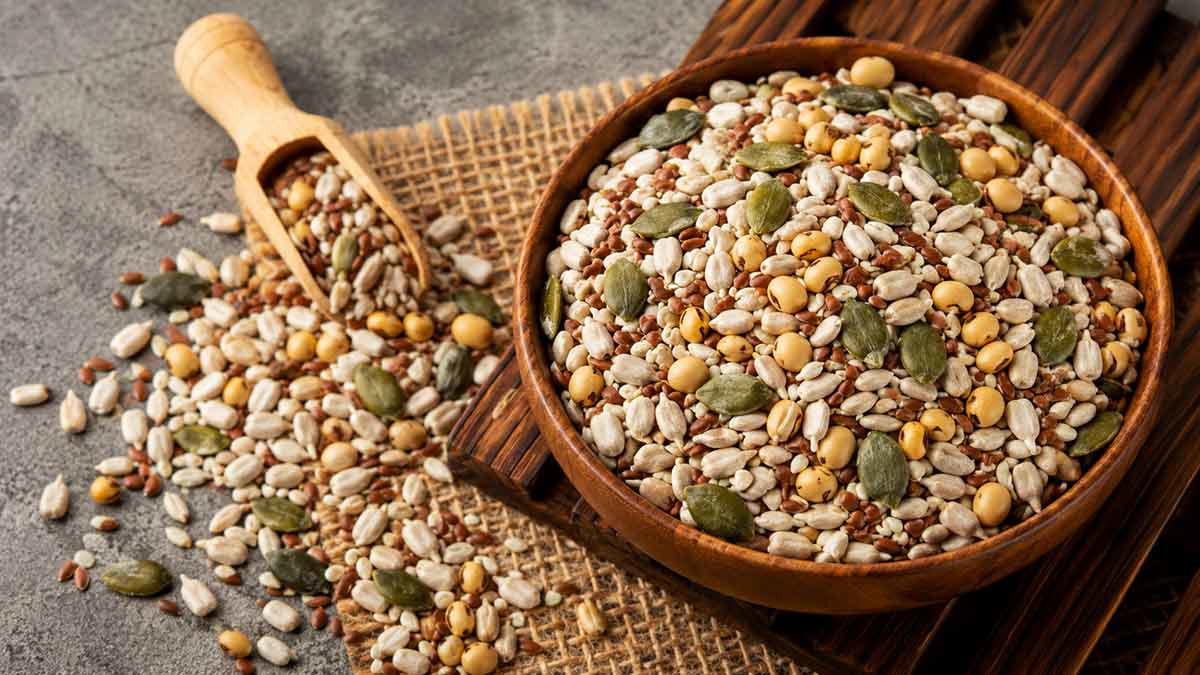
Most seed mixes are a combination of multiple seeds, such as pumpkin, sesame, chia, or flax. While each seed works differently, it mostly helps provide fibre, protein, vitamins and minerals.
For example, flax and chia seeds can be good sources of fibre and plant-based omega-3 fats, while pumpkin seeds provide nutrients such as magnesium and zinc.
Adding these a little to your diet can bring a variety of nutrients to your diet.
But the simple boundary is that adding them to your diet for better nutrients is good, but treating them as a superfood is not. They are simply nutritious foods that can improve your diet.
The Tricky Part Is That They Are Very Easy To Eat
Have you ever wondered that you are working and you have a packet of seeds and you keep on eating before realising that you have eaten more than it is required?
Seeds can be like that. They are tiny and crunchy and cause a little bit of distraction while doing anything, and because they are considered healthy, you might not think about how much is needed.
Seeds are considered to have relatively more energy because they contain a good amount of fat. They can be nutritionally helpful for you, but a small amount of seeds provides a lot of energy.
This is not a reason to avoid them; it can simply be a reminder that healthy doesn't always mean overdoing it.
How Can You Eat Them Without Overdoing It?
You are not asked to measure the portions or size of the seeds, or to strictly weigh them every time.
A way out of it can be adding these seeds as a topping or ingredient rather than eating them as a packet of snacks.
Try sprinkling it over:
- Oats or overnight oats
- Curd or yoghurt
- Salads
- Smoothies
- Rice bowls
In this way, eating it can be more enjoyable than mindlessly eating it.
Not Every Seed Mix Is The Same
Before buying any packet of seeds, you need to look at the ingredients. Some mixtures of seeds contain more than other seeds. Others can have salts, flavoring, or dried fruits.
None of this means the packet is bad as a whole, but they do change what you plan and want to eat.
If you want to go out for simpler options, a mix with mostly plain seeds and some sugar can be a simpler choice.
Do You Need A Seed Mix At All?
It is not necessary.
If you think you are able to enjoy seeds and they make your meals more interesting, you should do it, but if you think it is an expensive way for you, then you do not need to follow it because social media is saying so.
There are plenty of ways to get nutrients from plenty of other foods too. Seeds can be an addition to your diet but not something your diet is incomplete without.
So, Are Seed Mixes Useful Or Easy To Overeat?
Adding a small amount to meals can be a simple way to make your food more varied and satisfying.
At the same time, they’re small and easy to eat quickly, which makes it surprisingly easy to go overboard when you’re snacking straight from the packet.
The answer isn’t to stop eating them. It’s simply to be a little more intentional.
What Does Ayurveda Say?
Ayurveda generally looks at food not just in terms of whether it is “healthy,” but also how it suits your digestion, routine, and individual needs. Seeds are naturally nutrient-dense and can be included in a balanced diet, but Ayurveda also emphasises moderation.
Seeds such as sesame, flax and pumpkin seeds are traditionally valued for their nourishing qualities. However, having large amounts at once may feel heavy for some people, particularly if digestion is already uncomfortable. How you prepare and consume them can also matter.
Conclusion
Seed mixes can definitely be a useful addition to your meals, but they don’t need to become a daily health obsession. They provide healthy fats, fibre, protein and other nutrients, while also being incredibly easy to keep munching on.
The simplest approach is to enjoy them in reasonable portions and use them as part of meals rather than eating straight from the packet. Seeds can support a balanced diet, but more isn’t necessarily better.