 Published on
15 Sep, 2026
Published on
15 Sep, 2026 Updated on 15 Sep, 2026
 5062
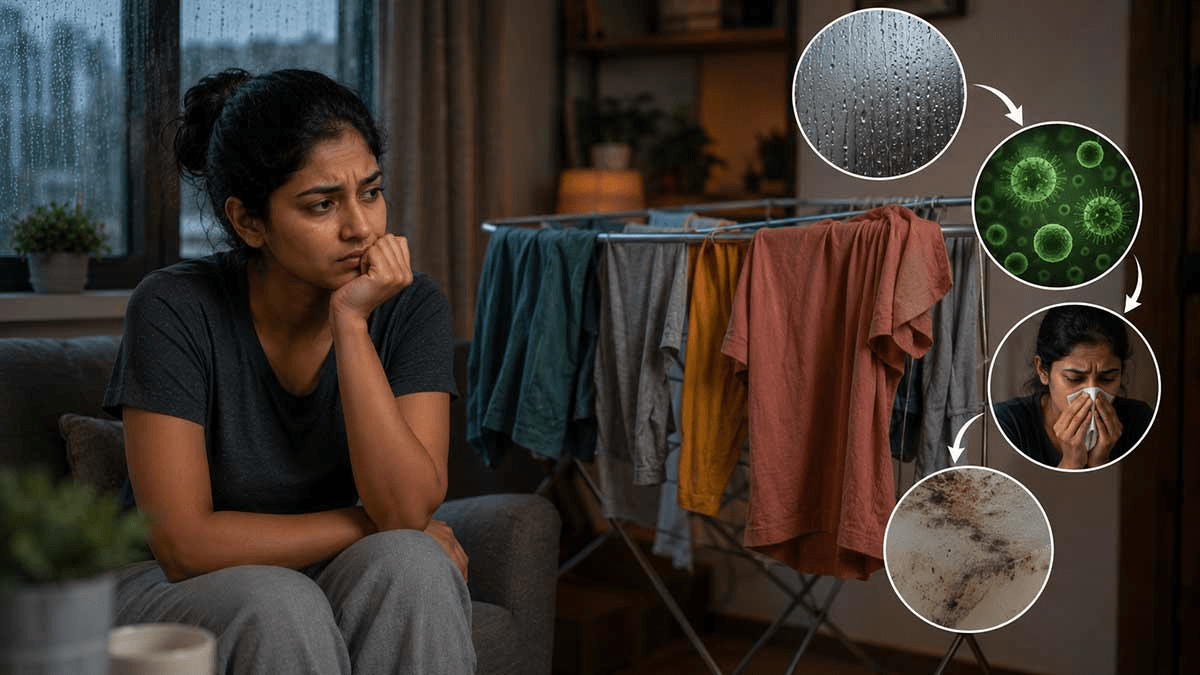
5062You know, laundry can be a bit difficult during the rainy season. Many people dry their clothes inside the house when they cannot be dried outside and wait for them to dry. It may seem harmless, but have you ever wondered what happens to your indoor air when the clothes are drying?
As the clothes dry off, they release water into the surrounding air. During the rainy season, the weather outside is already humid, and ventilation is limited; the extra moisture can make your indoors feel damp and uncomfortable.
Why Does Drying Clothes Indoors Increase Humidity?
The clothes that come out of the washing machine, it still contain a significant amount of water, and as they dry, the water evaporates into the air.
If the room has windows, fans, or an exhaust, then there is a good possibility of having good ventilation, and some of the moisture can escape. But if the room is small and closed, during the rainy season, the moisture can remain trapped indoors.
This can make the room feel stuffy, sticky, or unusually humid.
What Happens When Indoor Humidity Stays High?
Occasionally, there is not much concern when you dry clothes inside. The problem actually arises when you repeatedly dry clothes inside and the room does not get enough moisture.
Mould and mildew are more likely to grow in an environment with high indoor humidity, particularly around damp walls, corners, windows, and other poorly ventilated areas.
You may also notice a musty smell developing in rooms where clothes are regularly dried.
Another common issue is that high humidity can make the air feel warmer and heavier. Even if the actual temperature has not changed much, the room may feel less comfortable.
Why Rainy Weeks Can Make The Problem Worse
During the rainy season, outdoor air is often already moisture-rich. People also tend to keep windows closed because of rain, making it harder for indoor moisture to escape.
Add several loads of wet laundry to this environment, and the room may take much longer to dry.
This is why clothes that normally dry within a few hours may remain damp for much longer during rainy weather.
Can Damp Clothes Affect The Smell Of Your Room?
Yes. Clothes that stay wet for too long can develop a musty or unpleasant smell. This happens because prolonged dampness can encourage the growth of microorganisms on fabric.
Simply adding more fragrance or fabric freshener may temporarily cover the smell, but improving airflow and allowing clothes to dry properly is a better approach.
How Can You Dry Clothes Indoors More Effectively?
You do not necessarily need to stop drying clothes indoors during rainy weather. A few simple habits can help reduce excess moisture.
Improve ventilation: Keep windows or doors open when weather conditions allow. An exhaust fan can also help move moist air out.
Avoid overcrowding: Give clothes enough space between them instead of hanging everything tightly together. Better airflow helps them dry faster.
Use an extra spin cycle: If your washing machine has a spin option, removing more water before hanging clothes can shorten drying time.
Choose a suitable room: If possible, dry clothes in a well-ventilated area rather than a small closed bedroom.
Conclusion
Drying clothes indoors during rainy weeks is sometimes unavoidable. The main concern is not the laundry itself, but the additional moisture it releases into the room.
If wet clothes are regularly dried in a closed, poorly ventilated space, indoor humidity can rise and may contribute to dampness, musty odours and mould growth.
So, whenever possible, focus on good airflow, faster drying and proper ventilation. These small changes can help keep your indoor environment more comfortable even when the weather outside refuses to cooperate.
References
INDOOR HUMIDITY LEVELS AND ASSOCIATIONS WITH REPORTED SYMPTOMS IN OFFICE BUILDINGS - PMC