 Published on
16 Sep, 2026
Published on
16 Sep, 2026 Updated on 16 Sep, 2026
 5044
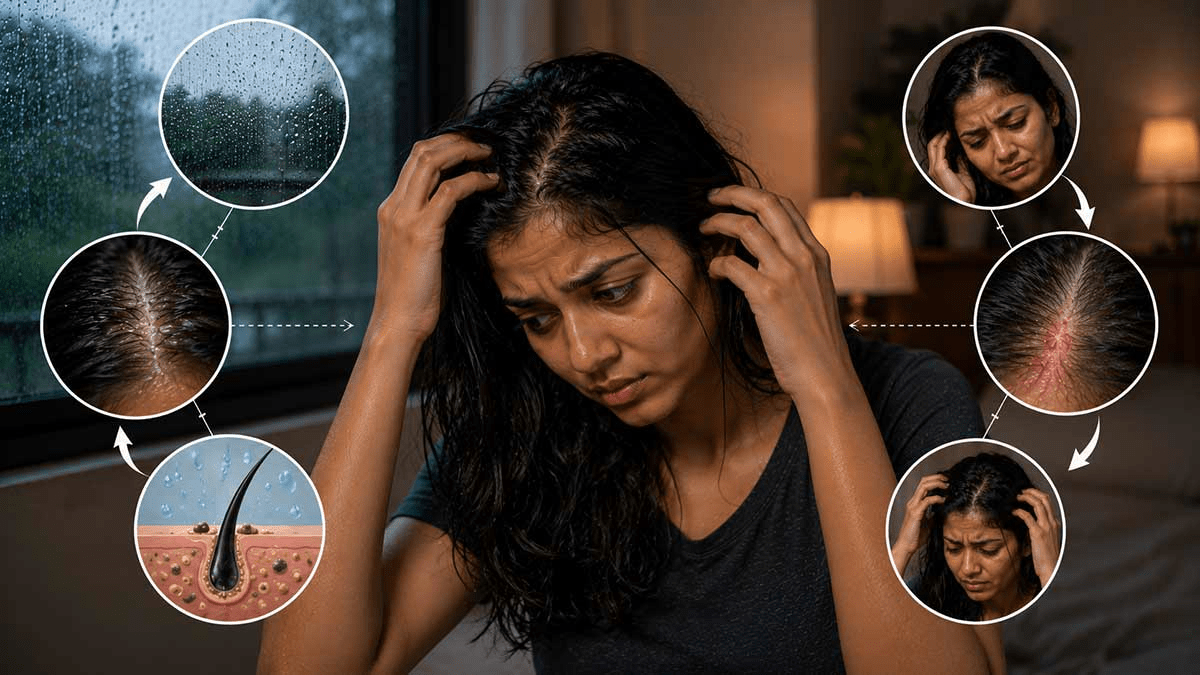
5044Hair and scalp can be confused during the monsoon season. One day, when you wash your hair, it looks fresh, only to end up being greasy the next day. At the same time, your scalp may feel itchy, uncomfortable, or irritated. But the thing that makes you wonder is: if the scalp is oily, then why does it feel dry or irritated?
The answer to this question is that scalp irritation and oiliness are not related to each other. Your scalp can produce oil in excess and still become uncomfortable due to humidity, rain, or a changed environment.
Why Does Hair Get Oily Faster During Monsoon?
The biggest cause and root of this is high humidity.
During monsoon, there is a lot of moisture in the air; this can cause the oil and grease on your hair to stay for a long time instead of evaporating easily. The scalp also produces its own oil because of sebaceous glands that naturally produce sebum, an oily substance that helps protect the skin and hair.
When sebum mixes with sweat, dust, and other hair particles, the roots can become very greasier than before.
This is the reason why your hair may feel perfectly fine on the day you wash it but become oily a day after.
Sweat Can Make The Scalp Feel Uncomfortable
Monsoon doesn't always mean better and cooler weather. You can always sweat in the weather, especially if you are outside or travel or play sports.
When the sweat on the scalp remains for a long time, it can create a disturbing environment. The scalp may feel itchy, irritated, or sticky.
This does not mean that your scalp is unhealthy. Sometimes it just needs to be cleaned properly and needs air to breathe.
But Why Does An Oily Scalp Feel Irritated?
This is where people start to get confused.
People get confused between a hydrated and an oily scalp; both of them are different things. People think that an oily scalp is moisturised.
Your scalp can have an excess of oil, and it can make the skin barrier feel irritated. Overwashing and using multiple shampoos can also make it worse for your scalp and make it more sensitive.
So, if you notice greasy roots and irritation, it can mean that your scalp needs a balanced routine rather than more cleaning.
Wet Hair Can Also Affect Scalp Comfort
One of the common habits people have is to leave their hair wet for a long period of time.
This can be because the weather is humid, and it may take a lot of time for your hair to dry naturally. Keeping the scalp damp for a long time can make it uncomfortable.
This doesn't mean to aggressively dry your hair, but gently drying it up before going out or before going to bed, as doing all this with soaking wet hair can invite a lot of germs and irritation to your scalp.
What Can You Do To Keep Your Scalp Comfortable?
A few simple habits can help during humid weather.
- Keep the scalp clean:
Wash your scalp according to how oily and sweaty it becomes rather than forcing yourself to wait several days.
- Rinse products properly:
Make sure shampoo and conditioner are thoroughly rinsed out. Conditioner is generally meant for the lengths rather than directly on the scalp unless the product specifically says otherwise.
- Avoid excessive oiling:
Hair oil can be part of a hair-care routine, but leaving heavy amounts on the scalp for very long periods may not feel comfortable for everyone, especially when the scalp is already oily.
- Dry the scalp properly:
After washing, gently remove excess water and allow your scalp to dry instead of keeping it damp for hours.
- Avoid scratching:
If your scalp feels itchy, scratching can further irritate the skin. Try to identify what is triggering the discomfort instead.
When Should You Pay More Attention?
Occasional oiliness or mild discomfort during monsoon is common. But persistent itching, redness, painful areas, significant flaking, sores, or unusual hair shedding should not simply be blamed on the weather.
These symptoms can sometimes be linked to conditions such as dandruff or other scalp problems. If the irritation continues or becomes severe, it is better to speak with a dermatologist instead of repeatedly changing hair products.
What Does Ayurveda Say?
According to Ayurveda, seasonal changes can affect the balance of the body, including the scalp and hair. Monsoon brings increased moisture and humidity, which may make the scalp feel heavier, sweaty, or oily.
Ayurveda generally focuses on keeping the scalp clean and maintaining a balanced routine rather than using too many products. Gentle cleansing, keeping the scalp dry, and avoiding excessive oiling when the scalp already feels greasy can be helpful.
Conclusion
Monsoon can make your hair oily faster because humidity, sweat and natural scalp oils can stay around the roots for longer. At the same time, the scalp can become irritated due to sweat, buildup, dampness, harsh products, or an already sensitive skin barrier.
The key is not to treat every oily scalp as a dirty scalp or every itchy scalp as a dry scalp. Oiliness and irritation can happen together.
References
Scalp Condition Impacts Hair Growth and Retention via Oxidative Stress - PMC