 Published on
29 Jul, 2026
Published on
29 Jul, 2026 Updated on 29 Jul, 2026
 5074
5074The liver is the body’s ultimate multitasker. It filters toxins from your blood, produces bile to digest fats, stores essential vitamins, and manages the intricate chemistry that keeps you alive. It handles over 500 vital functions every single day. It is a biological workhorse. And for millions of people around the world, it is under quiet attack.
Hepatitis simply means inflammation of the liver. While heavy alcohol use, certain medications, and autoimmune conditions can trigger it, viruses are the most common culprits. Viral hepatitis is a global health issue, affecting hundreds of millions. Yet, a massive portion of those infected have no idea they carry the virus.
That lack of awareness is exactly what makes hepatitis so dangerous. Medical science has made staggering leaps in treating these viruses over the last two decades. We now have vaccines that prevent infection and medications that can outright cure certain strains. But these medical marvels are entirely useless if you don't know you need them. Early diagnosis changes the entire trajectory of the disease. It is the difference between a manageable condition and a life-threatening crisis.
The Silent Epidemic

To understand why early diagnosis matters, you have to understand how the liver operates. The liver is famously resilient. It can take a beating. It can even regenerate its own tissue to a certain extent. But this stoicism works against us.
When a hepatitis virus enters the bloodstream, it seeks out hepatocytes. These are your primary liver cells. The virus hijacks them to replicate, and your immune system responds by attacking those infected cells. This causes inflammation.
Here is the catch. The liver itself has very few pain receptors. As the inflammation builds, you won't feel a sharp ache. You won't feel much of anything. Sometimes the membrane surrounding the liver stretches, causing a vague sense of heaviness in the upper right abdomen. Mostly, the early symptoms mimic a mild flu. You might feel fatigued. Your joints might ache slightly. You might lose your appetite. Nothing that sends you rushing to a doctor. You assume you're just tired from work. You push through it.
Meanwhile, the battle inside your liver rages on. If the infection becomes chronic, lasting longer than six months, the persistent inflammation forces the liver to continuously repair itself. Over the years, this chronic repair process leads to fibrosis, which is the buildup of scar tissue.
The Alphabet of Hepatitis
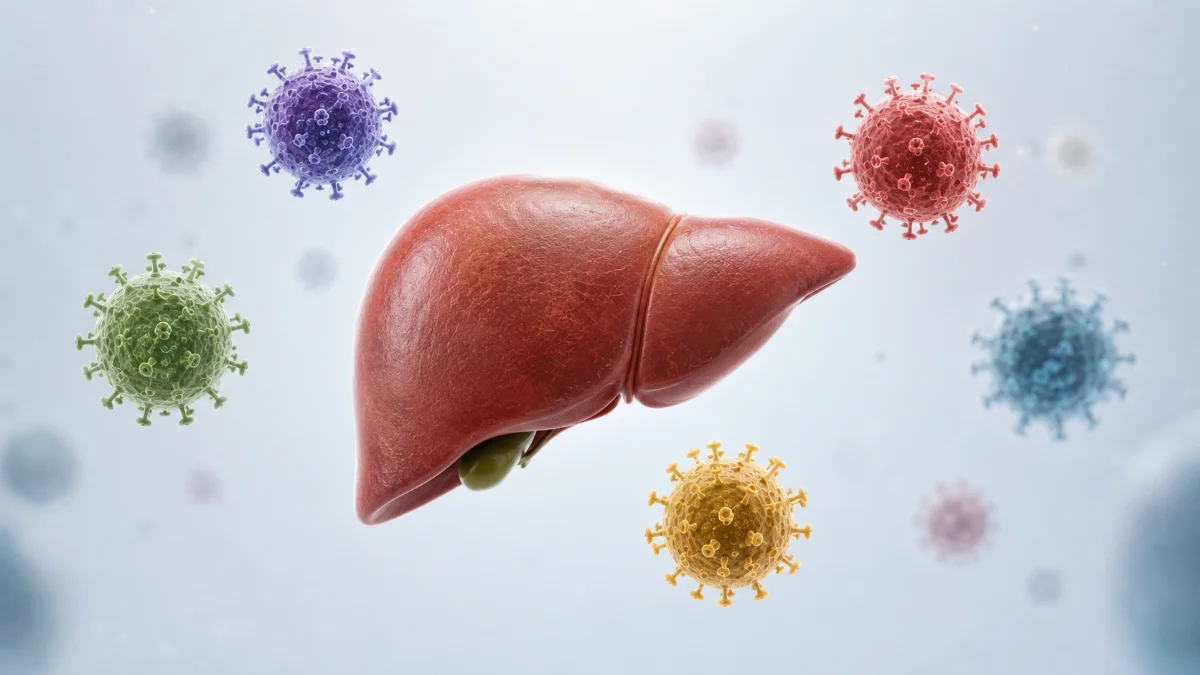
Medical science categorises the primary hepatitis viruses into five distinct types: A, B, C, D, and E. They share a target organ, but their methods of transmission and long-term impacts vary wildly.
Hepatitis A and E are typically transmitted through contaminated food and water. They usually cause acute infections. You get sick, your skin and eyes might turn yellow (jaundice), your urine darkens, and you feel entirely drained. But your body usually clears the virus on its own within a few months. They rarely lead to chronic liver disease, though Hepatitis E carries severe risks for pregnant women. The real heavyweights in the realm of chronic illness are Hepatitis B and C.
Hepatitis B is transmitted through contact with infectious bodily fluids. This includes blood, semen, and vaginal fluids. Globally, most people with chronic Hepatitis B acquired it at birth from an infected mother. When an adult is exposed to Hep B, their immune system usually fights it off. When a newborn is exposed, their developing immune system often fails to clear it. The virus stays for life.
Hepatitis C is almost exclusively bloodborne. Sharing needles is a well-known risk factor today. However, before widespread screening of the blood supply began in the early 1990s, many contracted it through blood transfusions. Hepatitis C is particularly insidious. Up to 85% of people infected will develop a chronic infection. It is a slow-moving virus, often taking twenty to thirty years to cause noticeable liver damage.
Hepatitis D is the wildcard. It is an incomplete virus that requires the presence of Hepatitis B to replicate. You can only get Hep D if you already have Hep B, but the combination usually leads to a much faster progression of liver disease.
The Cost of the Waiting Game
When chronic hepatitis is left undiagnosed, the clock keeps ticking.
The scar tissue (fibrosis) we talked about earlier starts to accumulate. Healthy, spongy liver tissue is gradually replaced by stiff, fibrous bands. This is a quiet, microscopic process. As the scarring worsens, it alters the physical architecture of the organ. Blood can no longer flow smoothly through the liver. This advanced stage of severe scarring is called cirrhosis.
Cirrhosis can be viewed as an alcohol-related condition, but chronic viral hepatitis is a leading cause. Once the cirrhosis condition becomes persistent, the ability of the liver to perform its daily jobs starts to drop. Toxins build up in the brain, causing confusion. Fluid leaks into the abdomen, causing massive swelling. The blood flow restriction causes pressure to build in the portal vein, forcing blood into smaller, fragile veins in the esophagus, which can easily rupture and bleed.
Furthermore, a cirrhotic liver is a prime environment for cellular mutation. Chronic Hepatitis B and C are the primary drivers of hepatocellular carcinoma, the most common type of liver cancer.
This is exactly why early detection is critical. By the time a patient actually feels sick from liver failure or cancer, the options for treatment are drastically reduced. If we catch the virus years before cirrhosis develops, the worst outcomes are entirely preventable.
Doctor’s Note
Chronic viral hepatitis often develops silently, but crucial warning signs should never be ignored. If you experience persistent fatigue, jaundice (yellowing of the eyes or skin), dark urine, abdominal swelling, or heaviness in your upper right abdomen, do not wait for severe complications. Early detection through a simple screening blood test can halt progressive damage and prevent irreversible liver scarring (cirrhosis) or liver failure. Consult a gastroenterologist, hepatologist, or qualified physician promptly for an accurate evaluation and timely medical care.
Modern Medicine Meets Holistic Support

The landscape of hepatitis treatment has transformed completely. It is one of the great success stories of modern medicine.
For Hepatitis B, we have highly effective antiviral medications. While they don't usually cure the virus, they suppress its replication to undetectable levels. This halts the progression of liver damage. It stops the scarring in its tracks. A daily pill can allow someone with chronic Hep B to live a normal, healthy lifespan.
For Hepatitis C, the breakthrough has been even more dramatic. Just a decade ago, treatment involved grueling months of interferon injections with severe side effects and mediocre success rates. Today, we use Direct-Acting Antivirals (DAAs). These are pills taken for eight to twelve weeks with minimal side effects. The cure rate is over 95%. It is a true medical cure. The virus is eradicated from the body.
But medical science isn't the only tool at our disposal. When managing liver health, particularly for chronic conditions or during recovery, comprehensive lifestyle care plays a massive role in alleviating the organ's burden.
In Ayurveda, the liver is viewed as a vital fire (Pitta) organ, deeply connected to digestive fire and blood purification. It emphasises mindful eating, deep hydration, and avoiding processed toxins that stress the organ. Integrating herbs like Bhumyamalaki or Kutki, which have been long respected in traditional practices for their liver-protective properties, can act as an excellent supportive measure to help maintain healthy liver enzymes and support tissue repair. It’s about total body harmony. The heavy medical artillery eliminates or suppresses the virus. The supportive lifestyle repairs the terrain.
Who Needs to Get Tested?
You can't treat what you don't know is there. Because risk factors are sometimes unclear or happened decades ago, relying solely on a history of risk isn't enough. Many people with Hepatitis C have absolutely no idea how they contracted it. Maybe it was a medical procedure in a developing country. Maybe it was a tattoo done with improperly sterilised equipment in the 1980s.
This is why health organisations like the CDC have updated their guidelines. The recommendation now is that all adults should be screened for Hepatitis B and C at least once in their lifetime. Pregnant women should be screened during every pregnancy. People with specific risk factors, such as healthcare workers, those who inject drugs, or those on hemodialysis, should be tested regularly. The test is simple. It requires a basic blood draw.
A preliminary screening looks for antibodies. If you have antibodies to Hepatitis C, it means you were exposed to the virus at some point. A follow-up test (an RNA test) is then done to see if the active virus is still present in your bloodstream. For Hepatitis B, the blood test looks for specific viral antigens and antibodies to determine if you have an active infection, if you've recovered, or if you are protected by the vaccine.
The Bottom Line
We are living in an era where chronic viral liver disease should be a thing of the past. We have a highly effective vaccine to prevent Hepatitis B. We have antiviral therapies that render chronic infections harmless. We have a literal cure for Hepatitis C. The science is already established. The medicine is already on the shelves.
The only missing link is awareness. Hepatitis thrives in the dark. It relies on the fact that you feel fine while it quietly damages your liver year after year.
Early diagnosis strips the virus of its only real advantage. Getting a simple blood test takes the power away from the disease and puts it back in your hands. It allows you to protect your liver long before irreversible damage is done. Talk to your doctor. Ask for the panel. A few vials of blood can save you from a lifetime of complications. It really is that simple.