 Published on
17 Sep, 2026
Published on
17 Sep, 2026 Updated on 17 Sep, 2026
 5055
5055Jaggery vs Sugar: Is There Really a ‘Healthy Sugar’?
Jaggery is often seen as the healthier alternative to sugar. You may have heard that replacing white sugar with jaggery can make your diet healthier because jaggery is natural and contains some minerals.
But does that mean you can eat unlimited jaggery without worrying about added sugar?
Not really.
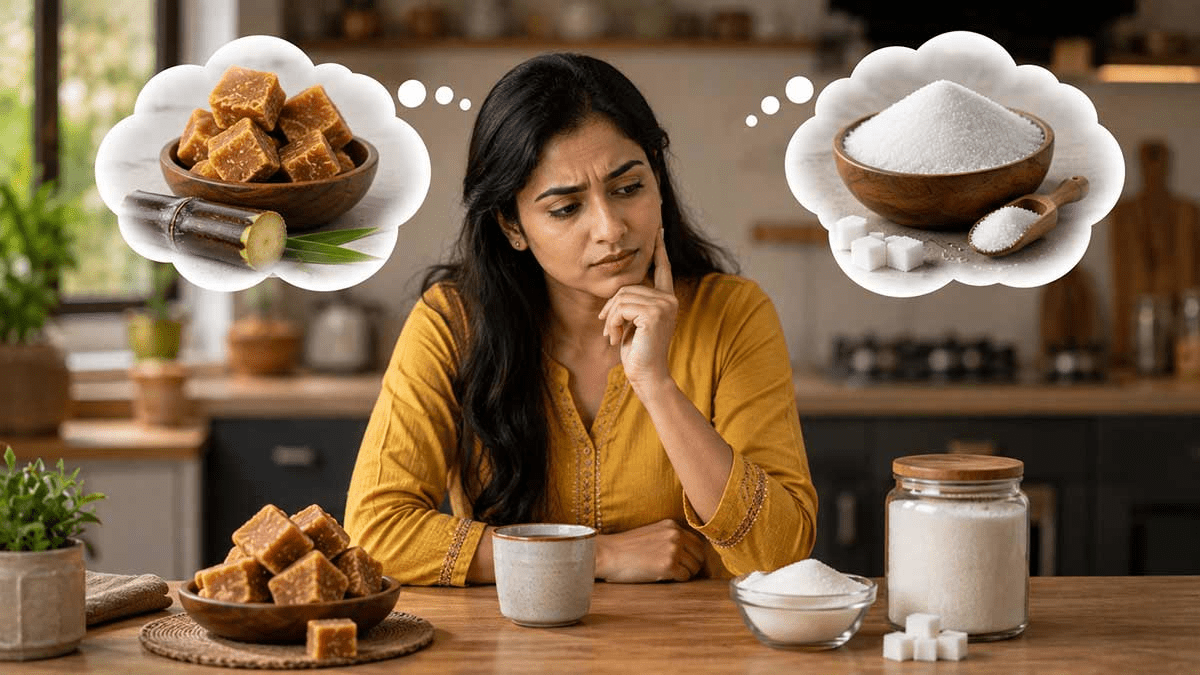
Jaggery and table sugar are made differently and have some nutritional differences, but both are forms of added sugar. Understanding what makes them different can help you make more informed choices without unnecessarily labelling one as “good” and the other as “bad.”
What Is The Difference Between Jaggery And Sugar?
Both jaggery and table sugar are traditionally made from sugarcane juice, although the processing methods are different.
Table sugar is processed to remove most of the other components, leaving mainly sucrose. Jaggery is less refined and retains small amounts of minerals and other compounds from the original sugarcane juice.
This is why jaggery usually has a darker colour and a more complex flavour.
However, being less processed does not automatically make jaggery a health food. It is still primarily a source of sugar and calories.
Does Jaggery Contain More Nutrients?
Jaggery can contain small amounts of minerals such as iron, calcium, magnesium and potassium. These amounts can vary depending on how the jaggery is produced and processed.
White sugar, on the other hand, provides very little nutritional value apart from energy.
This difference may sound significant, but there is an important point to remember: the amount of minerals you get from a normal serving of jaggery is relatively small.
You should not depend on jaggery as a major source of vitamins or minerals. Foods such as vegetables, fruits, pulses, nuts, seeds and whole grains can contribute much more meaningfully to overall nutrition.
Is Jaggery Lower In Sugar?
Jaggery is still mostly sugar.
Although its exact composition can vary, replacing sugar with the same amount of jaggery does not suddenly remove the sugar from your diet. Your body still receives a substantial amount of sugar from it.
The idea that jaggery is a completely different type of sweetener can therefore be misleading.
If you add jaggery to tea, desserts or homemade snacks, it still counts towards your overall intake of added sugars.
What About Blood Sugar?
Another common belief is that jaggery does not affect blood sugar because it is natural.
Natural does not automatically mean that a food has little effect on blood glucose. Jaggery contains significant amounts of sugar and can raise blood glucose levels.
For people who need to manage their blood sugar, simply switching from table sugar to jaggery should not be considered a solution. Individual dietary needs can vary, so people with diabetes or other blood sugar concerns should follow advice from their healthcare professional.
Why Does Jaggery Feel Healthier?
Part of the reason may be its traditional image.
Jaggery has been used in many Indian households for generations and is often associated with traditional foods and home remedies. Because it is less refined than white sugar, it can feel more wholesome.
It also contains small amounts of minerals that refined sugar does not.
Is White Sugar Completely Unhealthy?
White sugar is not a source of many essential nutrients, so it is not something you need to include in large amounts. But having some sugar as part of an otherwise balanced diet does not automatically make your diet unhealthy.
For example, you may occasionally enjoy a sweet dish, dessert or a cup of tea with sugar.
The bigger picture matters more than whether you choose jaggery or sugar for every sweet food.
So, Which One Should You Choose?
There is no need to think of the choice as simply “jaggery is healthy” and “sugar is unhealthy.”
If you enjoy the taste of jaggery, you can use it in appropriate amounts. If a recipe works better with regular sugar, that is also fine.
The more useful habit is to be aware of how much added sugar you are consuming overall.
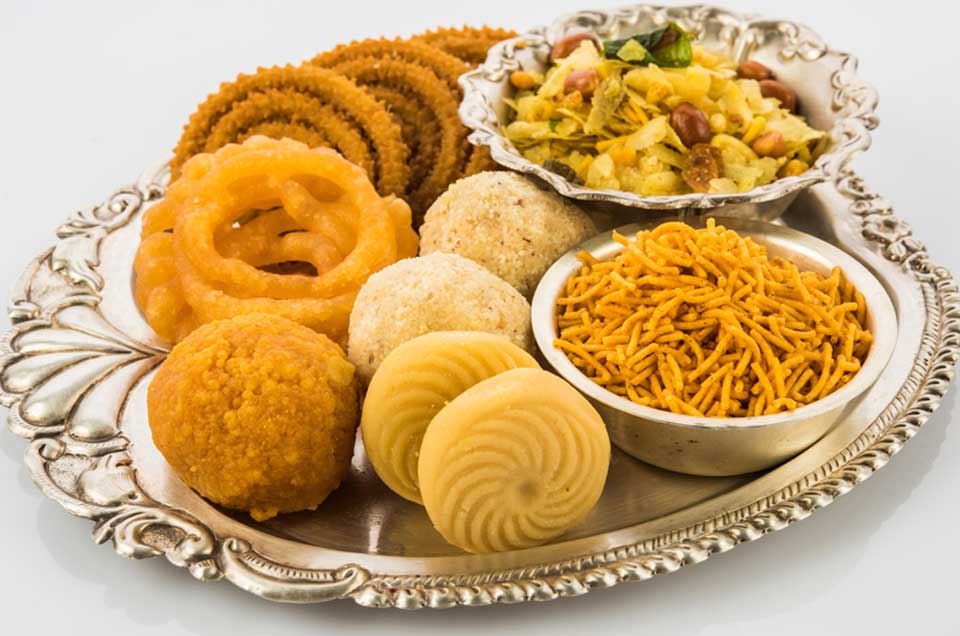
For example, replacing sugar with jaggery in a dessert but then eating large quantities of the dessert does not necessarily make it a healthier choice.
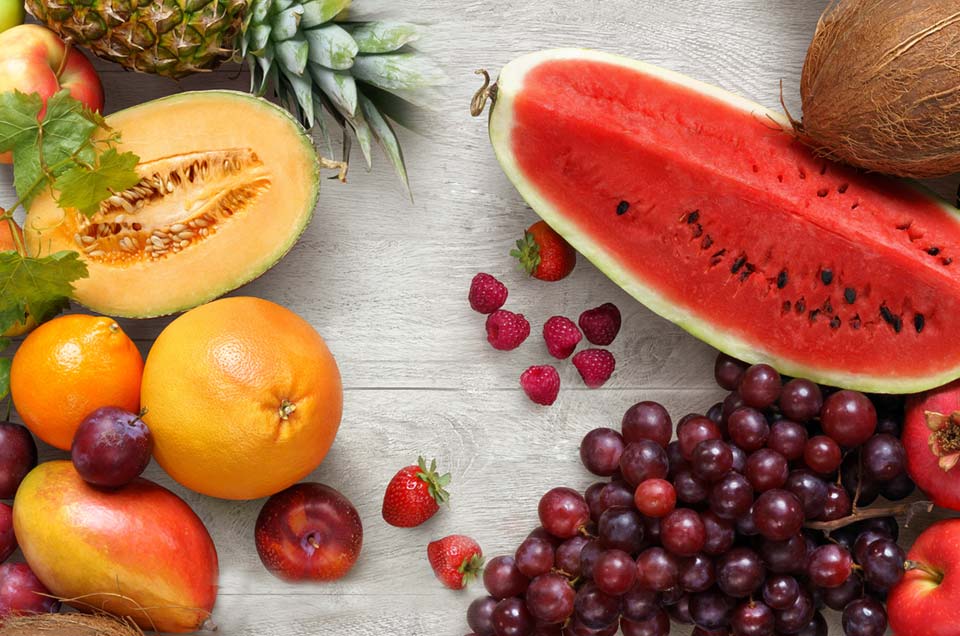
Similarly, reducing the amount of sweetener in your tea or choosing naturally sweet foods such as whole fruits can be a more meaningful change.
What does Ayurveda say?
Ayurveda has traditionally used jaggery in various foods and preparations, and it is often included in traditional Indian diets. From an Ayurvedic perspective, foods are considered in relation to qualities.
Jaggery is traditionally considered different from highly refined sugar because it undergoes less processing and retains some components of sugarcane. However, this does not mean that it should be consumed without limits.
Conclusion
Jaggery and white sugar are different in how they are processed, and jaggery does contain small amounts of minerals that refined sugar generally lacks. However, jaggery is still primarily sugar and should not be treated as a “healthy sugar” that can be eaten without limits.
Instead of focusing only on which sweetener is better, pay attention to portion size, frequency and your overall diet.