 Published on
08 Jul, 2026
Published on
08 Jul, 2026 Updated on 08 Jul, 2026
 5093
5093We have all been there. You walk into a modern cafe, order a trendy, healthy smoothie bowl, and it arrives topped with a thick, jelly-like layer of swollen seeds. Then, later that evening, you stop by your favorite local street vendor for a tall glass of sweet, cold rose falooda, and at the bottom of the glass sits a very similar-looking layer of gelatinous seeds.
Suddenly, every health blog and fitness influencer is pushing these little seeds, claiming they are the ultimate cure for everything from weight loss to glowing skin. But wait. Are the seeds in your modern smoothie the exact same ones hiding in your traditional falooda? Do they do the same thing?
They might look nearly identical once they are soaked in water, like tiny, translucent frog eggs, but they are completely different plants. One is a native Indian staple that our grandmothers have used for generations to beat the scorching summer heat. The other is an imported superfood that warriors in Central America used for intense physical endurance.
From an Ayurvedic perspective, understanding the difference between Sabja (sweet basil) seeds and Chia seeds is incredibly important. In Ayurveda, we do not just look at the vitamins or calories in a food; we look at how that food behaves once it enters your stomach. Does it create heat? Does it cool you down? Is it light and easy to digest, or heavy and building?
The Traditional Summer Cooler: Sabja Seeds
Sabja seeds, also known as Tukmaria or sweet basil seeds, have been an essential part of Indian kitchens for centuries. When you look at them dry, they are tiny, jet-black, and shaped almost like a tiny teardrop.
The magic of Sabja happens the second they touch liquid. If you drop a spoonful into a glass of water, they do not make you wait. Within just a few seconds, they instantly swell up, creating a thick, grayish-white translucent halo around the hard black center.
What Do They Do for You?
In Ayurveda, Sabja seeds are the ultimate Sheetala (cooling) food. They are specifically designed to pacify the Pitta dosha, the energy of heat, fire, and metabolism in the body. When the summer temperatures rise, or when you eat too much spicy, fried food, the Pitta in your stomach flares up. This is what causes that uncomfortable burning sensation of acidity, severe heartburn, or even heat boils on your skin.
Sabja seeds act like a natural fire extinguisher. Because they hold onto water so aggressively, they bring a deep, soothing moisture directly to your stomach lining. They flush out toxins from the gut, clear the urinary tract, and dramatically drop your core body temperature from the inside out.
When is the Best Time to Have Them?
Sabja is your best friend during the peak of summer, or anytime you are experiencing acid reflux and burning indigestion. Simply soak a teaspoon in water for five to ten minutes, and stir them into a glass of plain water, a cold rose syrup drink, or sweet lemonade. They do not have much flavor on their own, making them incredibly easy to drink. Because they are very light on the stomach, you can enjoy them in the mid-morning or late afternoon to keep your internal heat in check without ruining your appetite.

The Modern Energy Powerhouse: Chia Seeds
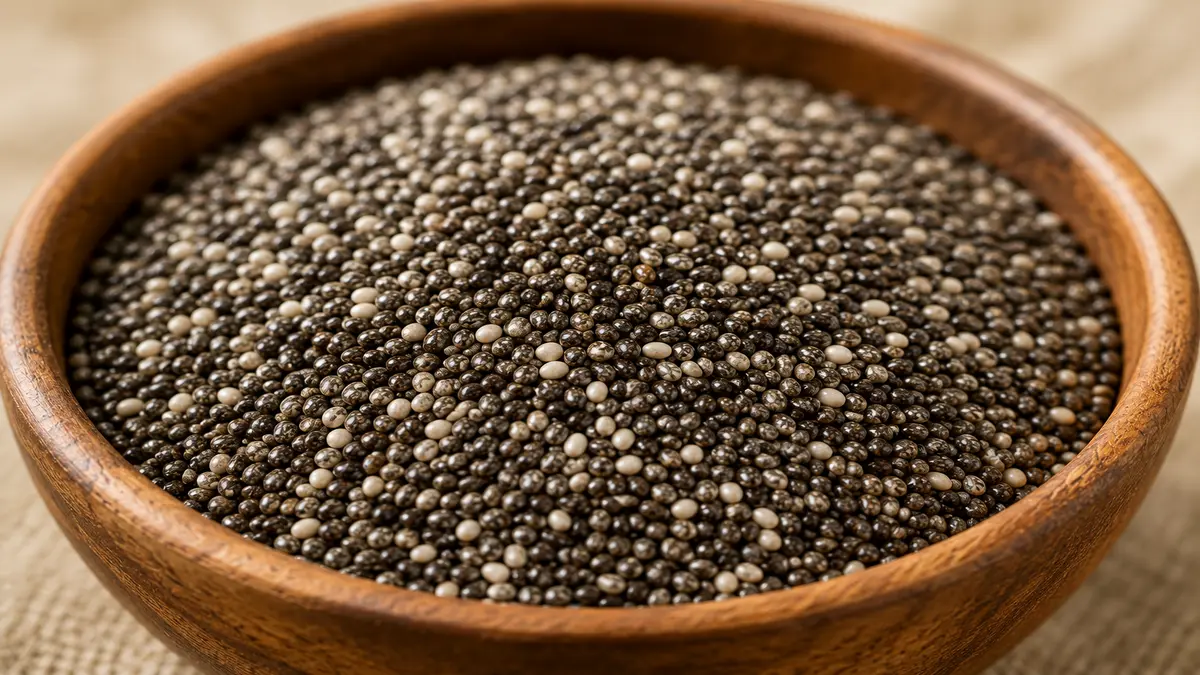
While chia seeds (Salvia hispanica) may not be widely available in Indian grocery stores yet, they have an ancient history in Mexico and Central America. Dry chia seeds appear slightly bigger than Sabja, oval, and a mottled variety of black, grey, brown, and white colors.
Chia seeds are slow growers, unlike Sabja. Place them in water, and they will float and absorb the water slowly for 20-30 minutes, and then develop into a thick, heavy, sticky gel which will hold everything together.
What Do They Do for You?
While Sabja is all about cooling you down, Chia is all about building you up. In Ayurvedic terms, chia seeds are considered Brimhana, meaning they are nourishing, tissue-building, and quite heavy to digest.
They contain a concentrated dose of the healthy fats (Omega-3 fatty acids), tons of dense protein and fiber. They are also heavy, oily, grounding, and perfect to calm the Vata dosha (energy of cold, dry, erratic movement). Chia seeds offer a slow, steady, deeply nourishing lubrication to the flesh of your body, providing nourishment to the tissues that feel dry and cracking, or weak, depleted, and tired all the time.
When is the Best Time to Have Them?
Chia seeds are essentially a mini-meal. They are perfect for giving you long-lasting, slow-burn energy. Because they are heavy to digest, it is best to have them in the morning as part of your breakfast. You can soak them overnight in milk or almond milk to create a thick pudding, or blend them into a heavy morning smoothie. They will keep your stomach full for hours and stop you from reaching for unhealthy mid-day snacks.
Which Seed Should You Choose Today?
Since we aren't looking at a nutritional chart, let us just think about your day and match the seed to what your body is physically asking for.
If you are dealing with a severe bout of acidity, heartburn, or you have just come indoors from the blazing afternoon sun, go for Sabja seeds. Their immediate, cooling gel will soothe your fiery stomach, bring down your body temperature, and rehydrate your system without making you feel heavily full or sluggish.
If you are about to go for a long, exhausting run, or you have a massive workday ahead and you know you will end up skipping lunch, grab the Chia seeds. Their heavy, fat-rich, protein-packed profile will give you a slow-release energy supply. They will ground your nervous system and keep your hunger completely satisfied until you finally have time to sit down for a real meal.
Sabja is a fast-acting digestive aid when you are craving food after a heavy and spicy meal. For building and to lubricate dry joints, Chia is the long-term builder.
Doctor’s Note
Always ensure these seeds are completely gelatinous and fully expanded in liquid before consuming, as swallowing them semi-dry poses a genuine risk of esophageal obstruction, particularly for children or individuals with dysphagia (swallowing difficulties). Furthermore, due to the high fiber and omega-3 content in chia seeds, individuals on blood thinners, blood pressure medications, or those with chronic gastrointestinal conditions like IBS should seek medical advice regarding safe daily intake limits to avoid adverse interactions or severe bloating.
A Few Things to Keep in Mind
Both these seeds are great natural foods, but each body is unique, and Ayurveda cautions against taking anything simply because it's in vogue. The following are some groups who should be wary of this:
- If your digestion is currently very weak: Chia seeds require a strong digestive fire (Agni) to break down all that dense fiber and fat. If you are feeling bloated, gassy, or have a sluggish stomach, eating a bowl of heavy chia pudding will only make the bloating much worse. Stick to light, warm foods until your digestion recovers.
- If you are prone to winter colds: Because Sabja seeds are intensely cooling (Sheetala), you should generally avoid putting them in your drinks during the freezing winter months, or if you are currently suffering from a wet, chesty cough and cold. They will only increase the cold, heavy Kapha Dosha in your chest.
- For expecting mothers: Ayurveda traditionally advises pregnant women, especially in their first trimester, to avoid consuming large amounts of Sabja seeds. They are believed to naturally lower estrogen levels and can sometimes induce mild uterine contractions. Always check with your doctor first.
- Preparation is absolutely non-negotiable: Never, ever eat chia or sabja seeds completely dry by the spoonful. Because they expand so rapidly when they touch moisture, eating them dry can cause them to swell in your throat or esophagus, creating a serious choking hazard or a severe blockage in your digestive tract. Always soak them fully in liquid before they enter your mouth.
Conclusion
We don't need to treat our food like a confusing math problem, constantly calculating every single vitamin and gram of fiber. Our grandmothers already figured out the best ways to keep our bodies balanced simply by looking at how food interacts with our internal environment.
Sabja and Chia might look like identical twins at the bottom of a glass, but they have completely different jobs to do. You don't have to pick just one favorite. Listen to your body. Stir a spoonful of Sabja into your lemonade when the summer sun is beating down, and your stomach feels like it is on fire. Soak some Chia seeds in milk when you need a powerful, grounding breakfast to carry you through a long, exhausting morning.
References:
Chia seeds (Salvia hispanica L.): A therapeutic weapon in metabolic disorders - PMC
Benefits and Uses of Basil Seeds (Sabja Seeds, Tukmaria)
Chia Seeds 101: Nutrition Facts and Health Benefits
Nutritional and therapeutic perspectives of Chia (Salvia hispanica L.): a review - PMC