 Published on
16 Jun, 2026
Published on
16 Jun, 2026 Updated on 16 Jun, 2026
 5094
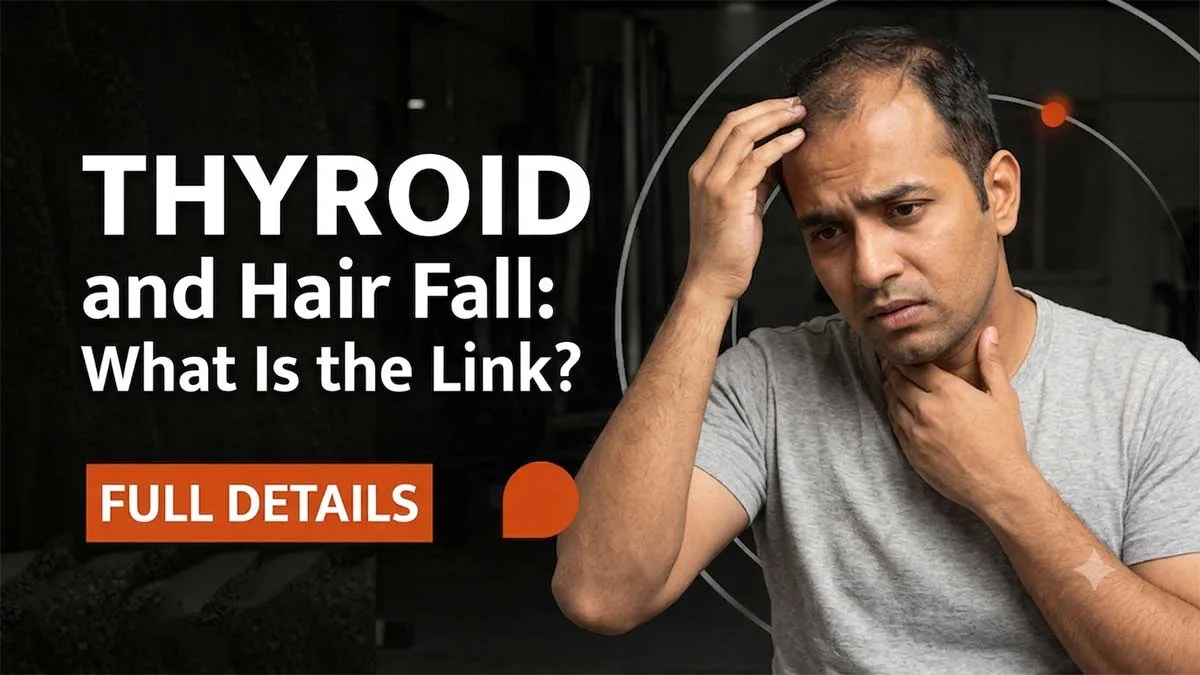
5094Finding a few strands of hair on your pillow or hairbrush is completely normal. Hair grows, rests, and falls. But if a person has excessive hair loss, it could indicate more than just a scalp problem. A common cause that is often overlooked by many people is thyroid dysfunction.
Many people spend a lot of money on shampoos, oils, serums, and supplements for several months, yet they are unaware that the problem lies in the endocrine system. Despite its small size, the thyroid gland can influence a variety of factors, including metabolism, energy production, tissue repair, and even hair follicle health.
Understanding the Thyroid Gland
The thyroid gland is a small but important gland found near the center of your neck, in a butterfly-like structure. Small as it may be, this gland plays a very important role in determining what goes on within your body every minute of every day. This gland is primarily responsible for producing two main hormones: triiodothyronine (T3) and thyroxine (T4).
These two hormones control the speed at which activities occur in your body. They will cause your body to function faster if their levels increase; conversely, when their levels decrease, body functions begin to slow down. Body functions such as blood circulation, body temperature, digestion, and even skin condition all involve the activities of the thyroid hormone.
How Thyroid Hormones Influence the Entire Body
Thyroid hormones function like the body's natural control system. They regulate your body’s energy expenditure and support a variety of essential functions, including metabolism, digestion, heartbeat, body temperature regulation, and cell growth. If the levels of thyroid hormones in your body are normal, then you are fine. Your cells will be fed properly and your tissue will be regenerated, along with the production of hair on hair follicles.
However, if the levels of these hormones are too high or too low in your body, your body cannot function properly. It will lead to symptoms such as tiredness, loss of weight, dry skin and loss of hair. The hair follicles in your scalp are very sensitive to these hormonal imbalances, which cause issues like hair thinning and hair loss.
The Natural Hair Growth Cycle Explained
Most people do not understand that hair loss is a natural phenomenon and is part of hair physiology. Every strand on your head goes through a natural three-phase cycle and understanding it makes it easier to spot when something is off.
- Anagen, or Growth Phase: This is the phase in which your hair is actively growing. The duration of this phase can be from 2 to 7 years, depending on your genetics, age, and general well-being. The longer the duration of this phase, the longer your hair will grow.
- Catagen or Transition Phase: This is the phase that begins after the growth phase of your hair ends. In this phase, your hair stops growing; its follicle starts shrinking and prepares to shed to make way for new hair.
- Telogen, or Resting, Phase: During this phase, hair remains in its follicle for about 3 months, after which it sheds. This shedding is perfectly normal as it facilitates new hair growth.
The Hidden Connection Between Thyroid Health and Hair Growth
Good hair care products are not the only criterion for healthy hair. Nourishment, oxygen and hormones are essential for proper hair follicle growth. Thyroid hormones play an important role in this. They control the hair growth cycle and promote healthy hair production. Too much or too little thyroid hormone can cause hair follicles to not function properly. This can result in slower hair growth, so more hair enters the shedding phase and becomes thinner over time.
Common Signs of Thyroid-Related Hair Loss
Hair loss associated with the thyroid gland is usually not the only symptom of the condition. Most often, it is accompanied by other symptoms that indicate an underlying thyroid imbalance.
Common symptoms often experienced along with thyroid hair loss are:
- Always feeling tired: You feel extremely tired or exhausted, even after getting enough rest.
- Sudden weight changes: Sudden weight loss or weight gain without a change in diet or exercise.
- Mood changes: You feel irritated, anxious, or have difficulty concentrating throughout the day.
- Temperature sensitivity: You become sensitive to hot and cold weather, feeling colder or hotter than other people.
- Sleep problems: You find it difficult to fall asleep and stay asleep through the night.
- Sparse eyebrows: Eyebrows that are missing patches along the outer edges.
Ayurveda's Perspective on Thyroid and Hair Health
In Ayurveda, hair health is directly linked to your internal processes, not just external ones. The condition of the hair is affected by the body's ability to digest food, absorb nutrients, and provide nourishment to all tissues through Rasa Dhatu, the primary tissue responsible for carrying nourishment to every cell, including hair follicles.
The three doshas (Vata, Pitta, and Kapha) themselves directly affect hair health. If there’s too much Vata, the hair will be brittle and dry, and you may experience hair loss. If Pitta Dosha is in excess in your body, then the hair will turn gray and become sensitive to the scalp. Excess Kapha Dosha causes oily hair and slowed hair growth.
Everything starts with Agni- the digestive fire. Weak Agni means that despite a healthy diet, there will be no nourishment for Rasa Dhatu, and the hair suffers as a result. Healthy digestion is the key to having healthy hair.
Dietary Recommendations for Thyroid-Related Hair Fall
A healthy, nutrient-rich diet is very important for thyroid function and hair growth. The following foods are some of the options that can help you have good and healthy hair:
- Fruits and vegetables
- Whole grains
- Nuts and seeds
- Lentils and legumes
- Protein-rich foods
- Seasonal foods
Eating a healthy diet, drinking plenty of water, and ensuring you get the required nutrients can create the conditions for growing healthy hair.
Daily Lifestyle Practices to Support Healthy Hair
However, addressing thyroid issues and eating right are very important; there are other actions you should take to keep your hair in good condition.
Among the following practices that you may find useful:
- Eat regularly so that your body can digest food properly and provide the necessary amount of energy.
- Drink a sufficient amount of water to hydrate yourself and make the skin on your scalp healthy.
- Massage your head in order to relax and stimulate blood circulation in it.
- Do exercises like walking, yoga, or stretching.
- Sleep at the same time regularly to get proper rest.
- Take care of your mental health through meditation or any other relaxing activity.
In terms of healthy hair, being consistent with your efforts will always pay off better than being perfect.
When to Seek Professional Medical Advice
Persistent hair loss should never be ignored. Medical evaluation may be appropriate if:
- Hair shedding becomes excessive
- Hair thinning progresses rapidly
- Other thyroid symptoms are present
- Hair loss affects daily confidence and well-being
Final Thoughts
Hair fall is not always a scalp problem. In most cases, hair loss might just be a manifestation of an inner hormonal imbalance, especially related to the thyroid gland. It affects the normal process of hair growth, causing shedding and weakening of the hair strands.
This is one important thing that should be understood by anyone who wants to solve their hair problems. Instead of concentrating on treating hair externally, one must start by improving his or her overall state of health, including nutrition, sleep and even level of stress.
References
https://erc.bioscientifica.com/view/journals/erc/30/2/ERC-22-0293.xml
https://www.aad.org/public/diseases/hair-loss/causes/18-causes