 Published on
12 Oct, 2026
Published on
12 Oct, 2026 Updated on 12 Oct, 2026
 5007
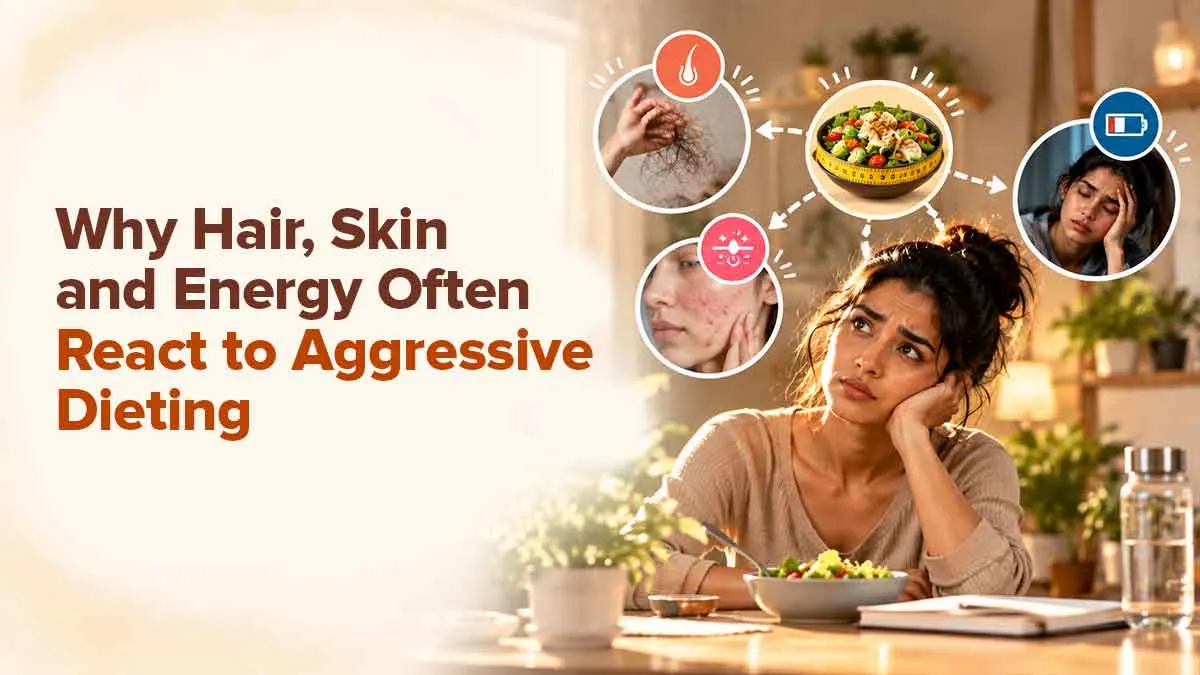
5007Have you ever started a strict diet to lose weight, only to notice sudden hair loss, skin problems, and a sudden drop in energy levels? You expect that since you are dieting, you will look healthy; instead, you start looking even weaker and face quite a few issues.
This experience is more common than many people realize. People who want to lose weight fast eat less and exercise more. But they forget that their body needs enough nutrients to perform its functions daily. Hair and skin can suffer, as can energy, when food intake is too restricted.
Skipping meals to lose weight can cause harm to your body. Knowing the right methods can help avoid these problems.
What Is Aggressive Dieting?
Aggressive dieting simply means sharply cutting off food intake to lose weight as fast as possible. Aggressive dieting involves consuming fewer calories than the body's requirements.
In normal dieting, you feed your body less, but in aggressive dieting, you almost stop eating, which makes the body start panicking, and this has a direct impact on your skin, hair, and energy levels.
This is done for a short period of time to lose weight as soon as possible. The main aim is to lose over 1kg per week.
What Happens When You Follow An Aggressive Diet?
When you stop eating food and start following an aggressive diet, you expect to lose weight over 1 kg per week. You drastically reduce the calories below what your body needs to function.
It has a negative impact on your body.
It slows down your metabolism when you restrict food intake; your body thinks it is starving. To protect your body from starving, it starts conserving your energy by slowing down the metabolic rate. A slow metabolism makes it much harder to lose weight, and when you start eating normally, your body starts rapidly storing food, which usually causes you to gain more weight than you initially lost.
You lose your muscle, not just fat. Due to fewer calories, it breaks down your muscle tissue and bone mass instead of burning fat. It leaves a severe impact on your body; it leads to long-term weakness in your body.
Rapid weight loss causes the liver to not function properly. It also weakens your immune system and causes dehydration, fatigue, hair loss, and muscle cramps.
What Happens To Your Hair, Skin, And Energy?
When your body follows aggressive dieting, calorie intake drops drastically, causing the body to shift into "survival mode." It begins conserving energy for vital organs, such as the liver, brain, and heart, and consequently stops prioritizing functions like hair growth and maintaining glowing skin.
Impacts On Hair
- Hair roots are the most active cells in our body; they require a lot of energy to grow. Aggressive dieting can push 70% of your hair into a premature condition.
- It shows a delayed impact; your hair starts shedding after 2 to 3 months of aggressive dieting. You would notice this later.
- When you stop taking enough calories, your body cannot get enough protein and nutrients, and due to the lack of these nutrients, your hair becomes weak, dry, and breaks easily.
Impacts On Skin
- When you do not consume essential fatty acids and healthy fats, your skin loses its natural oil barrier, causing it to become dry and dull.
- Hormonal imbalances cause acne breakouts and skin problems. Due to aggressive dieting, your stress hormone spikes and cause all these skin problems.
- Your skin requires certain vitamins and nutrients to repair itself; due to a lack of calorie intake, your body can't get sufficient nutrients, which increases the chances of skin infection.
Impacts On Energy Levels
- Calories provide energy to our body; when we consume fewer calories than required, the carbohydrates stored in our body are lost, which causes fatigue, weakness, and exhaustion.
- It impacts your brain as well. Your brain consumes 20% of your energy, and due to fewer calories, it can’t get enough energy, which causes poor concentration.
- To protect you from starvation, your body slows down your metabolism and burns fewer calories; this will lead you to feel cold and sluggish.
In aggressive dieting, food consumption decreases, so the body does not get enough calories, and all these problems have to be faced.
How To Fix This Problem?
This problem can be fixed. To reverse these side effects, you just need to signal to your body that the pandemic is over. By just focusing on a few steps:
- You need to stop the aggressive dieting immediately. If you want to lose weight, you don't need to follow an aggressive diet; simply consuming 500 calories below your maintenance level allows you to lose up to 1 kg per week, which is completely safe.
- Prioritize protein intake; the structure of hair and skin is primarily built from protein, so make sure you consume enough protein.
- Make sure you are eating enough iron, vitamins, zinc, and healthy fats because they nurture your skin and hair.
- Stay hydrated and get enough rest because your skin ages immediately if you don’t consume enough water. Sleep gives your body a chance to repair.
By prioritizing these simple tips, your body will thank you for being kind and gentle.
Ayurvedic Perspective
From an Ayurvedic perspective, food is not just a source of calories; it is an essential part of nourishing the body and supporting its natural function.
As per Ayurveda, aggressive dieting and irregular meals may disturb digestive fire (Agni) and the balance of the three doshas- Vata, Pitta, and Kapha.
Ayurveda focuses on balanced meals, proper digestion, adequate rest, and nourishing meals.
Rather than focusing on extreme diets, keep everything balanced for overall well-being.
Conclusion
Drastically cutting calorie intake just because you want rapid weight loss is not appropriate.
Aggressive dieting affects hair, skin, and energy levels. A balanced diet, proper rest, and healthy habits support sustainable weight management and overall well-being.
Remember, health matters more than quick results.
References
Diet and hair loss: effects of nutrient deficiency and supplement use - PMC
Influence of Nutrition, Food Supplements and Lifestyle in Hair Disorders - PMC
Nutrition and nutritional supplementation: Impact on skin health and beauty - PMC