.webp)
 Published on
09 Jul, 2026
Published on
09 Jul, 2026 Updated on 09 Jul, 2026
 5089
5089You hit the gym. You cut your calories. But when nothing seems to work and the scale refuses to move, it feels like the only option left is turning to prescription weight-loss drugs like Ozempic.
But is medication really the only answer? Absolutely not.
Ayurveda looks at weight loss completely differently. Instead of asking, "How do we force this weight off quickly?" it asks a much deeper question: "Why is your body holding onto this weight in the first place?"
Instead of chasing a number on the scale, it focuses on fixing the root causes, like sluggish digestion, poor sleep and daily stress. When you actually heal your body from the inside, dropping the extra weight just happens naturally.
Why Turn to Ayurveda Instead of Weight-Loss Drugs?
Even with all the amazing advances in modern science, more and more people are turning back to the ancient wisdom of Ayurveda. Why? Because people are simply exhausted.
Think about how many times you have started a new diet, lost a few kilos, and then gained it all back the moment you stopped. After years of riding this frustrating rollercoaster of commercial weight-loss programs, expensive supplements, and punishing workout routines that leave them feeling drained instead of healthy.
Rather than just looking at the number on your weighing scale, an Ayurvedic expert looks at your whole life. They want to know how your stomach feels after you eat, how many times you go to the washroom, how deeply you sleep and how much stress you carry on your shoulders. It is about understanding your unique body type, not forcing you into a one-size-fits-all diet plan.

How Ayurveda Sees Your Extra Weight
Modern diet culture tells us that weight gain is just extra fat caused by eating too much and moving too little. Ayurveda says it is not that simple. It views weight gain as a clear warning sign that something inside your body is out of balance.
Here is how it breaks down the real reasons behind weight gain in simple terms:
- Trapped Fat: Your body really does need some fat naturally, to keep your joints moving smoothly and to give you energy. But when the internal system gets confused, it starts hoarding fat way past what you actually need. Instead of burning it for energy, it locks it away like it’s guarding something.
- A Weak Stomach Fire: Think of a campfire. If it burns strongly, it turns wood into ash pretty cleanly. Your stomach has a similar “fire” too. If it is strong, it turns your food into pure energy. If it’s weak or slow, then the food just kind of sits there, and you feel heavy. And yeah, it also tends to add to your weight.
- Sticky Internal Waste: When that stomach fire is not doing enough, your food doesn’t digest properly. It can turn into a sticky, toxic waste inside your gut. That stuff blocks your inner channels, and then your metabolism slows down. So you feel tired, sluggish, all day long.
- Body Type Matters: Everyone is built differently. Some people have a naturally heavier, more grounded build. Other people gain weight quickly when they’re stressed, or when their hormones are out of whack. Ayurveda treats the person, not just the fat.
It Is Never Just About the Weight
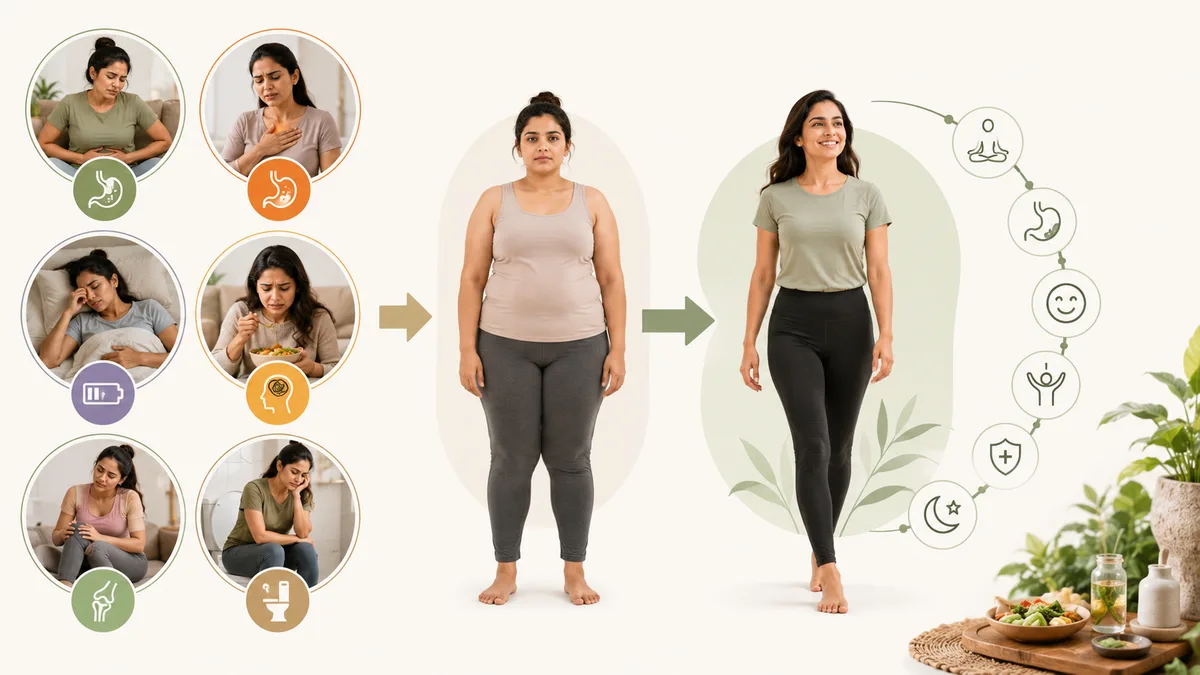
One of the best things about this natural approach is that it connects the dots. Rarely does someone just have a weight problem. Usually, being overweight comes with a whole package of other annoying daily struggles.
If you are struggling with your weight, you might also be dealing with:
- Constant bloating or gas
- Acidity and chest burn
- Waking up feeling tired
- Eating when you feel sad or stressed
- Pain in your knees or lower back
- Going to the washroom irregularly
Instead of just trying to melt the fat away, Ayurveda looks at how all these problems are connected. The goal is not just to make you look thinner; the goal is to make you feel completely healthy, light, and energetic again.
The Quick Fix vs. True Healing
Quick-fix diets and weight-loss drugs share one main goal: to make the number on the scale drop as fast as possible. Ayurveda has a totally different goal: bring your body back to life.
Instead of waking up and nervously stepping on the scale, this approach asks you to pay attention to how you actually feel. Are you digesting your meals without feeling bloated? Are you sleeping through the night? Do you have enough energy to play with your kids or get through your workday without needing a strong cup of coffee at 3 PM?
When you fix these basic human functions, weight loss naturally follows. This makes the change permanent because you are not just starving yourself for a month; you are rebuilding your entire lifestyle step by step.
Doctor’s Note
Gradual weight changes can often be managed with lifestyle and dietary adjustments, but sudden, unexplained weight gain, extreme fatigue, or severe obesity accompanied by breathlessness should not be ignored. These can be warning signs of underlying hormonal or metabolic disorders. Additionally, prescription weight-loss medications carry serious medical risks and must never be started without a proper doctor's evaluation.
Why Ayurveda Starts with Digestion Instead of Appetite Suppression
According to traditional wisdom, your stomach is the control center for your entire body. If your digestion is working well, everything else falls into place.
When your digestion is smooth, your body pulls exactly what it needs from your food and flushes out the rest. But when your digestion is broken, you end up with gas, a heavy stomach, and extra weight that simply will not budge. Improving your gut health by eating warm, fresh meals at the right times is the ultimate secret to long-term weight management.

Simple Habits for a Healthier Body
You do not need a complicated, expensive routine to see results. Ayurveda believes in simple, daily habits that gently push your body back into balance:
- Eat for your body: There is no single "best" diet. You need to eat foods that suit your specific stomach, your age, and the weather outside, rather than blindly following what an influencer eats.
- Fix your body clock: Waking up, eating lunch, and going to sleep at the same time every day works wonders. It trains your hormones to behave properly and keeps your metabolism running smoothly.
- Eat with the seasons: Your stomach is naturally weaker in the summer and monsoon, and stronger in the winter. Changing your food based on the weather prevents extra weight gain.
- Move, don't break: You do not need to run on a treadmill until you feel dizzy. Gentle yoga, brisk walking, and moving in a way that feels good are much better for your body than punishing workouts.
- Calm your mind: Chronic stress and poor sleep directly cause cravings for junk food. Breathing deeply and sleeping well are not just luxuries; they are mandatory for losing weight.
Why Quick-Fix Weight-Loss Methods Often Fail
When we are desperate to lose weight, we often panic and do things that actually harm our bodies in the long run.
Try to avoid these highly common traps:
- Starving yourself: Skipping breakfast or eating tiny portions only makes your body panic and hold onto fat even harder.
- Fake detoxes: Relying on harsh detox teas or liquid diets ruins your natural digestion and makes you weak.
- Cutting out entire food groups: Banning all carbs or fats usually just leads to massive cravings and binge eating later on.
- Ignoring your sleep: Staying up late scrolling on your phone completely destroys the hormones that control your hunger.
- Expecting overnight magic: Remember, you did not gain this weight in a week, so you cannot expect to lose it healthily in a week either.

Is This Approach Right for You?
This gentle, habit-based path is not a magic trick, but it is highly effective for the right person.
This approach is absolutely perfect for you if:
- You are tired of failing diets: You want a permanent lifestyle change, not a 30-day challenge.
- Your stomach is always upset: You want to finally fix your bloating, acidity, and bathroom issues.
- You stress-eat: You want to build a better, healthier relationship with your food.
- You want more energy: You want to feel good on the inside, not just look good on the outside.
The Bottom Line
The arrival of modern weight-loss medicines has definitely changed the game. For people in serious medical danger, these drugs can be a lifesaver. But for the vast majority of us, lasting health will never be found inside a single pill or injection.
Ayurveda offers a beautiful, common-sense alternative. It reminds us that our bodies are not machines to be starved and punished. If we focus more on eating fresher food, sleeping in a proper, deep way, handling our day-to-day stress well, and keeping digestion in good order, then we can naturally start letting go of the extra pounds we don’t really need anymore.
By the end, real weight loss isn’t about choosing one camp; it’s more about understanding your own body, not just in general but genuinely deeply, being gentle with yourself, and building small healthy routines that you can keep up comfortably for the rest of your life.
References
Optimal Diet Strategies for Weight Loss and Weight Loss Maintenance - PMC