.webp)
 Published on
04 Jul, 2026
Published on
04 Jul, 2026 Updated on 04 Jul, 2026
 5104
5104Nobody wakes up in the morning thinking today feels like a high blood pressure day. There is no warning signal.No obvious sign that anything is off. You feel fine. You go about your day. You eat your meals, do your work, watch your shows and sleep. And all the while your blood pressure is quietly doing something that is slowly damaging your heart, your kidneys, your brain and your eyes without giving you a single clue that anything is wrong.
This is why hypertension is called the silent killer. Not because it sounds dramatic but because it is genuinely, accurately descriptive of how this condition operates.
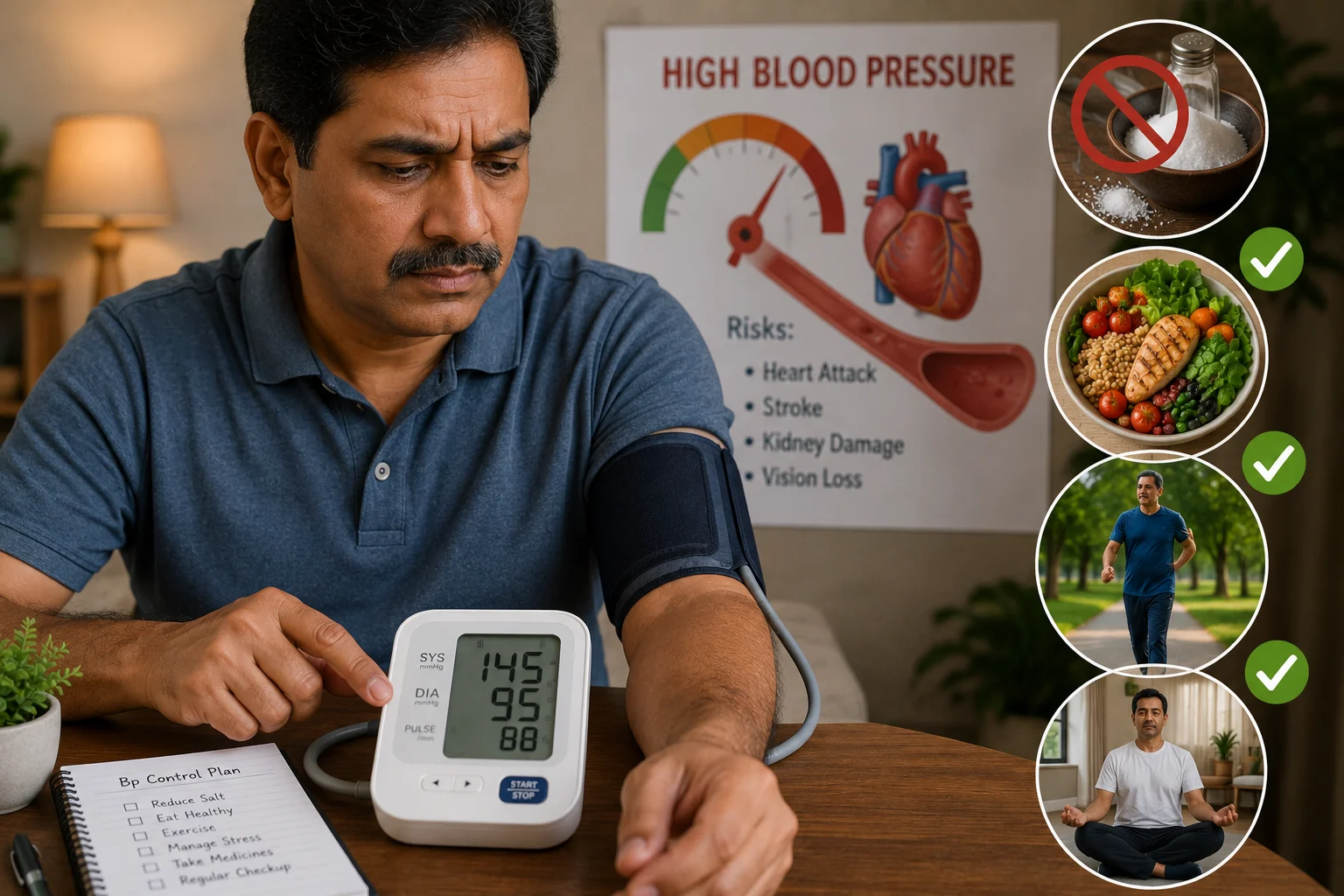
What High Blood Pressure Actually Means
Blood pressure is the force with which blood pushes against the walls of your arteries as the heart pumps it around the body. Some pressure is completely normal and necessary. The heart needs to generate force to move blood through an enormous network of vessels.
The problem starts when that force is consistently too high. The standard threshold is 130 over 80 millimetres of mercury for the newer guidelines, though many doctors still use 140 over 90 as the clinical cutoff for hypertension. Anything consistently above these numbers means the artery walls are under more pressure than they should be handling day after day.
Now imagine that sustained excess pressure applied to every blood vessel in your body, continuously, for years. The damage that accumulates is not dramatic. It is gradual, relentless and by the time it becomes obvious it has usually been happening for a very long time.
Why High BP Produces No Symptoms in Most People
This is the part that trips everyone up. Surely something this serious should feel like something?
The arteries are remarkably good at adapting. When pressure rises gradually over months and years the arterial walls thicken and stiffen to accommodate it. This adaptation is protective in the short term but damaging in the long term. And crucially it happens without pain, without sensation and without any signal the person can detect.
The brain, the heart, the kidneys. All of these organs have enormous reserve capacity. They compensate, adjust and continue functioning even as damage accumulates quietly. By the time that reserve is exhausted and symptoms appear, significant damage has already occurred.
This is not a flaw in human biology. It is just how gradual damage works. The body is built to maintain function. The cost of that adaptation is that the warning comes late.
What High BP Is Silently Doing to Your Body
This is where the real story is. Because while you feel nothing, quite a lot is happening.
- Damaging artery walls over time: Sustained high pressure creates tiny tears in the inner lining of artery walls. These tears become sites where cholesterol and inflammatory cells accumulate, forming plaques. This process called atherosclerosis narrows the arteries, reduces blood flow and significantly increases the risk of heart attack and stroke. All of this building silently over years before a single symptom appears.
- Overworking the heart: The heart is a muscle. When it has to pump against consistently high resistance in the arteries it works harder than it should. Over time the heart muscle thickens and stiffens, a condition called left ventricular hypertrophy. This makes the heart less efficient, increases the risk of heart failure and can cause dangerous heart rhythm abnormalities. The person feels nothing while this is happening.
- Quietly damaging the kidneys: The kidneys are full of tiny, delicate blood vessels. Sustained high blood pressure damages these vessels progressively, reducing the kidney's ability to filter blood efficiently. This is called hypertensive nephropathy and it is one of the leading causes of chronic kidney disease. The kidneys lose function gradually and silently until significant damage has accumulated.
- Affecting vision and eye health: The blood vessels of the retina at the back of the eye are similarly vulnerable to sustained pressure. Hypertensive retinopathy involves damage to these vessels that can eventually affect vision. An eye examination by a doctor can sometimes detect blood pressure related vessel changes before the person has any visual symptoms at all.
Who Is Most at Risk Without Knowing It
High blood pressure does not discriminate particularly but some people carry significantly higher risk.
Anyone with a family history of hypertension, heart disease or stroke. People who eat a high salt diet, which describes a significant portion of the Indian population. Those who are overweight, physically inactive or under chronic stress. People with diabetes, which doubles hypertension risk. Those who consume alcohol regularly. People above the age of forty where risk rises steadily with each decade. And increasingly, younger urban Indians whose lifestyle patterns are producing hypertension in their thirties.
The particularly concerning group are people who have never had their blood pressure checked. If you cannot remember the last time someone measured your blood pressure, this applies to you directly.
What Ayurveda Says About Hypertension
Ayurveda does not use the term hypertension but the condition maps clearly onto what classical texts describe as Rakta Gata Vata, a condition involving aggravated Vata in the blood channels causing excessive force and turbulence in blood flow. Pitta aggravation in the blood adds an inflammatory and heat driven component that worsens the condition further.
The factors Ayurveda identifies as causative are remarkably consistent with modern understanding. Excess salt consumption, oily and heavy food, chronic stress and emotional turbulence, suppression of natural urges, sedentary lifestyle and disrupted sleep are all classical contributors to Rakta Gata Vata.
Ayurveda approaches hypertension through multiple simultaneous pathways:
- Sarpagandha or Rauwolfia serpentina: One of the most important classical Ayurvedic herbs for managing high blood pressure. Contains compounds that reduce vascular resistance and lower blood pressure. Used under qualified Ayurvedic supervision with appropriate monitoring.
- Arjuna: Classically used for heart health and arterial function for centuries. Supports healthy heart muscle function, improves cardiac efficiency and has antioxidant properties that protect arterial walls. One of Ayurveda's most important cardiac herbs.
- Ashwagandha: Addresses the stress and cortisol component of hypertension. Chronic stress is a significant driver of sustained blood pressure elevation and Ashwagandha's cortisol regulating properties make it directly relevant.
- Triphala: Supports overall vascular health, reduces cholesterol and helps manage the metabolic factors that contribute to hypertension over time.
- Brahmi: Calms the nervous system and reduces the anxiety and mental turbulence that sustain elevated blood pressure in many people.
- Dietary guidance: Ayurveda strongly recommends reducing salt, avoiding heavy oily and heating foods, increasing bitter and astringent tastes, eating light easily digestible meals and completely avoiding stimulants. These align directly with modern dietary guidance for hypertension management.
The One Thing That Catches This Before It Causes Damage
There is no substitute for actually measuring blood pressure. It takes thirty seconds. It is painless. It is available at every pharmacy, doctor's office and diagnostic centre. And it is the only way to know what your blood pressure is actually doing.
Adults above thirty should check blood pressure at minimum once a year. More frequently if there is family history, existing risk factors or previous borderline readings. Anyone who has never had it checked should do it today without any further delay.
A single reading is not definitive. Blood pressure varies with time of day, stress level and physical activity. Sustained elevated readings across multiple checks is what establishes hypertension. But you cannot find sustained elevation without checking in the first place.
Practical Habits That Make a Real Difference
Some practical habits are as follows:
- Reduce salt intake genuinely: Not just not adding extra salt at the table. Reducing salt in cooking, cutting back on pickles, papads and processed foods which are all extremely high in hidden sodium. This single change has a meaningful and measurable effect on blood pressure.
- Move every day: Thirty minutes of brisk walking daily has documented blood pressure lowering effects comparable to some medications in people with mild to moderate hypertension. Consistency matters more than intensity here.
- Manage stress actively: Chronic stress sustains elevated blood pressure through sustained cortisol and adrenaline. Pranayama, meditation, adequate sleep and reducing unnecessary mental load are not optional lifestyle additions. They are blood pressure management.
- Limit alcohol: Even moderate alcohol consumption raises blood pressure. For people with hypertension, reducing significantly or stopping entirely is a meaningful intervention.
- Eat potassium rich foods: Potassium counteracts sodium's blood pressure raising effect. Bananas, coconut water, leafy greens, dal and sweet potato are all good sources that fit naturally into Indian diets.
When Symptoms Finally Do Appear
Occasionally high blood pressure does produce symptoms. Severe or rapidly rising blood pressure can cause headaches particularly at the back of the head, nosebleeds, visual disturbances, dizziness and a feeling of pressure in the chest.
If these appear suddenly and severely it can indicate a hypertensive crisis which is a medical emergency. Go to a hospital immediately. Do not wait.
But remember. These symptoms appearing is the exception, not the rule. Most people with dangerously high blood pressure feel perfectly fine right up until something serious happens. The absence of symptoms is not reassurance. It is the nature of the condition.
Final Thoughts
High blood pressure is not dramatic. It does not hurt. It does not announce itself. It just quietly does its damage, year after year, to organs that have no way of telling you something is wrong until the damage is done.
The only thing standing between you and that silent progression is a blood pressure cuff and thirty seconds of your time. That is genuinely all it takes to know.
Check it. Know your numbers. Act on what you find. Your heart, kidneys, brain and eyes are all depending on you to take those thirty seconds seriously.
Reference Links
- National Health Portal of India on Hypertension and Cardiovascular Health https://www.nhp.gov.in/disease/cardiovascular-diseases/hypertension
- Ministry of Health and Family Welfare, Government of India https://mohfw.gov.in/
- World Health Organization on Hypertension https://www.who.int/news-room/fact-sheets/detail/hypertension