 Published on
27 Jul, 2026
Published on
27 Jul, 2026 Updated on 27 Jul, 2026
 5075
5075Most of us have been there. You wake up exhausted, even though you slept for eight solid hours. Your digestion feels sluggish, and you notice your waistband is suddenly tighter just under your ribs. You might have even gone to the doctor for routine blood tests, only to be told your liver enzymes are perfectly normal. You chalk it up to getting older, stress, or just needing another cup of coffee to get through the day.
You try to fix it by eating less and exercising more, but the heavy, lethargic feeling refuses to lift. We have completely normalized living with metabolic exhaustion, treating our bodies like machines that just need a quick reset. But what if your body's main engine is actually choking?
If you are generally healthy but constantly feel like you are dragging a heavy weight, why does your energy keep crashing? Let us break it down simply using the timeless wisdom our grandmothers relied on long before modern metabolic disorders became an epidemic.
The Clogged Filter
Before we talk about how to get your energy back, we have to clear up a massive piece of confusion about what the liver actually does.
Modern culture often views the liver simply as the organ that processes alcohol. If you do not drink heavily, you assume your liver is perfectly fine. But in traditional Indian medicine, the liver (Yakrit) is the absolute seat of digestion, metabolism, and your internal fire (Pitta). It is the body's primary filter and energy regulator.
When you look at non-alcoholic fatty liver disease through an Ayurvedic lens, it is a condition of extreme congestion. When you overwhelm the liver with heavy, sweet, processed foods, its sharp, hot fire is smothered by cold, sticky fat (Kapha). The liver transforms from a highly efficient, burning furnace into a clogged, greasy sponge. Your body isn't just randomly tired; it is suffocating because its primary detox engine is buried under a layer of unburned waste (Ama).
The Invisible Exhaustion
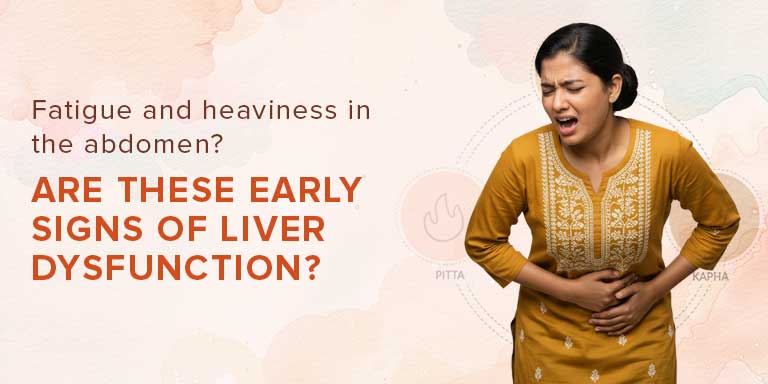
One of the earliest and most ignored signs of a fatty liver is a profound, unexplainable lethargy that coffee cannot fix. If you wake up feeling like you just ran a marathon, your liver is likely struggling to manage your energy reserves. You might assume you just need more sleep, but the reality is a problem of metabolic stagnation. The liver is responsible for storing glycogen and releasing it as usable energy. When it becomes choked with fat, it cannot release this energy efficiently into your bloodstream. In Ayurveda, this is the classic sign of toxic waste trapped in your plasma and blood channels. You feel exhausted because your cells are quite literally starving for energy while your liver hoards unprocessed fuel.

The Right-Sided Whisper
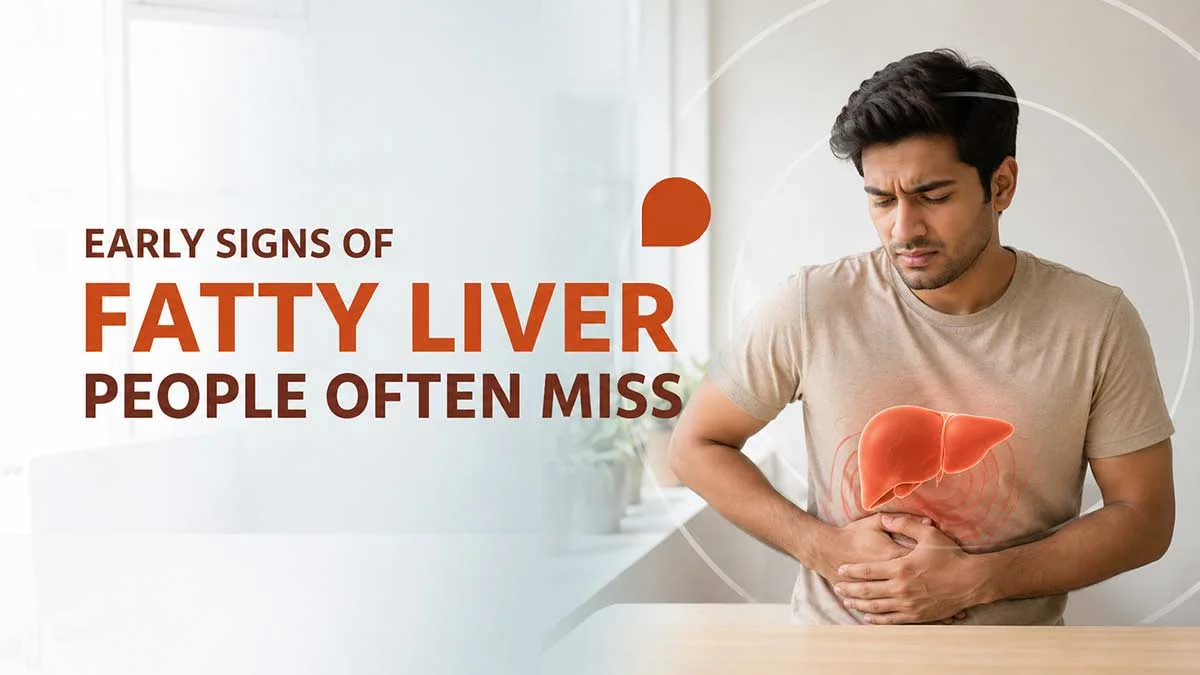
Another easily missed sign is a strange, dull pressure or fullness located specifically on the right side of your body, just tucked under your rib cage. You might feel a slight "stitch" or a heavy sensation after eating a large, greasy meal, or notice it most when you lie down on your right side at night. Because the liver does not have pain receptors on its inside, it doesn't give you a sharp warning when it gets sick. However, as it accumulates fat, it physically swells and stretches the sensitive membrane surrounding it (the Glisson's capsule). That dull, uncomfortable ache is your swollen liver pressing against its own boundaries, begging for relief from the heavy workload.
The Skin's Cry for Help
When your primary filter is clogged, your body becomes desperate and begins pushing toxins out through its secondary filter: the skin. You might start noticing dark, velvety patches of skin appearing on the back of your neck or in your armpits (a condition called acanthosis nigricans, heavily linked to liver-induced insulin resistance). Alternatively, you might experience sudden, unexplainable itching, particularly on the palms of your hands and soles of your feet, or flare-ups of adult acne and rosacea along your cheeks. When your liver cannot process and eliminate inflammatory waste, that heat and toxicity (Vitiated Rakta) is pushed straight up to the surface of your skin.
Daily Habits Fueling the Congestion
If your liver is becoming a greasy sponge, your modern daily routines are likely the exact things keeping it clogged. Watch out for these subtle traps:
- The Fruit Juice Illusion: Believing that massive glasses of fruit juice are a healthy detox is a major trap. While whole fruit has fiber, liquid fructose goes directly to the liver without any digestive buffer. The liver cannot process that much fructose at once, so it immediately converts the excess sugar directly into liver fat.
- Late-Night Carbohydrates: Eating heavy meals, large bowls of rice, or sweet desserts right before bed guarantees congestion. The liver does its deepest detox work while you sleep. If you force it to digest a heavy load of carbohydrates at 11:00 PM, it abandons its detox duties, storing the unburned fuel as fat instead.
- The Sedentary Squeeze: Sitting at a desk for eight uninterrupted hours right after eating a heavy lunch physically compresses the digestive organs. Without movement to stimulate blood flow, the liver becomes physically stagnant, slowing down bile production and allowing fat to accumulate in the tissues.
Traditional Kitchen Fixes for a Clean Filter
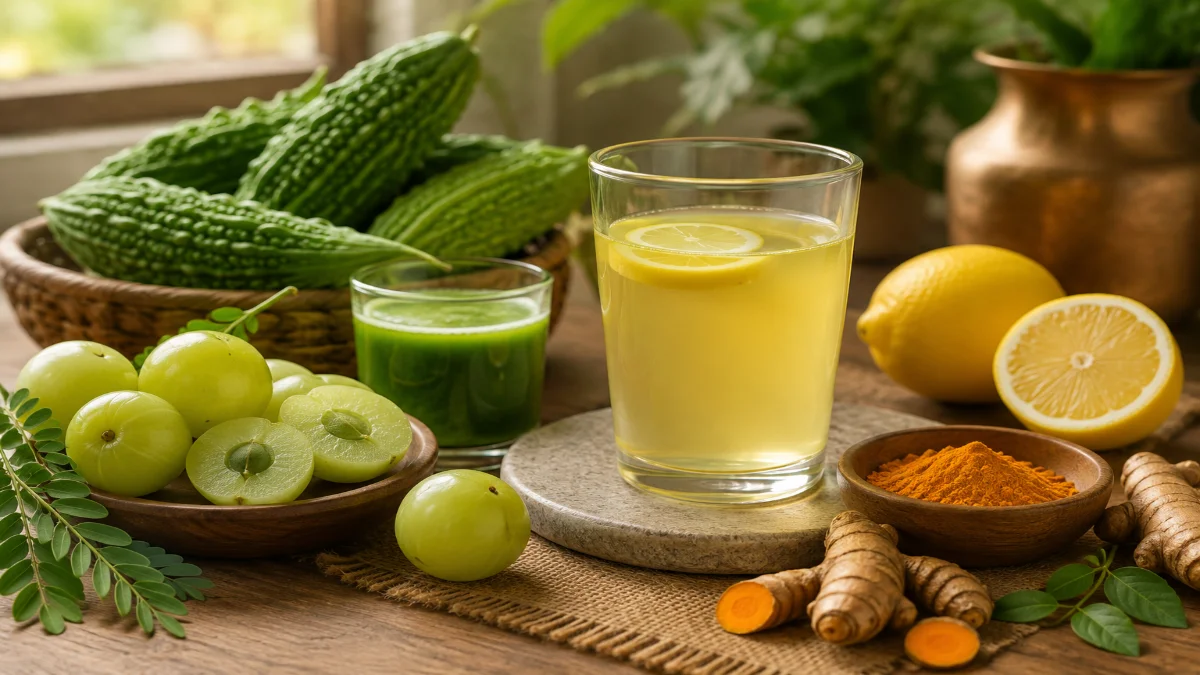
We do not need to wait for a severe medical diagnosis to start cleaning the filter. Our traditional kitchens use specific bitter and sour tastes to gently scrape away the sticky fat and reignite the liver's natural fire.
- The Bitter Truth (Karela): In Ayurveda, the bitter taste (Tikta Rasa) is the ultimate liver medicine. Drinking a small amount of bitter gourd (Karela) juice, or simply including bitter greens in your diet, directly stimulates the liver to release bile. This surge of bile acts like soap, physically scraping sticky, accumulated fat out of the liver channels.
- The Lemon and Turmeric Flush: Starting your morning with a glass of comfortably warm water, a squeeze of fresh lemon, and a pinch of turmeric is incredibly effective. The sourness of the lemon cuts through morning grease and stimulates digestive enzymes, while turmeric is a potent anti-inflammatory that protects the liver cells from the oxidative stress caused by the trapped fat.
- Indian Gooseberry (Amla): Amla is profoundly protective of the liver. Consuming fresh amla or unsweetened amla juice provides a massive dose of stable Vitamin C and antioxidants that help the liver flush out cellular waste without aggravating the body's internal heat.
Doctor’s Note
While using dietary changes and bitter herbs is beautifully effective for early-stage liver congestion, fatty liver disease is progressive and can quietly evolve into severe inflammation (NASH) or irreversible cirrhosis over time.
If you are experiencing a yellowing of your eyes or skin (jaundice), severe abdominal swelling, dark urine, or intense, sharp pain in your upper right abdomen, you must consult a hepatologist or gastroenterologist immediately. These are signs of advanced liver distress that require medical intervention. Always use traditional kitchen wisdom as a lifestyle foundation, but ensure you get routine liver function tests (LFTs) and ultrasounds to monitor your internal health accurately.
Conclusion
We spend so much time pushing through our fatigue, relying on caffeine and willpower, that we completely ignore the engine struggling beneath the surface. Just because your blood tests are currently in the "normal" range does not mean your internal filter isn't silently begging for a break.
Your unexplainable exhaustion, your skin flare-ups, and that heavy dullness under your ribs are a living, breathing message. They are asking you to stop drowning your liver in late-night sugar; they are begging you to introduce the cleansing power of bitter foods; and they are reminding you that the liver is incredibly forgiving if you just give it the space to heal. Listen to your body carefully. Honor your primary filter, bring warm, sour, and bitter elements back into your routine, and remember that true energy comes from a clean, unobstructed engine!
References:
Fatty liver — symptoms, causes and treatment | healthdirect
Non-alcoholic fatty liver disease: pathophysiological concepts and treatment options - PMC
Non-alcoholic fatty liver disease: A patient guideline - ScienceDirect