 Published on
21 Jul, 2026
Published on
21 Jul, 2026 Updated on 21 Jul, 2026
 5076
5076We spend a lot of time worrying about what is on our plates. We count calories, try to eat enough protein, and try to cut down on sugar. But there is one major thing most people completely ignore: the actual time on the clock when we eat.
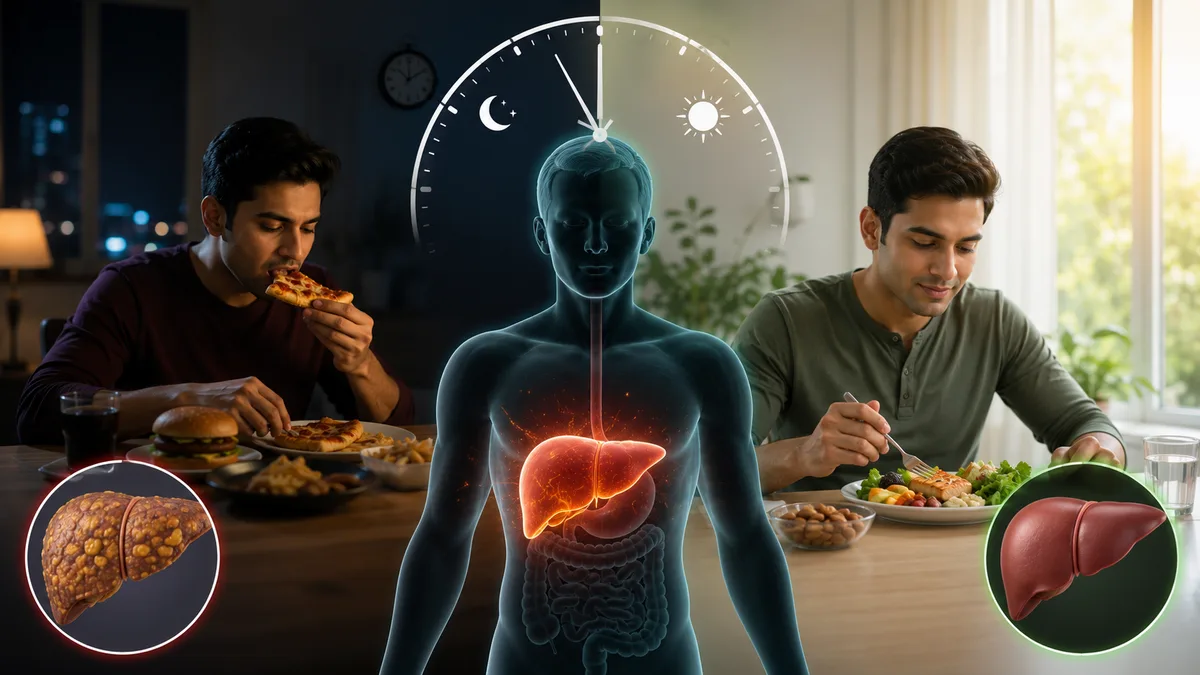
Picture this: you come home late from a long day at work, eat a heavy dinner at 10:30 PM, and go straight to bed shortly after. It seems like a normal routine for a busy person. But inside your body, your liver is working overtime, and it might be quietly struggling.
When you eat is just as important as what you eat. Eating late at night does not instantly cause liver problems, but making it a daily habit, especially combined with heavy food and no exercise, can slowly lead to a fatty liver.
Understanding Fatty Liver Disease
What Is Fatty Liver?
Fatty liver is a condition where excess fat builds up in the liver cells. While it is completely normal to have some fat in the liver, when it exceeds more than 5% to 10%, then it becomes a problem.
During the first stage of this condition, there are no harmful effects, but once fatty liver reaches its severity, you might experience an enlarged and inflamed liver.
Types of Fatty Liver Disease: There are mainly two types of fatty liver:
- Alcohol-induced Fatty Liver: It is caused by excessive consumption of alcohol by a person.
- Non-Alcoholic Fatty Liver: This is caused by obesity, high blood sugar levels, improper diet, and bad lifestyle choices.
The Science Behind Meal Timing
How the Body’s Internal Clock Works?
Your body has a natural clock built into it. This clock tells what to eat, when to eat, and even when to sleep, and all your body organs follow this clock, especially your liver.
The process of nutrient processing, regulation of blood glucose levels, and digestive processes is facilitated by your liver during the daytime. At night, the body goes into fasting mode due to sleeping, and digestive activities tend to slow down, whereas the liver keeps performing all necessary functions.
Why Metabolism Slows at Night?
Because your body needs rest at night, and you don’t do any activity, so that your food can be properly processed. When you eat a large, heavy meal at night and just lie on the bed and go to sleep, your liver gets load and hence the food is not able to follow the whole process the way it has to. As a result, the food cannot be processed at night, and the fat builds up in your liver.
How Late Dinners Can Contribute to Fatty Liver?
Eating food late at night comes with many liver-related issues, and it can contribute to fatty liver through:
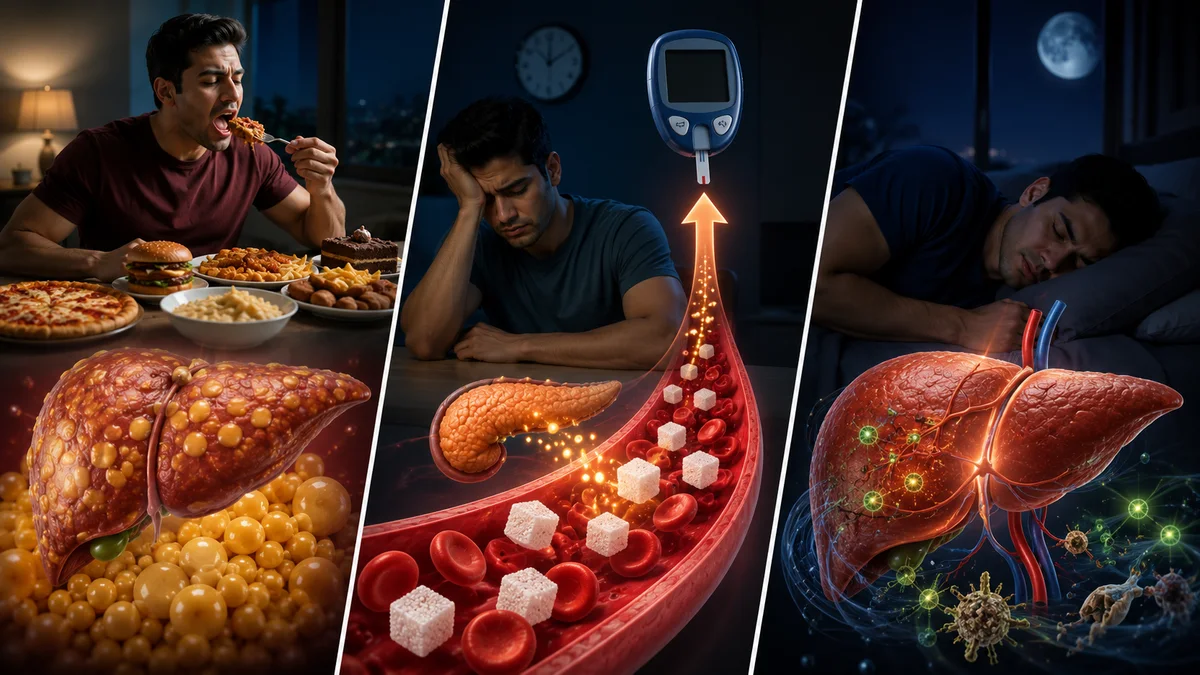
- Increased Fat Storage: When you eat a heavy meal late at night, you are just overloading your liver, and because of less or no movement in your body, the fat builds up in your body.
- Poor Blood Sugar Control: At night, your body is not able to control your blood sugar level because of the rest mode, and when you eat your dinner late, your body produces more insulin. When this happens every night, your body is not able to handle insulin, hence your blood sugar spikes.
- Reduced Overnight Liver Recovery: Your liver needs the night to heal itself and flush out the daily toxins. If you eat a late dinner, you force your liver to stay awake and process food while you sleep.
Signs That Your Eating Schedule May Be Affecting Your Liver
A fatty liver is usually silent, but your body will give you small clues that your late-night eating is causing a problem.
Look out for these soft warning signs:
- You always wake up feeling tired, even after taking a full night's rest.
- You gain weight mostly around your belly.
- You feel bloated and heavy after dinner.
- Your blood test results show high cholesterol or high blood sugar.
- You have sudden urges to eat something at midnight.
Doctor’s Note
When you eat is just as important as what you eat. Heavy late-night meals may disrupt the body's natural circadian rhythm and reduce metabolic efficiency. Over time, this may contribute to insulin resistance and increased fat accumulation in the liver, particularly when combined with excess calorie intake and a sedentary lifestyle.
The Ayurvedic View: Your Digestive Fire (Agni)
In Ayurveda, our liver health depends on the digestive fire of the stomach. If this fire is weak, then you will be able to digest food properly; if this agni is weak, then overall body balance is affected.
Why Late Dinners Hurt the Liver:
- Build-up of toxins: If you eat late-night dinners and your agni is weak, then your food won't be able to digest properly, hence it leads to the buildup of toxins in the body known as Ama.
- Sluggishness in the body: Late-night dinners can lead to an imbalance in the kapha dosha, which is responsible for digestion and energy, so if it gets affected, it creates sluggishness in the whole body, which directly damages your liver.
Simple Ayurvedic Habits for Liver Healing
Ayurveda suggests some changes in the eating habits of people, which can help them to attain a healthy liver:
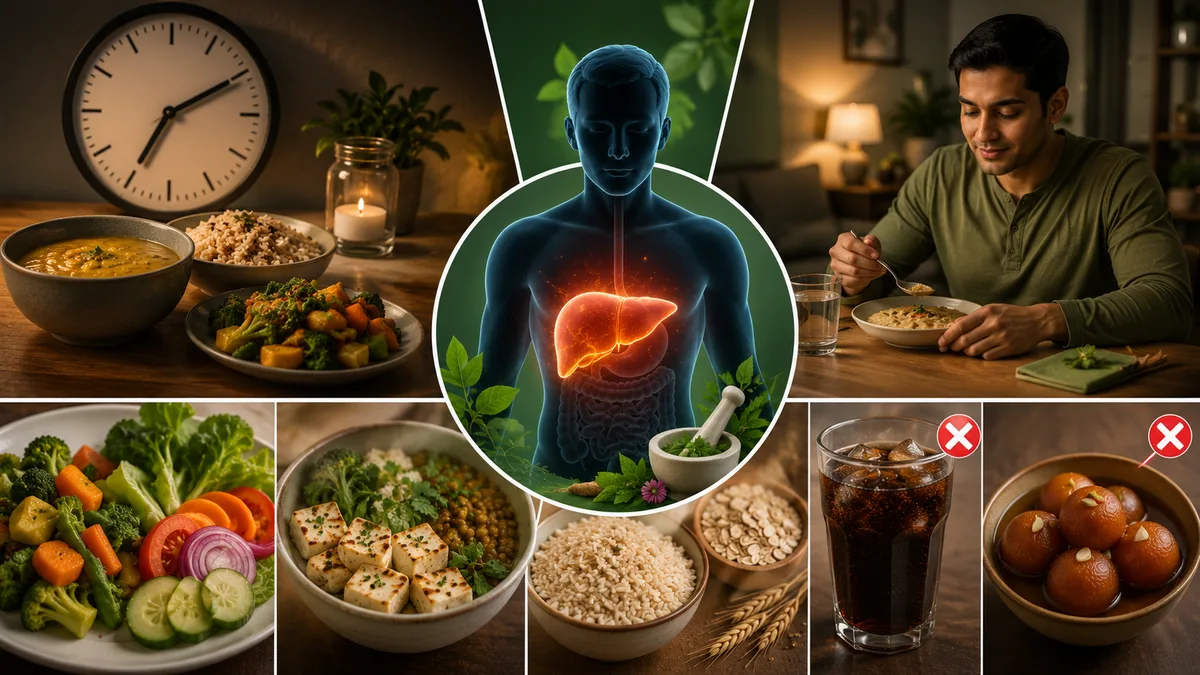
Aim for an Earlier Dinner: Try to eat your dinner 2-3 hours before going to bed, and do not eat very late.
Keep Portions Moderate: Your dinner has to be light and warm at night so that your liver can digest it without any burden. So try to moderate your portions, eat light and liver-friendly.
Smart Evening Food Choices: What you eat at night still matters. A liver-friendly dinner should be easy to digest. Focus on:
- Add cooked vegetables and salad on the side.
- Keep your protein light.
- Eat whole grains such as brown rice, oats, or a whole wheat roti.
- Skip sugary drinks and sweets at night.
Simple Ayurvedic Lifestyle Habits for Liver Health
Fixing your dinner time is a massive step, but it works best when you pair it with other good habits.
- Move your body: Take a gentle 15-minute walk after your early dinner. It helps push the food down and lowers blood sugar instantly.
- Drink water: Keep drinking water throughout the day so that your liver can flush out toxins from your body effectively.
- Sleep well: Do not use the phone too much at night. Sleep by 10 am and take at least 7-8 hours of sleep at night.
- Cut the junk: Keep away from highly packaged snacks, deep-fried foods, and excess sugar.
Common Mistakes to Avoid
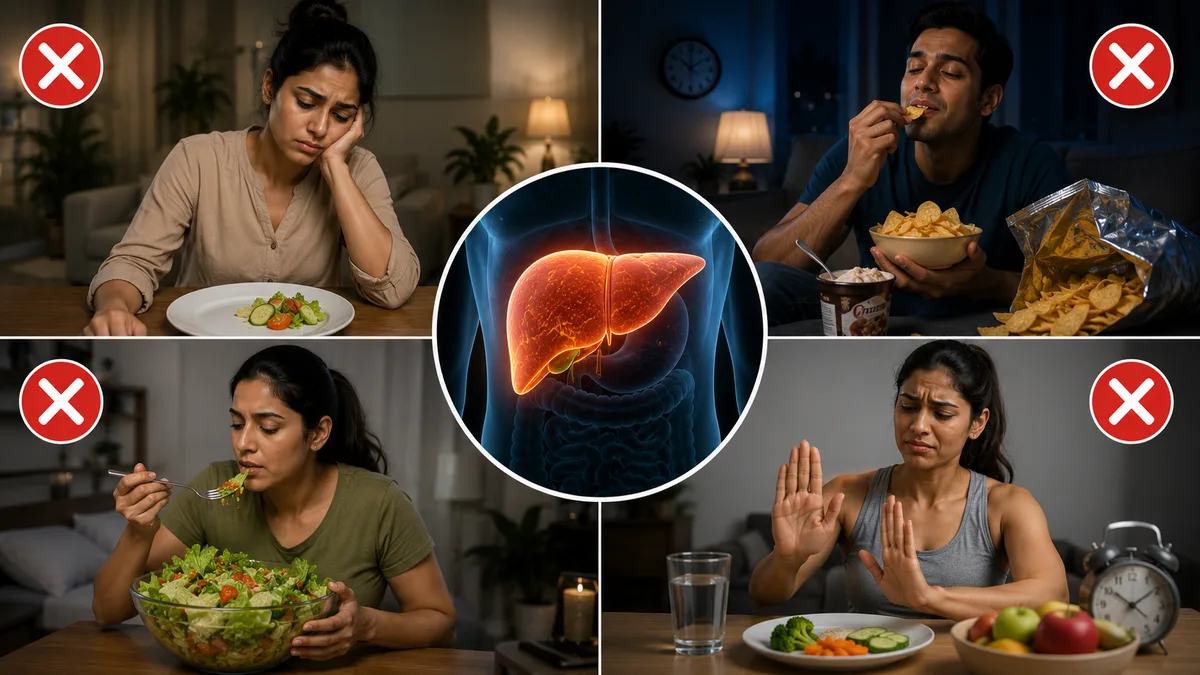
When people try to fix their dinner habits, they often make a few simple mistakes. Try to avoid these:
- Starving all day: Just don’t skip your breakfast or your lunch to have a big meal at dinner. Eat properly during the day so you are not starving at dinnertime.
- Midnight snacking: Eating an early dinner is useless if you open a packet of chips or eat ice cream at 11 PM.
- Thinking salads fix everything: Eating a massive bowl of food right before hitting the pillow, even if it is just a salad, still interrupts your liver's resting time.
- Going to extremes: Do not force yourself into extreme fasting without talking to a doctor first.
Final Thoughts: Small Timing Changes, Big Liver Benefits
Your liver works constantly to protect your health but when you eat matters just as much as what you eat. Giving your body an earlier, lighter dinner aligns with its natural clock, stabilizing blood sugar, improving sleep and preventing extra fat from crowding your liver cells.
You don't need drastic lifestyle changes to see results. Simply shifting your dinner a couple of hours earlier and keeping the food simple is a small daily choice that gives big rewards: a healthier liver and far more energy for years to come.
References
Fatty Liver - StatPearls - NCBI Bookshelf
Non-alcoholic fatty liver disease: What the clinician needs to know - PMC
Non-alcoholic fatty liver disease: Definition and subtypes - PMC