
Successful Treatments
Clinics
Doctors
Ayurvedic Treatment For Arthritis
 Published on 06 Dec, 2019
 Updated on 09 Oct, 2026

Arthritis is an umbrella term that includes more than 100 conditions that affect your joints and the surrounding tissues. It is typically associated with pain that affects your ability to move your joints. Depending on the type, it can cause swelling, tenderness, stiffness, and severe pain in the joints. Osteoarthritis, rheumatoid arthritis, gout, and ankylosing spondylitis are the most common among the different forms of arthritis that can be seen in many people.
Understanding Arthritis
Arthritis is an umbrella term that includes more than 100 conditions that affect your joints and the surrounding tissues. It is typically associated with pain that affects your ability to move your joints. Depending on the type, it can cause swelling, tenderness, stiffness, and severe pain in the joints. Osteoarthritis, rheumatoid arthritis, gout, and ankylosing spondylitis are the most common among the different forms of arthritis that can be seen in many people.
Arthritis has very different causes and patterns depending on the type of condition; the management and treatment also vary accordingly. In Ayurveda, the focus is on the root cause, which depends on the person, the condition, affected joints, symptoms, lifestyle, and Ayurvedic factors.
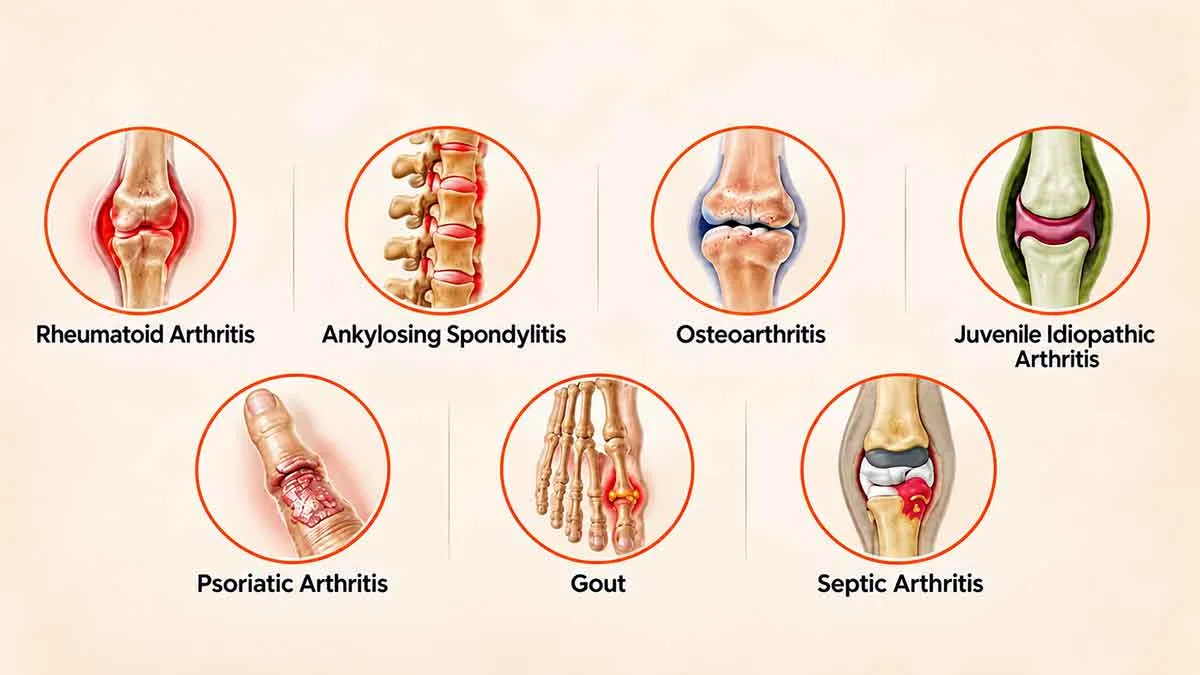
Types of Arthritis
Arthritis is an umbrella term for multiple conditions, each with different characteristics and symptoms:
- Osteoarthritis: It is the most common type of arthritis. It involves progressive changes in several joint tissues, including cartilage and underlying bone. This happens due to wear and tear of cartilage, causing bones to rub against each other, leading to pain and stiffness.
- Rheumatoid arthritis: It is a chronic autoimmune disease in which the immune system of the body mistakenly attacks the joint lining, called the synovium. In this, the pain is usually on both sides of the body, and it can harm other body parts also.
- Gout: It is an inflammatory arthritis caused by urate crystal deposition in and around joints. It commonly causes sudden attacks of pain, swelling, redness, and tenderness in the joints, mainly in the big toes of the feet.
- Psoriatic Arthritis (PsA): This condition is linked with people who are suffering from a skin condition named psoriasis. The symptoms include joint stiffness, skin rashes, and changes in your fingernails and toenails.
- Ankylosing Spondylitis: It is a type of inflammatory arthritis that affects the joints of your spine and can cause the bones of the spine to fuse together over time. It usually causes pain and stiffness in the lower back, neck, and hips.
- Juvenile Idiopathic Arthritis: It is the most common type of arthritis in children, usually before the age of 16. It happens when the immune system becomes overactive and causes inflammation in the body.
- Septic Arthritis: It is a painful and serious joint infection that needs urgent medical attention.
Check out our Types of Arthritis: Osteoarthritis, Rheumatoid Arthritis and More page for more.
Common Warning Signs of Arthritis
Different types of arthritis have different symptoms, but the early warning signs have some similar patterns. The most common sign is joint pain that can flare up while moving, working, or even resting. Along with the pain, you might feel heavy stiffness, especially in the morning. If you have rheumatoid arthritis, then the inflammation can cause swelling, redness, or puffiness in the joints. Slowly, you may find it difficult to do daily activities because of the fatigue and weakness. If you have gout, then your big toe may get swollen. Some people may also experience grinding, popping, or cracking sounds, commonly in osteoarthritis. If you notice any of the symptoms in your body, it is good to talk to your doctor for treatment.
Check out our Symptoms of Arthritis page for more.
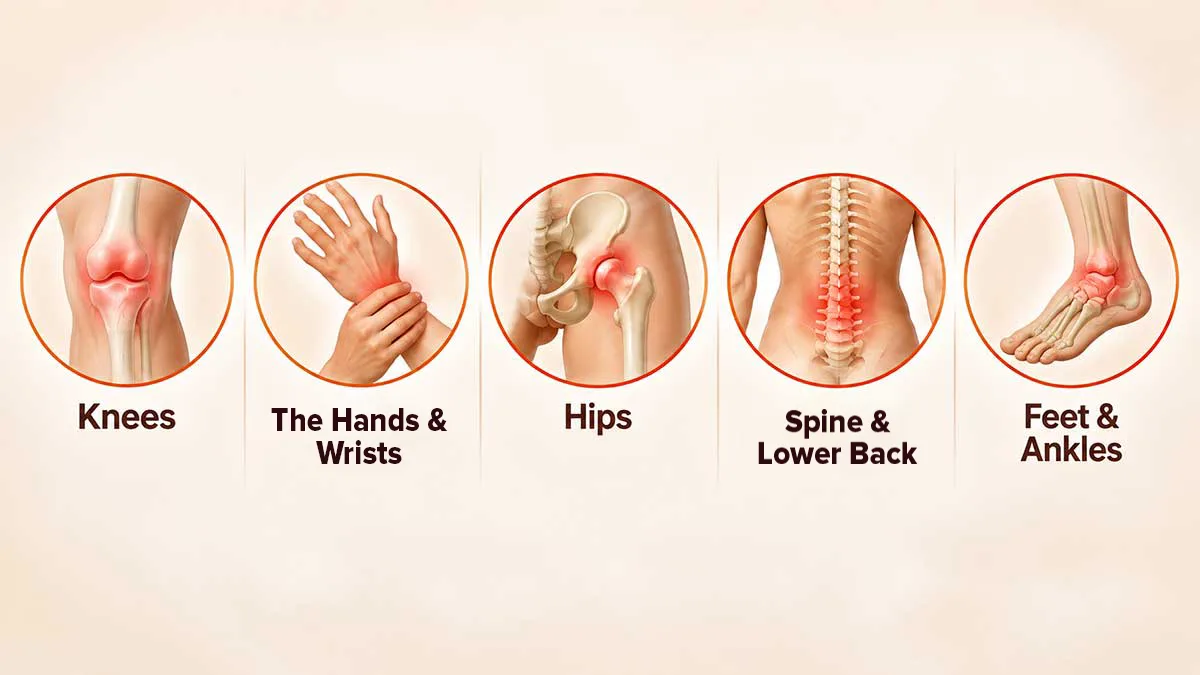
Which Joints Are Usually Hurt?
While joint pain can happen in different parts of the body, arthritis can affect specific parts, which are explained below:
- Knees: Because they carry body weight, the knees are the most common spot for the soft cushion to simply wear away over time.
- The hands & wrists: Rheumatoid arthritis often starts with knuckle pain in the wrists. On the other hand, osteoarthritis attacks the fingertips and the thick base of the thumb.
- Hips: Similar to knees, the hips bear a heavy daily load. When arthritis hits here, you will feel a deep pain in your hips and outer thighs.
- Spine & lower back: The spine has dozens of tiny joints. Normal ageing can dry out the cushions here, making them weaker.
- Feet & Ankles: Immune arthritis usually causes swelling and pain in the toes, ankles, and feet.
Patient Success Stories
Arthritis Symptoms
Joint pain and tenderness
This is usually the first symptom. You might have a dull ache or a sharp pain in your knees, fingers, wrists or back. The pain can become worse following physical exercise or at the end of the day.
Stiffness, especially in the morning
Do your joints feel tight in the morning or after sitting for long periods? That stiffness is a sign of arthritis. It may be there for some time before you can move around again comfortably.
Swelling and redness around the joints
Your joints may look bigger than usual or feel puffy and warm because of arthritis inflammation. This swelling may come and go or may last for some time depending on your arthritis type.
Decreased range of motion
If it is harder than usual to move your joints, or if you are struggling to bend or straighten them completely, it may be due to arthritis. You might have to avoid certain movements because of the discomfort.
Fatigue and a general feeling of discomfort
Due to the constant discomfort, you may feel more exhausted than before.
In severe cases, deformities of the joints
In serious cases, arthritis can even cause deformities in your joints along with severe pain and restricted movement.
Warmth or redness
The skin around your joints may feel warm or red. This is another sign of inflammation in your joints.
Flare-ups
Some forms of arthritis occur in an episodic fashion. You might be fine one moment and then suddenly, your symptoms may get worse. These are called flare ups and are generally caused by stress, certain foods or cold weather.
Daily Activities Affected By Arthritis
Arthritis not only causes joint pain but also affects your ability to do daily tasks. Here are the most common daily activities affected by joint pain:
- It makes it difficult to do even personal tasks such as bathing, showering, grooming, and dressing.
- Kitchen chores such as opening jars, holding utensils, making coffee, and cooking become a challenge because of wrist pain.
- Household chores such as vacuuming, carrying groceries, and doing laundry also become difficult because of back or spine pain.
- Day-to-day physical activities such as walking, climbing stairs, driving, and shopping start causing physical discomfort because of joint pain.
Check out our Knee Arthritis: Symptoms, Daily-Life Problems and Management page for more.
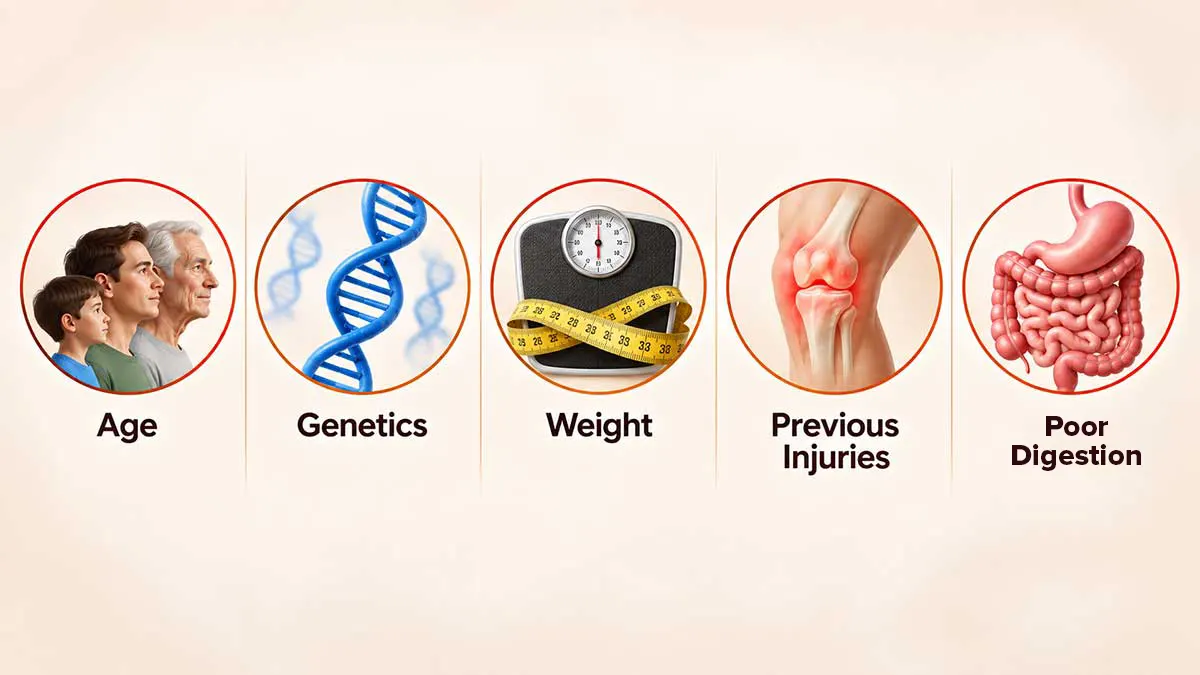
What Causes Arthritis and Who Is at Risk?
Joint pain does not happen for one single reason. The actual reason behind the disease depends on what exactly is happening inside the body. Here are the most common reasons behind arthritis:
- Age: As we get older, our bones also start getting weaker.
- Genetics: Certain genetic factors may increase susceptibility to some arthritis types, but it is not necessary that future generations can also develop arthritis.
- Gender: Sex-related risk differs by condition: rheumatoid arthritis is more common in women, while gout is more common in men.
- Weight: If a person has extra weight in their body, then it can also cause knee pain or joint pain as they carry all their body weight.
- Previous Injuries: If a person has had any previous injury or surgery, then it can cause joint pain later.
- Immune & Metabolic Factors: In conditions like rheumatoid or psoriatic arthritis, your immune system mistakenly attacks your joints. Altered urate metabolism causes gout.
Knowing the cause is the first thing that one should do for proper management and treatment of the disease. Check out our Causes of Arthritis page for more.
Diagnosis of Arthritis
Both modern medicine and Ayurvedic treatment diagnose arthritis accordingly, which includes the following:
How Does Modern Medicine Diagnose Arthritis?
- Physical Examination: The doctor will check your range of mobility, swelling, redness, instability, and warmth (Which indicates active inflammation).
- X-Ray: This is done to check classic issues such as osteoarthritis, to check whether the cartilage is damaged or not, bone spurs, or bone-to-bone contact.
- Blood Test: It is done to detect inflammation markers, autoimmune activity, and uric acid levels for gout through laboratory tests.
- Medical History & Symptom Assessment: The doctor will ask about the duration, nature, and intensity of the pain. If you have morning stiffness that lasts for hours, then it might be due to inflammation, and if you have brief stiffness due to physical inactivity, it may be due to wear and tear of the joint.
- MRI: It provides a detailed view of both bones and soft tissues ( ligaments, cartilage, and tendons). It is very good for detecting autoimmune arthritis at its earliest stage.
- Checking the Joint Fluid: If they suspect gout or a deep infection, they might take a bit of fluid from the joint very safely and check it further.
- Ultrasound: It helps doctors to see real-time inflammation in the joint lining and fluid accumulation before damage even shows.
How Does Ayurveda Diagnose the Problem?
Along with the doctor's diagnosis, an Ayurvedic check-up depends on certain tests. It also looks at your whole life, not just your symptoms:
- Checking Your Natural Energy (Prakriti & Vikriti): The doctor will check and evaluate which of your body energies- Vata, Pitta, and Kapha (Prakriti) is imbalanced in your body. Your Vikriti, which is your present state of imbalance caused by diet, stress, or seasons.
- Checking Your Digestive Fire (Agni): The doctor will ask you about your digestion. If your digestion is weak, then it can cause Ama buildup in your body.
- Checking Your Strength (Bala): They will look at your overall strength and natural immunity to see how well your body can handle the healing process.
- Reading Your Pulse (Nadi Pariksha): They might gently feel the pulse on your wrist. In Ayurveda, pulse reading acts as a roadmap showing how the energies and fluids are moving inside your body.
- Reviewing Your Daily Habits: They will ask detailed questions about what you eat, when you eat, how you sleep, when you sleep, and your daily activities to find the hidden triggers causing you pain.
An Ayurvedic doctor may also check your X-rays, ultrasound, or MRI and blood reports. They may also do a physical examination and symptom assessment to check further.
Ayurvedic Understanding of Arthritis
Ayurveda does not use a single term to describe the condition; it names it according to what is actually going on inside your body. If you have wear-and-tear arthritis, Ayurveda calls it SandhiVata. If your joints are hot, swollen, and stiff, like rheumatoid arthritis, it is called aamvata. If you have intense flare-ups like gout, it is known as Vatarakta, which happens when dry heat mixes directly with impurities in your blood,
Ayurvedic Treatment Approach For Arthritis
In Ayurveda, the goal is not only to calm the pain but to fix the problem internally and bring the whole body into balance. It focuses on:
- Fixing Your Digestion: If your digestion is weak, then they will focus on making it strong again so that it can process food properly and the body stops making new toxins.
- Removing Toxins From Your Body: Once your body stops making new toxins, the focus shifts to pulling the old, trapped toxins out of your joints. Doctors use specific cleansing herbs and certain therapies to fix it.
- Calming the Vata Dosha: Another step is to calm the aggravated Vata Dosha in the body through various methods such as herbal and Panchakarma therapies.
- Dietary Guidelines: It suggests warm, freshly cooked food, healthy fats, and anti-inflammatory spices such as ginger, turmeric, or garlic to add to your food. It asks you to avoid processed, refined, packaged food for better health.
- Yoga & Meditation: The mind-body processes create a beneficial effect that reduces stress while boosting emotional resilience through its stress reduction, body relaxation, and emotional balance techniques.
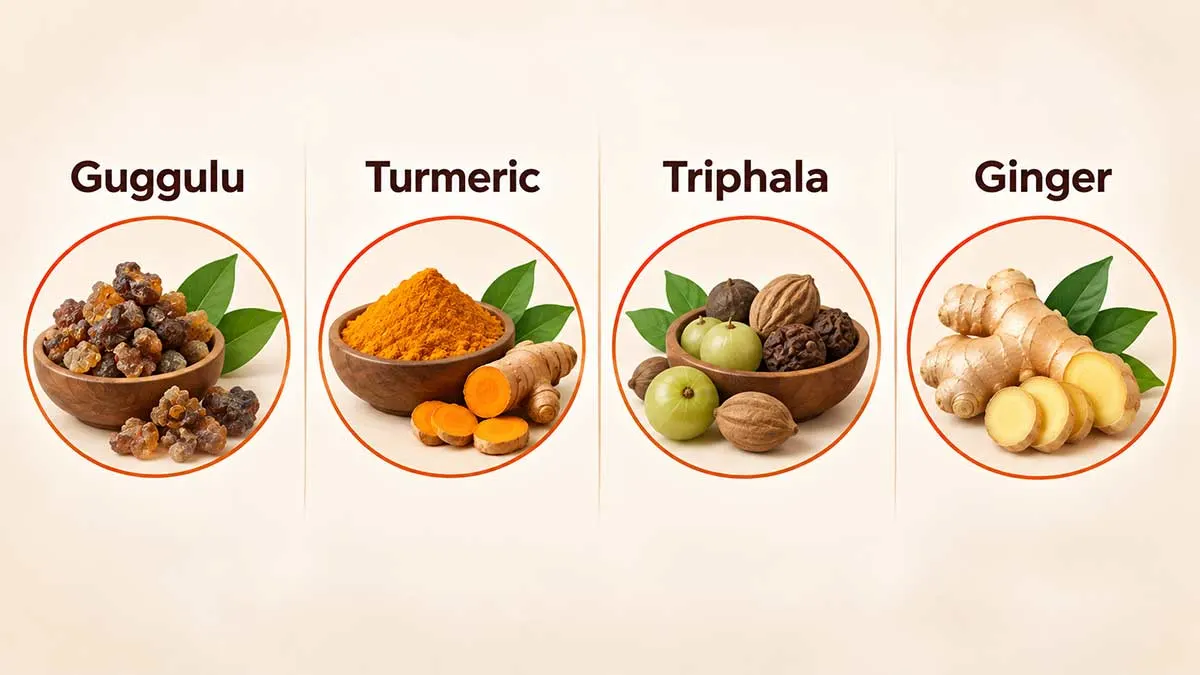
Ayurvedic Medicines Used For The Treatment of Arthritis
In Ayurveda, there is no one-size-fits-all magic pill. Instead of giving the same herb to everyone, an Ayurvedic expert will give specific medicines entirely on the basis of your unique symptoms and body type. Depending on what your joints need, they may recommend herbs like ginger, turmeric, triphala, and guggulu. However, you should never guess which one to take on your own. If you want to learn more about specific herbs, you can check out our detailed page on Ayurvedic Medicines for Arthritis.
Ayurvedic Therapies For Treating Arthritis
Ayurveda provides many healing therapies that help in reducing joint stiffness, swelling, and redness and establish internal balance in the body.
- Abhyanga: This therapy involves heated herbal oil massages that help in blood circulation to decrease muscle and joint pain.
- Panchakarma: It involves many therapies such as vamana, virechana, and basti to remove toxins from the body. This therapy helps in improving digestion and bringing the body into equilibrium.
- Swedana: It is a herbal steam therapy that is beneficial for your joints. It helps in reducing pain and stiffness in your joints.
All these therapies must be done under the expert guidance of an Ayurvedic practitioner for better treatment.
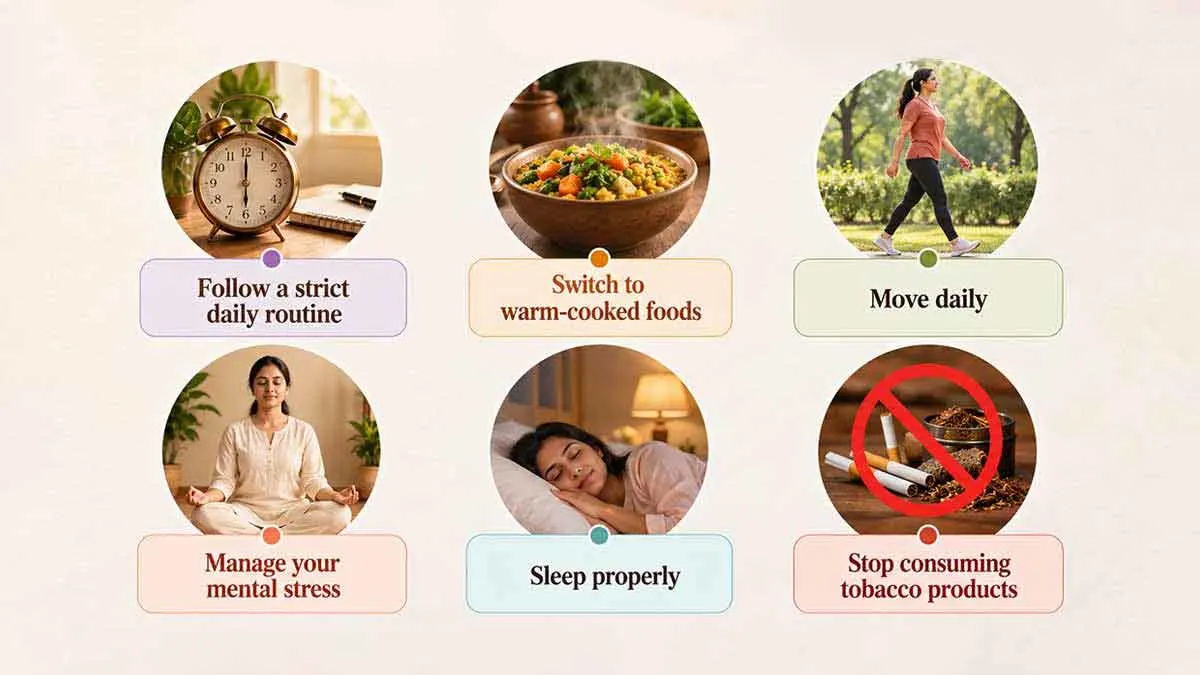
Lifestyle Measures to Support Joint Health and Arthritis Management
Ayurveda relies heavily on making small, simple changes to how you live day to day to keep your joints healthy and moving smoothly.
- Follow a strict daily routine: Eating your meals and going to sleep at the same times every single day is an effective way to calm down the nervous system, moving Vata energy that dries out your joints.
- Switch to warm-cooked foods: Avoid refrigerated food and iced cold water. Sticking to warm, freshly cooked meals keeps your digestion strong.
- Move daily: Appropriate movement can support mobility and muscle strength, while exercise intensity should be adapted to the arthritis type, affected joint, and current inflammation.
- Manage your mental stress: Deep worry and anxiety actually increase Vata energy in the body, which can contribute to sudden pain flare-ups. Taking a few minutes to simply sit quietly and breathe deeply actually helps keep you and your joints relaxed.
- Sleep properly: Proper rest is very important for your body. Get a proper sleep of 7-8 hours a day to keep your mind and body active.
- Stop consuming tobacco products: Avoid alcohol and tobacco because they contain substances that can harm your health. These substances can cause harm to your body.
Red Flags To Watch Out For
While Arthritis happens slowly over time, joint pain can be a sign of a serious problem.
- If you have persistent joint pain, stiffness, or swelling.
- If you have difficulty moving your joints.
- If your joints stay stiff in the morning for hours.
- If you experience redness or warmth around the joints.
- If your joint pain is preventing you from doing even your daily activities such as walking or gripping objects.
If you experience these red flags, then immediately see a doctor.
How We Assess Arthritis Patients at Jiva Ayurveda
At Jiva Ayurveda, our doctors start with a careful checkup to figure out what exactly is causing joint pain. This involves looking at.
- Your current symptoms, such as joint pain, stiffness, swelling, or trouble moving and bending your joints.
- Your medical history and any past treatment that you have taken for arthritis.
- What you eat and how you live day to day, since these habits directly affect your joints.
- Your daily stress, sleep quality, and digestion, which are also considered during an Ayurvedic assessment.
- Any other health problems you have or medicines you are currently taking.
Once they have all the information, the doctors create a personalised Ayurvedic treatment plan aimed at treating the joint pain and improving daily comfort.
Our Step-by-Step Care Process
When you come to Jiva Ayurveda, we want your healing journey to feel simple, personal, and completely stress-free. Here is exactly what you can expect when you start your treatment with us:
- Get In Touch: Leave your details with us or just give us a call directly on +91 9266714040.
- Book Your Slot: Meet our doctors at your convenience by visiting one of our 80+ clinics nationwide, or booking a video call for just Rs. 49 (down from 299).
- Finding the root cause: Our doctors assess the factors contributing to your condition, including the arthritis type, medical history, lifestyle, and Ayurvedic assessment.
- Personalised treatment plan: After understanding your problem, we will make a personalised treatment plan that will be tailored just for you.
- We Stay With You: The process is not just about prescribing medicines. We stay in touch with you to see how you are doing and adjust your treatment regimen accordingly.
Patient Testimonial – Ranjana
“I started experiencing arthritis symptoms in 2016. At night, my hands would become numb while sleeping, and I also had stiffness and discomfort in my joints. These problems gradually started affecting my daily routine.
Later, I decided to try Ayurvedic treatment at Jiva Ayurveda. The doctors carefully understood my condition and suggested a personalised treatment plan. After following the medicines and lifestyle advice regularly, I started noticing improvement. The numbness in my hands reduced, and my joint discomfort became much better. I feel much more comfortable now and can manage my daily activities with greater ease.”
Estimated Cost of Treatment for Arthritis at Jiva Ayurveda
Knowing how much your treatment will cost is important. At Jiva Ayurveda, we keep our pricing clear and upfront so you can choose the right plan for your health according to your needs.
Treatment Cost
If you are looking for regular, ongoing support, the starting cost for your medicines and doctor's consultation is usually between Rs 3000 and Rs 3500. Just keep in mind that this is just the baseline cost; the real cost may vary depending on the severity of the disease.
Protocol
For a deeper step-by-step approach, we offer specific healing packages that last for 3 to 4 months. You make a one-time payment ranging from Rs 15000 to Rs 40000 for the entire period.
The package includes:
- All medicines and doctor visits
- Hands-on physical therapy
- Customized diet plans, Yoga and meditation therapies
- Mental well-being support session
Why Should You Choose Jiva Ayurveda?
Jiva Ayurveda provides customised and root-based Ayurvedic treatment that is primarily focused on providing health and wellness solutions for specific patients.
- Patient-specific treatment: Jiva’s therapy and treatments are structured by professional doctors for unique prakriti, diet, and lifestyle.
- Root-based Treatment: Jiva focuses on the specific root cause of the health condition or disease rather than focusing only on formal medicines; we focus on the internal problem.
- Authentic Ayurvedic medicines: Jiva provides authentic Ayurvedic medicines; we follow strict quality parameters to ensure safety and effectiveness.
- Protocol- based Analysis: We follow research-backed clinical methods to provide structured assistance to our patients.
- Assist 8000+ patients every single day: Jiva's doctors are specialised in a wide range of Ayurvedic healthcare, and every single day we assist more than 8000 people.
References
Arthritis - StatPearls - NCBI Bookshelf
Overview of Rheumatoid Arthritis and Scientific Understanding of the Disease - PMC
FAQs
While not all types can be completely prevented, you can reduce the risk by maintaining a healthy weight, exercising regularly, and avoiding joint injuries. A balanced diet and stress management also support joint health.
Low-impact exercises (walking, swimming, yoga), proper posture, avoiding repetitive joint strain, and quitting smoking help protect joints. Anti-inflammatory diets rich in fruits, vegetables, nuts, and omega-3s can also reduce risk.
Relief from pain and stiffness may be noticed in a few weeks with proper Ayurvedic care, diet, and therapies. Full improvement in joint flexibility and strength can take 2–3 months, depending on severity and consistency of treatment.
Yes. Gentle exercises, heat or cold therapy, stress reduction, and dietary adjustments can help manage flare-ups between professional treatments.
Ayurvedic medicines, Panchakarma therapies, diet, and lifestyle modifications work together to balance doshas, reduce inflammation, strengthen joints, and prevent future damage.
Results can be long-lasting with consistent lifestyle habits, proper care, and avoidance of triggers. Regular follow-up and preventive measures are essential for maintaining joint health.
Avoid processed foods, cold and raw foods, and excessive intake of red meat and fried foods, which can worsen inflammation.
In severe cases, untreated arthritis can cause permanent joint damage, leading to disability.
Panchakarma detoxifies the body, balances doshas, and rejuvenates the joints, improving flexibility and reducing pain.
It is ideal to seek Ayurvedic treatment at the onset of symptoms to prevent further progression of the disease.
Consult Experienced Ayurveda Doctors for Arthritis




















Our Happy Patients
-
 Sunita Malik - Knee Pain
 -
 Abhishek Mal - Diabetes
 -
 Vidit Aggarwal - Psoriasis
 -
 Shanti - Sleeping Disorder
 -
 Ranjana - Arthritis
 -
 Jyoti - Migraine
 -
 Renu Lamba - Diabetes
 -
 Kamla Singh - Bulging Disc
 -
 Rajesh Kumar - Psoriasis
 -
 Dhruv Dutta - Diabetes
 -
 Atharva - Respiratory Disease
 -
 Amey - Skin Problem
 -
 Asha - Joint Problem
 -
 Sanjeeta - Joint Pain
 -
 A B Mukherjee - Acidity
 -
 Deepak Sharma - Lower Back Pain
 -
 Vyjayanti - Pcod
 -
 Sunil Singh - Thyroid
 -
 Sarla Gupta - Post Surgery Challenges
 -
 Syed Masood Ahmed - Osteoarthritis & Bp
Diagnostic Marker
Blogs
- 3 Benefits of Golden Milk in Arthritis
- Jiva?s Ayunique Treatment for Osteoarthritis
- Early Diagnosis - The Key to Treating Arthritis
- Natural Options That You Must Try For Arthritis
- Panchakarma to Get Relief from Arthritis Pain
- How to Control Osteoarthritis in Old Age
- Relieving Osteoarthritis with the power of Ayurveda
- Simple home remedies for Rheumatoid Arthritis (Ama vata)
- Uses of Ginger to Get Relief from Arthritis
- Benefits of Turmeric in Controlling Arthritis
Home Remedies
Related Disease
- Ayurvedic Treatment for Ankylosing Spondylitis
- Ayurvedic Treatment For Cervical Spondylosis
- Ayurvedic Treatment For Arthritis
- Ayurvedic Treatment for Osteoarthritis
- Ayurvedic treatment for Gout
- Ayurvedic Treatment for Sciatica
- Ayurvedic Treatment for Rheumatoid Arthritis
- Ayurvedic Treatment for Frozen Shoulder
- Ayurvedic Treatment for Deep Vein Thrombosis (DVT)
- Ayurvedic Treatment for Achilles Tendon Disorders
- Ayurvedic Treatment for Rickets
- Ayurvedic Treatment for Ganglion Cyst
- Ayurvedic Treatment for Osteoporosis
- Get Ayurvedic Treatment for AVN Avascular Necrosis
- Get Ayurvedic Treatment For Osteomyelitis
- Cerebral Palsy Treatment in Ayurveda
Latest Blogs
- Is Fasted Intense Exercise a Good Idea for Every Woman
- Health Tracking Every Hour: Helpful Awareness Or Another Source Of Stress?
- फोन देखते हुए चलना सिर्फ accident risk नहीं—posture और breathing पर क्या असर पड़ता है
- Bloating Before a Period: Why Lifestyle Can Change How It Feels
- बहुत जल्दी खाना खाने से पेट भरने का signal देर से क्यों मिलता है
- ‘No Added Sugar’ Doesn’t Automatically Mean Low Sugar—Here’s Why
- Online meetings के बीच zero movement दिन के अंत में stiffness क्यों बढ़ाता है?
- Screen brightness और late-night work sleep readiness को कैसे बदलते हैं
- Warm Vs Cold Foods: How To Discuss The Ayurvedic Idea Without Turning It Into A Myth
- Noise-cancelling headphones घंटों पहनना mental fatigue को कम करता है या बढ़ा सकता है?
- Sugar-Free Biscuits: Better Choice Or A Health Halo?
- Why a Long Afternoon Nap Can Make Bedtime Surprisingly Difficult
- Scrolling While Eating: The Habit That Makes Meals Harder to Remember
- The Forward-Head Posture You Don’t Notice Until Evening
- Are Seed Mixes Useful—Or Just Easy To Overeat?
- Laptop on the Sofa: Why Neck and Hip Stiffness Show Up Later
- Why Your Eyes Feel Tired Even When Screen Brightness Seems Fine
- Is A Standing Desk A Complete Fix For Too Much Sitting?
- Why a Damp Bathroom Can Affect More Than Just the Walls
- When ‘Resting’ Means Scrolling: Is Your Brain Actually Recovering?
Ayurvedic Doctor In Top Cities
- Ayurvedic Doctors in Bangalore
- Ayurvedic Doctors in Pune
- Ayurvedic Doctors in Delhi
- Ayurvedic Doctors in Hyderabad
- Ayurvedic Doctors in Indore
- Ayurvedic Doctors in Mumbai
- Ayurvedic Doctors in Lucknow
- Ayurvedic Doctors in Kolkata
- Ayurvedic Doctors in Patna
- Ayurvedic Doctors in Vadodara
- Ayurvedic Doctors in Ahmedabad
- Ayurvedic Doctors in Chandigarh
- Ayurvedic Doctors in Gurugaon
- Ayurvedic Doctors in Jaipur
- Ayurvedic Doctors in Kanpur
- Ayurvedic Doctors in Noida
- Ayurvedic Doctors in Ranchi
- Ayurvedic Doctors in Bhopal
- Ayurvedic Doctors in Ludhiana
- Ayurvedic Doctors in Dehradun