 Published on
18 Jun, 2026
Published on
18 Jun, 2026 Updated on 18 Jun, 2026
 5123
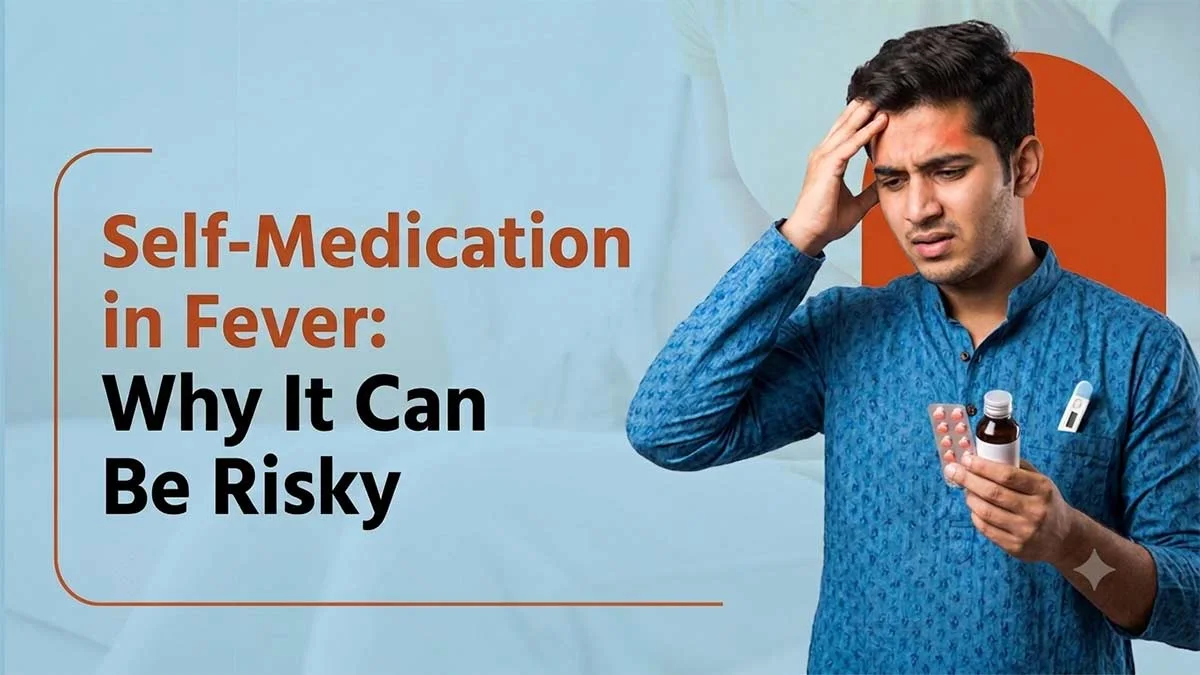
5123Fever shows up. You head straight to the medicine cabinet, pop something from the strip you bought three months ago, drink some water, and carry on with your day hoping it all sorts itself out by morning. No doctor, no prescription, no fuss.
And honestly, most of the time it feels like the sensible thing to do. Why book an appointment and wait two hours in a clinic for something that is probably just a seasonal bug?
Here is the thing though. That logic works right until it does not. And when it does not, it can really not work, in ways that catch people completely off guard.
Self-medication during fever is one of the most common things people do and one of the most quietly risky. Not because all medicine is dangerous, but because fever is not always what it looks like on the surface and treating it without understanding what is behind it can delay the right care at exactly the wrong time.
Fever Is Not the Problem. It Is the Signal.
This is the part most people skip over entirely. Fever is not actually the illness. It is your immune system doing its job, deliberately raising your body temperature to create an environment that is hostile to bacteria and viruses. It is one of the body's oldest and most intelligent defence mechanisms.
When you bring that fever down with medication the moment it appears, you are not treating the cause. You are silencing the alarm while the fire keeps burning. The underlying infection or illness continues doing what it was doing. The fever just stops telling you about it.
That is not always harmful. For mild viral fevers, bringing down the temperature for comfort makes complete sense. But when the cause of the fever is something more serious, suppressing it without investigating it can mean missing a critical window for proper treatment.
The Real Risks of Reaching for Medicine Without Guidance
Some of the major risks which are involved:
Taking the Wrong Medicine for the Wrong Fever
Not all fever medicines work the same way and not all of them are safe in every situation. This is the part that genuinely surprises most people.
Here is where it goes wrong most often:
- Taking ibuprofen or aspirin during dengue fever is not just unhelpful, it is dangerous. These medicines thin the blood and in dengue, where platelet counts are already dropping, they can significantly increase the risk of internal bleeding
- Aspirin given to children during viral fever is associated with a rare but serious condition called Reye's syndrome which affects the brain and liver
- Antibiotics taken for viral fevers do absolutely nothing since antibiotics target bacteria and viruses are completely unaffected by them. What they do instead is disrupt the gut microbiome, contribute to antibiotic resistance, and leave you with side effects and no benefit
- Combining multiple fever medicines without realising they contain the same active ingredient, like paracetamol showing up in a cold tablet and a separate fever tablet taken together, can push the total dose into dangerous territory for the liver
Masking Symptoms That a Doctor Needs to See
Fever medicines are very good at making people feel better temporarily. That is both their strength and their risk in the context of self-medication.
When you bring a fever down and feel better for a few hours, it becomes very easy to decide the situation is improving and delay seeing a doctor. But the underlying cause has not changed. And some conditions, dengue, typhoid, malaria, pneumonia, urinary tract infections that have spread, all present with fever in early stages and all need specific diagnosis and treatment that no over-the-counter medicine provides.
By the time the medicine wears off and the fever comes back higher, more time has passed and the illness has progressed further. This delayed diagnosis pattern is one of the most common ways that manageable infections become serious ones.
Incorrect Dosing and Timing
Medicine cabinet pharmacy is a real phenomenon. People take doses they remember from last time, or match what a neighbour suggested, or take an extra tablet because the first one did not seem to work fast enough.
The consequences of incorrect dosing are real:
- Paracetamol overdose is one of the most common causes of acute liver damage globally and it does not require a dramatic amount. Regularly taking slightly more than the recommended dose over a few days is enough to cause significant harm
- Taking doses too close together because the fever comes back before the next dose is due is extremely common and genuinely risky
- Using adult doses for children or adjusting based on guesswork rather than actual weight-based dosing guidelines causes harm that parents never see coming
Dependency and Delayed Recovery
Here is a subtler risk that does not get talked about enough. When you reach for medicine at the first sign of every fever, you train yourself to suppress the body's natural immune response rather than support it. Mild fevers, especially in otherwise healthy adults, are often best managed with rest, hydration, and monitoring rather than immediate medication.
Consistent early suppression of fever can actually prolong recovery in mild viral illnesses by interrupting the immune process before it has done its work properly.
What Ayurveda Says About Fever and Why It Is Relevant Here
Ayurveda has a deeply nuanced approach to fever that lines up surprisingly well with what modern medicine says about not over-medicating every temperature spike.
In Ayurveda, fever is called Jwara and is considered one of the most important illness states the body moves through. The classical texts describe fever as Agni, the body's fire, moving from the digestive system into the tissues as a response to infection or imbalance. The Ayurvedic approach in the early stages of fever is not to suppress it immediately but to support the body through it.
A few Ayurvedic principles for managing fever wisely:
- Light food or fasting in the early stage of fever. Ayurveda strongly advises against heavy meals during active fever because digestion is already compromised and heavy food adds more burden to a system that is already working hard. Warm water, thin khichdi, and light soups are the classical recommendations
- Tulsi, ginger, and black pepper are classical Ayurvedic fever supports that help the body manage the immune response without suppressing it. Tulsi tea with ginger and a pinch of black pepper is one of the oldest and most trusted fever remedies in the Indian tradition and it works by supporting the immune process rather than switching it off
- Giloy is specifically mentioned in classical Ayurvedic texts for Jwara and has been extensively studied in modern research for its immunomodulatory and anti-inflammatory properties. It supports the body through fever without the risks that come with inappropriate self-medication
- Rest and hydration above everything else. Ayurveda, like modern medicine, places rest and fluid intake at the absolute foundation of fever management. These two things do more for recovery than most medicines in mild cases
When You Absolutely Need to See a Doctor
This is the most important part of this blog and worth reading carefully. Home management of mild fever is reasonable in healthy adults. But there are specific situations where seeing a doctor is not optional and should not be delayed.
Go to a doctor without waiting if:
- Fever is above 103 degrees Fahrenheit or 39.4 degrees Celsius in an adult
- Fever in a child under three months is any reading above 100.4 degrees Fahrenheit and needs immediate attention
- Fever has lasted more than three days without clear improvement
- Fever comes with a rash, severe headache, stiff neck, or sensitivity to light
- There is persistent vomiting, severe abdominal pain, or difficulty keeping fluids down
- Breathing feels laboured or chest pain develops alongside the fever
- You have recently travelled to an area where malaria, dengue, or typhoid are common
- The fever keeps returning after breaking, suggesting a pattern rather than a simple viral illness
- The person with fever is elderly, pregnant, immunocompromised, or has diabetes or kidney disease
The Sensible Middle Ground
None of this means you should panic at every temperature rise or rush to a clinic for every mild fever. It means being informed enough to know the difference between a fever you can manage at home and one that needs professional assessment.
The sensible approach looks like this:
- Monitor the fever properly with an actual thermometer rather than guessing by touch
- Stay hydrated with warm water, coconut water, or oral rehydration solutions
- Rest properly instead of trying to push through
- Use paracetamol at the correct dose and timing for comfort if needed, not as the first instinct at every temperature blip
- Avoid ibuprofen, aspirin, and antibiotics unless specifically prescribed by a doctor
- Use Ayurvedic support like Tulsi, Giloy, and ginger to support the immune response alongside monitoring
- Know the red flags and act on them promptly instead of waiting to see if things improve on their own
The Bottom Line
The medicine cabinet is not a substitute for medical judgment and a fever is not always just a fever. Most of the time it probably is and that is fine. But some of the time it is dengue or typhoid or something else entirely that needs specific treatment, and those situations do not announce themselves differently in the beginning.
Self-medication in fever is risky not because medicine is harmful but because diagnosis matters and timing matters. Suppressing a fever without understanding its cause can make a manageable illness into a complicated one simply by buying it more time.
Monitor carefully. Medicate sensibly. Know when to ask for help. And maybe do not rely entirely on the advice of whoever is in your phone contacts who once studied medicine for a year.
References:
World Health Organization. Rational Use of Medicines and Self-Medication Risks. Available at: https://www.who.int/medicines/areas/rational_use/en
National Health Portal, Government of India. Fever Management and When to Seek Medical Care. Available at: https://www.nhp.gov.in/disease/fever
Ministry of AYUSH, Government of India. Ayurvedic Guidelines for Fever Management. Available at: https://main.ayush.gov.in