Diseases Search
Close Button


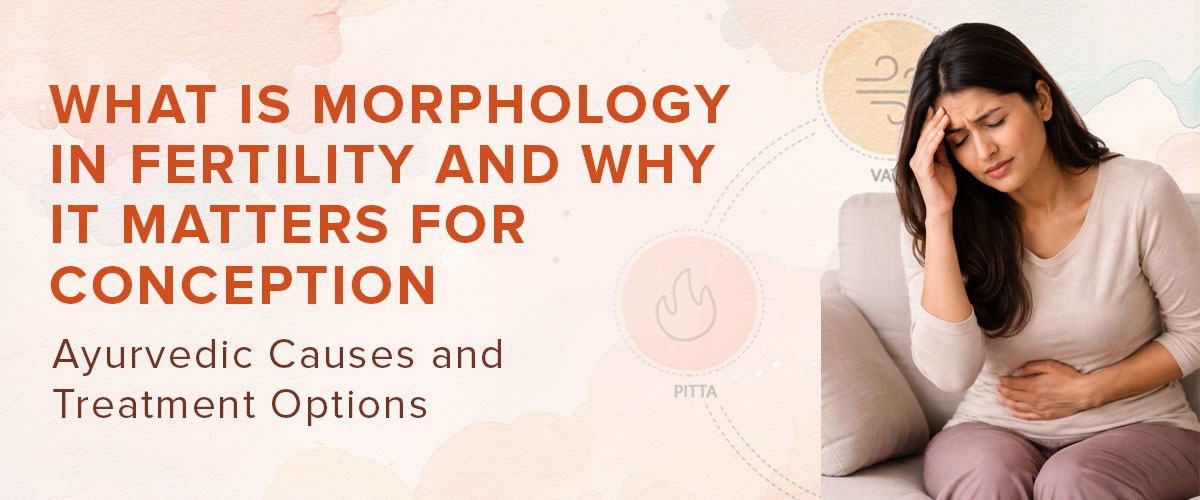
What Is Morphology in Fertility and Why Does It Matter for Conception

Information By Dr. Keshav Chauhan
  • category-iconPublished on 03 Apr, 2026
  • category-iconUpdated on 03 Apr, 2026
  • category-iconWomen's Health
  • blog-view-icon5006

Fertility is often reduced to clinical metrics, sperm count, ovulation cycles, and hormone levels. But beneath these numbers lies a more nuanced and critical factor: morphology.

The reproductive health area, which people frequently overlook, has crucial importance for achieving successful conception. The term morphology describes how reproductive cells maintain their structural integrity while displaying their highest potential form. Ayurvedic medicine considers this to be the highest demonstration of your internal well-being because it shows the perfect condition of Shukra Dhatu, which is also known as reproductive tissue. When the body loses its correct form, it indicates that all its most advanced systems have fallen into a state of disorder.

What Does "Morphology" Mean in Fertility?

Morphology is about the shape and structure of sperm. It looks at quality, not quantity. How well are they formed, not just how many there are? A sperm may be plentiful. Move well, but if its structure is not right, it can't fertilize an egg properly.

Why Sperm Morphology Matters in Conception

Conception is not merely about reaching the egg. It is about penetrating it. A properly shaped sperm is designed for this precise function. Deviations in form can hinder movement, reduce efficiency, and ultimately affect fertilization success.

Understanding Sperm Structure

The architecture of a sperm cell is a marvel of biological engineering, with each section serving a specialized purpose. In Ayurveda, this structural perfection is the result of the body’s ability to refine nutrients into the Shukra Dhatu (reproductive tissue).

  • The Head: This part is like the boss of the sperm cell. It carries all the information that will help make a baby. It also has a cap called the acrosome that helps the sperm cell get into the egg. If something is wrong with the head, it can be hard for the sperm cell to get into the egg.
  • The Midpiece: This part is like the power house of the sperm cell. It has lots of things called mitochondria that give the sperm cell the energy it needs to swim to the egg. If the midpiece is not working properly, the sperm cell can get tired. Didn't make it to the egg.
  • The Tail: This part is like the sperm cell's engine. It is long and thin. Helps the sperm cell move in a straight line. If something is wrong with the tail, the sperm cell can not move well or maybe not at all. The sperm cell needs a tail to swim to the egg. The Tail of the sperm cell is really important because it helps the sperm cell get to where it needs to go.

What Is Normal vs. Abnormal Morphology?

The production process generates millions of sperm, but their actual success rate relies on their particular body dimensions and shape characteristics. 

Normal Morphology: A healthy sperm presents a typical shape that includes an oval head, a straight midpiece, and a single tail that functions properly. The streamlined design of this product enables users to achieve their fastest speed while accessing the deepest penetration range. 

Abnormal Morphology: The abnormal morphology category includes sperm that show double-headed characteristics, permanent body damage from coiled or bent tails, and irregular head features, which include both oversized and undersized dimensions. The structural changes that occur from even minor variations lead to performance declines because they make it impossible for sperm to move properly and connect with eggs.

Causes of Poor Sperm Morphology

In Ayurveda, the quality of cells is the final product of a 30-day metabolic cycle. When this cycle is disrupted by stressors, the structural integrity of the seed is the first to suffer.

  • Lifestyle Factors: These involve factors such as smoking, drinking alcohol, and eating a lot of processed sugars, which are not good for the body. These things create inflammation in the body. This inflammation hurts the DNA and the physical structure of sperm. Also, when people do not move around a lot, the blood does not flow well to the region.
  • Environmental Toxins: These involve factors such as pollutants, heavy metals, and pesticides, which are very bad for the body. These toxins can change the shape of sperm at a cellular level. This means the sperm can become deformed and cannot work correctly.
  • Medical Conditions: These involve imbalances and infections, and physical issues like varicocele, which can interfere with the cooling mechanism that is needed for sperm development. In Ayurveda, people think that excess Pitta or heat can hurt these reproductive tissues; it is like the heat is scorching the reproductive cells.

Can You Conceive with Poor Morphology?

Yes, but it may take longer. While conception is still possible because a percentage of sperm remains structurally normal, poor morphology reduces the overall probability of fertilization. In Ayurveda, this is viewed not as a permanent "score" but as a 90-day window for improvement. 

Ayurvedic Understanding of Morphology in Fertility

In Ayurveda, the shape of sperm is not the thing that matters. The quality and strength of the tissue, which is called Shukra Dhatu, is also very important for fertility. When Shukra Dhatu is healthy, it means that the reproductive tissue is well nourished. When there are problems with the shape of sperm, it can mean that there are bigger problems in the body.

Ayurveda says that Shukra Dhatu is made strong through a process that starts with digestion. When the digestive fire, which is called Agni, is working well, the body can absorb the nutrients it needs and use them to make tissues, including Shukra Dhatu. But when digestion is not working well, it can lead to the formation of toxins, which are called Ama, and these toxins can hurt the quality of sperm, including its shape.

The balance of the Doshas is also very important.

  • Vata imbalance can cause problems with the shape of sperm. Make them form in weird ways.
  • Pitta imbalance can make the body too hot. Hurt the quality of sperm.
  • Kapha imbalance can make the reproductive tissue develop slowly and not work well.

From the point of view, when the shape of sperm is not normal, it is not just a problem with the sperm itself. It is a sign that the body's systems, like digestion and metabolism, are not working the way they should. This means that the body is not nourishing its tissues, including Shukra Dhatu, in the right way. 

Jiva Ayurveda’s Approach to Improving Morphology

Issues with sperm shape are often a sign that the body’s balance, especially Shukra Dhatu and Doshas, is not right. Jiva Ayurveda does not just try to fix sperm shape for a short time. It tries to understand why the quality is poor and works on fixing it from the start. It focuses on improving overall reproductive health by strengthening digestion, reducing toxins, and restoring balance over time.

  • Check-up: Jiva Ayurveda starts by understanding your body type (Prakriti), Dosha imbalance, how well you digest food, and your daily habits. This helps find the reason for poor sperm shape.
  • Fixing the root cause: Instead of just looking at sperm parameters, Jiva Ayurveda focuses on issues like weak digestion, stress, toxin buildup, or an unhealthy lifestyle that affect sperm quality.
  • Balancing Doshas: Therapies and lifestyle changes are used to balance Vata, Pitta, and Kapha. This helps in the proper formation and development of healthy sperm.
  • Fixing digestion: Jiva Ayurveda works on improving digestion so that nutrients are absorbed properly. Good digestion helps in the nourishment of Shukra Dhatu.
  • Removing toxins: Accumulated toxins are cleared from the body to create a better environment for sperm production.
  • Herbal support: Customized Ayurvedic herbs are given to improve health, support metabolism, and enhance sperm quality over time.
  • Diet and lifestyle changes: A fertility-supportive diet, stress management, proper sleep, and a balanced daily routine are recommended to maintain long-term improvement and prevent recurrence.

Ayurvedic Medicines for Improving Sperm Morphology

In Ayurveda, treating the body is about giving the tissue the deep nutrition it needs to make a perfect seed. These medicines help get rid of toxins and cool the body down to prevent problems with the way things are shaped.

  • Gokshura is a herb for reproductive health. It is like a helper that makes sperm stronger and better. It also helps clean out the reproductive tracts of bad stuff.
  • Ashwagandha is known as a herb that helps people feel more interested in love. It gives sperm the strength and nourishment they need to have energy to reach the egg.
  • Shatavari is a cooling herb that's really good at balancing the body. It reduces the heat inside that can make sperm heads get shapes or tails get broken, and it also helps keep the cells hydrated.
  • Shilajit is a mineral that helps the nutrients from the food we eat get to the deepest parts of the reproductive tissue. It helps make sure the genetic material in the sperm head is correct.

Ayurvedic Therapies for Improving Sperm Morphology

To change the shape of the seed, we must change the environment of the soil. These therapies clean out the channels and regulate body temperature.

  • Virechana therapy is very important for balancing Pitta. It removes heat and bad stuff from the liver and digestive tract. This stops the sperm cells from getting damaged when they are developing.
  • Uttar Basti is a therapy where medicine is put into the body through the urethra. It helps the organs by clearing out blockages and giving them the nutrients they need.
  • Abhyanga is a type of massage that uses cooling oils like Kshirabala. It helps reduce stress and lowers body temperature. This creates an environment that is good for sperm to develop.
  • Shirodhara is a therapy that calms the system. The pituitary gland controls the hormones that help make sperm. So Shirodhara helps by making sure the hormones are balanced. This is necessary for sperm to develop properly.
  • Pitta-Shamak Basti is a type of enema therapy. It targets the parts of the body where Vata and Pitta are. It cleans out the colon. Reduces the bad heat and air that can hurt the reproductive cells.

Dietary Guidelines for Enhancing Sperm Morphology

Food Category Recommended (To Favour) Avoid / Limit (To Reduce)
Grains Whole wheat, Basmati rice, Quinoa, Oats. Refined flour (Maida), White bread, Instant noodles.
Vegetables Asparagus (Shatavari), Zucchini, Pumpkin, Sweet potatoes, Carrots. Canned vegetables, excessive Raw onions, Garlic, Green chillies.
Fruits Pomegranates (excellent for Shukra), Sweet Mangoes, Dates, Figs, Grapes. Sour citrus fruits, Unripe pineapple, Papaya (excessive heat).
Proteins & Dairy A2 Cow’s Milk, Ghee, Soaked Almonds, Walnuts, Moong Dal, Tofu. Processed meats, Soy protein isolates, Aged/Salty cheeses, Red meat.
Spices & Oils Turmeric, Fennel, Cardamom, Saffron, Olive oil, Coconut oil. Red chili powder, Vinegar, Mustard oil, and excessive salt.

How Patients Are Assessed at Jiva Ayurveda

Our assessment focuses on identifying why sperm morphology is affected and how internal imbalances are impacting overall reproductive health, to restore natural fertility.

  • Detailed analysis of reproductive health patterns, including semen quality and any history of fertility concerns.
  • Assessment of symptoms such as low energy, stress, poor libido, or hormonal imbalance.
  • Identification of the dominant imbalance, typically Vata (irregular formation) or Pitta (heat-related damage).
  • Examination of digestive fire (Agni) and toxin accumulation (Ama), which can affect sperm development.
  • Comprehensive review of sleep quality, energy levels, and mental stress.
  • Evaluation of dietary habits (like processed food, alcohol, or nutrient deficiencies) and lifestyle patterns.
  • Assessment of daily routine, physical activity, and environmental factors that may impact sperm quality.

Our Step-by-Step Care Process 

At Jiva Ayurveda, every process of the treatment is carried out in an organised and structured manner to give you the best personalised experience of Ayurvedic treatment for thyroid and digestive issues. 

1. Share Contact Details: After submitting your details, you can also reach out to us directly at 0129 4264323 to start the consultation process and get your metabolic issues treated.

2. Appointment Confirmation: An appointment with our experienced and well-trained Ayurvedic doctors specialising in thyroid and digestive issues is arranged for you. You can choose to consult with our doctors in the mode that best suits you:

  • Clinic: We have over 80 Jiva clinics in different cities, and you can come to the nearest clinic to consult with our doctor face-to-face.
  • Video Consultation (Rs. 49): In case you are not able to locate our clinics in your city, you can also consult with our doctor online, which will be available to you at a discounted price of Rs. 49 (regular price: Rs. 299). Simply give us a call at 0129 4264323 to connect with our experts from home itself.

3. Detailed Diagnosis: Our experienced doctor will consult with you to understand your thyroid issues, digestive problems, and “Agni” (metabolic fire) to diagnose the root cause of the problem in your body.

4. Root Cause-Based Treatment Plan: A personalised treatment plan is designed using herbal medicines and therapies to balance Kapha, regulate Vata, strengthen Agni, and reduce Ama. This approach targets the root cause of morning nasal congestion and helps prevent recurrence over time.

Healing Timeline: Restoring Reproductive Balance

Initial Weeks (Building the Foundation): Early improvements begin as digestion (Agni) starts to stabilize. Energy levels may improve, and the body begins clearing toxins (Ama), creating a better internal environment for sperm development.

1–3 Months (Systemic Stabilisation): Noticeable improvement in overall vitality and reproductive health. Stress reduces, sleep improves, and nutrient absorption becomes better, supporting the formation of healthier sperm.

3–6 Months (Core Resilience): Significant improvement in sperm quality, including morphology. The body becomes more balanced, and reproductive tissues (Shukra Dhatu) are well-nourished, leading to better fertility potential.

What Results Can You Expect?

Ayurvedic treatment focuses on strengthening Agni, clearing Ama, and nourishing Shukra Dhatu. With consistency, you can expect:

  • Improved Sperm Quality: Better morphology, motility, and overall sperm health.
  • Enhanced Energy Levels: Reduced fatigue and improved stamina.
  • Better Digestion: Proper nutrient absorption supports reproductive health.
  • Hormonal Balance: Improved reproductive hormone function.
  • Reduced Stress: Calmer mind and improved mental well-being.

Patient Testimonial- Deepika

I’m Deepika, and for almost 6 years, I kept trying everything, from Allopathy to Homoeopathy, but nothing worked. I followed every suggestion, waited with hope, but slowly felt exhausted and disheartened. I was also diagnosed with Thyroid Disorder, which made things even more stressful.

That’s when my husband found Jiva Ayurveda through Pratap Chauhan, and we decided to give it a try.

They carefully studied all my reports and created a personalised treatment plan for me, including medicines, diet, meditation, and support for my mental and emotional well-being. For the first time, I felt truly understood and supported.

And then, I finally saw results, I conceived, and today I’m blessed with a son. This journey wouldn’t have been possible without Jiva Ayurveda.

Estimated Cost of Treatment at Jiva Ayurveda 

Understanding the financial aspect of your treatment is important. At Jiva Ayurveda, transparent pricing helps you choose a plan suited to your condition and needs.

Treatment Cost

For patients seeking standard, ongoing care for post-nasal drip, the monthly cost of medicine and consultation typically ranges from Rs. 3,000 to Rs. 3,500. This is an estimated baseline and may vary based on individual condition and severity.

Protocol

For a structured and holistic approach, specialised package protocols are available. These focus on clearing mucus, improving respiratory health, and restoring long-term balance. The package includes:

The cost for this protocol ranges from Rs. 15,000 to Rs. 40,000 for a 3 to 4-month treatment duration.

Jivagram:

For individuals requiring intensive care, Jivagram offers an immersive healing environment that supports deep detoxification and respiratory strengthening. It includes:

  • Authentic Panchakarma therapies
  • Sattvic meals
  • Modern healing services
  • Comfortable accommodation
  • Additional wellness facilities

An immersive stay at Jivagram costs approximately Rs. 1 Lakh for 7 days, providing continuous personalised care.

Why Patients Trust Jiva Ayurveda

Our method is centred around personalised, root cause-based treatment that works to heal the body from the inside out. 

  • Root Cause-Based Treatment: Our treatment strategy is to treat the root cause of the imbalance, not just the symptoms.
  • Customised Care Plans: Our patients receive personalised care plans that are tailored to their individual Prakriti (constitution), diet, and lifestyle. 
  • Protocol-Based Analysis and Treatment: Our treatment protocols are evidence-based, Ayurvedic approaches to treating hormonal and digestive imbalances. 
  • Authentic Medicines: Our Ayurvedic medicines are genuine and made in licensed facilities to ensure safety and efficacy. 
  • Proven Scale & Expertise: Our physicians have seen over 8,000 patients daily and have extensive experience in treating complex chronic diseases. 
  • High Success Rate: Our patients have seen significant improvements in their health, with over 90% reporting positive changes in their health. 
  • Reduced Dependency: 88% of our patients can stop or greatly reduce their dependency on conventional medications.

Modern vs. Ayurvedic Approach to Sperm Morphology

Feature Modern Medicine Approach Ayurvedic Approach
Primary Focus Improving sperm parameters like morphology, count, and motility. Strengthening Shukra Dhatu and correcting internal imbalances.
Method Uses supplements, antioxidants, or assisted reproductive techniques. Focuses on improving Agni, clearing Ama, and balancing Doshas.
Diagnosis Relies on semen analysis and lab reports. Uses Nadi Pariksha (pulse), Prakriti analysis, and overall health patterns.
Treatment Often includes medications or procedures like IVF/ICSI. Uses herbs, detox (Panchakarma), diet, and lifestyle correction.
Side Effects May address symptoms without fixing the root cause. Works naturally to restore balance with minimal side effects.
Goal Improve sperm shape and increase the chances of conception quickly. Build long-term reproductive strength and overall fertility.

When to Consult a Doctor

You must seek medical advice if:

  • Persistent Fertility Issues: Trying to conceive for a long time without success.
  • Poor Semen Reports: Repeated reports showing low morphology, count, or motility.
  • Low Energy and Libido: Ongoing fatigue, weakness, or reduced sexual health.
  • Hormonal Imbalance: Symptoms like mood changes, weight issues, or low stamina.
  • Chronic Stress: Constant stress or anxiety affects overall health and fertility.
  • Systemic Symptoms: Digestive issues, poor sleep, or toxin buildup, along with reproductive concerns.

Conclusion

Sperm morphology is often seen as just a lab parameter, but in Ayurveda, it reflects the deeper health of Shukra Dhatu, digestion (Agni), and toxin levels (Ama). Simply trying to improve sperm shape may not be enough if the root cause is not addressed.

While modern treatments may offer faster results, long-term improvement comes from correcting internal imbalances. By strengthening digestion, clearing toxins, and balancing Doshas, Ayurveda helps improve not just morphology but overall reproductive health.

FAQs

Yes, but it is challenging. "0%" typically means very few perfectly shaped sperm were visible in that specific sample. Since a new batch of sperm is produced every 90 days, detoxifying Ama (toxins) can "reset" and improve these numbers for the next cycle.

Not necessarily. Morphology refers to the shape (the container), while birth defects are usually related to DNA (the content). However, improving Shukra Dhatu (reproductive tissue) quality ensures both the structure and the genetic material are robust.

No. Sperm maturation takes roughly 72–90 days. By cooling excess Pitta (heat) and nourishing the body's deepest tissues during this window, you can significantly improve the structural "blueprint" of the next generation of sperm.

High stress increases oxidative stress and internal heat. This "scorches" developing sperm, leading to physical defects like bent tails or shriveled heads. Cooling therapies like Shirodhara help protect the sperm's structural integrity.

 In Ayurveda, A2 Cow Ghee and Pomegranates are essential. Ghee provides the healthy fats needed for cell membranes, while pomegranates act as powerful antioxidants that protect the "Seed" from oxidative damage.

Yes. Sperm development requires a temperature lower than the core body. Tight clothing traps heat, increasing local Pitta and causing structural "warping" of the sperm as they mature.

 They provide raw materials, but Ayurveda focuses on Agni (digestion) to ensure you actually absorb them. Catalysts like Shilajit are used to drive these nutrients directly into the deep reproductive tissues.

Significantly. These are "Vidahi" (burning) substances that introduce Ama into the blood. This interferes with cellular division, often resulting in "deformed" sperm, such as those with double heads or headless structures.

 Morphology is about efficiency. You can have a high count, but if the sperm are structurally "broken," they cannot swim straight or penetrate the egg. Quality often trumps quantity for successful conception.


Because the sperm cycle is roughly 3 months, a 90-day protocol is recommended. This provides enough time to detoxify the system and nourish a completely new, healthier batch of reproductive cells.

Top Ayurveda Doctors

Social Timeline

Our Happy Patients

  • Sunita Malik - Knee Pain
  • Abhishek Mal - Diabetes
  • Vidit Aggarwal - Psoriasis
  • Shanti - Sleeping Disorder
  • Ranjana - Arthritis
  • Jyoti - Migraine
  • Renu Lamba - Diabetes
  • Kamla Singh - Bulging Disc
  • Rajesh Kumar - Psoriasis
  • Dhruv Dutta - Diabetes
  • Atharva - Respiratory Disease
  • Amey - Skin Problem
  • Asha - Joint Problem
  • Sanjeeta - Joint Pain
  • A B Mukherjee - Acidity
  • Deepak Sharma - Lower Back Pain
  • Vyjayanti - Pcod
  • Sunil Singh - Thyroid
  • Sarla Gupta - Post Surgery Challenges
  • Syed Masood Ahmed - Osteoarthritis & Bp
Book Free Consultation Call Us