 Published on
22 Jul, 2026
Published on
22 Jul, 2026 Updated on 22 Jul, 2026
 5069
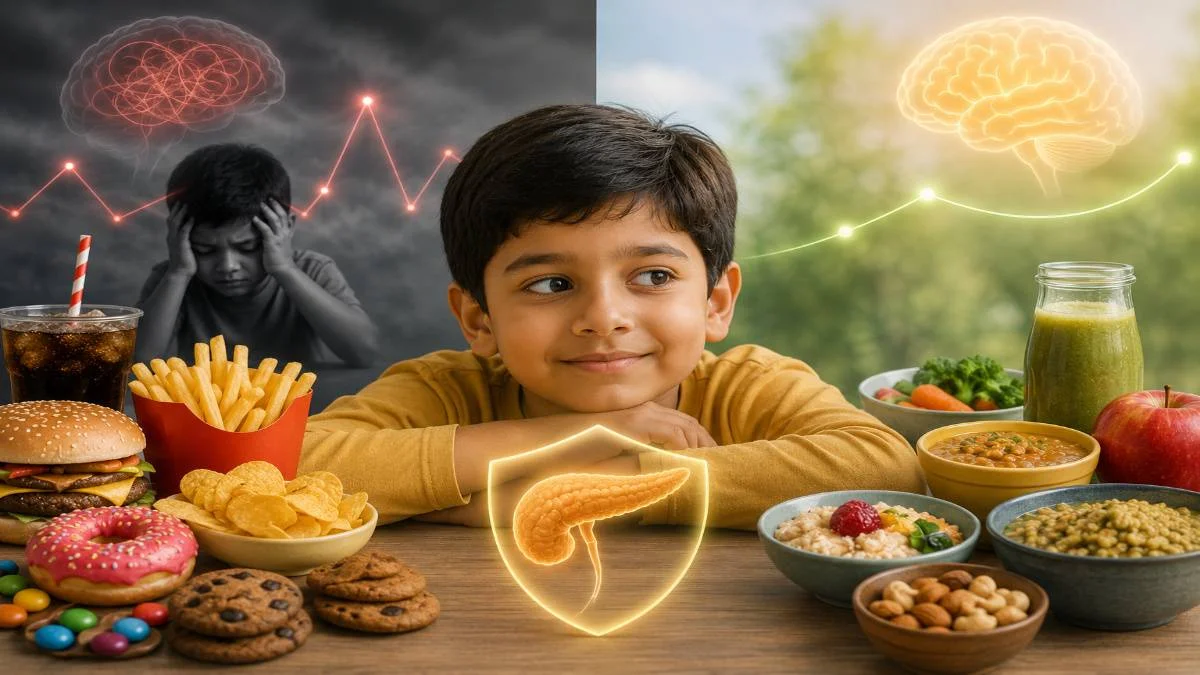
5069Walk down the snack aisle of any modern grocery store. The colors are aggressively bright. The packaging is loud and plastered with cartoon characters. We know these foods aren't exactly broccoli. We toss them into lunchboxes anyway. They are remarkably convenient. They survive room temperature. Kids actually eat them without a fight. Public health messaging has spent decades warning us about sugar causing cavities or contributing to childhood obesity.
Yet, we are largely ignoring a massive, invisible crisis happening inside our children's bloodstreams. Pediatricians and endocrinologists are tracking a deeply troubling trend. As childhood diets shift heavily toward ultra-processed foods, clinical markers for metabolic dysfunction are surging. We tend to view a brightly colored fruit snack or a packaged pastry as a mild indulgence. A temporary burst of energy.
It isn't just a burst of energy. It is a profound metabolic stressor. The connection between ultra-processed diets and the degradation of a child's insulin health is not a coincidence. It is an established, widely documented medical reality. Extreme food processing fundamentally alters how a child's body processes energy.
Understanding how your child's pancreas reacts to these engineered foods is the first step in protecting their long-term health.
The Architecture of Ultra-Processed Food
To understand the metabolic toll, you have to look at how these foods are built. Ultra-processed foods (UPFs) are not just "junk food" cooked in a factory. They are industrial formulations.
According to the internationally recognised NOVA food classification system, UPFs are foods that have been entirely dismantled and reassembled. The original matrix of the food, the fibrous cell walls of a plant, the natural binding of a whole grain, is destroyed. The raw ingredients are subjected to extrusion, molding, and milling. Then, they are combined with artificial emulsifiers, industrial seed oils, high-fructose corn syrup, and synthetic flavorings.
This mechanical and chemical destruction of the food's natural structure is exactly what makes UPFs so dangerous to a child's metabolic system. The food is practically pre-digested. When a child eats it, their body doesn't have to work to break it down. It floods their system instantly.
The Insulin Engine in a Growing Body
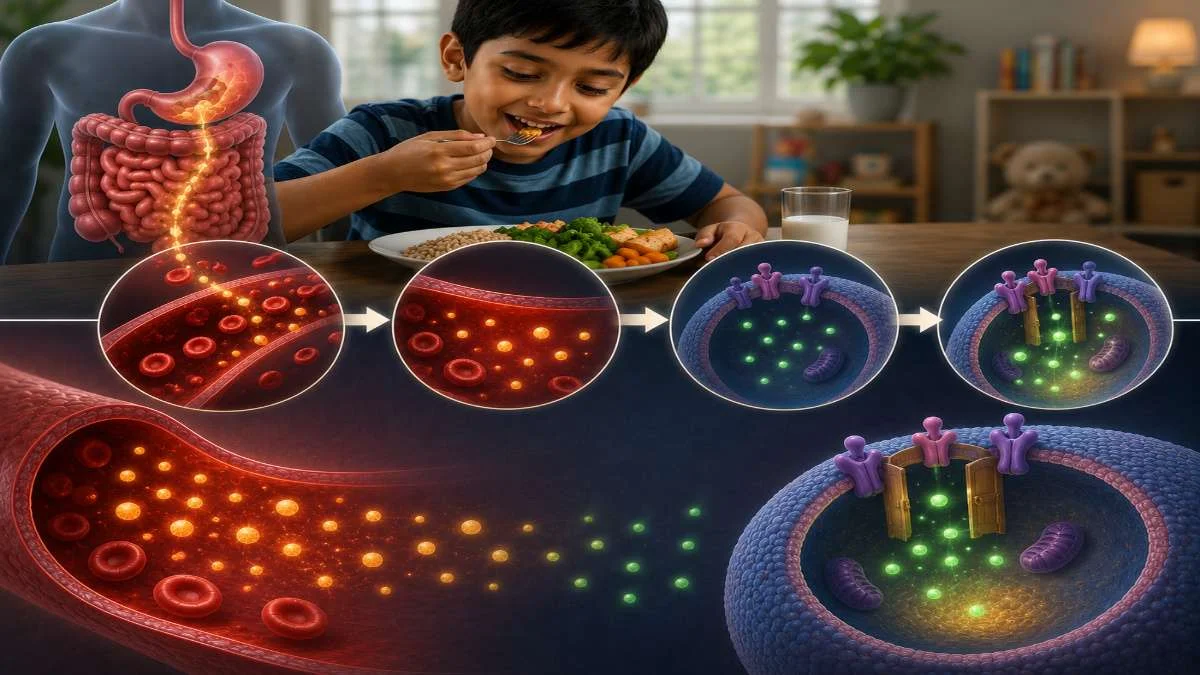
Your child's body runs on glucose. It is the primary fuel for their rapidly growing brain and their active muscles. But glucose can’t just float around in the blood; it’ll need to get inside the cells to be used.
Insulin is a hormone produced by the pancreas. You can think of it as a highly specialised biological key. When a child eats, their digestive system breaks the food down into glucose, which enters the bloodstream. The pancreas senses this rising tide of sugar and releases insulin. The insulin travels to the cells, unlocks the cellular doors, and allows the glucose to enter. Blood sugar levels drop back to normal. The engine hums along perfectly.
Children naturally have highly responsive, tightly calibrated insulin systems. But this system evolved to process whole foods, foods encased in fiber, which break down slowly and release a steady, manageable trickle of glucose.
The Breakdown: How UPFs Hijack the System
When a child consumes a lunchbox full of ultra-processed snacks, that tightly calibrated system is violently thrown off balance.
Because UPFs lack intact fiber and are loaded with rapidly absorbing refined carbohydrates and liquid sugars, they hit the bloodstream like a tidal wave. The blood sugar spikes drastically. The pancreas panics. To get all that toxic, free-floating sugar out of the blood before it causes tissue damage, the pancreas dumps a massive, unnatural amount of insulin into the system.
This causes a secondary problem: the crash. The flood of insulin pulls the sugar out of the blood so aggressively that the child's blood glucose levels plummet below baseline. They become exhausted, irritable, and suddenly ravenous for more sugar to fix the crash.
If this happens occasionally, a child's resilient body handles it. But when a child eats UPFs for breakfast, a packaged snack at recess, an extruded lunchable at noon, and a sugary granola bar after school, the pancreas is forced to pump out massive amounts of insulin all day long. Over time, the cells get overwhelmed by this constant barrage of insulin. They start to ignore it. The locks get sticky.
This is insulin resistance. The pancreas has to produce even more insulin just to get the same amount of sugar into the cells. It is the direct precursor to prediabetes and type 2 diabetes, conditions that were virtually unheard of in pediatrics just a few decades ago, but are now alarmingly common.
Ancient Nourishment: The Ayurvedic Perspective
Modern medicine treats metabolic health as a numbers game. We track glucose levels, insulin resistance, and lipid panels. Ancient medical frameworks, however, offer a slightly different, yet highly complementary lens. They view childhood nourishment fundamentally differently.
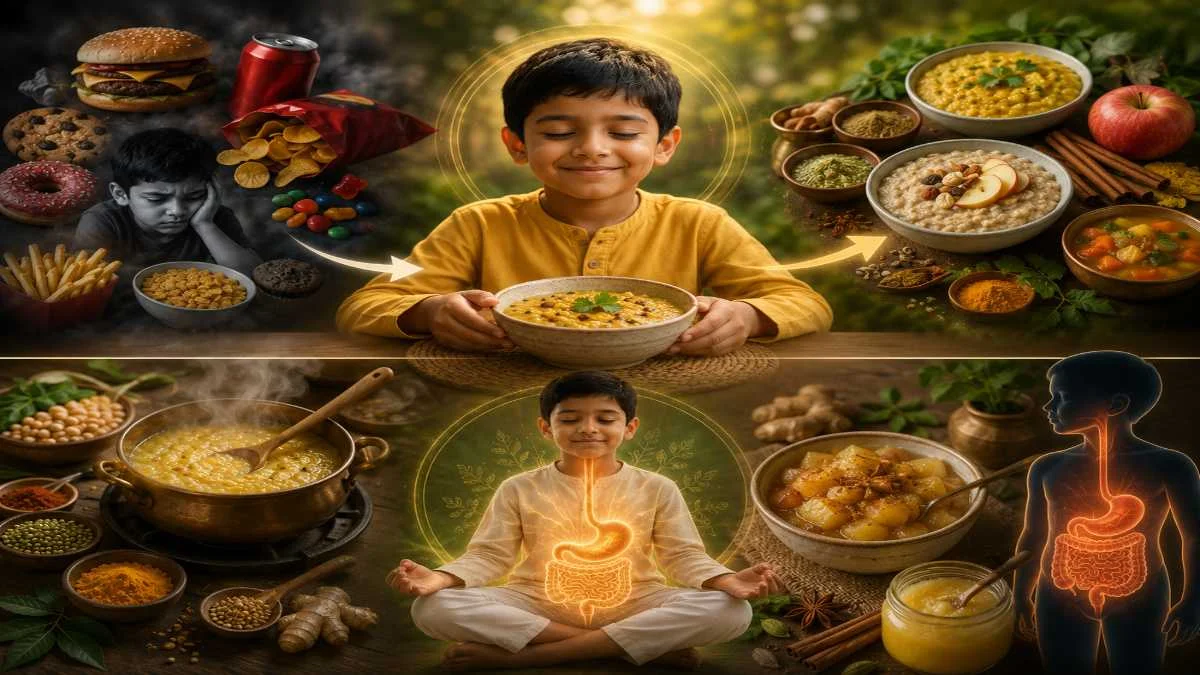
According to Ayurveda, childhood years are considered the Kapha stage of life. It is a very important period of rapid growth and development of body tissue. Of course, the foods that are deeply nourishing and grounding are essential to this biological building. However, there is a significant difference between wholesome nourishment (Sattva) and food that is "functionally dead" (Ama) in Ayurveda.
Ultra-processed foods, heavily altered and stripped of their natural life force, are viewed as inherently clogging to the body's subtle channels. They disrupt the digestive fire, known as Agni. When a child's Agni is overwhelmed by heavy, synthetic ingredients and refined sugars, the entire metabolic system becomes sluggish and confused.
To manage this and support metabolic health naturally, an Ayurvedic lifestyle doesn't just cut out the bad; it actively introduces the good. Practitioners emphasise warm, freshly prepared whole foods. Think spiced oatmeal, lentil soups like kitchari, or warm apples cooked with a touch of cinnamon and ghee. These foods are essentially pre-digested by the cooking process and the spices. They are incredibly easy on a child's digestive fire, allowing the body to absorb real, sustained energy without the chaotic spikes and crashes that modern processed foods trigger.
Doctor's Note
Chronic exposure to ultra-processed foods (UPFs) in children is not just an issue of cavities or weight gain; it is a silent driver of early-onset insulin resistance and pediatric metabolic dysfunction. If your child exhibits critical clinical red-flag signs such as dark, velvety skin patches around the neck or armpits (Acanthosis Nigricans), extreme unquenchable thirst, frequent urination, persistent dark circles with chronic lethargy, or severe behavioral crashes after eating, do not dismiss these as mere mood swings. Consult a pediatric endocrinologist or primary care doctor for proper metabolic screening (including fasting glucose and insulin levels). Early lifestyle intervention can fully reverse metabolic damage before it develops into Type 2 diabetes.
The Behavioral Fallout: Meltdowns and Brain Fog
The fallout of a UPF-heavy diet is not restricted to the metabolic system. It deeply affects a child's behavior and cognitive function.
The brain is highly sensitive to glucose fluctuations. When a child experiences the steep blood sugar crash that follows a highly processed snack, their brain perceives it as a physiological emergency. It triggers the release of adrenaline and cortisol, stress hormones, to force the body to find energy.
This biological panic attack looks a lot like a behavioral meltdown. Children experiencing a blood sugar crash struggle with impulse control. They cannot focus on their homework. They become easily frustrated and highly reactive. Many educators and pediatricians note that the symptoms of a severe glucose-insulin crash closely mimic the symptoms of ADHD. We often discipline children for bad behavior when their brains are simply reacting to a biological state of emergency caused by their lunchbox.
Reclaiming the Lunchbox
Protecting a child's insulin health does not require a flawless diet. It requires pragmatic, consistent shifts away from extreme processing.
You don't need to ban all packaged foods. The goal is to reintroduce the food matrix. Swap heavily extruded puffed snacks for roasted chickpeas or whole grain crackers. Replace fruit gummies, which are essentially just dyed sugar, with actual whole fruit. An apple still has its fibrous cell walls intact, meaning its natural sugars will digest slowly and safely.
Read the ingredient labels. If the back of a snack box reads like a chemistry experiment, featuring high-fructose corn syrup, modified food starch, and artificial dyes, put it back. Focus on the pairings. Whenever a child eats a carbohydrate, ensure it is paired with a protein or a healthy fat. A handful of almonds with a banana slows down the digestive process, putting the brakes on the blood sugar release and giving the pancreas a chance to respond normally.
We cannot control the food industry. We can, however, control what goes into the lunchbox. The food we feed our children is the biological building block of their future. A functioning, healthy metabolic system is one of the greatest gifts we can send them into adulthood with.
References:
Fast food, central nervous system insulin resistance, and obesity - PubMed