 Published on
25 Jun, 2026
Published on
25 Jun, 2026 Updated on 25 Jun, 2026
 5104
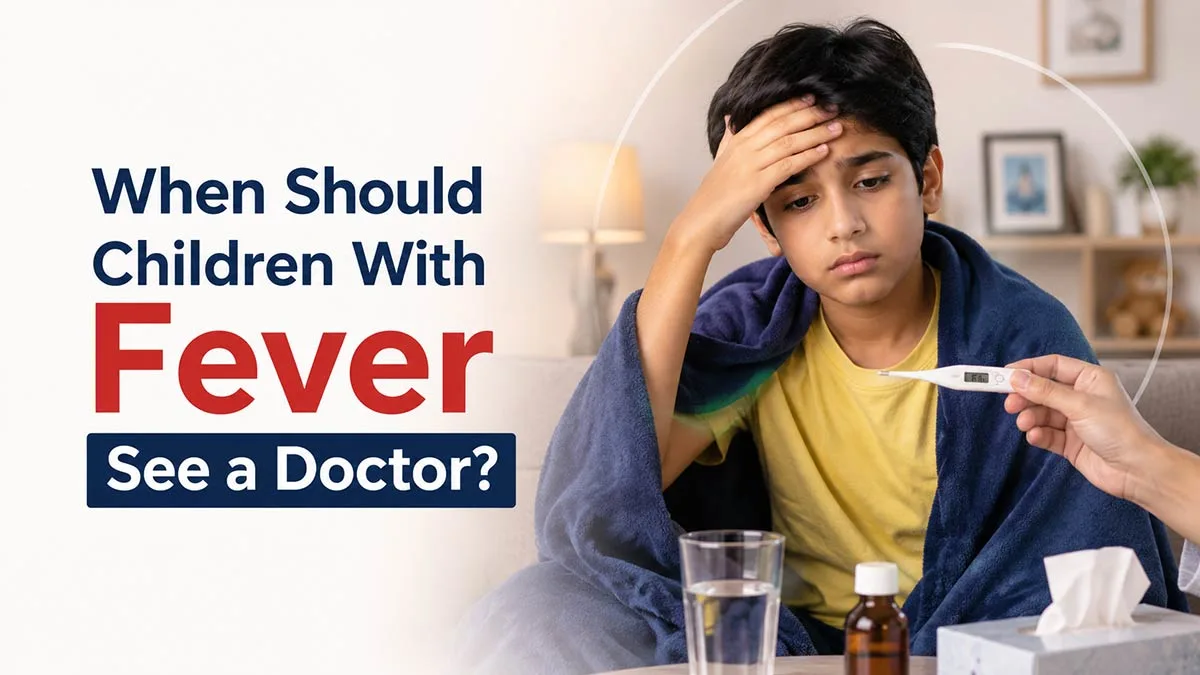
5104Every parent knows that sinking feeling. You go to check on your child at night, put your hand on their forehead and feel that unmistakable warmth. Your stomach drops a little. The thermometer comes out. And suddenly you're doing mental calculations at midnight trying to figure out if this is a "wait and watch" situation or a "get to the doctor right now" situation.
It's one of the most stressful parts of parenting honestly. Because fever in children is so common. Almost every child gets multiple fevers every year. But it can also be a sign of something that needs proper attention. And figuring out which one you're dealing with, especially when your child is crying and you're sleep deprived and worried, is not easy.
So let's break this down properly. Calmly. Without the panic.
First, What Is Actually Happening When a Child Gets Fever?
Here's something that genuinely helps to know. Fever is not the enemy.
Fever is your child's immune system doing its job. When the body detects an infection, whether viral or bacterial, it raises its temperature on purpose. Because most of the bacteria and viruses that make us sick don't survive well at higher temperatures. The fever is literally your child's body fighting back.
So a fever by itself is not a disease. It's a response. It's a sign that the immune system is active and working.
The number on the thermometer matters. But it's not the only thing that matters. How your child looks, how they're behaving and what other symptoms are present often tell you more than the temperature reading alone.
What Temperature Counts as Fever in Children?
Let's get the basics right first because there's a lot of confusion around this.
- A normal body temperature in children is around 98.6 degrees Fahrenheit or 37 degrees Celsius. Fever is generally defined as a temperature of 100.4 degrees Fahrenheit or 38 degrees Celsius and above.
- Anything between 100.4 and 102 degrees Fahrenheit is considered a low grade fever. Between 102 and 104 degrees is a moderate fever. Above 104 degrees is a high fever and needs more careful attention.
- Above 106 degrees Fahrenheit is a medical emergency. No waiting, no watching. Straight to the hospital.
How you measure also matters. Rectal temperature is most accurate for babies. For older children, an oral or underarm thermometer works. Forehead strips are convenient but not always the most reliable.
Age Matters More Than You Think
Here's the thing that most people don't realise. The same temperature reading means very different things depending on how old your child is. Age changes everything when it comes to fever.
- Newborns up to 3 months old: This is the group where you do not wait. At all. If a baby younger than three months has a rectal temperature of 100.4 degrees Fahrenheit or higher, you go to the doctor immediately. Even if the baby seems okay. Even if it's the middle of the night. Newborns have immature immune systems. What looks like a mild fever in a newborn can escalate very fast and can sometimes indicate a serious infection like meningitis or sepsis. There is no safe "let's see how it goes tonight" option here.
- Babies between 3 and 6 months: Still needs prompt attention. If the temperature is above 101 degrees Fahrenheit or your baby seems unusually unwell, lethargic or is not feeding, call your doctor the same day.
- Babies between 6 months and 2 years: A fever of 102 degrees or higher lasting more than a day warrants a call to the doctor. If your child seems very unwell, is not drinking fluids, is inconsolably crying or has other concerning symptoms, don't wait for the second day.
- Children above 2 years: Here you have a little more room to observe. A fever that responds to medication, where the child is still drinking fluids, playing a bit and not completely listless, can often be monitored at home for 24 to 48 hours. But if it crosses 104 degrees, lasts more than three days or the child is getting worse instead of better, it's time to see the doctor.
Signs That Mean Go to the Doctor Now. No Waiting.
Forget the temperature reading for a moment. These signs mean you need medical help regardless of what the thermometer says.
Your child is having difficulty breathing or is breathing very fast. Their lips, fingernails or skin look bluish or very pale. They are unusually limp, floppy or extremely difficult to wake up. They have a stiff neck or are complaining of severe headache along with the fever. They've had a seizure. Even a brief one. They have a rash that is spreading rapidly, especially one that looks like small red or purple dots that don't fade when you press on them. They're not urinating at all or showing signs of severe dehydration like sunken eyes, dry mouth and no tears when crying. They seem confused or are not recognising you or their surroundings.
Any single one of these signs is enough. You don't need to have all of them. Get medical help right away.
What You Can Do at Home While Monitoring
If you're in watch and wait mode, here's how to keep your child comfortable and safe at home.
- Keep them hydrated. This is the most important thing. Fluids help the body fight infection and prevent dehydration. Water, coconut water, dal water, thin khichdi, even ice chips for older children. Little and often is better than forcing large amounts at once.
- Dress them lightly. Bundling up a child with fever actually traps heat and makes things worse. Light cotton clothing and a comfortable room temperature helps the body regulate.
- Use a fever reducer if needed. Paracetamol is generally considered safe for children above a certain age and weight. Always follow dosage instructions based on your child's current weight, not age alone. Do not give aspirin to children. And do not give adult medicines in smaller doses.
- Lukewarm sponging can help bring temperature down gently. Use lukewarm water, not cold. Cold water can actually cause shivering which raises body temperature further.
Rest. Children's bodies heal during rest. Keep activity minimal and let them sleep as much as they need.
What Ayurveda Says About Fever in Children
In Ayurveda, fever is called Jwara and is considered one of the most significant conditions in classical texts. Interestingly, Ayurveda also recognises that fever in its early stages should not always be forcefully suppressed. The body's heat is seen as part of the natural process of burning out toxins called Ama.
For children, Ayurveda emphasises gentle, supportive care. Keeping the child warm but not overheated, offering light easily digestible food like rice water or thin khichdi, and avoiding heavy, oily or hard to digest foods during fever are key recommendations.
Herbs like Giloy, also known as Guduchi, have been used traditionally for centuries to support the immune system during fevers. Tulsi, which is holy basil, is another commonly used herb known for its antimicrobial and fever reducing properties. Ginger and honey in small amounts are also traditionally given to older children.
However, Ayurvedic care for children should always be guided by a qualified practitioner. Dosages and formulations for children are very specific and self medicating with herbs for young children is not advisable.
The Ayurvedic approach ultimately aligns with what modern medicine also says. Support the body, keep the child comfortable, watch carefully and know when to seek help.
A Note for First Time Parents
If this is your first child and your first experience with childhood fever, please know that the anxiety you feel is completely valid. Every parent goes through it.
Fever is one of the most common reasons parents visit doctors and emergency rooms. You are not overreacting by being concerned. And you are not a bad parent for not knowing exactly what to do in the moment.
The goal is not to never feel worried. The goal is to have enough information so that the worry leads to the right action at the right time. Sometimes that's a reassuring home observation. Sometimes it's a doctor's visit. And occasionally it's an urgent trip to the hospital.
All of those are okay. What matters is that you pay attention and respond.
Final Thoughts
Fever in children is normal. It is common. And most of the time it passes without any serious consequences.
But it deserves your attention. Not panic. Attention.
Know the signs that need immediate help. Know what to watch for at different ages. Keep your child hydrated and comfortable at home when it's safe to do so. And never hesitate to call your doctor when something doesn't feel right.
Your child cannot always tell you what's wrong. Their body does the talking. Fever is one of the loudest things it says. Make sure you're listening.
Reference Links
https://www.nhp.gov.in/disease/paediatrics
https://mohfw.gov.in/
https://www.who.int/news-room/fact-sheets/detail/children-reducing-mortality