 Published on
21 Sep, 2026
Published on
21 Sep, 2026 Updated on 21 Sep, 2026
 5035
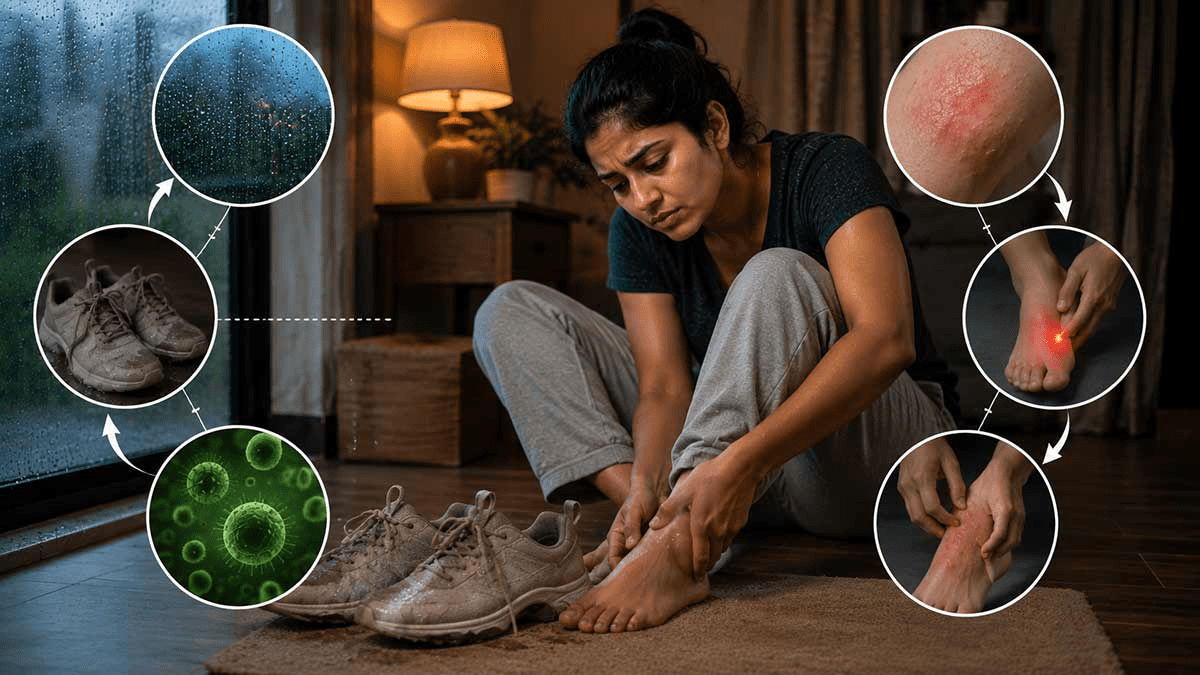
5035During the rainy season, one of the minor inconveniences can be damp shoes. When you step out in the rainy season, there is a high probability that your shoes will get wet, and you simply assume that they will dry out eventually, but wearing those damp shoes for a long period of time can affect your comfort in your shoes more than you know.
The environment becomes very warm and humid and less breathable when the skin on your feet spends a good amount of time inside the shoes. This can affect your skin, making it feel soft, sticky, itchy, and irritated, and if it happens more often, the texture of your feet can get worse, and the discomfort can become more noticeable.
Why Do Damp Shoes Affect Your Skin?
When you wear any footwear, there is a tendency for your feet to sweat throughout the day. Usually, if you wear breathable footwear, this will allow some of the moisture to escape. But if you are wearing shoes and they are already wet from sweat or raindrops, moisture can be trapped for a longer time.
Prolonged moisture can make the outer layer of your skin feel very soft and more open to friction. It creates rubbing between the socks and footwear because of your movement. This can lead to redness, irritation, or general discomfort from this feeling.
It creates an environment while wearing the footwear, which can help microorganisms such as fungi grow easily. This does not automatically mean that every person wearing damp shoes will develop a fungal infection, but repeatedly wearing those damp shoes can make you have feet problems.
It Is Not Just About Rain
Shoes becoming damp doesn’t happen just because of the rain or because you step into a puddle. Moisture buildup can happen due to other reasons as well, such as sweaty feet, humid weather, and wearing the same pair for a long time.
This can especially happen or be noticeable during the monsoon season because humidity can slow down the drying process. A pair of shoes that feel slightly damp in the morning while you wear them can still hold moisture for several hours.
Why Does The Skin Feel Uncomfortable So Quickly?
When skin stays excessively moist for a long time, the skin barrier that protects the body from external moisture can make your skin softer and more prone to friction.
This is why you notice that your feet feel more tender and uncomfortable after spending several hours in damp shoes. The problem can be more noticeable if the shoes are tight, if the socks remain wet, or if the footwear is not breathable enough.
What Can You Actually Do?
The simplest step is to avoid wearing damp shoes for extended periods whenever possible.
Let wet footwear dry completely before wearing it again. If your socks become wet, changing into a dry pair can also make a noticeable difference. Changing your footwear can give each pair enough time to dry properly.
After washing your feet, dry them carefully, especially between the toes. At the same time, avoid scrubbing already irritated skin, as this can increase discomfort.
If your feet develop persistent itching, peeling, cracks, a rash, swelling, or other symptoms that do not settle, it is better to speak with a healthcare professional rather than assuming it is simply because of the weather.
What Does Ayurveda Say?
From an Ayurvedic perspective, excessive moisture and humidity can be associated with an imbalance in the skin environment, particularly when warmth, moisture, and poor ventilation occur together.
Ayurveda traditionally places importance on keeping the body clean and dry and avoiding prolonged exposure to conditions that can disturb the natural balance of the skin. For the feet, this can translate into simple habits such as keeping them clean, drying them properly after washing, and avoiding continuously wearing wet footwear.
Conclusion
Damp shoes may look like a minor monsoon problem, but your feet can feel the effects surprisingly quickly. Trapped moisture, warmth, and friction can make the skin uncomfortable and may create conditions that encourage certain foot problems.
Keeping footwear dry, changing wet socks, and allowing your feet and shoes to breathe are simple habits that can help keep your feet more comfortable throughout humid and rainy weather.
References
mechanisms and new approaches for risk assessment. 1. Skin irritation - PubMed