 Published on
24 Sep, 2026
Published on
24 Sep, 2026 Updated on 24 Sep, 2026
 5035
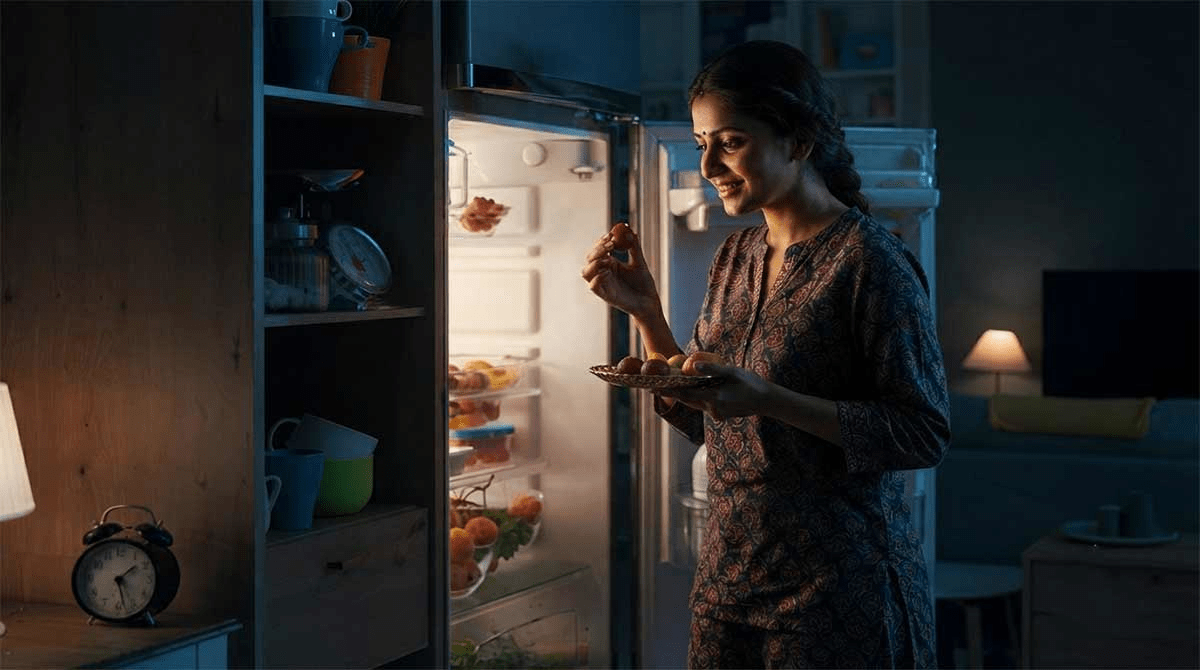
5035After you have had a long day, maybe it was due to work or deadlines that kept piling up, or your mind won’t be at peace. In the end, you finally go to bed, and suddenly your mind wanders to the chips, biscuits, or leftovers sitting in your pantry.
And you might think that you are getting all these cravings because you are simply hungry. But sometimes it is more than that; it is not just because of physical hunger but because of how much of a stressful day you had.
Stress has different effects and can play with your appetite and eating patterns, and you cannot control your cravings. When you had a full, exhausting day, the only comfort you look to is tasty food.
Why Does Stress Make You Want To Snack At Night?
- Your brain is searching for comfort
After you have a stressful day, every odd of yours went against you; in the end, you look for one thing: to eat the food that relaxes your nervous system. Foods that are sweet, salty, or high in calories; these types of foods can provide extreme comfort.
This doesn’t mean that your brain does not have any self-control; it can simply mean your brain needs a reward or comfort after an exhausting day.
That is why u might not crave anything special on a regular day but want something with high sugar or spice at 2 am after a stressful day.
- You might have eaten irregularly during the day
Stressful days can mess up your eating habits and routines. You might skip your breakfast or eat lunch at unusual times or rush through to eat your food, and it is very possible that by the end of the day your body might need food.
So what sometimes may feel like a sudden craving can be a pile-up of what you had throughout the day.
- Stress can affect your sleeping patterns
Stress and sleep go hand in hand. If your mind is running through different work you need to do tomorrow, or conversations or worries, at bedtime can make your sleeping pattern even more difficult, and when you are not able to sleep at night, your first thought to erase boredom is to eat.
Another factor is that when you are tired or stressed or just don’t want to stand in the kitchen for long, reaching for a snack is an easier option than preparing a whole proper meal.
Is Late-Night Snacking Always A Bad Thing?
Not every time.
Eating at night is not always wrong if you are genuinely hungry, and if you are not able to sleep because of hunger, then eating can be completely reasonable.
The question is, why are you eating?
If you are hungry because you ate your dinner at an early hour or didn’t eat enough throughout the day, then getting hungry is normal, and having nourishing food is also important.
But if you notice that you’re eating mainly because you’re stressed, bored or trying to distract yourself from your thoughts, it may help to pause and check in with yourself.
You don’t need to judge the craving. Just ask, “Am I physically hungry, or do I need something else right now?”
Sometimes the answer might be food. Other times, it could be rest, a break, a shower, some quiet time or simply getting away from your screen.
What Can Help On Stressful Days?
Instead of trying to completely eliminate nighttime snacking, focus on making your overall day more balanced.
Try not to regularly skip meals when you’re busy. Include enough protein, fibre, healthy fats and carbohydrates in your meals so you’re not reaching nighttime feeling extremely hungry.
If you notice stress building up in the evening, create a small wind-down routine. Put your phone away for a while, take a short walk, listen to music, stretch gently or do something that helps your mind shift out of work mode.
And if you do snack, you don’t need to feel guilty about it.
One late-night snack isn’t going to undo your entire day. What matters much more is the overall pattern of your eating, sleep, movement and stress levels.
What Does Ayurveda Say?
Ayurveda places importance on regular eating routines and paying attention to digestion. Traditionally, it also recommends keeping dinner relatively light and avoiding unnecessarily heavy eating very late at night, particularly when it becomes a regular habit.
From an Ayurvedic perspective, stress and an irregular daily routine can also disturb normal digestive patterns. Creating a calmer evening routine, eating dinner at a consistent time and choosing foods that feel comfortable and easy to digest may support better nighttime habits.
Rather than treating late-night eating as something to fear, the focus can be on understanding your routine and bringing more balance to it.
Conclusion
Late-night snacking on stressful days is often more complicated than simply being “hungry.”
Stress, irregular meals, tiredness, poor sleep and emotional comfort can all play a role. Instead of blaming yourself for reaching for a snack, try to understand what your body and mind might actually be asking for.
Sometimes you need food, sometimes you need rest, and sometimes, you need a little bit of both.
References
https://www.ncbi.nlm.nih.gov/books/NBK560720/
Eating Disorders - National Institute of Mental Health (NIMH)