
 Published on
24 Jul, 2026
Published on
24 Jul, 2026 Updated on 24 Jul, 2026
 5080
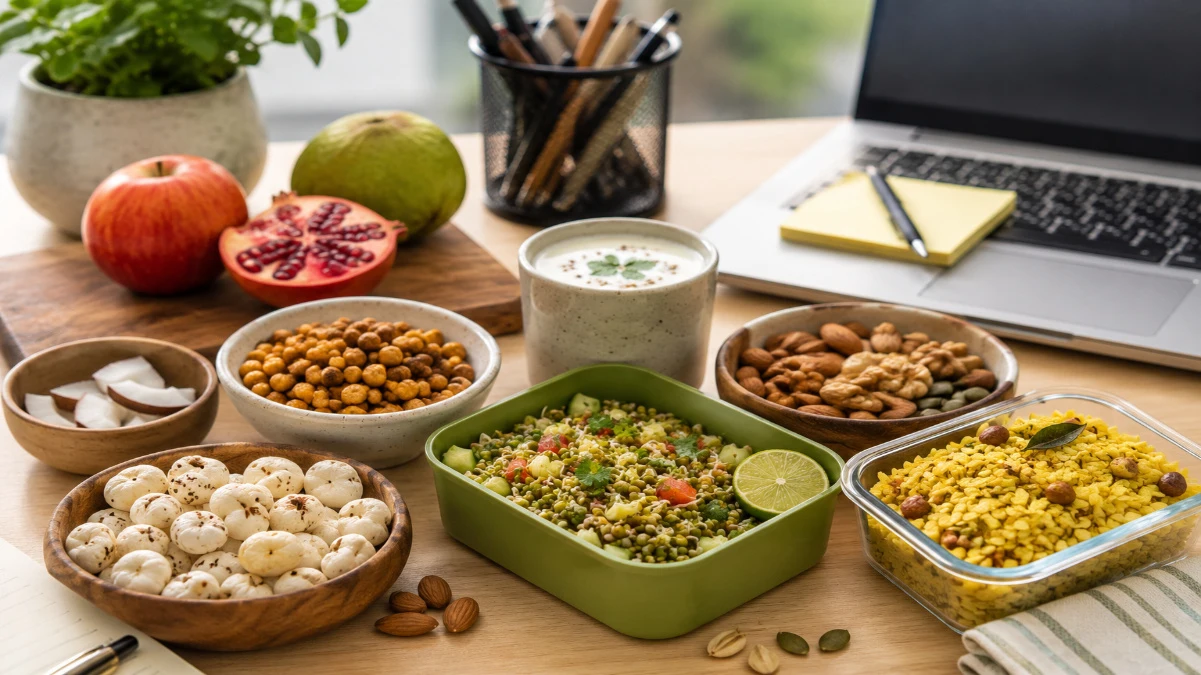
5080Let's be honest: modern office life is practically a recipe for mindless munching. Between long desk hours, endless back-to-back meetings, and that inevitable afternoon energy slump, it is dangerously easy to reach for biscuits, chips, or whatever sugary treat happens to be in the breakroom. While those snacks give you a quick, comforting hit of satisfaction, they almost always leave you feeling sluggish, bloated, or hunting for another snack an hour later. Ayurveda takes a surprisingly practical view on this: how and when you snack matters just as much as what you eat. Choosing fresh, wholesome foods that actually support your digestion can keep your energy steady, sharpen your focus, and stop those distracting workday cravings in their tracks.
Here is a down-to-earth look at healthy office snacking through an Ayurvedic lens, along with the best traditional Indian snacks to stash at your desk.
Indications That Your Office Snacks Are Hindering Your Work
How would you tell when your office snacks are actually causing more problems than solving them? Well, your body would normally indicate when it is not feeling good enough. These may be indications when you should reconsider your snacks:
- Tendency to feel like sleeping after you have finished eating
- Bloating or feeling too full in your stomach
- Experiencing sudden cravings for sweet stuff
- Severe energy drain towards the end of the day
- Acidity/heartburn problems
- Unable to focus while working on your computer
- Feeling hungry immediately after having a snack
These symptoms, however, do not always imply that there is something medically wrong, but rather that your snacks are not providing you with sufficient fuel throughout your workday.
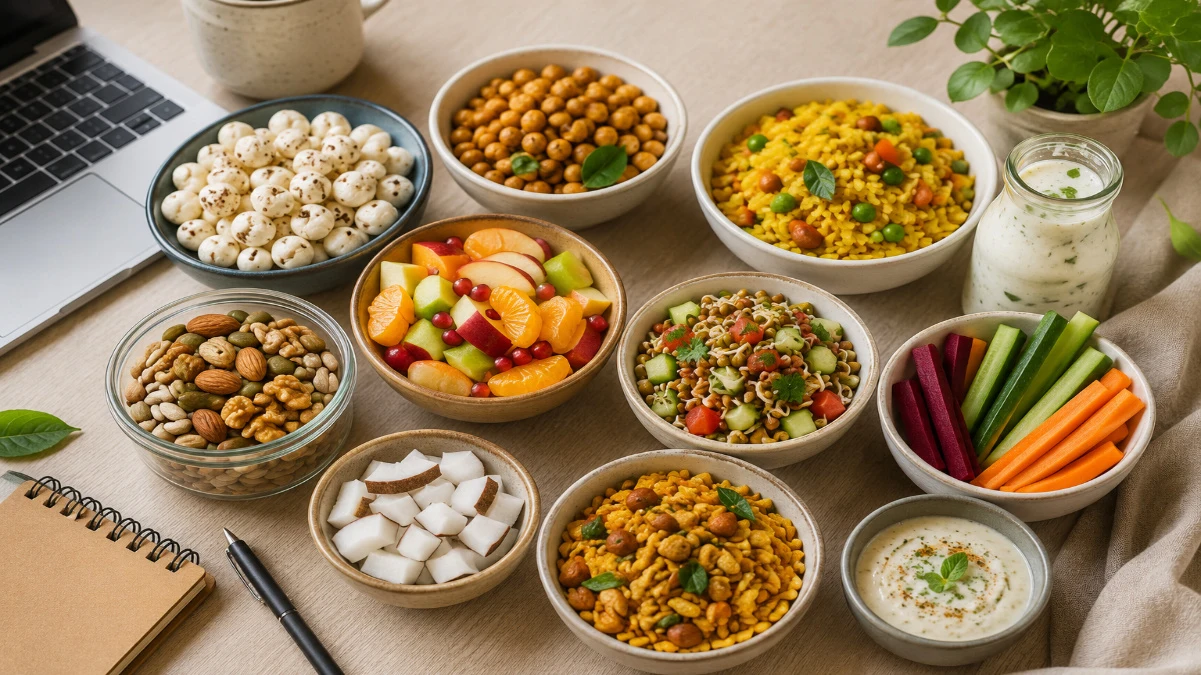 The Best Indian Office Snacks According to Ayurveda
Roasted Makhana (Fox Nuts)
Light, airy, and super easy to pack, roasted makhana is the ultimate desk companion.
- Why it works: It satisfies that craving for a crunch, packs a decent dose of fiber and minerals, and isn't greasy like fried potato chips.
- Tip: Toss them in a dry pan with a little ghee, cumin, black pepper, or a pinch of rock salt instead of buying heavily flavored, store-bought varieties.
Roasted Chana (Bengal Gram)
Good old-fashioned roasted bhuna chana is one of the simplest, most effective protein hits you can keep in your drawer.
- Why it works: It keeps you feeling full for hours, delivers a steady stream of energy, and pairs brilliantly with your afternoon cup of herbal or green tea.
- Tip: Look for unsalted or lightly salted versions to keep sodium levels in check.
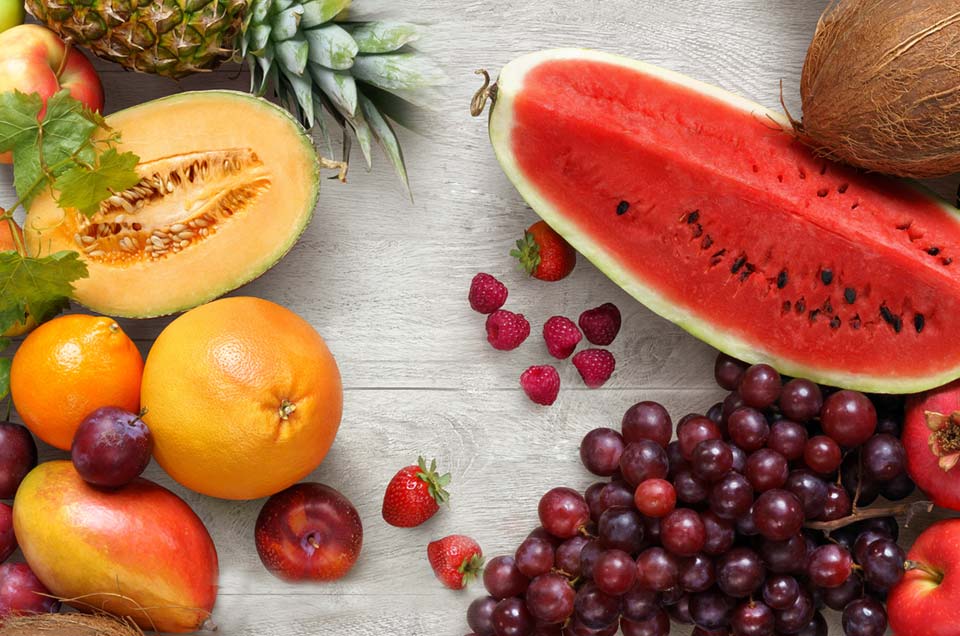
Fresh Seasonal Fruits
Ayurveda is a huge proponent of eating what is in season, as nature naturally provides what our bodies need at different times of the year.
- Office-friendly picks: Apples, guavas, pears, oranges, pomegranates, or a freshly packed box of papaya.
- Why it works: You get natural sweetness to beat the 3 PM sugar craving, plus a hydrating boost of vitamins and fiber.
A Handful of Nuts and Seeds
When you need something nutrient-dense, you cannot go wrong with a small mix of nuts and seeds.
- Great options: Almonds, walnuts, pumpkin seeds, sunflower seeds, and roasted flaxseeds.
- Tip: Keep your portions to a small handful; nuts are rich and calorie-dense, so a little goes a long way.
Homemade Vegetable Poha
Who says poha is just for breakfast? A small, packed dabba of vegetable poha makes a fantastic, filling mid-day snack.
- Why it works: Flattened rice is notoriously easy to digest. By adding peas, carrots, curry leaves, and a few peanuts, you turn it into a balanced, nutrient-rich mini-meal that won't weigh you down.
Fresh Sprout Salad
A refreshing bowl of moong or chana sprouts tossed with chopped cucumber, tomatoes, coriander, a squeeze of lemon, and mild spices is like a reset button for your workday.
- Why it works: It is loaded with plant-based protein, vitamins, and fiber, keeping you satisfied without the sluggishness. Just make sure to prep it fresh and keep it cool!
Fresh Coconut Pieces
Fresh coconut is a traditional powerhouse that we often overlook in modern diet trends.
- Why it works: Rich in healthy fats and natural sweetness, chewing on a few small pieces of coconut offers a satisfying texture and long-lasting fullness. It makes a stellar mid-morning bridge between breakfast and lunch.
Homemade Millet Chivda
Millets like ragi, jowar, and bajra are having a massive comeback, and for good reason; they are nutritional goldmines.
- Why it works: A homemade roasted millet mix tossed with curry leaves, peanuts, and turmeric is the perfect crunchy swap for greasy, store-bought namkeens.
Buttermilk (Chaas)
If your office has a fridge, keeping a bottle of plain, spiced buttermilk is a game-changer, especially after a heavy lunch.
- Why it works: Chaas actively aids digestion, cools and refreshes the system, and banishes post-meal sluggishness. Skip the sugary, flavored store brands and stick to traditional cumin-and-mint spiced versions.
Fresh Vegetable Sticks
When you just want to blindly crunch on something while reading emails, grab some raw carrot, cucumber, or beetroot sticks.
- Why it works: They give you that satisfying chip-like crunch with virtually zero heaviness. Pair them with a spoonful of homemade yogurt dip or roasted hummus for extra staying power.
What to Leave Out of Your Desk Drawer
To keep your digestive fire burning smoothly, Ayurveda suggests cutting back on highly processed, heavy foods. Try to limit:
- Deep-fried potato chips and packaged namkeens
- Cream-filled biscuits and sugary cookies
- Candy bars and milk chocolates
- Instant noodles
- Sugary sodas, sweetened teas, and energy drinks
These ultra-processed culprits are often the main drivers behind afternoon brain fog and relentless hunger rebounds.
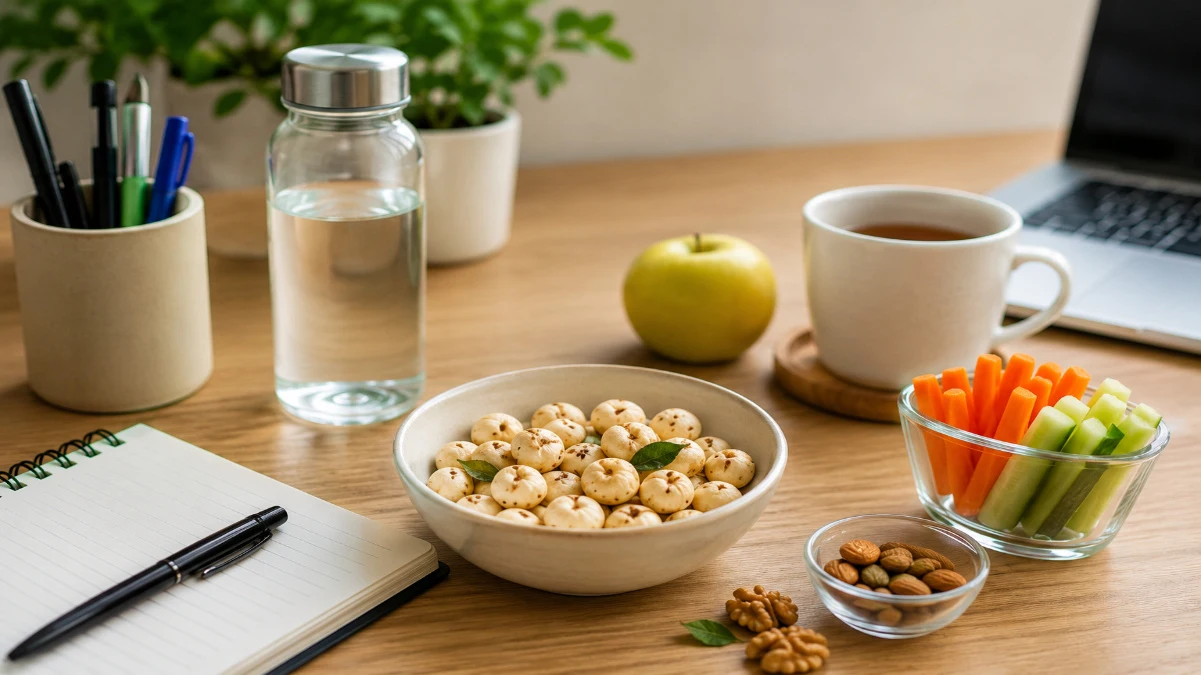 Smart Office Snacking Habits
It is not just what you eat; how you eat plays a huge role in how you feel by 5 PM.
- Eat only if you're truly hungry: Do not reach out for a cookie because there is an open box of them lying around in the break room, or you are feeling stressed about a presentation.
- Take yourself away from the computer screen: It will only make sure that you don't notice when you've eaten enough. Step away from your computer screen for a few minutes and savor what you are eating.
- Hydrate before anything else: Thirst is usually mistaken for hunger. Drink water regularly from the water bottle kept on your desk.
- Prepare in advance: The presence of roasted makhana in your lunch box will not tempt you to visit the vending machine once 4 pm arrives.
- Be portion-conscious: Eating too much even of the most nutritious snacks may lead to indigestion.
 Building a Supportive Office Routine
Healthy snacking will be more effective when you see it as one element of a larger strategy. In order to maintain your energy levels and keep your digestive system functioning smoothly, here are some practices that you can incorporate in your work schedule:
- Have your major meals on time each day.
- Go for a 5- to 10-minute walk after having your lunch to aid digestion.
- Ensure good sleeping hours.
- Stress management could be done through deep breathing or even quick exercises from your desk.
- Move around every hour or so to prevent long periods of sitting.
A Quick Note on Health
While tweaking your snacking habits can work wonders for everyday fatigue and minor bloating, you should always listen to your body. If you experience persistent digestive pain, chronic acidity, unexplained weight changes, or severe ongoing fatigue, it is always wise to check in with a healthcare professional. Ayurvedic practices are fantastic for daily wellness, but they go hand-in-hand with proper medical evaluation when you need it.
The Takeaway
You don’t need imported superfoods or restrictive diet plans to eat well at work. Humble, traditional Indian staples like roasted makhana, chana, seasonal fruits, sprouts, and buttermilk are more than enough to keep you nourished and focused.
By applying a little Ayurvedic wisdom, eating mindfully, respecting your digestion, and choosing fresh over processed, you can conquer the afternoon slump, ditch the cravings, and make your workday feel a whole lot lighter.
References
National Institute of Nutrition
Introduction of healthy and hygienic foods in the Departmental Canteens.