 Published on
24 Jul, 2026
Published on
24 Jul, 2026 Updated on 24 Jul, 2026
 5088
5088Ayurveda is everywhere these days. Whether someone is dealing with a bad stomach, daily stress, or joint pain, they often look for Ayurvedic solutions. It is easy to see why. Ayurveda looks at your whole body, your diet, and your daily habits instead of just throwing a quick pill at the problem.
But because Ayurveda uses natural herbs and plants, a very common myth has started to spread. People think that "natural" automatically means "100% safe." Because of this belief, many of us just buy herbal powders online, follow social media tips, or copy a friend's prescription without ever talking to a doctor.
The truth is a little different. Natural things are powerful, and they need to be used with care.
Is Every Ayurvedic Medicine Safe?
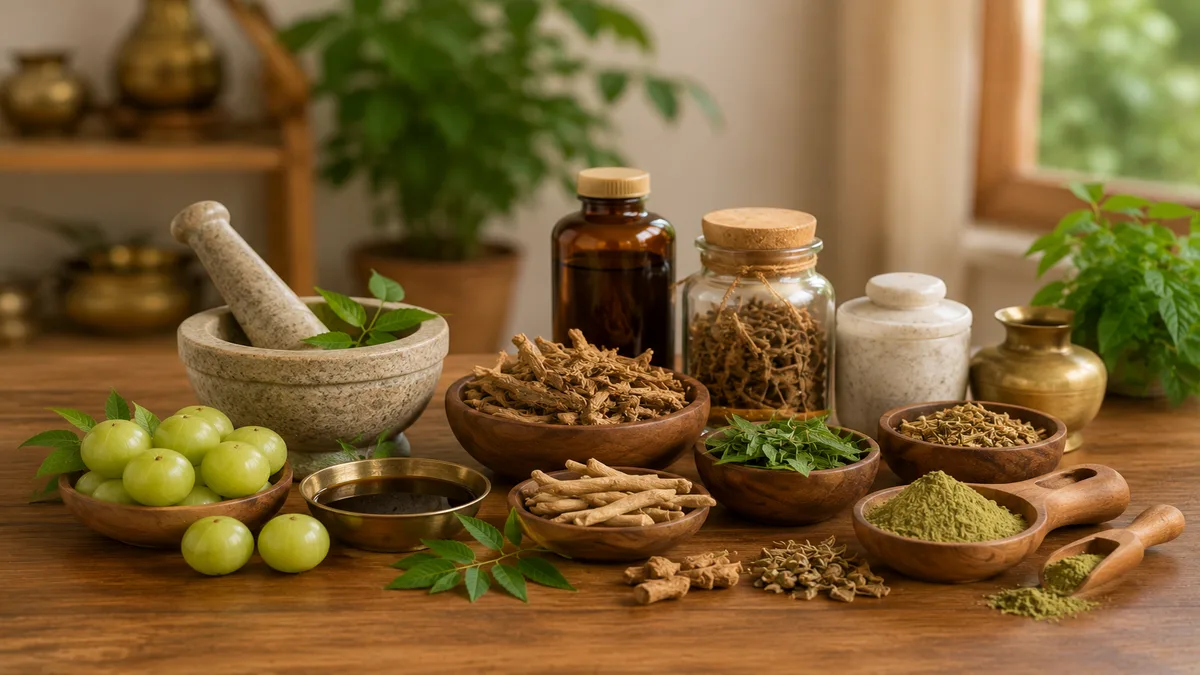
Ayurvedic medicines are created using herbs, roots, minerals, and other gifts from nature. When a qualified doctor gives them to you the right way, they do a wonderful job of supporting your health.
However, just because something grows in the ground does not mean it is harmless for everyone. Think about it: a lot of things in nature are powerful. The safety of any medicine depends completely on how you use it. A medicine must perfectly match your specific body type, your current health, your age, and whatever other pills you are swallowing every day.
Even the most expensive, high-quality herbal product can cause trouble if it is not right for your body. Ayurveda itself clearly says that checking the patient properly is just as important as the medicine itself. You cannot just pick a bottle off a supermarket shelf and expect it to work like magic without knowing if it actually suits you.
Why Self-Medication Can Be Risky?
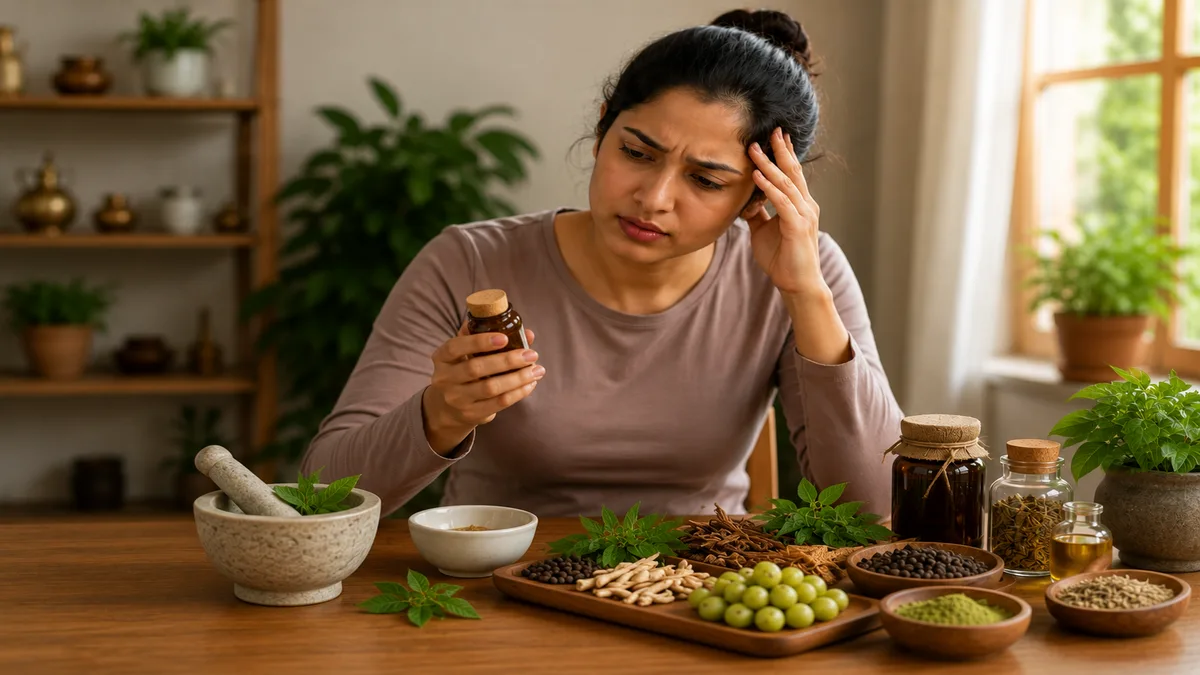
We have all done it. You get a bad cough, and your neighbor tells you to boil a specific herb and drink it. Or you see an ad on your phone for a weight-loss powder and click "buy." People think herbal remedies are so gentle that they cannot possibly cause any harm. Sadly, treating yourself without a doctor can create a lot of unnecessary problems.
The biggest danger here is hiding the real disease. Let us say you have a terrible, burning pain in your stomach. You decide to take a natural cooling syrup you found at the store. The syrup might make you feel better for a few hours. But what if that pain is actually an ulcer or a serious infection?
By just trying to fix the pain on your own, you are delaying the real medical help you actually need. A proper doctor finds the root cause of your problem instead of just putting a temporary band-aid on it.
Ayurveda Believes in Personalised Treatment
If you go to a clothing store, you do not buy a shirt without checking the size, right? One size does not fit everyone. Ayurveda thinks about your body the same way.
One of the most beautiful things about Ayurveda is that it treats you as a unique person. It believes everyone has a specific body type or nature (called Prakriti). It also looks at your digestion speed, how you sleep, where you live, and what you eat.
This means if you and your best friend both have a bad headache, an Ayurvedic doctor might give you two totally different medicines. The reason behind your headache might be a lack of sleep, while your friend's headache might be caused by bad digestion.
This is exactly why you should never copy someone else’s prescription. A natural pill that did wonders for your brother might just give you a terrible stomachache.
What Can Happen If You Take the Wrong Ayurvedic Medicine?
It is commonly believed by people that if an Ayurvedic medication is not suitable for someone, it would simply be ineffective on him/her, and thus would do no harm. It is a huge mistake.
Consuming inappropriate herbs can actually interfere with one's body functions. For instance, if someone takes something which he/she is not supposed to take, they may experience flatulence, diarrhea, or excessive acidity. Certain individuals may even develop allergies.
Moreover, if a person has some problems with his/her health in advance, consuming unsuitable herbs will simply aggravate those problems. Also, purchasing five different herbs and consuming them all at once in one's drinking water is not a good practice. Ingesting too many things at once may confuse one's body and prevent the medications from functioning properly.
Doctor’s Note
Natural does not automatically mean 100% safe. Ayurvedic medicines are potent treatments that must be personalized to an individual’s body type (Prakriti), age, and health status. Self-medicating or blindly following online advice can lead to severe side effects, delay proper medical diagnosis, or trigger dangerous herb-drug interactions (such as sudden drops in blood sugar when combined with modern diabetes drugs). Always consult a qualified Ayurvedic practitioner, strictly follow the prescribed dosage and timing, and inform all your doctors about every medicine and supplement you take.

The Importance of Correct Dosage and Duration
In Ayurvedic medicine, dosage and timing are a very exact science.
Many patients think that if a teaspoon of this medicine works for them, then taking two teaspoons would double the effectiveness and thus heal them faster. This is wrong. Overdosing would only overload their liver and stomach. At the other end of the spectrum, many patients consume the medicine for three days, feel somewhat better, and discard the rest of the pills. Premature discontinuation of the treatment would only ensure that the disease returns.
Time of intake is equally important. A doctor may instruct a patient to take a pill on an empty stomach in the morning or in the evening, only after eating dinner. He may also ask a patient to wash the pill down with warm water, a teaspoon of honey, or warm milk. Such simple things would dramatically affect the process of medication absorption into the bloodstream.
Can Ayurvedic Medicines Interact with Other Medications?
This is where people need to be extremely careful. Today, it is quite common for one to consume modern medication (for instance, high blood pressure medicine) along with Ayurvedic medications. It is all right, but if it is known to your physician!
The herbs consumed with the modern medicines tend to affect the action of these medicines in the stomach. For instance, in the case of diabetes, if you are taking any modern medicine daily to reduce your sugar level, and then you decide to take Ayurvedic medicine in the form of a powder to reduce your sugar, it could cause a dangerous drop in your sugar level.
You should always inform both your doctor and your Ayurvedic doctor regarding the consumption of all kinds of medicines and herbs.

Simple Tips for Using Ayurvedic Medicines Responsibly
Keeping yourself safe is really quite simple if you follow a few basic rules:
- Please consult an expert medical professional before ingesting any new herb or medication.
- Don’t give away any of your medications to another person, nor take any from them.
- Take only what the doctor prescribed for you. Do not exceed or miss the dose.
- Do not lie about your use of medications. Let them know how many pills you take.
- Obey the dietary instructions. Take their advice when asked not to eat certain foods when using this medicine.
- Return for your follow-up visits. This will help the doctor see whether you are recovering.
When Should You Consult an Ayurvedic Doctor?
Always book an appointment with a proper Ayurvedic doctor if you are dealing with things like:
- Consistent high levels of glucose in the blood or diabetes.
- Elevated blood pressure or a weak heart.
- Problems relating to your liver or kidneys.
- Chronic pain in your joints that hinders movement.
- Skin conditions that seem to persist no matter what.
Final Thoughts
The healing process of Ayurveda is extremely brilliant and natural, and its effect on people has been amazing for thousands of years already. Ayurveda consists of correcting the problem at its roots, changing your unhealthy daily routine, and choosing the right foods.
However, there is no point in considering herbs to be simply harmless candies. All herbs should be chosen according to their purpose, correct dosage, and the period of time of their consumption.
Without doubt, the most effective way to become healthy is to take someone's expert hand. A qualified practitioner of Ayurveda will prescribe the exact treatment, which is tailored precisely to your body type. If you apply Ayurveda properly, it will turn into a superb instrument of a healthy and joyful life.
References
WHO international standard terminologies on Ayurveda
Contribution of world health organization in the global acceptance of Ayurveda - PMC