 Published on
11 Aug, 2026
Published on
11 Aug, 2026 Updated on 29 Aug, 2026
 5065
5065When we hear the word fatty liver, alcohol is the first thing that comes to mind, but that is not fully true. The truth is, you can develop fatty liver even when you have barely touched alcohol in your whole life.
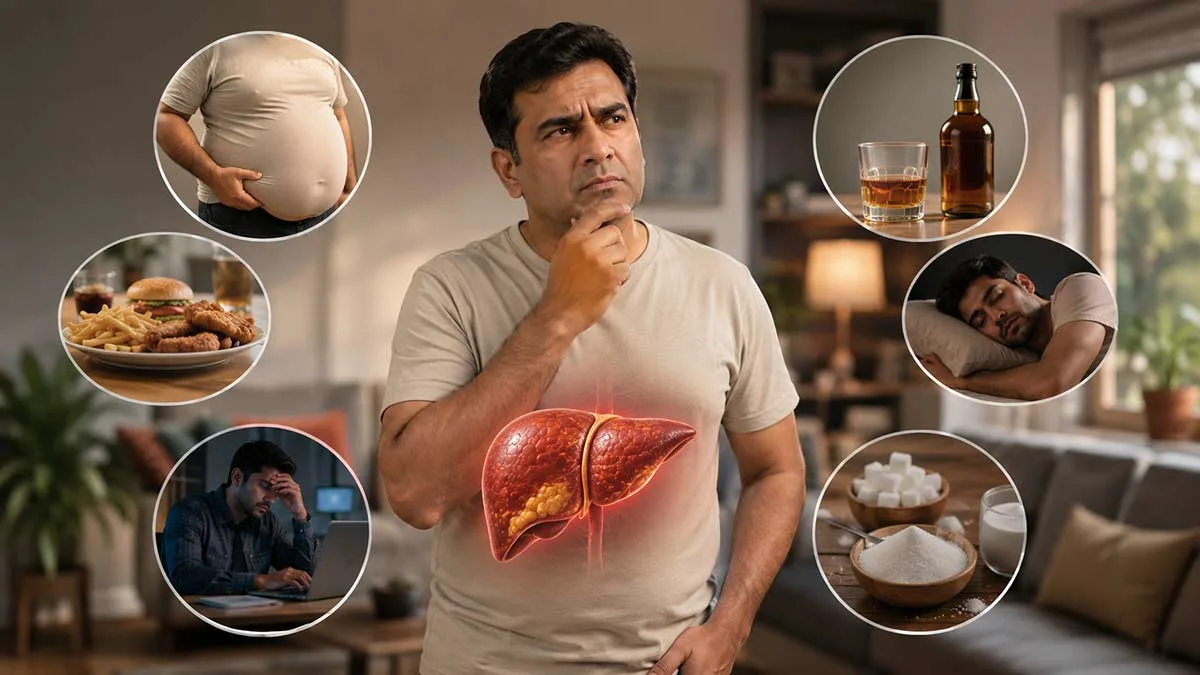
It can also happen due to metabolic issues, carrying extra body weight, having insulin resistance, suffering from Type 2 diabetes, eating a lot of junk food, and not moving your body all day, all of which can cause fat to slowly build up around your liver.
What Exactly Is A Fatty Liver?
Fatty liver is a condtion when a lot of fat accumulates in the liver; a bit of fat on the liver is normal, but when it reaches 5% to 10% or more, then it becomes a very serious problem.
This happens when our bodies can't process food properly or when fat is produced faster than it is burned. This problem slowly weakens the liver's ability to perform its function properly.
In the beginning, fatty liver doesn’t show many symptoms, but if a person is going through fatty liver, then they may have signs of:
- You feel constantly tired or low on energy.
- You may feel mild pain or heaviness in the upper right belly.
- You may lose weight without even trying.
- You have weakness in your body.
Alcohol Related Fatty Liver Disease
Alcohol completely changes the way your liver deals with fat. It happens when a person heavily drinks alcohol or drinks daily. Drinking alcohol daily completely ruins the liver’s capacity to process food and forces fat to get trapped inside the liver cells.
Fatty liver is the first warning sign given by the liver; if not controlled, it can also cause liver swelling, permanent scarring, or permanent liver damage in a person. However, everyone's body reacts differently to alcohol. Things like your family genes, age, what you eat, your body weight, and your overall health all play a big role in how quickly alcohol will hurt your liver. So alcohol is not only the cause of developing a fatty liver; other factors can cause it too.
Non- Alcoholic Fatty Liver Disease
Can you get a fatty liver if you never drink alcohol? Yes, absolutely! This is where your daily metabolic health comes into play. When a person gets a fatty liver without drinking, it is usually because their body's inner energy system is out of balance. The main things linked to this non-alcoholic fatty liver are:
- You have a lot of weight, especially around your belly
- You have insulin resistance or type 2 diabetes
- You have high cholesterol or high triglyceride levels
- Your blood pressure always remains high
- You don’t move your body enough
- You eat a lot of processed and junk food
Why Does Fat Build Up in the Liver?
Your liver is the main control center for processing food into your body. When your body gets way more energy than it needs, especially if your cells are ignoring insulin, your liver gets completely flooded with extra fatty acids that it simply cannot burn off fast enough. So, it has no choice but to store that extra fat inside itself.
When your body ignores insulin, it makes even more insulin to compensate, which makes your liver store fat even faster. It is usually caused by an overall metabolic system that is struggling.
Can Diabetes Cause Fatty Liver?
There is a massive connection between diabetes and your liver. In fact, people living with type 2 diabetes or high blood sugar have a very high chance of developing a fatty liver.
Insulin is the key hormone that tells your body how to use glucose and fat for energy. When your body stops responding to insulin properly, your fat management falls completely out of order. Extra fatty acids get pushed directly into your liver cells.
This works both ways! Having a fatty liver also makes it much harder for your body to control blood sugar, which increases your risk of getting diabetes. That is why keeping your blood sugar, weight, and blood pressure in a safe range is a huge part of taking care of your liver.
Ayurvedic View On Non-Alcoholic Fatty Liver Disease
In Ayurveda, Fatty lover is caused by an imbalance in the Meda Dhatu, an increase in kapha dosha, and weak digestive fire. When your digestive fire gets weak, your food is not able to be digested properly, and it converts into a toxic waste, known as Ama. This Ama later accumulates in the liver, and it stops functioning well. Due to this, the fats start building up in the liver and also in the other parts of the body. Ayurveda also talks about fixing the root cause of the body and bringing the whole body into equilibrium so that the problem does not come back again and again.
Lifestyle Habits to Keep Your Liver Healthy
The wonderful news is that your liver is an amazing organ that can actually heal itself if you give it a chance! Simple, everyday lifestyle habits make a world of difference:
- Get Moving: Walking, cycling, simple gym workouts, or yoga help your body burn off extra fat. Doing a little bit of movement every single day is what counts most.
- Manage Sugar and Cholesterol: If you have diabetes or high blood pressure, take your daily care seriously and keep those numbers in a safe zone.
- Limit Alcohol: If your liver is already struggling with extra fat, drinking alcohol will only make things worse.
- Manage Your Stress: Constant stress can create an imbalance in the body, which later affects the body's internal systems as well. So controlling your stress can help in keeping the inner body balance.
- Protect Your Sleep: Take proper 7-8 hours of sleep a day and try to avoid sleeping in the afternoon, as it can help in maintaining the inner balance of the body.
Doctor’s Note
You can develop a fatty liver even if you never drink alcohol, often due to weight, cholesterol, or blood sugar issues. While fatty liver usually has no early symptoms, you should watch out for serious warning signs. If you ever notice your eyes or skin turning yellow (jaundice), dark urine, sharp pain in your upper right belly, or sudden swelling in your legs, see a doctor right away. These indicate severe liver damage that needs urgent medical care
Simple Eating Habits To Keep Your Liver Healthy
Here are some simple, practical eating habits to keep your liver light and your metabolism strong:
- Try to make your lunch your biggest meal of the day: Enjoy a hearty, satisfying lunch by adding more proteins, fibres, and carbs to your plate, and try to keep your dinner light and early so your liver can rest at night.
- Eat seasonal food: Only eat fruit and vegetables that are seasonal; for example, if you want to eat a watermelon, then it is in the summertime as it is a summer fruit; if you eat it in another season, it will react in your body very differently.
- Eat fresh, home-cooked food: Food that is freshly prepared is better and easier for your body to process. Leftovers, heavily processed food, or boxed meals can slow down your digestive system and make you feel sluggish.
- Avoid processed food: Refined sugars and highly processed snacks are the quickest way to create Ama, sticky, toxic waste that clogs up your internal channels and burdens your liver.
- Eat only when you feel hungry: We often eat just because we are bored, stressed, or because the clock says it is lunchtime. Try to wait until your stomach is actually asking for food.
When To See A Doctor?
Immediately seek medical help if you have the following warning signs:
- You have developed yellow skin and eyes ( jaundice).
- You feel swelling in your belly or legs.
- You have dark urine and pale stools.
- Your skin keeps on itching.
- You develop bruising or bleed easily.
- You feel confused all the time.
Conclusion
People have a misconception about fatty liver that it can only be caused by drinking alcohol, but the truth is completely different. It can be caused by multiple factors, such as your body weight, type 2 diabetes, your eating habits, and your genes, etc.
If someone is being diagnosed with fatty liver, it can be reversed in the first stage by fixing their lifestyle, eating habits, and making necessary changes.
References
Fatty Liver - StatPearls - NCBI Bookshelf
Non-alcoholic fatty liver disease: pathophysiological concepts and treatment options - PMC
Non-alcoholic fatty liver disease: Definition and subtypes - PMC