 Published on
14 Aug, 2026
Published on
14 Aug, 2026 Updated on 14 Aug, 2026
 5064
5064We often think that fatty liver is the problem of those who drink regularly or those who have significant belly fat. Skinny people tend to assume that since they don’t have extra fat on their body and they don’t drink, having liver fat is just not possible, but the dark shade on the back of their neck and the daily fatigue despite proper sleep tell a different story.
A lean appearance and a healthy liver may look like the same thing, but they’re totally different in terms of biology.
Only a reduction in weight and a fit look don’t make a person less susceptible to developing fatty liver; in fact, if a person looks fit but their liver is unhealthy, it increases the risk for a “silent fatty liver”.
What Does A Fatty Liver Do In The Body?
The liver, or Yakrit as it is called in Ayurveda, is a formidable organ that filters, digests, and metabolises all the food and medication that come into the body. The development of fatty liver is due to abnormal deposition of Meda Dhatu (fat tissue) in the cells of this important organ.
In terms of modern science, this is called hepatic steatosis, and Ayurveda calls it Yakrit Roga (liver disorders) and Medo Roga (disorders of fat metabolism). The liver is considered the largest and most intelligent 'factory' of chemicals. It is responsible for the digestion of food, cleansing of blood, and storing energy in the body. In case of a healthy liver, it processes the fat and gets rid of it. But when the intake of sugar and processed grains or other food items is very high, even without the person gaining weight, the liver finds it difficult to process that much calorie intake. It fails to process the extra glucose and transforms it into fat by storing it within itself. Slowly, liver cells start getting filled up with fats, leading to a bloated and heavy liver. The filtering capability of the healthy liver is hindered by a fatty liver.
Doctor’s Note
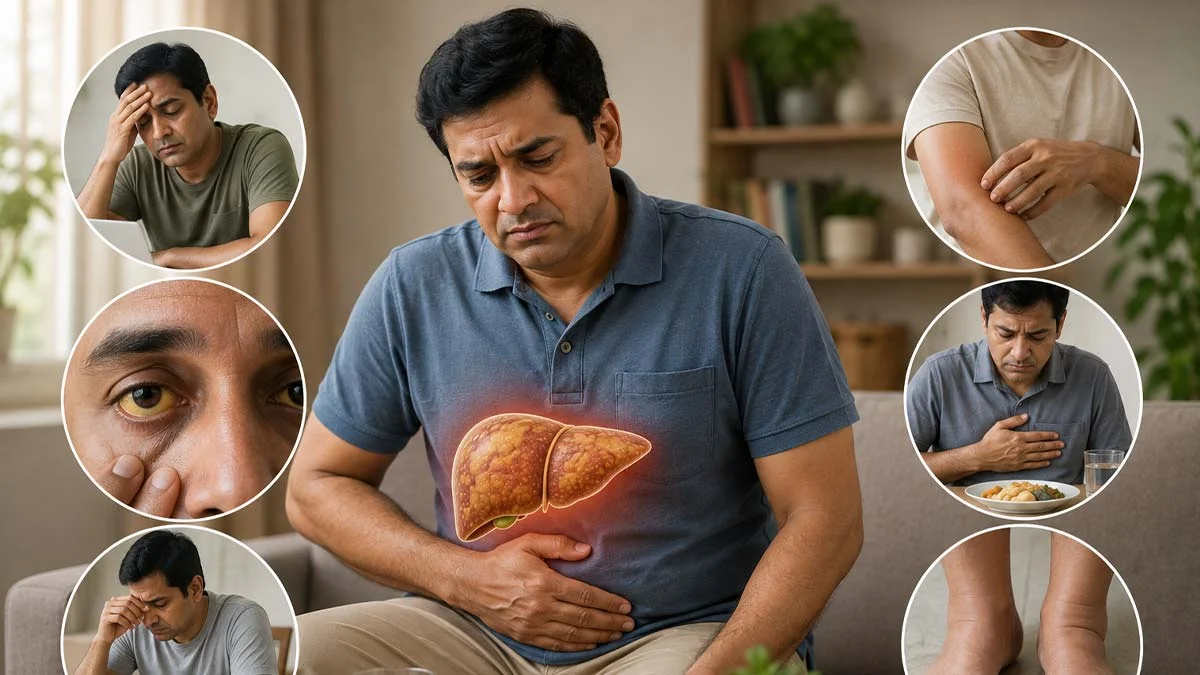
Fatty Liver (NAFLD) is not just a term for an inflated belly, but a condition that can develop in anyone without any significant visible symptoms. If you’re noticing black spots on your underarms and neck, going through chronic fatigue, or feeling heavy in the upper stomach, don’t dismiss it as gas or bloating, and get the LFT or ultrasound done, and consult a Gastroenterologist or an Ayurvedacharya as soon as you can.
Warning Signs Of Fatty Liver
Fatty liver is a condition that is deeply tied to the digestive fire and metabolic function of the body. Despite being tied to belly fat, it can have a number of other signs and symptoms that should be noticed and monitored.
Cellular Fatigue
We tend to blame fatigue on lack of sleep or a busy schedule. But liver fatigue is very different; it is a heavy exhaustion that no amount of caffeine can fix.
This happens because of a mechanical energy crisis. A healthy liver acts as a battery, releasing stored glycogen into your bloodstream between meals to keep your brain and muscles powered. A fatty, insulin-resistant liver loses this flexibility. It becomes trapped in "storage mode" and refuses to release energy back into the system. You can eat a massive meal and still feel completely exhausted two hours later because your cells are literally starving for fuel that your liver refuses to dispense.
Right-Sided Shoulder Pain
This is one of the most misunderstood symptoms of liver distress. People often spend months visiting chiropractors for a stubborn ache in their right shoulder or shoulder blade, completely unaware that the pain is originating in their abdomen.
The liver itself does not have pain receptors. However, it is encased in a thin, nerve-dense membrane called Glisson's capsule. When the liver rapidly swells with fat and inflammation, it stretches this capsule. The swollen liver also presses upward against the diaphragm. The diaphragm is innervated by the phrenic nerve, which travels all the way up through your chest and into your neck and right shoulder. The brain misinterprets the distress signal from the diaphragm as a deep, aching pain in your right shoulder joint.
The Skin and Hormone Connection
Your liver is responsible for filtering out and deactivating old, used hormones, particularly estrogen. When the liver is congested with fat, this clearance system slows down dramatically, leading to a state of estrogen dominance in both men and women.
This hormonal phenomenon can sometimes manifest visibly on the skin:
- Spider Angiomas: Tiny, web-like blood vessels that appear on the chest, neck, or face. High estrogen levels cause these superficial capillaries to dilate permanently.
- Palmar Erythema: A distinct, warm redness on the palms of the hands, driven by altered hormone metabolism and vascular changes.
- Intense Itching: If fat accumulation begins to block the tiny bile ducts inside the liver, bile salts can leak into the bloodstream and accumulate in the skin, causing severe itching that is usually worse at night and has no visible rash.
Ayurvedic Dietary Recommendations
| Category | Recommended Ayurvedic Foods |
| Grains | Yava (Barley), Purana Shali (Old rice), Kodrava (Millet). |
| Legumes | Mudga (Green gram), Kulattha (Horse gram), Aadhaki (Pigeon pea). |
| Vegetables | Bitter gourd, pointed gourd (Patola), fenugreek, and cruciferous vegetables. |
| Spices | Ginger, cumin, coriander, turmeric, and Maricha (black pepper). |
The Power of Regeneration
The healthcare system considers fatty liver disease a natural part of aging and genetics, with nothing but "lose some weight" being offered as help. But considering the liver as just the victim of abdominal fat is pure fatalism.
The liver is the only visceral organ in the human body with the capacity to completely regenerate itself.
To reverse fatty liver, you must stop treating the symptoms and start emptying the metabolic filter. This means drastically reducing the influx of liquid fructose, lowering systemic insulin levels through fasting or carbohydrate restriction, and giving the organ the biological space it needs to burn the fat trapped inside its own cells. When you remove the metabolic friction, the liver doesn't need a miracle drug to heal; it simply goes back to doing the job it was engineered to do.
References:
Fatty liver — symptoms, causes and treatment | healthdirect
Non-alcoholic fatty liver disease: pathophysiological concepts and treatment options - PMC
Non-alcoholic fatty liver disease: A patient guideline - ScienceDirect
Fatty Liver Diet: What Foods to Eat and Avoid
Ayurveda management against Non-Alcoholic Fatty Liver Disease: A Case Report
Ayurvedic Perspective of Non-Alcoholic Fatty Liver Disease (Yakritodara): A Comprehensive Review