 Published on
29 Jul, 2026
Published on
29 Jul, 2026 Updated on 29 Jul, 2026
 5080
5080As you decide to get serious about your health, you swap your morning toast for a massive, glowing glass of fresh-pressed orange or apple juice. It is pure fruit, so it must be healing, right? But an hour later, you feel a familiar, jittery sugar crash, your energy plummets, and at your next checkup, your doctor mentions your liver enzymes are elevated, and your blood sugar is creeping up.
You feel betrayed by your own healthy choices. You followed the advice to eat more plant-based foods, but your body is still struggling with profound lethargy and metabolic congestion. If fruit is natural, why is it making your chronic conditions worse?
The Idea of Fruit in Ayurveda
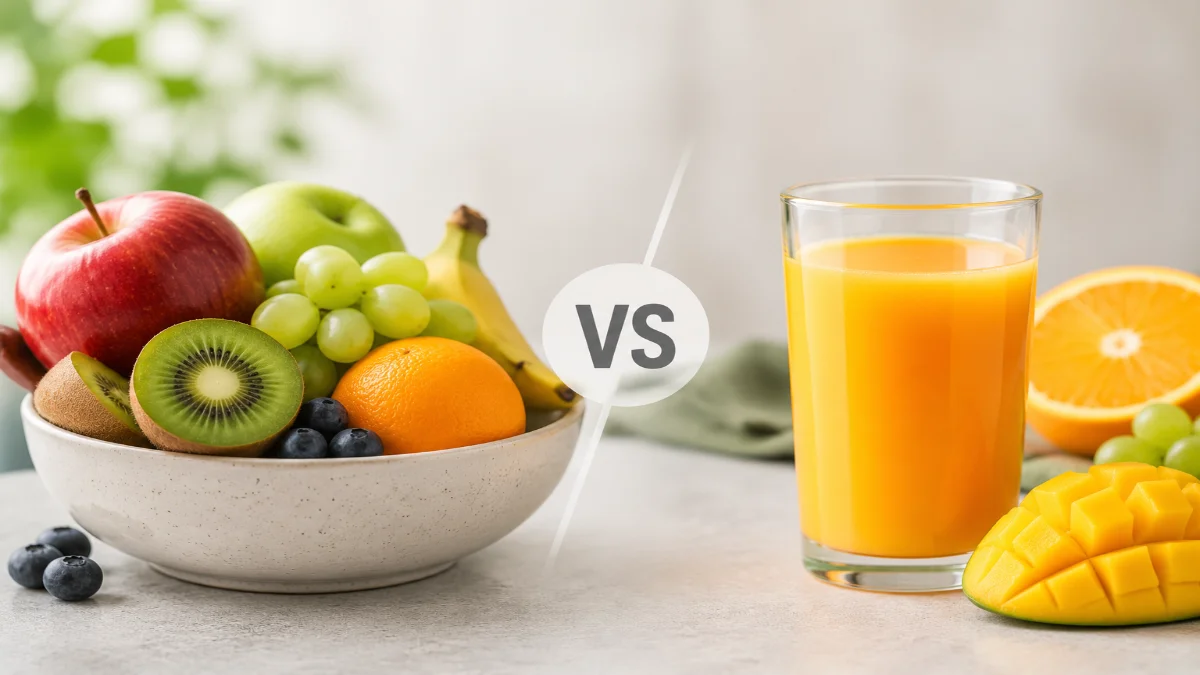
Before we talk about what you should eat, we have to clear up a massive piece of confusion about what fruit actually is. Modern diet culture views fruit juice as a hyper-efficient shortcut to vitamins. We assume that pulling the liquid out and throwing away the pulp is just a way to save time. But in traditional Indian medicine, digestion is entirely about the process of breaking food down. The rough, fibrous part of the fruit is not trash; it is the essential antidote to the sugar.
When you strip away the fiber, you remove the necessary friction (Ruksha) that prevents the sweetness from overwhelming your internal fire (Agni). The whole fruit is perfectly balanced by nature; the sugar gives you energy, and the fiber acts as the brakes. When you juice it, you are throwing away the brakes and slamming on the metabolic accelerator.
The Sugar Tsunami: Why Juice Panics the Liver
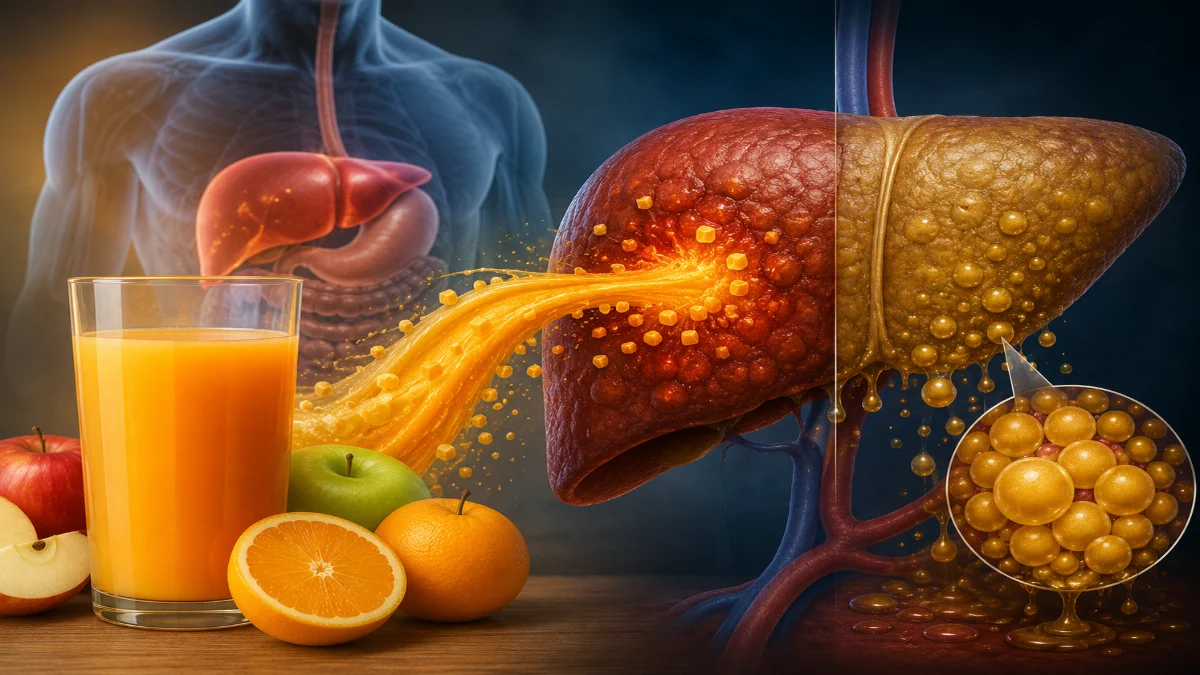
For patients with non-alcoholic fatty liver disease, fruit juice is particularly dangerous because of how the body processes fructose. Unlike glucose, which is used by every cell in your body, liquid fructose goes straight to the liver.
Without the fibrous matrix to slow it down, a glass of juice hits the liver like a tsunami. Because your liver is already congested and sluggish (Kapha imbalance), it cannot process this massive wave of instant fuel. Panicked, the liver immediately converts the excess liquid sugar directly into triglycerides (fat). You are drinking what you think is a healthy detox, but you are accidentally giving your body a cold, sticky, direct injection of liver fat.
The Slow-Release Capsule: How Whole Fruit Heals
When you eat an entire apple, chewing it thoroughly, the sugar is locked inside a complex, fibrous structure. Your stomach has to work diligently to break this matrix apart. This process takes hours, trickling the sugar into your bloodstream slowly and steadily.
Because the energy is released slowly, your pancreas does not need to panic and dump massive amounts of insulin into your blood. Your cells actually have time to open their doors and burn the fuel, and your liver is never overwhelmed. The whole fruit acts as a slow-release energy capsule, while the juice acts as an uncontrolled metabolic flood.
What Are the Wrong Daily Habits Fueling the Congestion?
If your blood sugar or liver enzymes are stubbornly high, your perfectly innocent routines around fruit are likely the exact things keeping your internal fire smothered. Watch out for these subtle traps:
- The "Detox" Juice Cleanse: Believing that a three-day liquid fruit juice fast will clean out your liver is a profound mistake. Flooding a sluggish, fatty liver with pure liquid fructose without any digestive buffer forces the liver to rapidly store more fat, creating more toxic Ama rather than clearing it.
- The Smoothie Trap: You might think blending the whole fruit is safer than juicing it because the fiber is still in the cup. However, completely pulverizing the fiber matrix in a high-speed blender does the mechanical work of digestion for you. It still releases the sugars too quickly for a diabetic body to handle without an insulin spike.
- Late-Night Dessert Fruit: Eating a large bowl of sweet, cold fruit immediately after a heavy, warm dinner destroys your digestive fire. The heavy meal is trying to digest, while the cold fruit ferments on top of it, creating gas, bloating, and sticky metabolic waste while you sleep.
How Can Ayurveda Help You Make Better Fruit Choices?
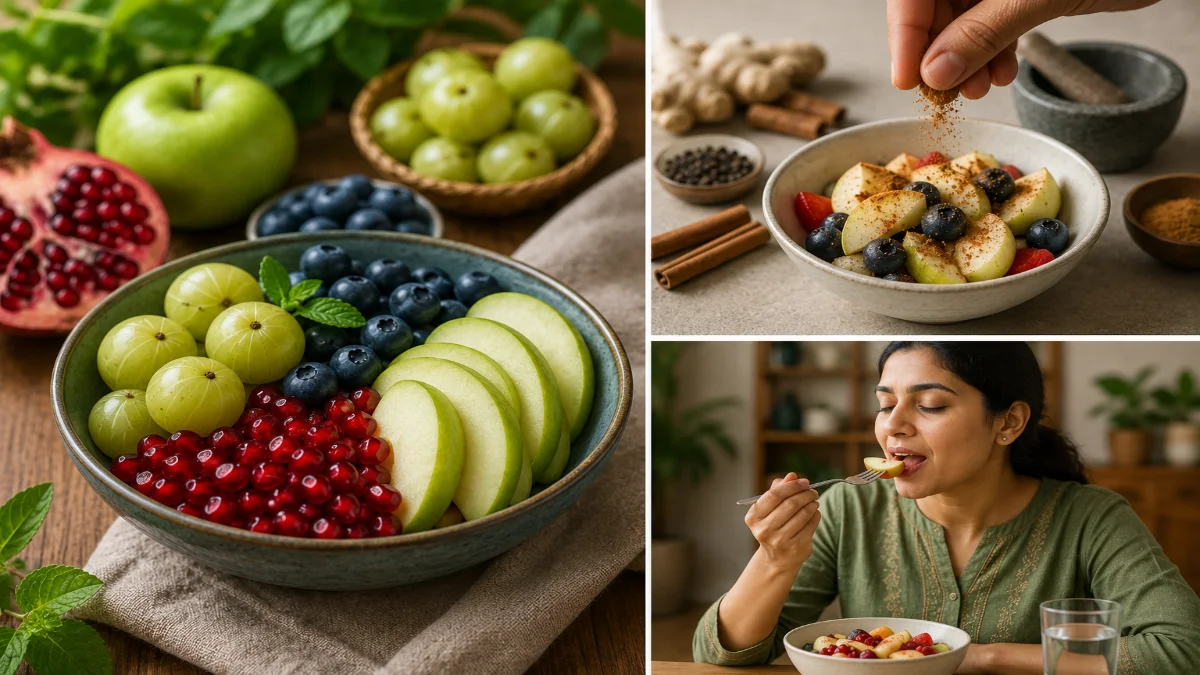
We do not need to banish all sweetness from our lives. Our traditional kitchens use specific preparation methods to make sure the fruit we eat nourishes the body instead of congesting it.
- The Astringent Shift: If you have diabetes or fatty liver, step away from heavy, fleshy, intensely sweet fruits like mangoes, bananas, and grapes. Shift your focus to astringent, fiber-dense, and slightly sour fruits. Fresh berries, tart green apples, pomegranates, and Indian Gooseberry (Amla) physically scrape the digestive tract and clear out trapped stagnation rather than adding to it.
- Spicing the Sweetness: In Ayurveda, it is incredibly common to sprinkle a pinch of digestive spices over fresh fruit. Adding a dusting of black pepper, dry ginger powder, or true Ceylon cinnamon to a bowl of berries or apple slices kindles the digestive fire. The spices ensure the cold, wet nature of the fruit does not extinguish your metabolism.
- The "Chew Your Drink" Rule: If you are going to consume fruit, you must do the mechanical work of eating it. The act of chewing produces saliva, which contains the first crucial enzymes needed to digest carbohydrates safely.
Doctor’s Note
While transitioning from juice back to whole, fiber-rich fruit is universally beneficial, severe metabolic conditions require strict monitoring.
If you have advanced Type 2 diabetes or diagnosed NASH (advanced fatty liver inflammation), even the fructose in whole fruit must be carefully portioned. You must consult your endocrinologist or hepatologist to determine your specific daily carbohydrate limits. Always use traditional kitchen wisdom to guide how you eat, but let your medical team and your blood tests dictate how much you eat.
Conclusion
We spend so much time searching for the ultimate superfood or the perfect detox drink that we forget nature has already packaged our food perfectly. Just because you can extract the sweet liquid from a fruit does not mean your body was designed to handle it in isolation.
Your creeping liver enzymes and afternoon sugar crashes are a living, breathing message. They are asking you to stop taking shortcuts with your digestion; they are begging you to bring the grounding, scraping power of fiber back into your meals, and they are reminding you that the antidote to sugar is always found in the whole food itself. Listen to your body carefully. Honor the brilliant packaging of nature, embrace the effort of chewing, and remember that true healing is a slow, steady process, not a quick, sugary fix!
References:
Fruit Juices: Are They Helpful or Harmful? An Evidence Review - PMC
Health effects of fruit juices and beverages with varying degrees of processing - ScienceDirect