 Published on
20 Jun, 2026
Published on
20 Jun, 2026 Updated on 20 Jun, 2026
 5093
5093Everyone loves a good nap. When that familiar wave of afternoon exhaustion hits, lying down for a quick snooze feels like the most natural thing in the world. It recharges the brain. It boosts mood. It gets you through the rest of the workday.
For the average person, a midday rest is a harmless reboot. But for individuals living with Type 2 diabetes, the story is suddenly looking very different.
Now, however, new research suggests that our afternoon sleeping patterns are turned on their head. Scientists have discovered an under-reported link between daytime sleep and chronic liver disease. These results indicate that daytime sleep may be causing a fragile metabolic system to enter distress.
Here is a closer look at why doctors are suddenly asking their diabetic patients about their afternoon routines, and why you might want to set a stricter alarm the next time you lie down on the couch.
The 30-Minute Threshold
The alarming new insights come straight from ENDO 2026, the Endocrine Society’s annual meeting. A major study tracked 1,900 adults living with Type 2 diabetes over the course of nearly three years. The research team wasn't testing a new pharmaceutical drug. They were looking at daily lifestyle habits. Specifically, they wanted to know how these patients slept.
The results established a boundary. Thirty minutes.
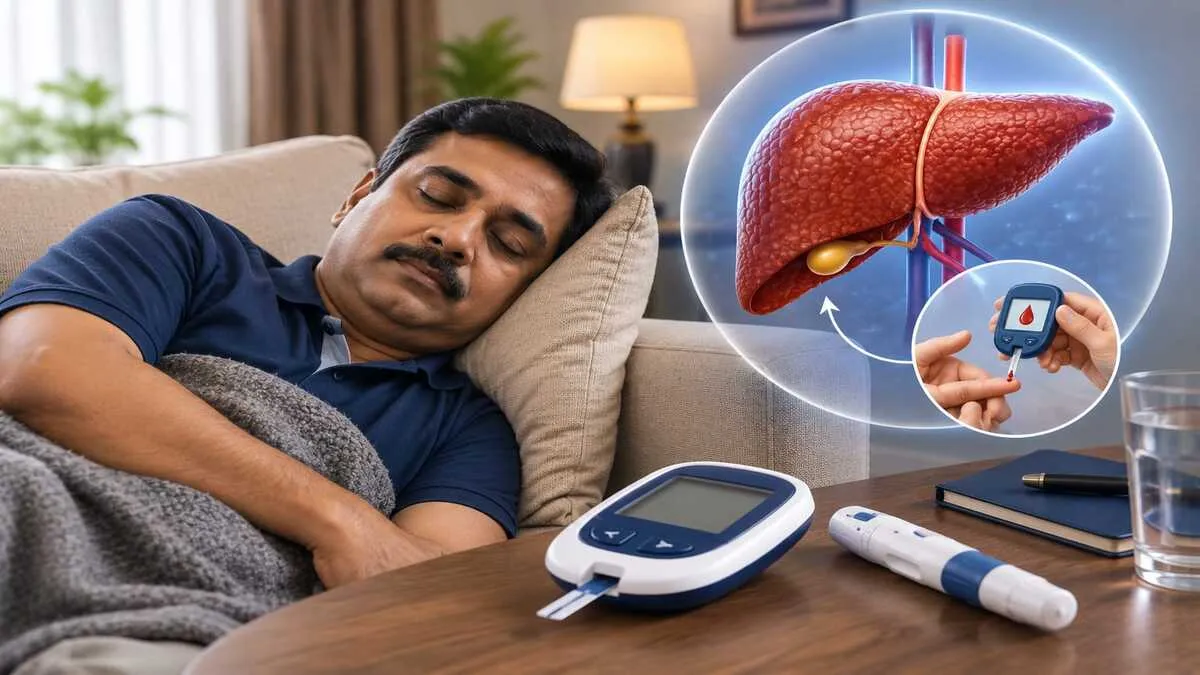
People with Type 2 diabetes who nap for more than 30 minutes a day significantly increase their risk of developing a condition called Metabolic Dysfunction-Associated Steatotic Liver Disease (MASLD).
If that medical term sounds unfamiliar, you might know it by its old name: nonalcoholic fatty liver disease (NAFLD). MASLD happens when excessive amounts of fat build up in the liver. The liver gets bogged down. It becomes inflamed. Over time, this buildup can cause severe scarring and liver failure.
The liver of individuals with Type 2 Diabetes is very prone to fat accumulation due to insulin resistance. They're already on a metabolic tightrope. Whether the person sleeps well at night or not, the new data indicates that long naps may contribute to the liver getting an additional push in the wrong direction.
The Danger Combo: Night and Day
Things get remarkably worse when you look at the whole 24-hour sleep picture.
The researchers divided the study participants into four specific categories. They looked at people with good nighttime sleep and short naps. Good nighttime sleep and long naps. Poor nighttime sleep and short naps. Poor nighttime sleep and long naps.
The last group raised the biggest red flag. Patients who experience poor, fragmented sleep at night and try to compensate with long naps during the day face a massive health penalty. Their risk of developing MASLD more than triples.
It's a logical conclusion to draw. You toss and turn all night. You're feeling very tired. You make up for missed sleep in the afternoon with an hour or two of extra zzz's. It is tempting to think that you are doing your body a favour by sleeping more. You aren't. You are actually confusing your body's internal clock.
When nighttime sleep is poor, cortisol and blood sugar levels naturally spike. When you add a long daytime nap on top of that, you interrupt the body’s natural active hours. The metabolism slows down when it should be burning fuel.
Why the Liver Cares About Your Sleep Schedule?
Why does a nap affect an organ tucked away in your abdomen? The answer comes down to circadian rhythms.
Your liver does not just filter out toxins. It manages your energy bank. It processes fats. It handles glucose. It packages and distributes nutrients. And it does all of this on a very strict 24-hour biological clock.
Your liver assumes you are awake, active, and eating during daylight hours. It requires you to be in the dark and resting while fasting. The liver receives mixed signals when dropped into deep sleep at 2:00 PM. The brain's command to the body is to slow down. The digestive system slows down, which may be engaged in digesting lunch.
When a diabetic body powers down too deeply during the day, the already-impaired insulin response gets sluggish. Glucose isn't driven into the muscle cells effectively. Because the energy isn't being used, it gets routed back to the liver. The liver then converts that excess sugar straight into fat. Day after day, long nap after long nap, that fat accumulates.
Ancient Wisdom Catching Up to Modern Science
Interestingly, this "new" discovery about daytime sleeping and metabolic health isn't entirely new. Modern endocrinology is essentially proving what holistic medicine has suspected for centuries.
There is a growing recognition in wellness circles about the positive potential an Ayurvedic lifestyle holds for managing metabolic conditions like Type 2 diabetes. Ayurveda, the ancient Indian system of medicine, places massive importance on aligning human habits with the natural rhythms of the sun.
In Ayurvedic texts, sleeping during the day (a practice known as Divasvapna) is heavily cautioned against for most adults, particularly those struggling with weight or metabolic sluggishness. Ayurveda links daytime sleeping to an aggravation of Kapha dosha, an energy associated with heaviness, fluid retention, and lethargy. From an Ayurvedic perspective, resting after a meal stifles the digestive fire. It creates toxic buildup. It causes the body to store heavy, damp energy exactly where the liver sits.
Many people discover their blood sugar and energy naturally stabilise when they adopt a lifestyle that respects these natural daily rhythms: have the biggest meal at the hottest part of the day, keep busy in the day, and only go to bed to get a good night's sleep. It is as much a scientific fact (called "circadian misalignment" by modern science) as it is an ayurvedic fact (called "doshic imbalance" in ayurveda).
A New Tool for the Doctor's Office
The implications of this research go way beyond just giving out lifestyle advice. It gives doctors a highly practical, incredibly cheap diagnostic tool.
The blood is typically drawn for liver enzyme panels, which are used for testing liver disease. It must be done by ultrasound imaging. It sometimes even involves painful liver biopsies. However, Dr. Xuejiang Gu, the lead researcher of the study, notes that sleep habits are behaviors that can be modified easily, and patients can discuss these behaviors with a doctor.
A doctor can now sit down with a diabetic patient and ask a very basic question. "How long do you nap in the afternoon?"
If the patient says they regularly sleep for an hour or two, the doctor instantly knows to screen them for liver issues. It is a behavioral red flag that appears long before the bloodwork starts showing signs of organ damage. It allows healthcare providers to catch the problem in the early stages, where liver fat can still be reversed through diet and lifestyle changes.
How to "Nap Wisely"?
Does this mean people with diabetes need to banish naps entirely? Not necessarily.
The public health message coming from the research team is simple. Nap wisely. The 30-minute mark is your boundary.
A 15 to 20-minute afternoon nap is safe as long as you feel completely exhausted throughout the day. You stay in the light sleep stage with a short nap. It rejuvenates the brain without slowing down the metabolism. Your liver continues to function.
But if you are chronically exhausted and needing two-hour naps just to function, that is a symptom, not a solution. It is a sign that your nighttime sleep hygiene needs serious work. Focus on fixing the dark hours. Keep your bedroom cool and completely dark. Put the screens away an hour before bed.
Your liver is working incredibly hard to keep you healthy, especially if you have Type 2 diabetes. Do it a favour. Stay awake during the day. Give your body the chance to burn the fuel it has, and leave the heavy sleeping for the night.
References:
Long naps may increase the risk of chronic liver disease in people with diabetes | Endocrine Society
Long daily naps increase liver disease risk in diabetic patients