 Published on
03 Jul, 2026
Published on
03 Jul, 2026 Updated on 03 Jul, 2026
 5135
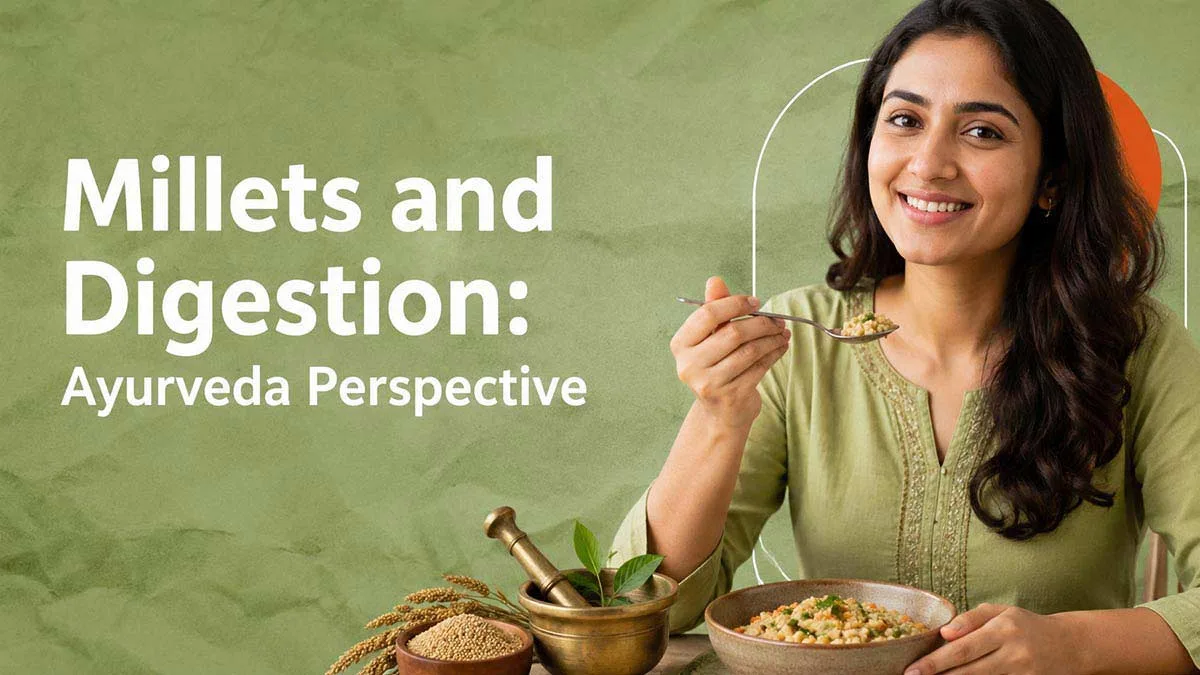
5135Millets are everywhere right now. They are on restaurant menus, in health food stores, in government nutrition campaigns and all over social media feeds of anyone who has ever searched for healthy eating tips. Jowar rotis, bajra khichdi, ragi cookies, foxtail millet upma. The millet moment is very much here.
And honestly, good. Millets deserve their comeback. They are genuinely nutritious, fibre rich, gluten free and have been a staple of Indian diets for thousands of years before refined grains pushed them off the plate.
But here is what the enthusiastic millet revival conversation often misses. Millets are not a one size fits all health food. They have specific properties that make them excellent for some people and genuinely problematic for others. And Ayurveda, which has worked with millets for centuries, has a lot of nuanced and practical things to say about how, when and for whom they are most beneficial.
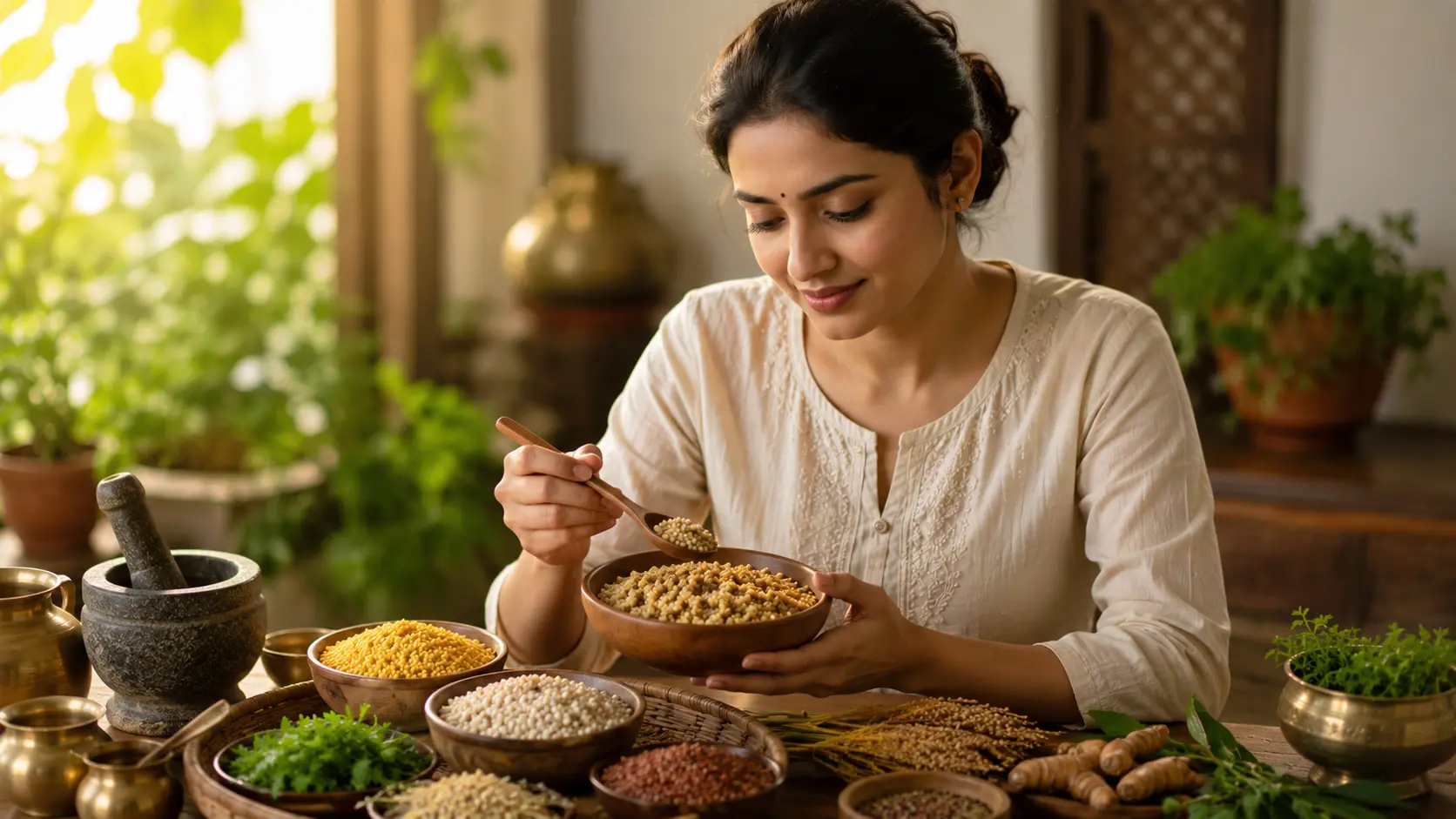
Why Millets Fell Off and Why They Are Back
For decades, millets were considered poor man's food. Urbanisation and the green revolution pushed wheat and rice to the centre of the Indian plate and millets got quietly sidelined to rural kitchens and forgotten recipes.
What changed is that modern nutrition caught up to what rural communities never forgot. Millets are nutritionally dense, have a lower glycaemic index than refined wheat and rice, are rich in fibre, contain meaningful amounts of iron, calcium and B vitamins and are naturally gluten free. For a country dealing with rising rates of diabetes, obesity and nutrient deficiencies, millets made a very strong case for their own comeback.
The Indian government declared 2023 the Year of Millets and global attention followed. Which is all great. The only thing missing from most of the conversation is the Ayurvedic perspective on how these grains actually behave in the digestive system.
What Ayurveda Says About Millets Generally
Ayurveda classifies food based on its Guna or qualities, its Rasa or taste, its Virya or potency and its Vipaka or post digestive effect. Millets as a group tend to share certain broad characteristics.
Most millets are considered Ruksha or dry in quality, Laghu or light in nature and have an astringent or slightly bitter taste depending on the variety. They are generally Kapha reducing and tend to have a drying effect on the body's tissues and channels.
This makes them genuinely excellent for certain conditions and certain body types. And genuinely less suitable for others. Which is the nuance the millet conversation tends to skip over.
The Most Common Millets and How Ayurveda Views Them
Some of the millets are:
- Jowar or Sorghum: Considered cooling in potency, light to digest and particularly good for Pitta dominant people. Supports healthy digestion without generating excess heat. Good for people with acidity, mild inflammation and those needing to manage weight. One of the gentler millets for the digestive system.
- Bajra or Pearl Millet: Warming in nature, heavier than jowar and considered strengthening and nourishing. Particularly suitable for winter consumption when the body needs warmth and grounding. Good for Vata types and people needing to build strength. However its warming and Pitta aggravating properties make it less ideal in summer or for people already running hot.
- Ragi or Finger Millet: Rich in calcium, cooling in nature and considered nourishing for bone and muscle tissue. Ayurveda views ragi as beneficial for Pitta and Vata types. Its high fibre content is excellent for healthy elimination. However ragi is on the heavier side digestively and people with weak Agni may find it difficult to process in large quantities.
- Foxtail Millet or Kangni: Considered dry and light, cooling in nature and beneficial for managing blood sugar and reducing Kapha accumulation. Suitable for people with diabetes, sluggish digestion and weight concerns. One of the lighter millets and generally well tolerated.
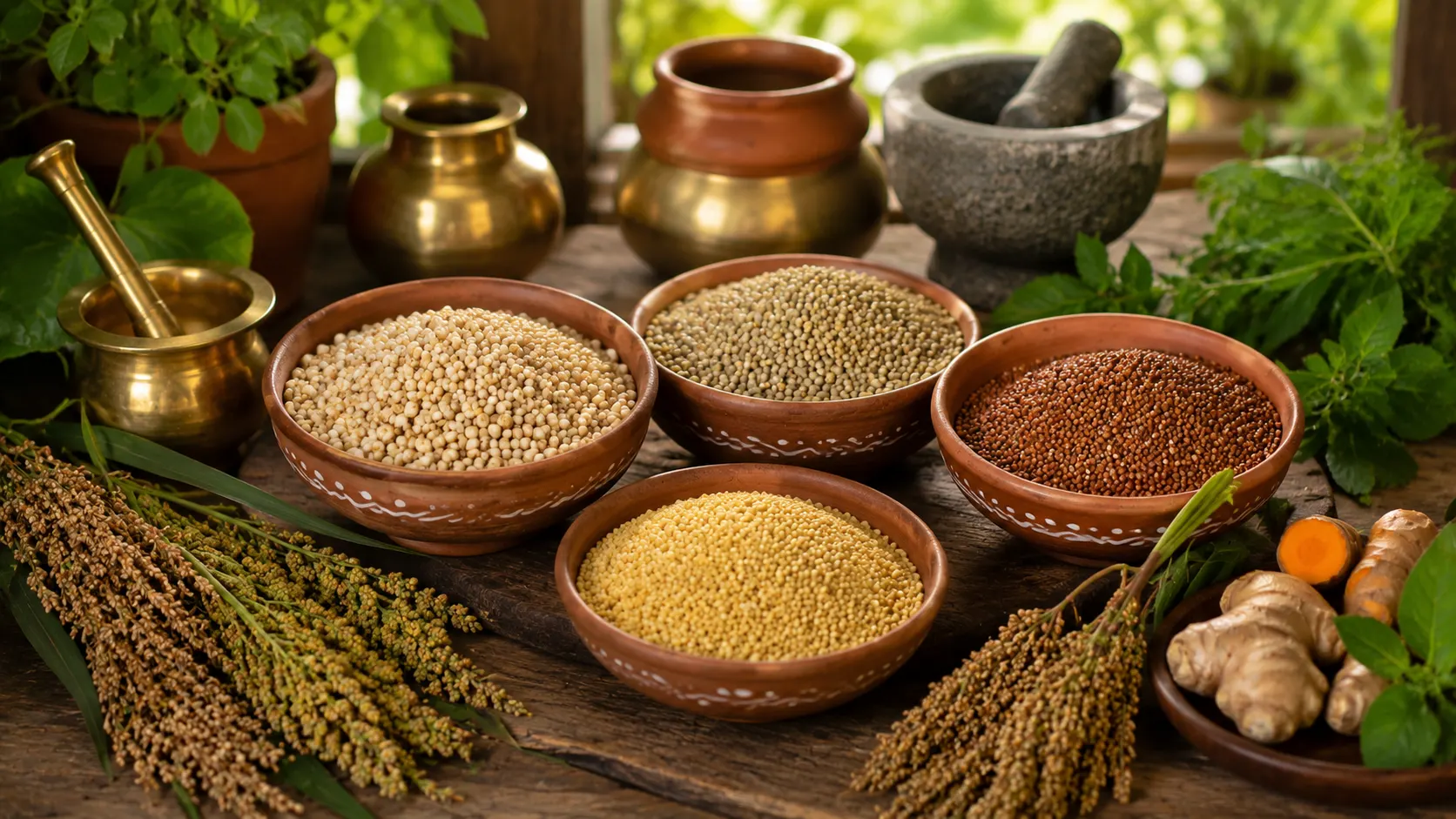
The Digestive Challenges Millets Can Create
Here is the part that tends to get left out of the millet enthusiasm online.
- High fibre causing digestive trouble in sensitive systems: Millets are significantly higher in fibre than refined grains. For people with already healthy digestion this is genuinely beneficial. For people with weak Agni, irritable bowel, sensitive guts or those just making the transition from refined grains, the sudden fibre increase can cause bloating, gas, cramping and irregular bowel movements. The gut needs time to adjust.
- Phytic acid reducing mineral absorption: Raw and improperly prepared millets contain phytic acid, an antinutrient that binds to minerals like iron, calcium and zinc and reduces their absorption. This is particularly relevant given that millets are often promoted specifically for their mineral content. Preparing millets correctly through soaking, sprouting or fermenting significantly reduces phytic acid and improves nutrient bioavailability.
- Goitrogenic properties in some millets: Certain millets, particularly bajra and jowar consumed in very large quantities over long periods, contain compounds called goitrogens that can interfere with thyroid function. This does not mean avoiding these millets entirely but it does mean variety and moderation matter especially for people with thyroid conditions.
- Dryness aggravating Vata over time: The Ruksha or dry quality of most millets, consumed regularly and without adequate fat or moisture in preparation, can increase Vata over time. This shows up as dryness in the skin and channels, constipation, bloating and gas, joint discomfort and general roughness in the body. People who go all in on dry millet rotis every single day without balancing preparations often experience these effects within weeks.
How Ayurveda Recommends Preparing Millets
This is where classical Ayurvedic wisdom becomes immediately practical. The how of preparation changes the digestive experience of millets dramatically.
- Always soak millets before cooking: Soaking for six to eight hours or overnight reduces phytic acid, improves digestibility and reduces the cooking time. This single step makes a meaningful difference to how well millets are absorbed and how easy they are on the digestive system.
- Add healthy fats generously: Because millets are dry and light in Ayurvedic terms, cooking them with ghee, sesame oil or coconut oil counteracts their dryness and makes them more nourishing and easier to digest. A jowar roti cooked with ghee is very different from a dry jowar roti in its effect on the body. This is not just a flavour suggestion. It is digestive logic.
- Use warming spices: Adding cumin, ginger, black pepper, ajwain or coriander to millet preparations supports digestion and reduces the gas and bloating that can come with high fibre foods. Traditional millet recipes from across India almost always include these spices. There is a reason for that.
- Eat as porridge or khichdi rather than dry flatbread: Moist preparations like millet khichdi, porridge or upma are gentler on digestion than dry flatbreads eaten without adequate fat or moisture. For people with weaker digestion, starting with moist millet preparations rather than dry rotis makes the transition much more comfortable.
- Ferment when possible: Fermented millet preparations like ragi mudde, fermented ragi porridge or fermented bajra dosas significantly reduce antinutrients, increase probiotic content and improve overall digestibility. Traditional South Indian and Rajasthani cuisines have always included fermented millet preparations for exactly these reasons.
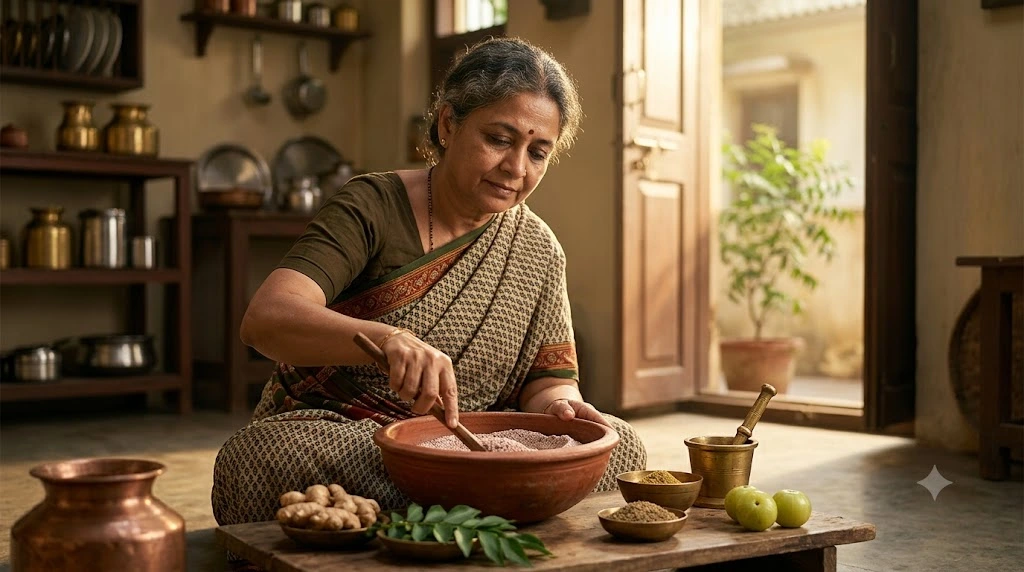
Who Benefits Most From Millets and Who Should Be Careful
Lets see who benefits most and who should be careful:
- Best for Kapha types: The dry, light and astringent qualities of most millets directly counter Kapha accumulation. People with sluggish digestion, tendency to weight gain, congestion and lethargy benefit enormously from making millets a regular part of their diet.
- Good for Pitta types in appropriate varieties: Cooling millets like jowar and ragi suit Pitta types well, especially in summer. Avoid heavy warming millets like bajra in large quantities if Pitta is already aggravated.
- Needs care for Vata types: Vata types should approach millets thoughtfully. Soaking well, cooking with generous ghee, eating in moist forms and pairing with warming spices makes millets much more suitable for Vata. Dry millet rotis eaten alone without fat are the least Vata friendly way to consume them.
- People with weak digestion: Start slow and small. Little millet and barnyard millet are the gentlest starting points. Build up gradually as digestion strengthens rather than switching entirely to millets overnight.
- People with thyroid conditions: Enjoy millets in variety and moderation. Avoid relying on any single millet exclusively in very large quantities. Cooking rather than eating raw reduces goitrogenic effects significantly.
Final Thoughts
Millets are genuinely wonderful and their revival is well deserved. But like every food in Ayurveda, they are not a universal fix to be consumed enthusiastically by everyone in every form without thought.
Understanding which millet suits your body type, preparing it correctly through soaking and adding fat and spices, and consuming it in forms that match your digestive strength turns millets from a trendy health food into a genuinely powerful everyday ally.
The tradition knew what it was doing when it paired bajra rotis with generous ghee and a warming dal in winter. That was not just a recipe. That was Ayurvedic nutrition in action.
Reference Links
- National Institute of Nutrition India on Millets and Nutrition https://www.nin.res.in/
- Ministry of AYUSH, Government of India on Ayurvedic Dietary Principles https://main.ayush.gov.in/
- World Health Organization on Nutrition and Whole Grains https://www.who.int/health-topics/nutrition