 Published on
11 Jul, 2026
Published on
11 Jul, 2026 Updated on 11 Jul, 2026
 5107
5107The monsoon season in India is a beautiful relief. The moment the heavy rains finally break the summer heat, the earth smells amazing, and everything turns a lush, vibrant green. But along with the cool breeze and the hot cups of chai, the monsoon also brings a familiar, quiet panic to almost every neighborhood.
As the rain puddles form, the mosquitoes start breeding, and soon enough, the dreaded word starts echoing in our homes and WhatsApp groups: Dengue.
As soon as one member of the family contracts dengue fever, the whole life cycle of the family changes. The sharp, painful body pains and super high fever are enough to make one cry. The body pains and super high temperature are scary enough. But the fear is generally when the blood test results come in, and everyone's eyes focus on one number: the platelet count.
Although hospitals are getting filled up and pharmacies are running out of fever-reducing tablets, most of us are aware of one secret weapon of Indian families. Whenever someone gets a Dengue diagnosis, they immediately go to the backyard or to the local vegetable vendor and look for one thing: fresh green leaves from papaya.
For generations, drinking the dark, unbelievably bitter juice of crushed papaya leaves has been our go-to rescue remedy for Dengue. But is it just an old wives' tale, or does it actually do something to your blood? Can you just drink glasses of it like a normal juice? Let us break it down simply.
Why Dengue Makes Our Bodies Crash?
To understand why papaya leaf juice works, we first need to understand what Dengue actually does to you. We are all told that Dengue drops our platelet count, but what does that mean?
Platelets are tiny bits of cells in our blood that work like microscopic bandages. Platelets quickly gather at the site of a leak or bleed in the body and form clumps to plug the hole. Once the Dengue virus gets into the bloodstream, it will suddenly assault the bone marrow, the same factory that makes these platelets.
From an Ayurvedic perspective, Dengue is seen as a severe, life-threatening spike in Pitta dosha (the energy of fire and heat) combined with Vata dosha (erratic wind). The virus acts like a raging, toxic fire inside your bloodstream. This intense internal heat literally "burns up" your blood tissues (Rakta dhatu) and destroys the platelets faster than your body can make them.
When your platelets drop dangerously low, your blood loses its ability to clot. This is why you feel so deeply exhausted, why your joints feel like they are breaking, and why there is a severe risk of internal bleeding.
The Bitter Savior: Papaya Leaf Juice
When the body is burning with this kind of toxic, viral heat, sweet or heavy foods will not save it. According to Ayurveda, the ultimate weapon against toxic Pitta fire is the Tikta rasa, the bitter taste.
And if you have ever tasted fresh papaya leaf juice, you know it is arguably one of the most bitter things on the planet.
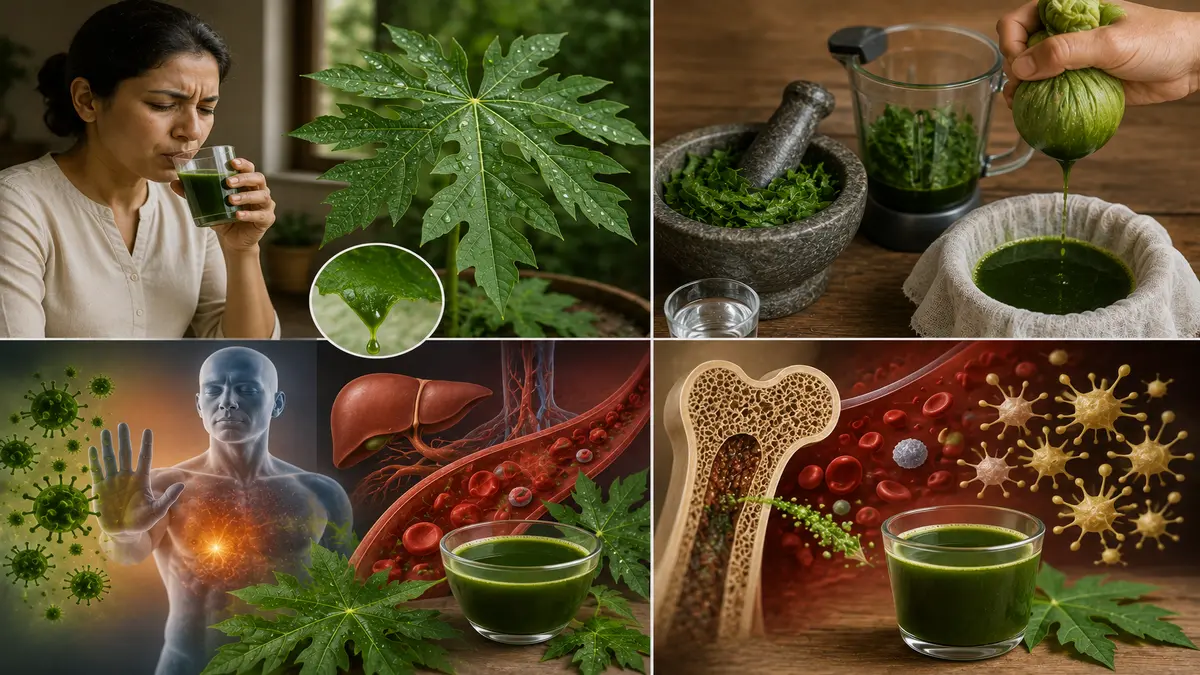
This remedy is prepared from fresh and tender green papaya leaves (medium-sized, not too old and tough, but not too young). Wash them thoroughly, tear them into pieces, and crush them in a stone mortar or blender with a small splash of water. Afterwards, the pulp is squeezed through a clean muslin cloth to remove a dark, thick, green liquid.
What Does It Do for You? Papaya leaf juice is basically a heavy-duty cooling agent and a powerful blood purifier (Rakta shodhak). Because it is so intensely bitter and astringent, it immediately goes to work on the fiery Pitta dosha in your liver and bloodstream.
Modern science has actually caught up with our grandmothers on this one. Studies have shown that papaya leaves are packed with specific enzymes (like papain and chymopapain) and unique phytochemicals that directly stimulate the bone marrow. While the bitter qualities clear the viral toxins from the blood, these active compounds kick the bone marrow factory back into high gear, dramatically speeding up the production of fresh, healthy platelets.
Doctor’s Note
We must always prioritise safety alongside traditional wisdom. While papaya leaf juice is an excellent, scientifically backed supportive therapy for increasing platelet counts, it is not a replacement for professional medical care. Please seek immediate hospital care if: the patient experiences severe abdominal pain, persistent vomiting, bleeding from the gums or nose, blood in the stool, extreme fatigue, or sudden restlessness. Never rely solely on home remedies. Dengue patients must have their blood platelet counts monitored daily by a doctor. The biggest risk in Dengue is severe dehydration due to plasma leakage; patients must be given massive amounts of oral rehydration fluids (ORS), and in severe cases, intravenous (IV) fluids at a hospital are absolutely mandatory to save their life.
When and How is the Best Time to Drink It?
If you or a loved one is recovering at home with a doctor's guidance, timing and dosage are everything. You cannot drink this like a refreshing glass of Aam Panna. It is potent medicine.
Don't use a huge glass. It is generally recommended that you take the juice 2 times a day, 2 tablespoons (20-30 ml) at a time. It is best taken on an empty stomach to enable the enzymes, but some prefer to take it between light meals as it is very bitter and may tend to upset the stomach.
If the extreme bitterness makes you gag, you can mix a tiny drop of pure honey into the spoon just before swallowing it, but try to avoid diluting it with huge amounts of water or sugar.
A Few Things to Keep in Mind
While this traditional leaf is a lifesaver for many, it is very potent. Here is who should be a little careful:
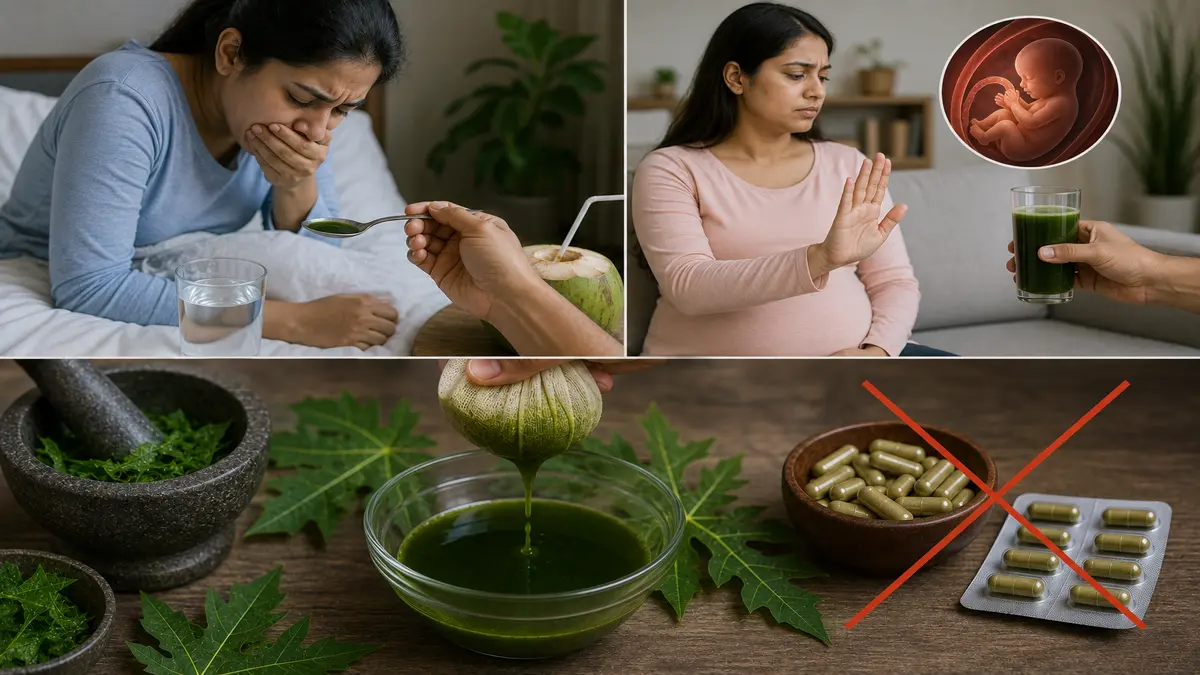
- If you are feeling violently nauseous: Dengue ruins your appetite and makes your stomach very sensitive. Because papaya leaf juice is profoundly bitter and astringent, forcing down a large amount can instantly cause severe vomiting. If the patient is already throwing up their food, do not force the juice. Give them tiny, half-teaspoon drops, or focus entirely on medical IV fluids and coconut water until their stomach settles.
- For expecting mothers: Pregnant women should never take papaya leaf juice. The leaves are very rich in active substances and in latex, which can induce uterine contractions and hence can be dangerous for the pregnancy.
- Fresh is always better: While you can find papaya leaf extract pills in modern pharmacies now, Ayurveda always favors the fresh Swarasa (freshly squeezed juice). The life force (Prana) and the immediate cooling effect of the fresh green leaf cannot be fully replicated in a dried, processed capsule.
Conclusion
Helplessness isn't always necessary when a seasonal virus breaks out. Our forebears studied nature carefully and determined just which plants contained the natural remedies to our most violent fevers.
Papaya leaf juice has survived the test of time because it may support platelet recovery. It is a brilliant, natural way to support your body's internal factory when it is under severe attack. Just remember to use it wisely. Listen to your body, work alongside your doctor, keep hydrating with plenty of fluids, and let this incredibly bitter, powerful green juice help you get back on your feet. Stay safe, sleep under a mosquito net, and take care of your family this monsoon season!
References:
Dengue fever treatment with Carica papaya leaves extracts - PMC
Papaya Extract to Treat Dengue: A Novel Therapeutic Option? - PMC
Is Papaya Leaf Extract the Sweet Remedy for Dengue-Induced Thrombocytopenia? - PubMed