 Published on
23 Jul, 2026
Published on
23 Jul, 2026 Updated on 23 Jul, 2026
 5082
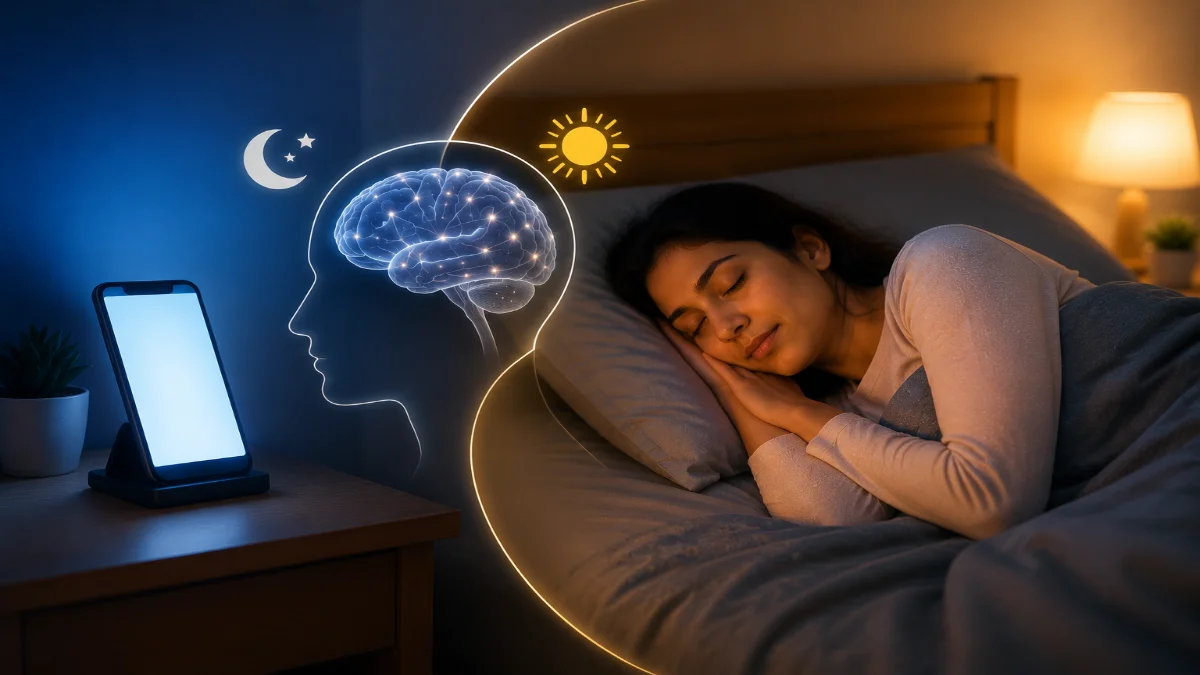
5082You know the routine. The lights in the house go out. The phone lights up. You lie in bed, promising yourself you will only check a few emails or scroll for five minutes. But 45 minutes later, the room is still bathed in that familiar, artificial glow. We often brush off late-night screen time as a bad habit. A mild vice that just leaves us needing an extra cup of coffee the next morning. But it is far more than that. It is a fundamental disruption of your neurobiology.
Neurologists and sleep researchers are increasingly alarmed by the chronic sleep deprivation defining modern life. The connection between the quality of our sleep and the long-term health of our brains is absolute. Sleep is not a passive state of resting. It is a highly active, biologically critical period of repair and maintenance. When we introduce a smartphone screen into that process, we are throwing a wrench into a delicate neurological machine.
Understanding what exactly is happening behind your eyes when you scroll at midnight is the first step toward reclaiming your sleep.
The Blue Light Illusion
To understand the damage, we have to look at the mechanics of light and time. Your body operates on a circadian rhythm, a 24-hour internal clock that dictates everything from hormone production to body temperature. This clock is primarily anchored by light.
For hundreds of thousands of years, the fading of the sun was the universal biological signal that it was time to shut down. The process is elegant. As it gets dark, a tiny structure in your brain called the pineal gland begins producing melatonin. Melatonin is the chemical messenger that tells your nervous system to cool off, lower your heart rate, and prepare for sleep. Smartphones fundamentally hijack this system.
The screens on our devices emit a high concentration of short-wavelength blue light. In nature, we only encounter this specific type of light on a bright, sunny day. When you stare at your phone in a dark room, the photoreceptors in your eyes absorb that blue light and send an urgent message to your brain. The sun is up. The pineal gland instantly halts melatonin production. Your brain thinks it is high noon. It isn't.
This creates a state of forced biological jet lag. You might feel physically exhausted, but neurologically, your brain is wired and alert, resulting in what doctors call "sleep onset latency", the frustrating inability to actually fall asleep once you finally put the phone down.
The Night Shift: What Sleep Actually Does
The problem with delayed sleep isn't just about feeling groggy. It is about what you are missing when you cut your sleep short.
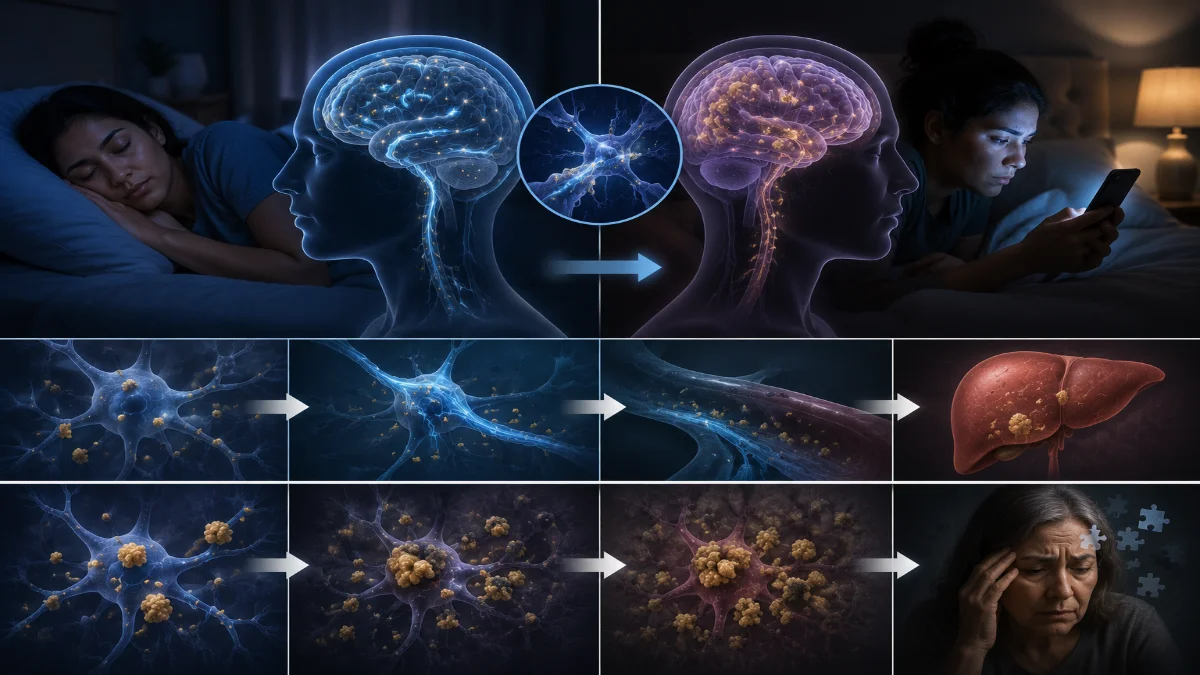
While you are sleeping, your brain goes to work. During deep sleep (also known as slow-wave sleep), your brain initiates a highly sophisticated cleaning process via the glymphatic system. You can think of the glymphatic system as the brain's internal janitorial staff.
During the day, as your neurons fire and process information, they create metabolic waste. One of the primary waste products is a protein called amyloid-beta. When you enter deep sleep, the brain cells actually shrink slightly. This allows cerebrospinal fluid to rush in and wash all that accumulated metabolic trash out of the brain and into the circulatory system, where it is processed by the liver.
When you use screens late at night, you don't just delay falling asleep; you fragment your sleep architecture. You spend less time in the deep, restorative phases of sleep. Without adequate deep sleep, the janitorial staff never finishes the job. The trash piles up. This is a critical issue because the buildup of amyloid-beta is one of the primary hallmarks of Alzheimer's disease and other forms of cognitive decline.
Consistently shortening your sleep with screen time is essentially denying your brain the ability to wash itself.
Ancient Wisdom for Modern Overstimulation
Modern science relies on terms like circadian disruption and blue light frequencies. But the fundamental concept of evening overstimulation has been addressed for centuries.
In the Ayurvedic tradition, the end of the day is a time to manage Vata, the energetic principle associated with movement, air, and the nervous system. The rapid scrolling, the glowing lights, and the influx of information from a screen are viewed as extreme Vata-aggravating activities. They scatter energy up into the head, exactly when energy should be moving downward to ground the body.
An Ayurvedic approach to sleep, or Nidra, focuses entirely on the transition. It recognizes that you cannot jump from a highly stimulated state to deep rest in five minutes. Instead of fighting the phone with sheer willpower, Ayurveda suggests replacing the habit with deeply grounding sensory practices. This might look like drinking warm milk steeped with a pinch of nutmeg and ashwagandha, an adaptogen known to calm the nervous system. It could involve Padabhyanga, the practice of massaging the soles of the feet with warm sesame oil before bed to draw energy away from a hyperactive brain. It isn't just about putting the phone away; it is about actively signaling to the nervous system that it is safe to power down.
Doctor's Note
Chronic sleep disruption caused by late-night screen exposure isn't just a habit to break; it's a direct neurological stressor. If late-night scrolling has escalated into persistent insomnia, severe morning brain fog, chronic migraines, or noticeable memory gaps, do not rely solely on lifestyle tweaks. Consult a neurologist or board-certified sleep specialist to evaluate your sleep architecture and protect your long-term cognitive health.
Building a Defense Strategy
You are not going to throw your phone in the river. We live in a digital world, and these devices are necessary tools. But protecting your brain requires establishing hard boundaries between your waking life and your sleep architecture.
The 90-Minute Rule
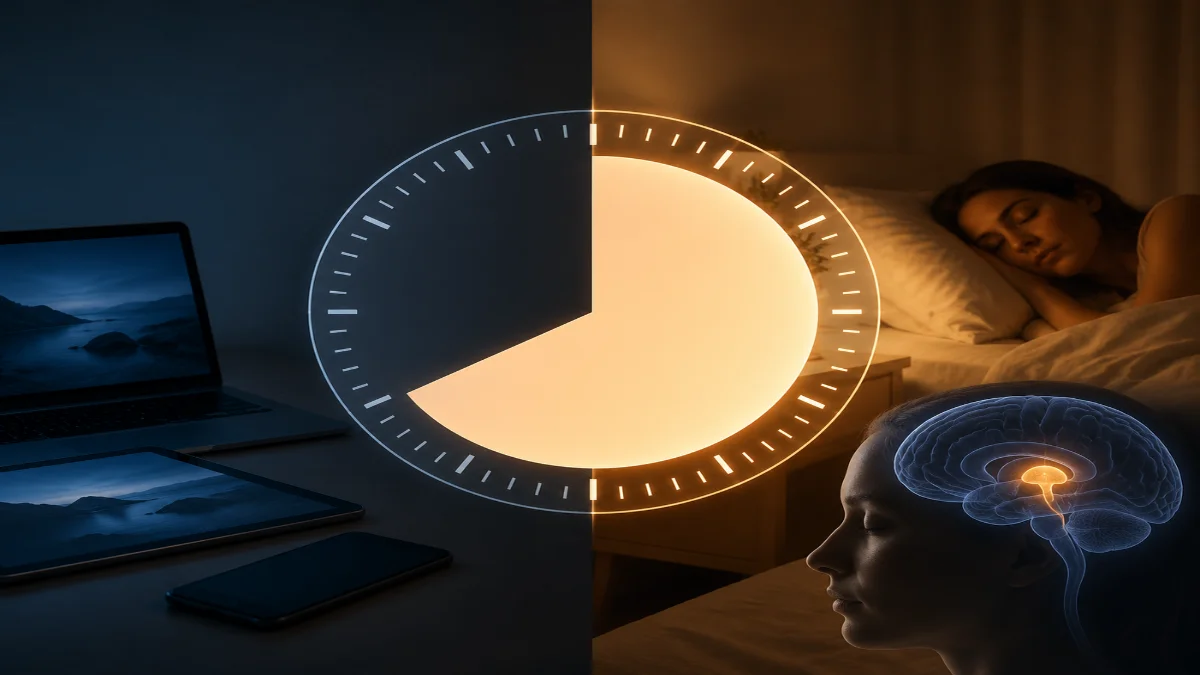
The most effective intervention is absolute. Keep screens out of the 90 minutes preceding your target bedtime. This is the exact window your pineal gland needs to ramp up melatonin production without interference.
Blue Light Blockers and Filters
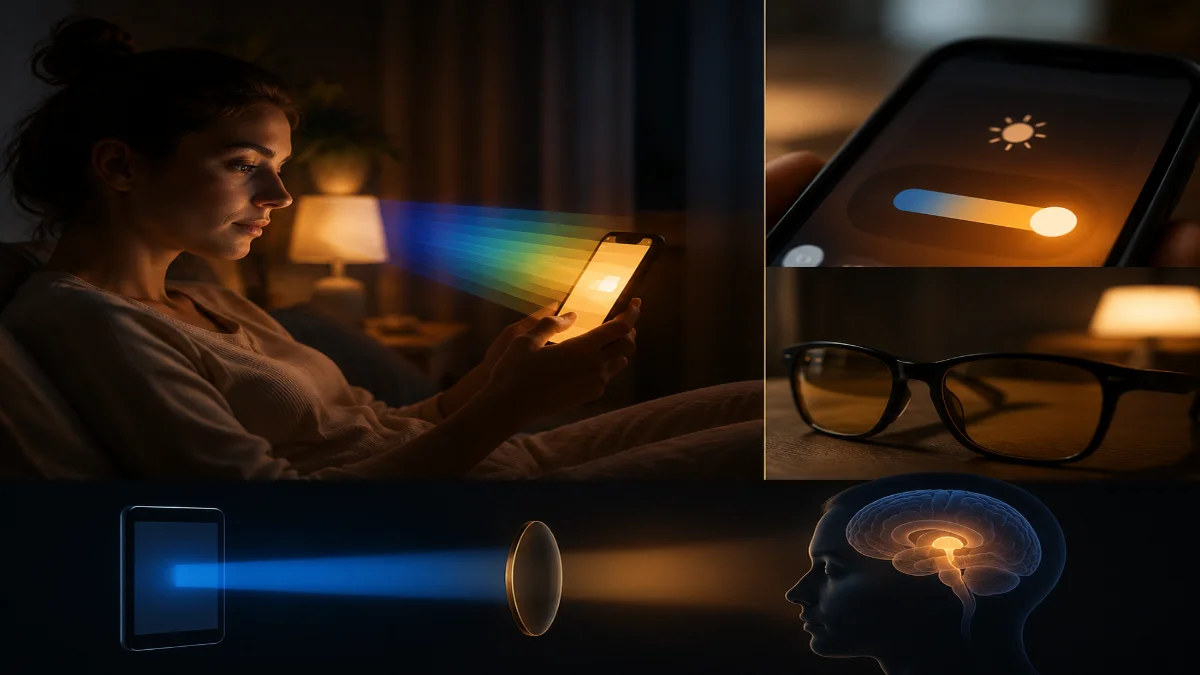
If you absolutely must use a screen, use the "night shift" or "warm color" setting built into most phones, which strips out the blue frequencies. Blue-light-blocking glasses can also help. However, be aware that these are band-aids. They block the light, but they do not block the psychological stimulation of reading the news or answering emails.
Temperature Control
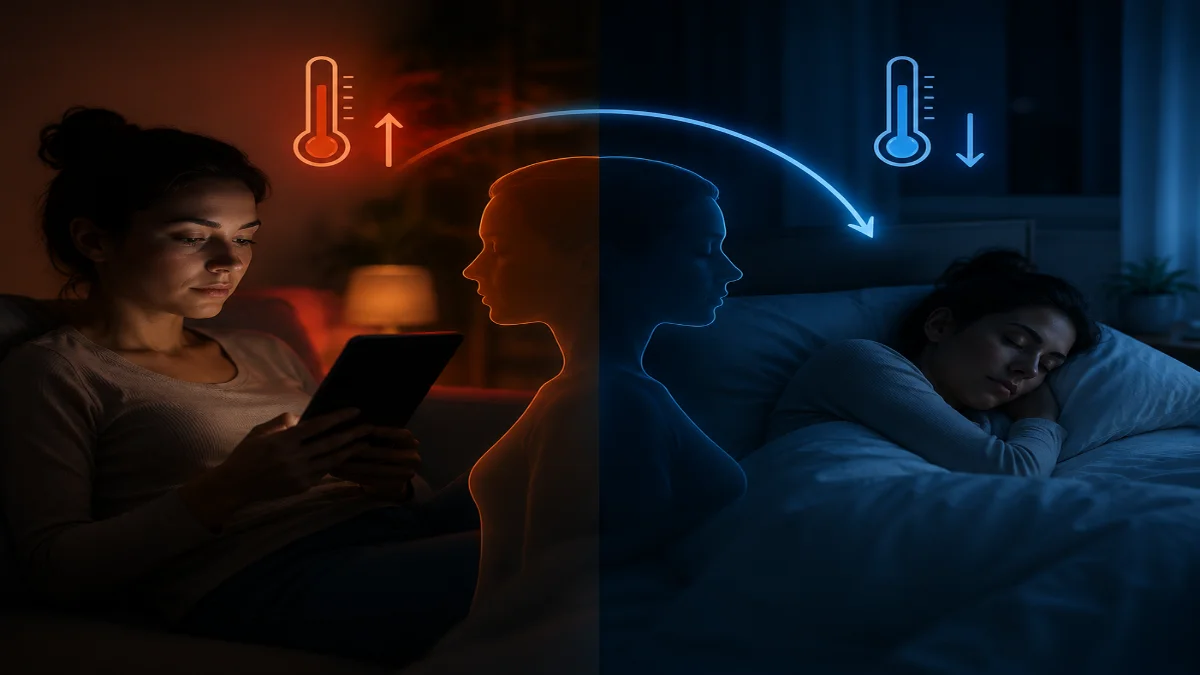
Your body temperature needs to drop by about two degrees to initiate sleep. Screens keep you awake, which keeps your temperature elevated. Help the process along by keeping your bedroom cool, around 65°F (18°C).
Choosing the Pillow Over the Screen
We have to stop viewing sleep as a luxury we can negotiate with. It is a biological imperative. The screen is engineered to capture your attention, but your brain is engineered to require rest. Give your brain the darkness it needs to do its job.
Every time we choose the phone over the pillow, we are not just losing an hour of rest; we are actively preventing the brain from washing away the toxic byproducts of the day. Whether you look at it through the lens of circadian neurobiology or the grounding, Vata-pacifying wisdom of Ayurveda, the message is exactly the same: your brain requires a clear, unmistakable transition into darkness to survive and thrive.
The next time you lie in bed and feel that familiar urge to reach for the light of your screen, pause. Remember the delicate, hard-working neurological machine behind your eyes. The news, the emails, and the endless social feeds will all be waiting for you tomorrow morning. But the vital window for your brain to heal, repair, and clear the slate is fleeting. Turn off the screen, honor your biology, and give yourself the ultimate luxury of simply powering down.
References:
Sleep as the Foundation of Brain Health - PMC