Diabetes, arthritis, skin disorders & more! Get a free consultation with Top Ayurveda doctors - +91 9266714040 | No travel, No waiting – Consult Jiva’s doctors from home via video call! | Get up to 10% OFF! On Authentic Ayurveda Products! Best Prices only on the brand store. Visit : www.store.jiva.com
Sciatica is one of the most common diseases in India, which not only affects people physically but mentally as well. Living with this type of discomfort means delaing wth highly unpredictable days. Sometimes you feel perfectly fine, and other times, just sitting, standing, or trying to sleep becomes very frustrating. It quickly drains your energy and makes simple household chores feel very heavy. Because the aching can be there for weeks, it often leads to deep physical stress and exhaustion. Managing this is not about finding an overnight cure. Instead, it is about finding a gentle, steady rhythm to protect your body and slowly take back control of your peace of mind.
What Sciatica Is
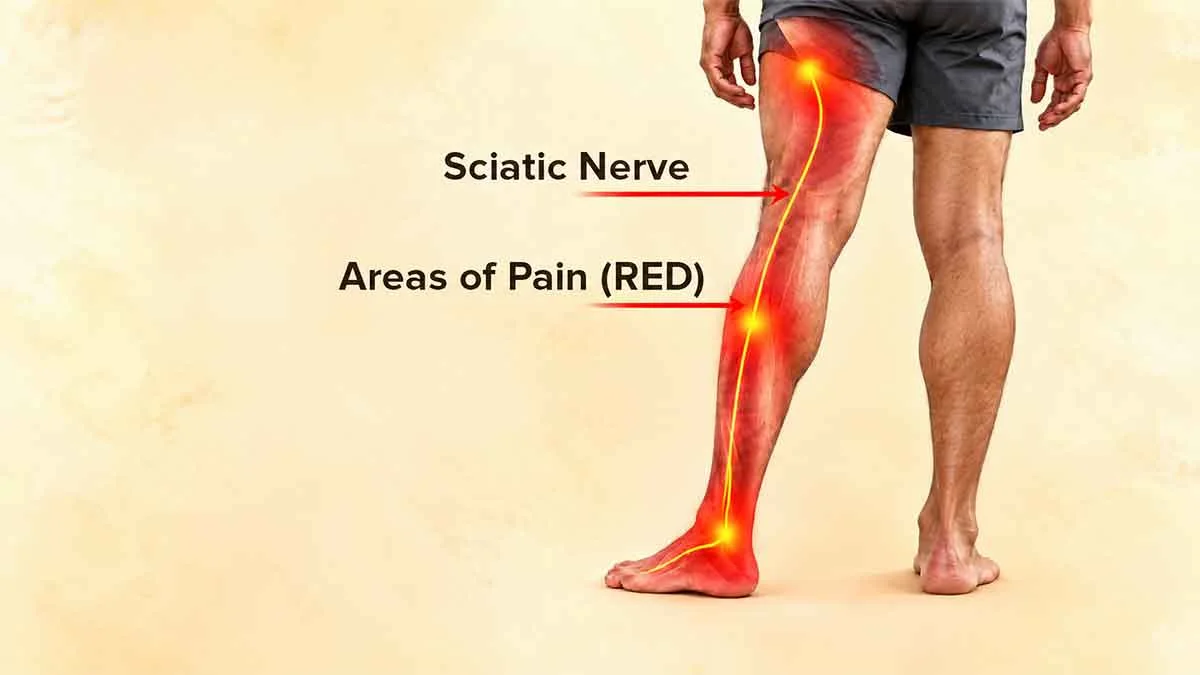
Sciatica is not actually a disease itself, but a painful symptom of a trapped or pinched nerve. The sciatic nerve is the thickest and longest nerve in the human body, running from the very bottom of your lower back, through your hips and all the way down to each leg. When this nerve is affected, usually by a swollen disc or a very tight muscle, it sends a sharp, burning pain, tingling, or heavy numbness shooting directly down the back of one leg.
The Ayurvedic View
In Ayurveda, sciatica is understood as Gridhrasi. The word Gridhra means Vulture, because the intense pulling force makes a person walk with a slight tilt or limp, resembling how a vulture walks. Ayurveda sees this condition as an imbalance in the Vata Dosha (responsible for air and movement in the body)& sometimes Kapha Dosha (responsible for lubrication & body fluid); vitiation along with Vata dosha is called Vata-Kaphaj.
When too much cold, dry Vata and Kapha energy gets trapped in the lower back, it dries out the natural lubrication around the spine. This blocked energy then shoots down the leg channels, causing the heavy stiffness and sharp, pulling ache that makes simple walking so much more difficult. It is also caused by weak digestion fire, Agni, which causes Ama buildup in the body, which gets accumulated in the tiny channels, Srotas, of the body.
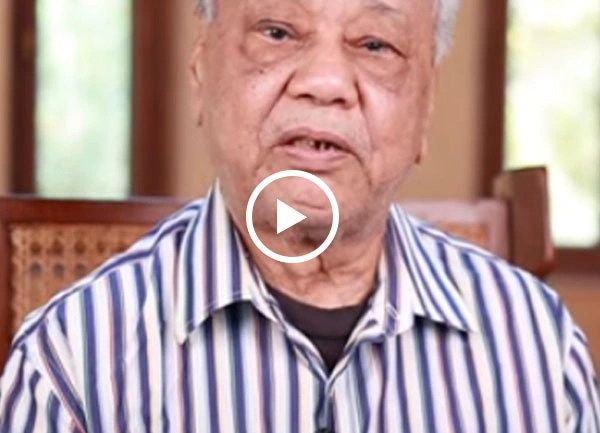
I was suffering from sciatica since 2025 and Doctors prescribed me for surgery but I believe in ayurveda and came here to consult with Dr Bhawna , she advised me 14 days panchakarma treatment. After 14 days panchakarma. I stayed here for 14 days and got 90% relief in my symptoms. I thankful to Dr Bhawna and team to cure me.
Thank you Lalita, Preeti, Naina and Tanuja who give me thefalies and personal care.
Reception staff was also very coperative.
Sciatica Symptoms
Sharp Shooting Pain
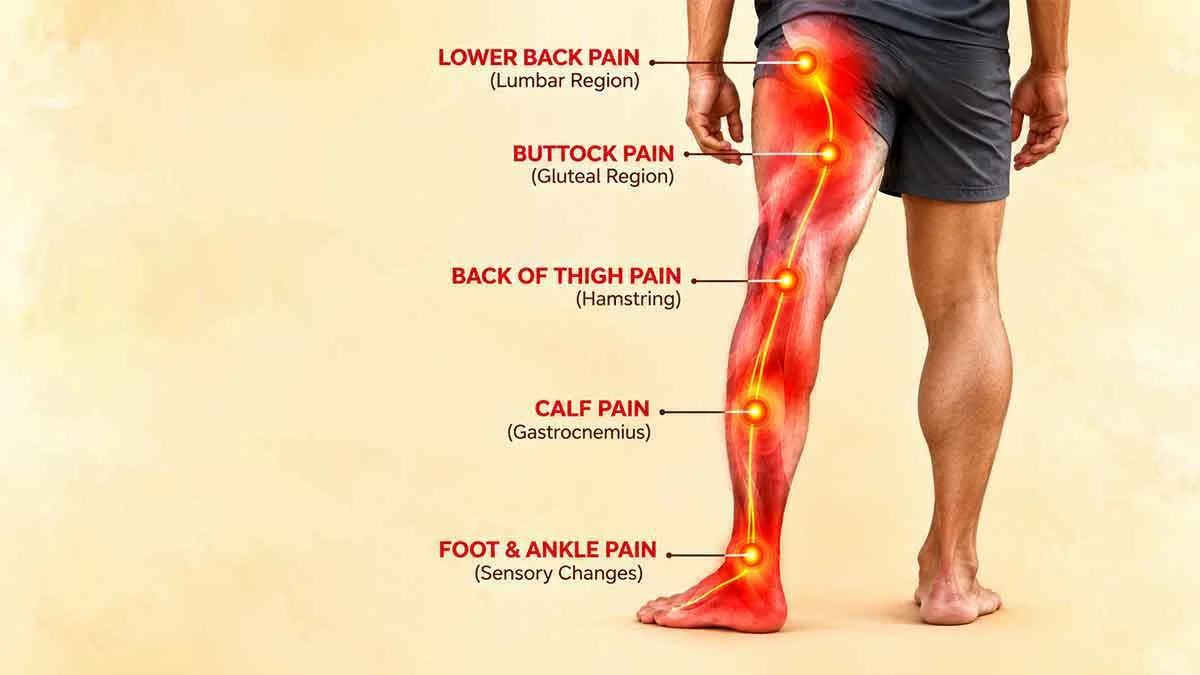
The most common symptom of Sciatica is a shooting pain down the leg, referred to as an electric shock or burning sensation. It may originate in the lower back or buttocks and spread down the leg.
Numbness
Sciatica sometimes causes numbness in the back or leg. This happens if the nerve is too compressed or irritated.
Muscle Weakness
Sciatica may cause weakness in the affected leg and lead to difficulty walking, standing or lifting the leg. This happens when nerve signals are not reaching the muscles correctly.
Pain That Gets Worse with Movement
Sitting for long periods, coughing, standing and even sneezing can make Sciatica pain worse. The pain may also radiate when bending or lifting the legs when lying down.
Pain in the Buttocks or Lower Back
Even though the pain typically radiates down the leg, it may also originate in the lower back or buttocks and feel like a dull pain or constant discomfort.
Limited Mobility
Sciatica can make it harder to move or do everyday tasks like walking, bending, or sitting comfortably. The pain may be constant or sometimes intermittent.
Pain Affecting One Leg
Sciatica typically affects just one side of the body but may involve both sides if the problem affects both sciatic nerves.
Typical Pain Pathway And Neurological Symptoms
Ayurveda identifies this pain pathway as Gridhrasi, a condition deeply rooted in a vata energy imbalance. To understand the condition more clearly, the practitioners pay close attention to the quality, location, and timing of your symptoms. They look for specific feelings like a Ruk (a deep, continuous ache that drains your physical energy), Toda (sharp pain, a pricking sensation that feels like an electric shock when you try to walk), and Stambha (a heavy physical stiffness that makes standing up very difficult for a person.
You may notice progressive leg weakness that causes your foot to drag or sudden and unexpected changes in your bladder or bowel control. These are serious neurologic stop signs indicating that the nerve is dangerously compressed and needs urgent medical care. Check out our Symptoms of Sciatica page for more.
What Causes Sciatica Pain?
Sciatica happens when the longest nerve in your body gets squeezed. Most of the time it happens because of a herniated or slipped disk. Your spine has soft, jelly-like cushions in each bone that act as shock absorbers. If these cushions bulge backward or press directly against your sensitive nerve, then it may cause severe pain. If the spinal canal gets narrowed, then it can put pressure on the spinal cord and nerves. It can also happen when there is an overgrowth in the bone on the spine, narrowing the space for nerves due to ageing or arthritis. Check out our Causes of Sciatica page for more.
Risk Factors of Sciatica
Certain risk factors can cause sciatica pain in a person, which include the following:
Age: Generally, people between the ages of 30 and 40 years old face the highest risk.
Obesity: If a person has excessive body weight, it can increase the mechanical pressure on the spine and can trigger inflammation.
Sedentary Lifestyle: If you are someone who sits all day, it can weaken the muscle strength that supports your lower back.
Occupation: Jobs that require heavy weight lifting, prolonged sitting or driving, and frequent twisting, they may also be associated with sciatica.
Diabetes: High blood sugar in the body for a long time can cause nerve damage in a person.
Consuming Tobacco Products: Smoking can also increase the risk of sciatica because nicotine use reduces blood flow to the spine and can make spinal discs weaker.
Previous Injury or Surgery: If a person has any sort of injury because of an accident or any surgery, then it can also increase the risk of sciatica pain in them.
If you have sciatica pain, knowing the risk is very important for an individual for early treatment and management.
How Is Sciatica Diagnosed?
Diagnosing sciatica in both modern and Ayurvedic medicine involves different and unique approaches. In modern medicine, doctors usually do a simple physical exam by checking your leg, analyzing the pain and symptoms, when the pain started, where it hurts more, and the location. If the condtion is chronic, then MRI, X-rays, CT scans, or other tests will be recommended to get a clear picture.
In Ayurveda, the diagnosis looks deeply at your internal health. The Ayurvedic practitioner will do a Nadi Pariskhsa, pulse diagnosis, to check which of the internal energies (Vata, Pitta, and Kapha) is aggravated. The ayurvedic chiktsak may also ask you questions related to your diet and lifestyle, and he may also do a physical examination as well. To know everything in detail, just check out the diagnosis page for more. Check out our Sciatica Diagnosis and Red Flags: When to Seek Medical Care page for more.
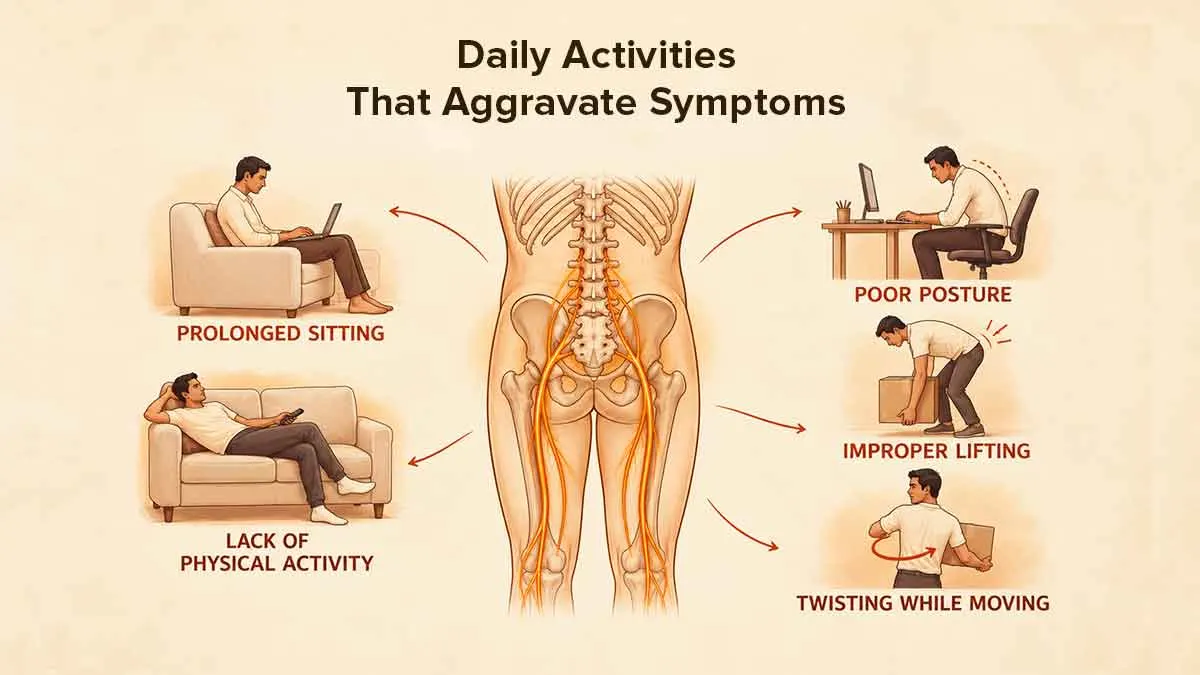
Daily Activities That Aggravate Symptoms
Many daily activities aggravate sciatica pain in an individual; it is very important to avoid them for better relief:
Prolonged Sitting: If you are someone who sits for hours, it can only worsen the pain. Even if your job demands long hours of sitting, you must change your sitting position and take a break every half hour.
Lack of Physical Activity: If you have a sedentary lifestyle, it can weaken your lower back and core. Without physical activity, the spine struggles to maintain proper alignment. Gentle movement and mild exercise can help in managing sciatica pain.
Poor Posture: If you slouch while sitting or standing, it can stress your spine and sciatic nerve. Try to fix your posture because misaligned posture aggravates nerve pain.
Improper Lifting: Using back muscles to lift groceries, boxes, children, or shopping bags instead of bending at the hips and knees strains the lower spine.
Twisting While Moving: If you twist your spine to carry an object or reach backward, it can put pressure on the spine, which can trigger intense nerve pain.
If you do any of the above activities in your daily life, then fixing them must be your priority or the first step towards managing and calming the pain.
Movement And Recovery Overview
Movement is very important for the body, and when you're dealing with problems like sciatica, being sedentary becomes the poison that rots health even more. In Ayurveda, Suksham-Vyayam (gentle exercises) is also recommended. Low-impact exercises and gradual activity help boost blood flow, reduce inflammation, and prevent muscle stiffness. Going for short walks daily also helps in keeping your body mobile without straining your spine.
Certain activities are also avoided when you are dealing with sciatica, such as heavy weight lifting, high-impact workouts, deep forward bends, and work that strains the core, as they can put heavy pressure on the spine, resulting in nerve compression and deep pain. Check out our Movement With Sciatica: Walking, Standing and Stairs page for more.
Treatment Options For Sciatica
Managing sciatica isn't about finding an overnight cure; it is about using a steady, gentle treatment approach to calm the pain, swelling, and safely restore your natural movement. Sciatica pain can range from a dull pain to a severe electric shock; it needs warm care. It has the following treatment options:
Home Relief
It can be used to calm the pain or swelling at home, but should not be considered the only treatment approach for sciatica pain. It can be used along with your medications for better relief. You can use certain home remedies to calm the pain, which include:
Use Ice & Heat: Apply an ice pack to the affected area for 15-20 minutes to reduce the swelling at first for 3-4 days. Later, you can switch to a hot pad to relax the tight muscles.
Keep Moving: Do not just lie on your bed all day; it can increase the pain. Take short and easy walks, mild exercise, or do simple household tasks to keep your body active and prevent your muscles from getting stiff.
Do Gentle Stretches: Try mild lower back or glute stretches at home, and do not force yourself much. Stop when you start feeling severe pain.
Medical Treatment
Medical care primarily focuses on reducing the acute inflammation and physically taking the heavy pressure off the pinched nerve so your body can heal:
Targeted Physical Therapy: It involves focusing on relieving nerve compression, correcting muscle imbalance, and stabilizing the lower back. It helps build deep core strength to support your fragile spine, preventing the disc from bulging backward in the future.
Anti-Inflammatory Medications: Certain over-the-counter medicines are used to help relieve sciatica pain by reducing swelling and irritation around the sciatic nerve.
Targeted Injections: If the nerve compression is very severe and standard medicines are not working, then doctors might suggest targeted steroid injections. This delivers powerful, anti-inflammatory medicine directly to the nerve root, offering a temporary window of deep pain relief so you can start moving safely again.
Ayurvedic Treatment
Unlike treatments that only mask your discomfort for a few hours, Ayurveda does ot believe in quick, temporary fixes. Instead of just numbing the surface pain, this approach dives deep to find and fix the actual root cause of your sciatica. It focuses on completely healing your body from the inside out. By calming the trapped nerve and naturally repairing the tissue damage, Ayurveda ensures your body heals at the core. Most importantly, it deeply strengthens your lower back muscles and weak nerves, protecting your spine and preventing this heavy pain from returning in the future.
Ayurvedic Assessment And Supportive Care
In Ayurveda, assessing sciatica goes beyond only numbing the pain; it's deeply about understanding the internal imbalance in your body. An Ayurvedic practitioner carefully examines your daily digestion and internal blockages. The main goal of supportive care is to gently warm the body, naturally lubricate tight nerves, and encourage deep, lasting healing in an individual.
Fixing The Digestive Fire, Agni
Ayurveda teaches that digestion is the epitome of our overall health. When it's weak, the food is not digested properly, which creates heavy, sticky, and toxic waste in the body known as Ama. These toxins gather in your lower back, blocking the energy flow. Therefore, a doctor will ask you detailed questions about it, and his first step will be fixing it with Ayurvedic treatment approaches.
Snehana & Swedana Therapy
To calm the irritated sciatic nerve, Ayurvedic care recommends deploying warming physical therapies. Snehana involves gentle massage using warm, medicated oils to deeply lubricate stiff muscles. Swedana, a gentle herbal steam therapy, opens blocked channels, Srotas, that help relieve tissue stiffness and safely release trapped nerve pressure. Both therapies are done by a well-experienced Ayurvedic practitioner only after consulting the whole problem happening in you.
Ayurvedic Herbs
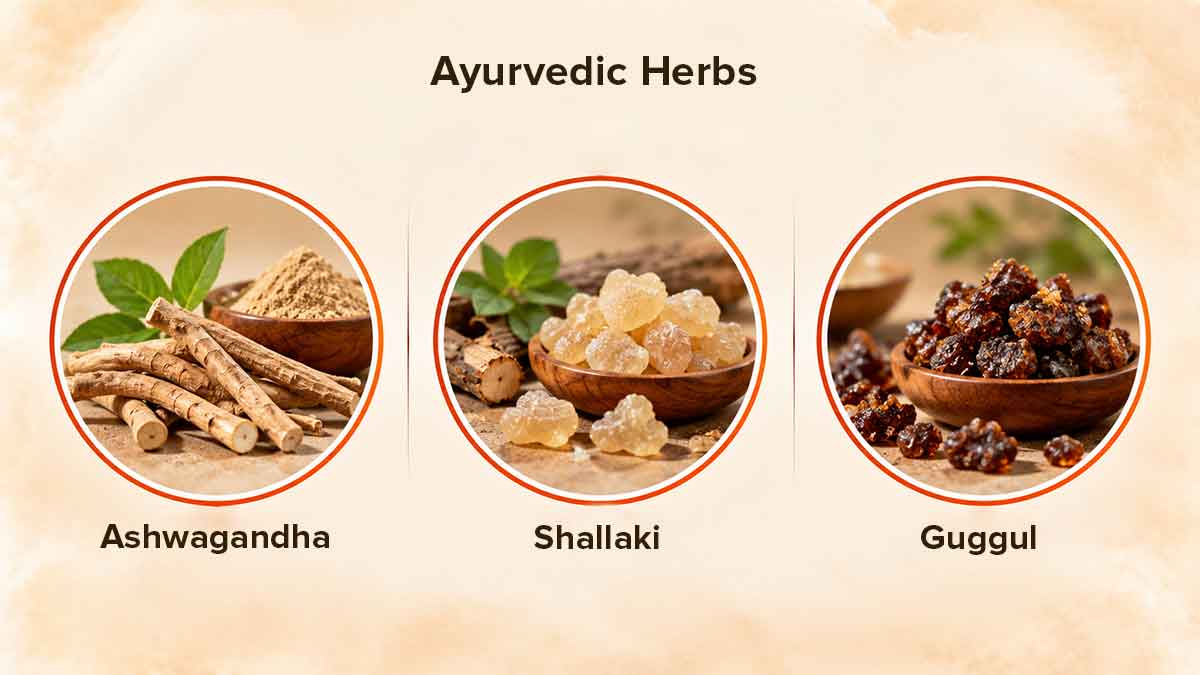
Ayurveda uses certain herbs that help naturally calm internal inflammation and rebuild damaged nerve strength. Ayurvedic practitioners usually recommend herbs like Ashwagandha to nourish the weak nervous system. Herbs like shallaki and guggul are used to calm the pain and cure the stiffness. These herbs must be taken under medical supervision and only after consulting your problem with a well-experienced Ayurvedic doctor. Self-consumption of these herbs may have the opposite effect and can worsen the symptoms of sciatica.
Panchakarma Detoxification Therapies
An Ayurvedic practitioner also suggests Panchakarma therapies. It involves five deep internal cleansing therapies; among them, Basti is considered the most effective for Vata imbalance. Virechana, or therapeutic purgation, is suggested when Pitta dosha is imbalanced in the body. And in cases when a person has severe constipation, then Mridu Virechana (mild purgation) using castor oil and vitex negundo juice is suggested. These therapies are done by a well-experienced Ayurvedic practitioner only after consulting the whole problem happening in you.
Vata-Kapha Pacifying Diet
Ayurveda recommends a strong and warm diet for fixing Vata and Kapha dosha in the body. It suggests avoiding cold, dry, and processed food as they increase nerve stiffness. Instead, warm, freshly cooked, and easily digestible food is suggested. Nourishing soups, cooked root vegetables, and healing spices like ginger naturally help in clearing blockages and deeply nourishing the body.
Lifestyle Measures For Managing Sciatica
Ayurveda relies heavily on making small, simple changes to how you live day to day, because your lifestyle can be one of the major factors in why you are having sciatica pain:
Follow a strict daily routine: Eating your meals and going to sleep at the same times every day is a very effective way to calm down the nervous system, moving Vata energy and Kapha energy
Switch to warm-cooked foods: Avoid refrigerated food and iced cold water. Sticking to warm, freshly cooked meals keeps your digestion strong.
Sleep properly: Proper rest is very important for your body. Get a proper sleep of 7-8 hours a day to keep your mind and body active.
Stop consuming tobacco products: Avoid alcohol and tobacco because they contain substances that can harm your health. These substances can cause harm to your body.
Move daily: Appropriate movement is very important; sitting all day can make your spine and lower back weak. Do mild exercise daily for better spine health.
Manage your mental stress: Deep worry and anxiety actually increase Vata energy in the body, which can contribute to sudden pain flare-ups. Take a few minutes to simply sit quietly and breathe deeply to keep your body relaxed.
Implementing these changes may help calm the sciatica pain and help in living a better and more healthier life.
Red Flags To Watch Out For
Seek immediate medical care if you experience the following symptoms:
If you experience difficulty urinating or sudden loss of control of your bowel or bladder.
If your legs are getting weaker day by day and don't get better even after rest.
If you have lost sensation in your legs or numbness is creeping into your legs or spreading to both legs.
If your pain gets steadily worse or does not improve after a few weeks of self-care.
You have unexplained weight loss, fever, night sweats, or chills, as it signals severe infection.
These symptoms must not be ignored as they can be a sign of a serious problem, and neglecting them can result in loss of bone or movement for life.
How We Assess Sciatica Patients at Jiva Ayurveda
At Jiva Ayurveda, our doctors start with a careful checkup to figure out what exactly is causing nerve pain. This involves looking at.
Your current symptoms, such as joint pain, stiffness, swelling, or trouble moving and bending your joints.
Your medical history and any past treatment that you have taken.
What you eat and how you live day to day, since these habits directly affect the sciatica pain.
Your daily stress, sleep quality, and digestion, which are also considered during an Ayurvedic assessment.
Any other health problems you have or medicines you are currently taking.
Once they have all the information, the doctors create a personalised Ayurvedic treatment plan aimed at treating the joint pain and improving daily comfort.
Our Step-by-Step Care Process
When you come to Jiva Ayurveda, we want your healing journey to feel simple, personal, and completely stress-free. Here is exactly what you can expect when you start your treatment with us:
Get In Touch: Leave your details with us or just give us a call directly on +91 9266714040.
Book Your Slot: Meet our doctors at your convenience by visiting one of our 80+ clinics nationwide, or booking a video call for just Rs. 49 (down from 299).
Finding the root cause: Our doctors assess the factors contributing to your condition, including the arthritis type, medical history, lifestyle, and Ayurvedic assessment.
Personalised treatment plan: After understanding your problem, we will make a personalised treatment plan that will be tailored just for you.
We Stay With You: The process is not just about prescribing medicines. We stay in touch with you to see how you are doing and adjust your treatment regimen accordingly.
Estimated Cost of Treatment for Arthritis at Jiva Ayurveda
Knowing how much your treatment will cost is important. At Jiva Ayurveda, we keep our pricing clear and upfront so you can choose the right plan for your health according to your needs.
Treatment Cost
If you are looking for regular, ongoing support, the starting cost for your medicines and doctor's consultation is usually between Rs 3000 and Rs 3500. Just keep in mind that this is just the baseline cost; the real cost may vary depending on the severity of the disease.
Protocol
For a deeper step-by-step approach, we offer specific healing packages that last for 3 to 4 months. You make a one-time payment ranging from Rs 15000 to Rs 40000 for the entire period.
The package includes:
All medicines and doctor visits
Hands-on physical therapy
Customised diet plans, yoga and meditation therapies
Mental well-being support sessions
Why Should You Choose Jiva Ayurveda?
Jiva Ayurveda provides customised and root-based Ayurvedic treatment that is primarily focused on providing health and wellness solutions for specific patients.
Patient-specific treatment: Jiva’s therapies and treatments are structured by professional doctors according to each patient’s unique prakriti, diet, and lifestyle.
Root-based treatment: Jiva focuses on the specific root cause of the health condition or disease rather than focusing only on medicines, with an emphasis on addressing underlying factors.
Authentic Ayurvedic medicines: Jiva provides authentic Ayurvedic medicines; we follow strict quality parameters to ensure safety and effectiveness.
Protocol-based analysis: We follow research-backed clinical methods to provide structured assistance to our patients.
Assist 8000+ patients every day: Jiva's doctors are specialised in a wide range of Ayurvedic healthcare, and every single day, we assist more than 8000 people.
Explore The Sciatica Topic Hubs
To help you better understand your sciatica recovery journey, explore the sections below to find detailed, practical solutions for every part of your daily experience:
Sciatica Symptoms: In this section, we will explain how sciatica pain feels. We cover the complete journey of the pain from initial tingling to heavy, sharp electric pain that aggressively travels down your leg.
Sciatica Causes: In this section, we will learn about the reasons why the pain occurs in the first place. Here, we will talk about the root causes, such as slipped disc, poor daily posture, natural ageing, Vata and Kapha imbalance, or weak digestion, etc.
Sciatica While Sitting: Staying in a chair all day can rapidly increase your nerve pain. This hub covers the ergonomic office setups, proper chair adjustments, and smart daily habits to keep your spine safe and pain-free while working.
Sleeping With Sciatica: Waking up in sharp pain very frustrating. In this section, we share the absolute best sleeping positions and pillow placement to keep your spine naturally aligned, helping you finally get deep and restful sleep.
Movement With Sciatica: Bending and walking feel impossible when you have sciatica. In this, we teach you how to get out of bed safely, how to move without putting much pressure on the spine, and how to manage your daily chores.
Sciatica Exercise & Recovery: In this section, we will learn about the importance of doing impactful, gentle, and simple workouts to keep your body and spine health maintained.
Sciatica Diagnosis & Red Flags: It is crucial to know the difference between the mechanical ache and a medical emergency. This hub covers all the red warning signs that need medical attention and what diagnoses are done.
Sciatica is pain that radiates along the sciatic nerve from the lower back to the legs. It’s usually caused by nerve compression, disc problems, or aggravated Vata in Ayurveda.
Symptoms include lower back pain, shooting leg pain, tingling, numbness, or weakness in the legs. Pain often worsens when sitting or standing for long periods.
Ayurveda links sciatica to aggravated Vata, causing dryness, stiffness, and nerve irritation. Treatments focus on balancing Vata, nourishing nerves, and relaxing muscles naturally.
Yes, Ayurveda uses herbal medicines, therapeutic massages, yoga, and lifestyle adjustments to relieve pain and improve mobility. These methods support long-term nerve health.
Herbs like Rasna, Shallaki, Ashwagandha, Nirgundi, Guggulu, and Erand help reduce nerve inflammation, relieve stiffness, and strengthen nerves naturally.
Maintaining correct posture, avoiding prolonged sitting, gentle stretching, and stress reduction through meditation help relieve pressure on the sciatic nerve and prevent flare-ups.
Consult a doctor if pain is severe, persists for weeks, or causes numbness, weakness, or loss of bladder/bowel control. Early intervention prevents complications.
Recovery depends on the severity, but mild cases may improve in a few weeks, while chronic cases require consistent Ayurvedic care, therapy, and lifestyle changes over months.
Yes, recurrence is possible without proper posture, regular exercise, and Vata-balancing lifestyle practices. Ayurveda focuses on long-term prevention alongside pain relief.
Find Jiva Ayurveda Clinics for Sciatica Treatment Near You

 Published on 10 Dec, 2019
 Updated on 12 Oct, 2026