Diabetes, arthritis, skin disorders & more! Get a free consultation with Top Ayurveda doctors - +91 9266714040 | No travel, No waiting – Consult Jiva’s doctors from home via video call! | Get up to 10% OFF! On Authentic Ayurveda Products! Best Prices only on the brand store. Visit : www.store.jiva.com
Recovering from Sciatica (Gridhrasi), requires time and patience. Some days the sciatica may feel better, and on other days it may feel worse. But with the right approach and treatment, it can be managed, and you can alleviate your symptoms and get back on track. So the question is: how will you know that your sciatica pain is getting better?
Well, recovery also has some phases: first, centralization. In this, the pain recedes from the legs or glutes back towards the hips and lower back, which generally indicates that the nerve irritation is getting better. Second, desensitisation: in this, the intense, shooting pain reduces slowly, but weakness and numbness in the legs often persist. Lastly, nerve rehabilitation: in this, the sciatic nerve is relieved from the pressure, which lets you move more properly, and you also get back to your normal day-to-day activities.
If you recover from all three stages, then it doesn't mean that you stop following the treatment guidelines and start doing everything that was not allowed when you had sciatica. When you had or have problems like sciatica, following the precautions is very important so that the disease does not occur again and you can live a healthy life again.
Exercise Categories
Daily movement is considered one of the most powerful tools to heal a pinched nerve causing sciatica pain. Exercise acts as natural medicine. It pumps fresh, oxygen-rich blood directly to the nerves and builds a strong muscle shield around your weak joints.
In Ayurveda, proper physical movement (Vyayama) is essential for keeping your Srotas (channels) open for better flow of energy and blood. Gentle movement and stretching help burn the sticky toxins and warm up cold, stiff areas to keep your Vata energy flowing smoothly instead of getting trapped in a painful knot.
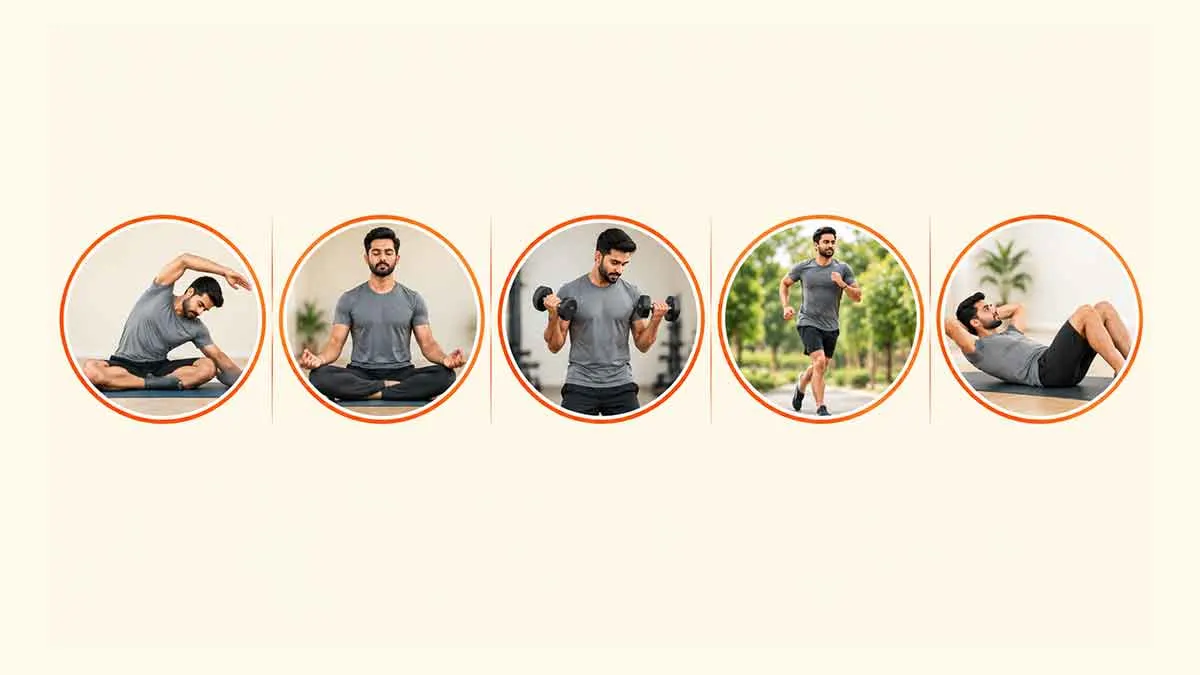
To heal effectively, your routine needs these three main categories of movement.
Stretching: Light stretching helps relieve tight muscles, reduce the tight pressure, and calm down the aggravated Vata doha that causes stiffness and pain in the lower body.
Strengthening: It helps in making the joints, muscles, and nerves strong, because in Ayurveda the root cause is treated, and strengthening the lower back helps in calming and managing the pain more effectively.
Gentle Cardio: Sitting all day makes your body stiff, and you lose all your immunity and strength because of that; doing gentle cardio can help with better immunity and metabolism, which helps in better management and flow of blood and oxygen in the body.
I was suffering from sciatica since 2025 and Doctors prescribed me for surgery but I believe in ayurveda and came here to consult with Dr Bhawna , she advised me 14 days panchakarma treatment. After 14 days panchakarma. I stayed here for 14 days and got 90% relief in my symptoms. I thankful to Dr Bhawna and team to cure me.
Thank you Lalita, Preeti, Naina and Tanuja who give me thefalies and personal care.
Reception staff was also very coperative.
Yoga And Modification Overview
While modern treatment approaches include painkillers or therapies that provide short-term relief, that's where yoga comes into the picture. Yoga is one of the most effective tools. There are certain poses and stretches that help to treat the underlying cause of sciatica pain.
Some benefits of doing yoga include better recovery and relief of sciatica pain.
It strengthens the core and back muscles for better stability and posture.
It helps to restore flexibility and also releases tension in the hips, legs, spine and hamstrings.
It helps to reduce nerve compression and improve spinal alignment.
It encourages healing with gentle movement and stretching.
It helps to loosen tight hamstrings and glutes, stiff muscles and joints to relieve sciatica pain.
When yoga is done correctly and daily with expert guidance, it can help in reducing and managing sciatica pain. Check out our Yoga for Sciatica page for more.
Movements To Avoid During Irritation
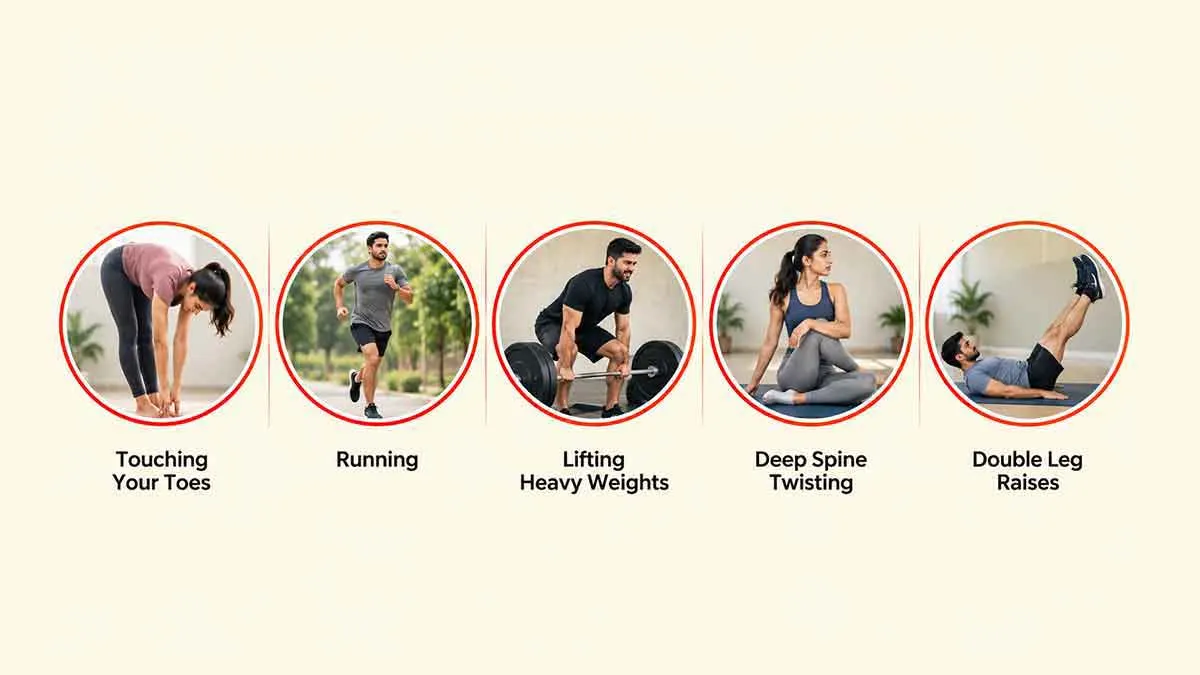
When healing from sciatica, the wrong movements can affect the spine more and instantly trigger sharp pain in it. To let the trapped nerve breathe nd heal, you need to avoid certain movements that pinch your leg or compress your back:
Touching your toes: When you try to touch your toes while having sciatica, it puts heavy pressure on the lower back, which causes pinching pain.
Running or jumping: Doing high-impact exercises can put severe stress on the legs, buttocks, and even back muscles, so try to completely avoid them when you have sciatica.
Lifting heavy weights: Doing workouts that require heavy weight lifting can cause shooting pain in the lower back muscles, worsening the sciatica even more.
Deep spine twisting: Exercises that require deep spine twisting are dangerous for people with sciatica. So avoiding them will be the right choice for better recovery and healing.
Double leg raises: Lying on the floor and lifting both legs requires back strength. If you have sciatica, it can cause you more pain.
Avoiding these movements while exercising is very important, as it can slow down or worsen your recovery and healing journey from sciatica pain.
Expected Timeline And Variability
Healing nerve pain is a long journey, and there is no single timeline for everyone. How long it takes to feel better depends on the condition you have and how deeply the nerve is injured. A tight muscle knot might release rather quickly with the right daily stretches and warm Ayurvedic oil therapies. However, repairing a physical pinch in your spine or healing widespread chemical nerve damage from high blood sugar requires much more patience and daily consistency. Because your body repairs itself at its own natural pace, focusing on steady, gentle progress is much better than watching the calendar. Check out our How Long Does Sciatica Last? page for more.
Return To Normal Activity
Returning to normal daily routine should never be a sudden jump, but rather a slow and careful step forward. The golden rule is to listen to your body and only do what feels completely pain-free. If a movement brings back that sharp shock or heavy tingling, your nerve is warning you that it is not fully healed.
In Ayurveda, rushing back to heavy work or intense workouts too quickly is known to immediately aggravate Vata dosha in the body. This causes your body to instantly dry out, stiffen up, and trap the healing nerve all over again. Start with gentle walks or easy chores. As you feel stronger, slowly add more movement week by week. You will know you are truly ready for full normal activity when you can comfortably move, sit, and sleep without constantly thinking about your leg.
Why Symptoms Recur
Nerve pain often returns for one simple reason: we stop doing what helped us. The moment the sharp shooting pain or heavy tingling goes, it is very easy to slip back into old habits. We stop our daily stretches, go back to slouching at our desks for long hours, or start eating highly processed, sugary foods again. In Ayurveda, this is like putting the fire back on but leaving the hot coals behind. If you immediately return to a lifestyle of heavy stress, cold food, or lack of movement, the Vata energy quickly builds right back up. Your muscles act like a rubber band, snapping back into the exact same painful knots that originally trapped your nerves. To keep the pain away for good, your new movements and healthy diet must become a permanent part of your daily life, not just a temporary fix. Check out our Why Sciatica Keeps Coming Back page for more.
When Progress Needs Review
Your recovery progress needs a medical review whenever your symptoms completely stall despite consistent daily care or if your nerve pain suddenly takes a turn for the worse. For a pinched nerve, you should see a doctor right away:
If your shooting pain spreads to the other leg
Your muscles become suddenly weak
You notice numbness around your groin area
Loss of bladder or bwel
You start losing your balance while walking
If your home therapies are no longer easing the pain.
Move slowly and gently. Avoid sudden twisting or heavy lifting. Walking at a comfortable pace is one of the best ways to keep your spine healthy and muscles warm.
No. If any stretch or movement shoots sharp, electric pain down your leg, stop immediately. Exercise should only feel like a very mild, comfortable stretch.
Most mild sciatica cases naturally fade within four to six weeks with gentle care. Deeper nerve pinches may take a few months of patient, daily effort to completely unpinch.
You are actively healing when the pain stops reaching your toes and starts moving backward up your leg, safely shrinking toward your lower back.
Pain returns when old habits resume. Slouching, lifting incorrectly, or eating a cold, dry diet can quickly recreate the deep stiffness that pinches the delicate nerve.
Maintain good posture, keep your digestion strong, and continue doing your gentle daily stretches even after the sharp pain goes away completely.
Find Jiva Ayurveda Clinics for Sciatica Treatment Near You

 Published on 01 Oct, 2026
 Updated on 21 Oct, 2026