
Successful Treatments
Clinics
Doctors
Movement With Sciatica: Walking, Standing and Stairs
 Published on 25 Sep, 2026
 Updated on 15 Oct, 2026

Explore Movement With Sciatica
- Home / Diseases & Ayurveda / Joint & Muscle Pain / Ayurvedic Treatment for Sciatica / Movement With Sciatica: Walking, Standing and Stairs
When the sharp, burning pain of sciatica strikes, the first thing that comes to mind is to stop moving completely. We think that staying completely frozen in bed is the only safe option left to protect your back. However, completely stopping your daily movements is one of the worst things you can do to your pinched nerve. In Ayurveda, stillness creates cold, dry, and blocked energy that only makes your tight muscle grip the fragile nerve even harder.
To heal, the body needs the natural warmth, fresh blood flow, and soft flexibility that only comes from gentle movement. But you cannot simply power through the pain or move the way you used to. You have to learn how to walk, stand, and climb stairs in a way that actively protects your spine.
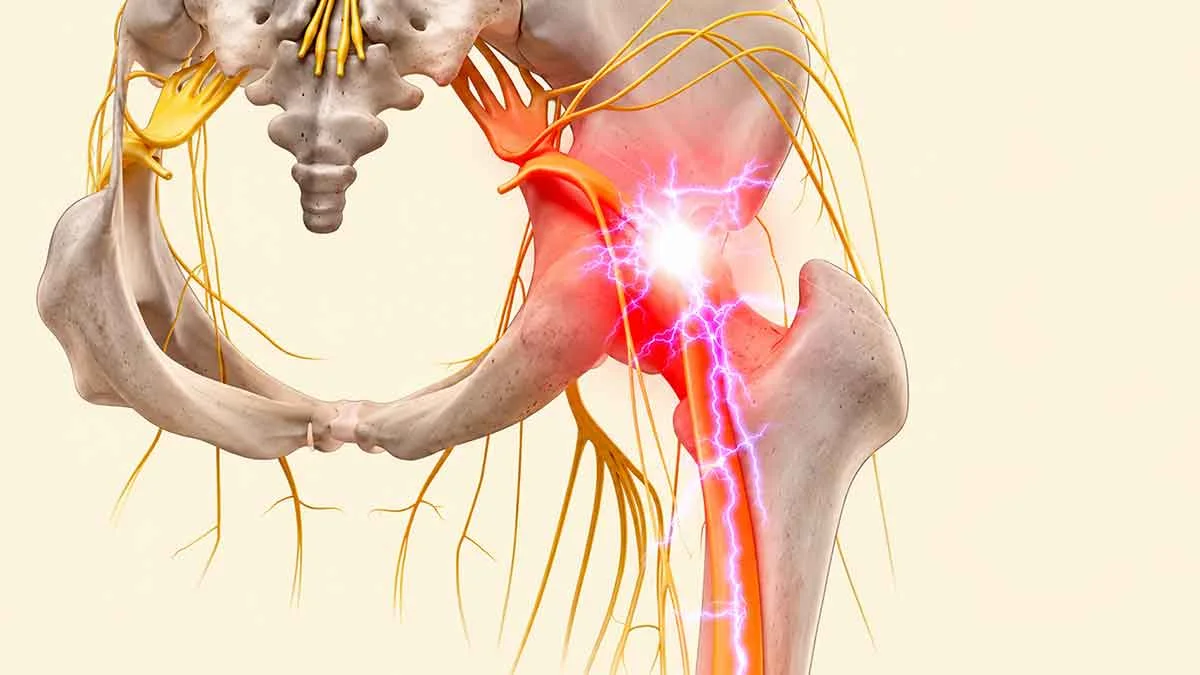
Rest vs Movement
When sharp sciatica pain hits, it is completely normal to want to stay in bed all day to protect your back. However, locking yourself in bed actually makes your lower back muscles much stiffer and completely delays your natural healing. While short periods of rest are deeply necessary for extreme flare-ups, gentle daily movements are what truly pump natural blood to your damaged nerve. Understanding when to rest and when to move is very important to finally breaking free from the heavy pain.
- When to Rest: Take complete rest when your leg is burning from an intense shooting pain, and you can barely walk.
- When to Move: When that intense pain becomes a dull, light ache and you have the capacity to stand. Then start walking; it will help improve blood and oxygen flow in the lower body.
- Why Too Much Rest Is Harmful: Lying flat in bed for multiple days freezes your energy. It makes your lower back, legs, and spine completely cold, locked, and weak when you try to move.
- Importance of Gentle Movement Daily: Walking on a flat surface daily can help create deep, natural warmth inside your body that helps remove muscle tightness and gives you room to breathe.
- How To Balance Both: Limit deep rest to very short bursts when the pain is unbearable, but make easy, five-minute movement breaks a constant, non-negotiable part of your everyday routine.
Walking Guidance
Walking is the most powerful and natural medicine for a pinched sciatic nerve. When you are suffering from heavy leg pain, your lower back muscles become very tight, dry, and frozen. This stiffness clamps down directly on your fragile nerve, making the pain much worse. Walking gently breaks this painful cycle.
From an Ayurvedic perspective, walking creates deep internal warmth that naturally fights off the cold, stiff energy trapped in your spine. As you move, your body actively pumps fresh blood and oxygen into your damaged nerve. This fresh blood circulation acts like a warm, soothing oil, melting away the heavy muscle tension and slowly softening the tight tissues around your spine.
By simply keeping your body in motion, you prevent spinal joints from locking up. This natural, easy movement gently opens up your lower back, finally giving your angry, crushed nerve the quiet space it needs to breathe, calm down, and heal. Check out our Walking With Sciatica page for more.
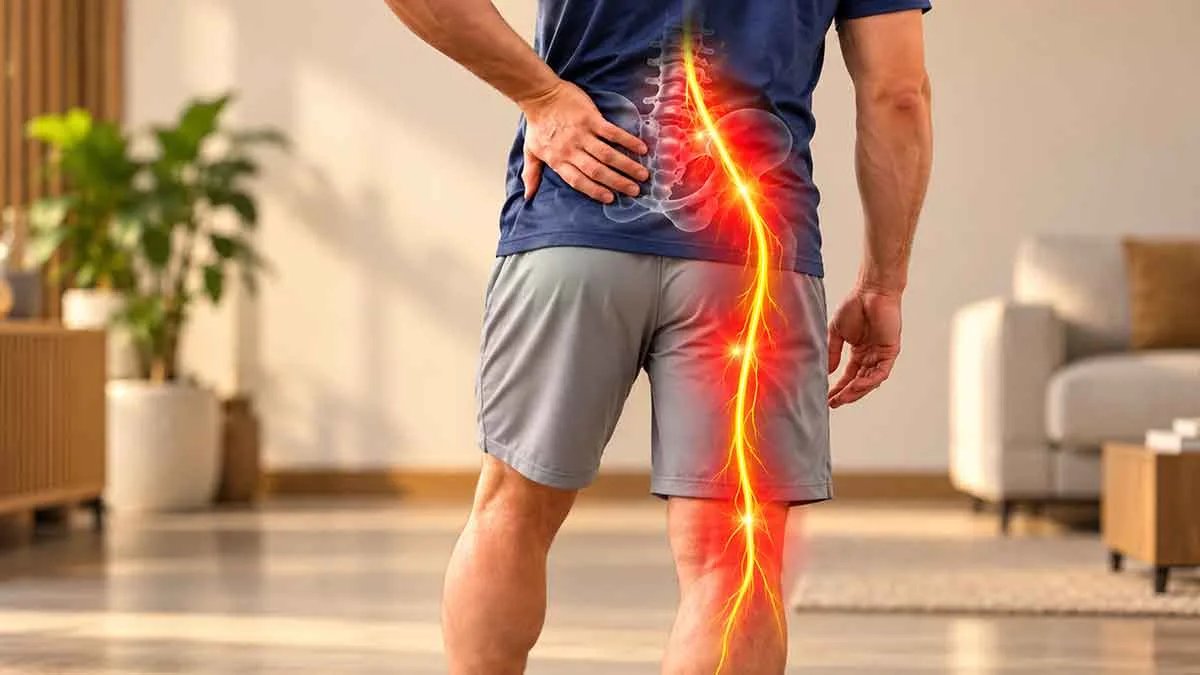
Standing Tolerance
Building your ability to stand for longer periods is a very important step in healing your sciatic nerve. When you sit down in a chair, all of your upper body weight pushes directly down onto your lower spinal discs. This heavy, crushing pressure forces the disc to bulge out, which tightly pinches your fragile nerve and causes a sharp, burning ache in your leg.
Standing up completely reverses this damaging process. When you stand, you instantly remove that heavy weight from your spine. This simple change directly allows your compressed disc to become decompressed and breathe. Building your standing tolerance means allowing your damaged nerve a much-needed break from being constantly squeezed.
By slowly increasing the amount of time you stand, you train your back muscles to support your spine again. This vital strength helps protect your nerve from future flare-ups and provides relief from the exhaustion of sitting.
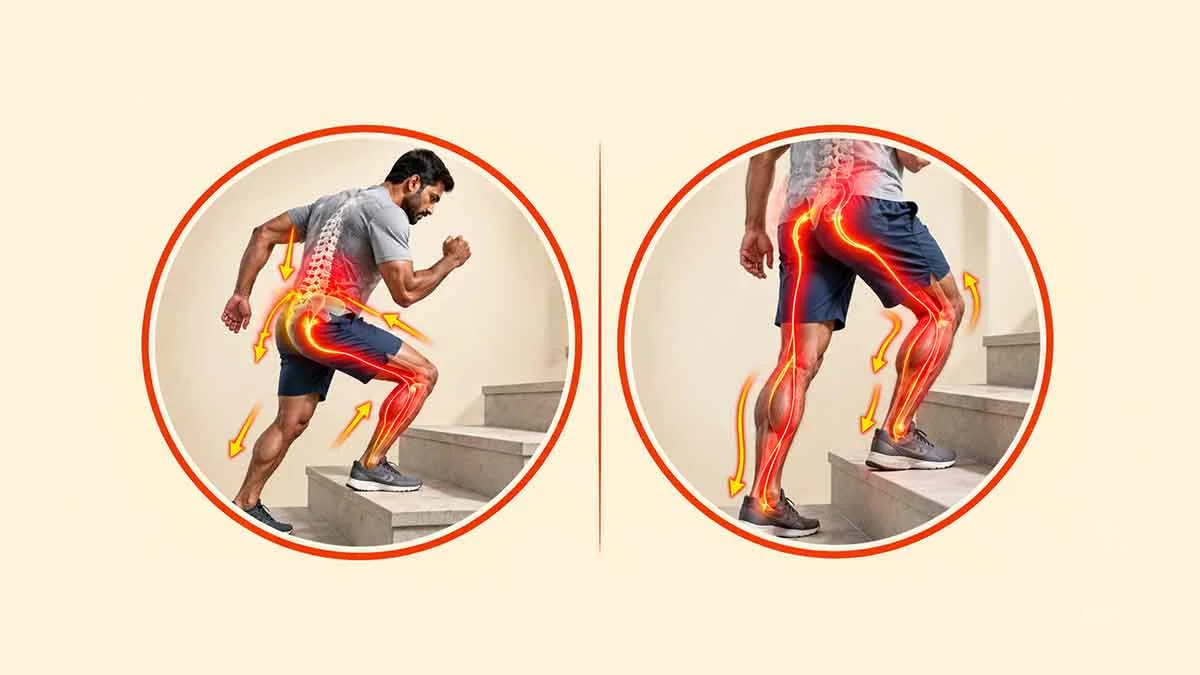
Stairs Modifications
Climbing stairs when you have sciatica pain becomes a difficult task. When you go up, an intense pain may trigger in your legs, hips, and lower back, and coming down may feel worse. You may find yourself holding the handrail and taking one step at a time, thinking that you are making things more difficult every time you use the stairs. But if you feel pain climbing stairs, it doesn't necessarily mean that it is damaging your spine.
When you constantly go up and down, changing height and loading one leg can temporarily aggravate symptoms. It doesn't mean that you have to stop using stairs; you just need to change the way you do so that your aggravated symptoms can calm down, and you can gently climb the stairs.
You can apply the practical steps discussed below:
- If you feel pain in one leg, then transfer all of your weight to the other leg.
- Try to push yourself upwards; do not bend and put pressure on your back muscles.
- Try to control your balance
- Use a handrail or a stick for support
- Move your hips through a greater range
Doing these while climbing stairs can help calm down the intense sciatica pain caused by an uneven method.
Activities To Pause
Dealing with sciatica can be very frustrating, but sometimes stopping a few everyday habits can bring the fastest relief. Here are a few simple things you should avoid to heal from a pinched nerve:
- Stop sitting on the couch or at your desk without getting up to stretch.
- Avoid keeping your wallet or phone in your back pocket when you sit down.
- Pause any heavy lifting, especially if you catch yourself bending at the waist instead of using your knees.
- Stop sleeping flat on your stomach, since it can put pressure on your lower back.
- Take a break from running or jumping exercises that repeatedly stress your spine.
- Don't wear shoes that are uncomfortable, such as high heels or flats that throw your posture out of balance.
- Stop trying to do deep forward stretches like touching your toes with straight legs, which can just pull the nerve more.
Pacing And Progression
Healing a pinched nerve is a very slow process, and one mistake that people make is to expect that they will make changes in their routine today and will get perfectly fine by tomorrow. If you can only walk comfortably for five minutes today, that is perfectly fine for the start. Do not just force yourself to walk for twenty minutes just because you feel you should. Pushing into sharp pain completely ruins your natural healing process. Next week, simply try walking for seven minutes. Listen very closely to what your body tells you. Ayurveda also teaches us that deep internal healing cannot be rushed. It takes time and, most importantly, patience.
Red Flags To Watch Out For
Certain warning signs should not be overlooked:
- If your pain gets steadily worse or does not improve after a few weeks of self-care.
- If you have unexplained weight loss, fever, night sweats, or chills, as it signals a severe infection.
- If you are not able to control your bladder or bowels.
- If your legs become numb, you cannot lift them in front of your feet.
- If you suddenly lose all feeling in your inner thigh or groin area.
References
Sciatica - StatPearls - NCBI Bookshelf
Diagnosis and treatment of sciatica - PMC
The neuropathic pain: An overview of the current treatment and future therapeutic approaches - PMC
Consult Experienced Ayurveda Doctors for Movement With Sciatica





















Our Happy Patients
-
 Sunita Malik - Knee Pain
 -
 Abhishek Mal - Diabetes
 -
 Vidit Aggarwal - Psoriasis
 -
 Shanti - Sleeping Disorder
 -
 Ranjana - Arthritis
 -
 Jyoti - Migraine
 -
 Renu Lamba - Diabetes
 -
 Kamla Singh - Bulging Disc
 -
 Rajesh Kumar - Psoriasis
 -
 Dhruv Dutta - Diabetes
 -
 Atharva - Respiratory Disease
 -
 Amey - Skin Problem
 -
 Asha - Joint Problem
 -
 Sanjeeta - Joint Pain
 -
 A B Mukherjee - Acidity
 -
 Deepak Sharma - Lower Back Pain
 -
 Vyjayanti - Pcod
 -
 Sunil Singh - Thyroid
 -
 Sarla Gupta - Post Surgery Challenges
 -
 Syed Masood Ahmed - Osteoarthritis & Bp
Diagnostic Marker
Blogs
- Ayurvedic Diet & Lifestyle Tips to deal with Sciatica
- 3 Yoga Asanas that Help Ease Sciatica Pain & Bring Relief
- Sciatica Pain? Try These 3 Home Remedies
- 5 Powerful Wonder Herbs to Relieve Sciatica Pain
- How to Sleep Peacefully With Sciatica Pain
- सायटिका का इलाज: जानिए कमर और पैरों की झनझनाहट से राहत पाने के आयुर्वेदिक तरीके
- Difference Between Sciatica and General Backache: What to Know
- क्या हीट थेरेपी या मसाज सायटिका में ठीक है? आयुर्वेद बताता है कब करना है और कब नहीं
- क्या स्लिप डिस्क और साइटिका एक जैसे हैं? दोनों में फर्क और आयुर्वेदिक उपचार समझिए
- लंबे समय तक ड्राइविंग या गलत बैठने से साइटिका क्यों ट्रिगर होता है? आयुर्वेद बताता है उपचार का सही मार्ग
Home Remedies
Related Disease
- Ayurvedic Treatment for Ankylosing Spondylitis
- Ayurvedic Treatment For Cervical Spondylosis
- Ayurvedic Treatment For Arthritis
- Ayurvedic Treatment for Osteoarthritis
- Ayurvedic treatment for Gout
- Ayurvedic Treatment for Sciatica
- Ayurvedic Treatment for Rheumatoid Arthritis
- Ayurvedic Treatment for Frozen Shoulder
- Ayurvedic Treatment for Deep Vein Thrombosis (DVT)
- Ayurvedic Treatment for Achilles Tendon Disorders
- Ayurvedic Treatment for Rickets
- Ayurvedic Treatment for Ganglion Cyst
- Ayurvedic Treatment for Osteoporosis
- Get Ayurvedic Treatment for AVN Avascular Necrosis
- Get Ayurvedic Treatment For Osteomyelitis
- Cerebral Palsy Treatment in Ayurveda
Latest Blogs
- Mindful Eating Is Trending—But Ayurveda Has Long Focused on How You Eat
- घर में बार-बार Snacks सामने दिखना बच्चों और Adults दोनों की Eating को कैसे बदलता है?
- गीले बाल बांधकर सोना कितना Harmless है?
- Why Dust Builds Up Faster Around Electronics and Workstations
- The ‘Clean Home’ Myth: When Fragrance Is Mistaken for Fresh Air
- बुजुर्गों का dinner बहुत जल्दी और breakfast बहुत देर से हो तो energy पर क्या असर पड़ सकता है?
- पीरियड्स से पहले Salty Food की Craving क्यों बढ़ सकती है?
- Can Ancient Dinacharya Be Practical For A Desk-Job Lifestyle?
- Why One ‘Perfect Breakfast’ Cannot Work For Every Body
- Mindful Eating नया Wellness Trend है या Ayurveda में यह Idea पहले से मौजूद था?
- Can Too Little Sleep Make Sugar Cravings Feel Stronger
- Seasonal Eating: Where Modern Nutrition And Ayurveda Meet
- हर चीज़ का health data track करना कब useful से obsessive बन सकता है
- Can Sleeping In An Overcooled Room Leave You Feeling Stiff In The Morning?
- Why Hair, Skin and Energy Often React to Aggressive Dieting
- बच्चों में weekend sleep timing बदलना Monday mood को कैसे प्रभावित कर सकता है
- Is Fasted Intense Exercise a Good Idea for Every Woman
- Health Tracking Every Hour: Helpful Awareness Or Another Source Of Stress?
- फोन देखते हुए चलना सिर्फ accident risk नहीं—posture और breathing पर क्या असर पड़ता है
- Bloating Before a Period: Why Lifestyle Can Change How It Feels
Ayurvedic Doctor In Top Cities
- Ayurvedic Doctors in Bangalore
- Ayurvedic Doctors in Pune
- Ayurvedic Doctors in Delhi
- Ayurvedic Doctors in Hyderabad
- Ayurvedic Doctors in Indore
- Ayurvedic Doctors in Mumbai
- Ayurvedic Doctors in Lucknow
- Ayurvedic Doctors in Kolkata
- Ayurvedic Doctors in Patna
- Ayurvedic Doctors in Vadodara
- Ayurvedic Doctors in Ahmedabad
- Ayurvedic Doctors in Chandigarh
- Ayurvedic Doctors in Gurugaon
- Ayurvedic Doctors in Jaipur
- Ayurvedic Doctors in Kanpur
- Ayurvedic Doctors in Noida
- Ayurvedic Doctors in Ranchi
- Ayurvedic Doctors in Bhopal
- Ayurvedic Doctors in Ludhiana
- Ayurvedic Doctors in Dehradun