
Successful Treatments
Clinics
Doctors
Walking With Sciatica
 Published on 25 Sep, 2026
 Updated on 15 Oct, 2026

Explore Movement With Sciatica
- Home / Diseases & Ayurveda / Joint & Muscle Pain / Ayurvedic Treatment for Sciatica / Movement With Sciatica: Walking, Standing and Stairs / Walking With Sciatica
Who this Walking With Sciatica guide is for
This guide is for anyone who wants to stay active but feels held back because of that sharp, intense pain or annoying tingling traveling down their leg. If going for a normal stroll around the neighbourhood has become uncomfortable instead of enjoyable, then you are in the right place.
Right now, you might even be afraid of getting up from your sofa or bed and think that you will get a sudden pinch from a sciatica flare-up. When every step feels like a risk, it is completely natural to just want to stop moving entirely. But staying frozen in fear will not heal your pinched nerve. We are going to show you how to safely get back on your feet, build your confidence, and start enjoying your daily walks again without making the heavy pain worse.
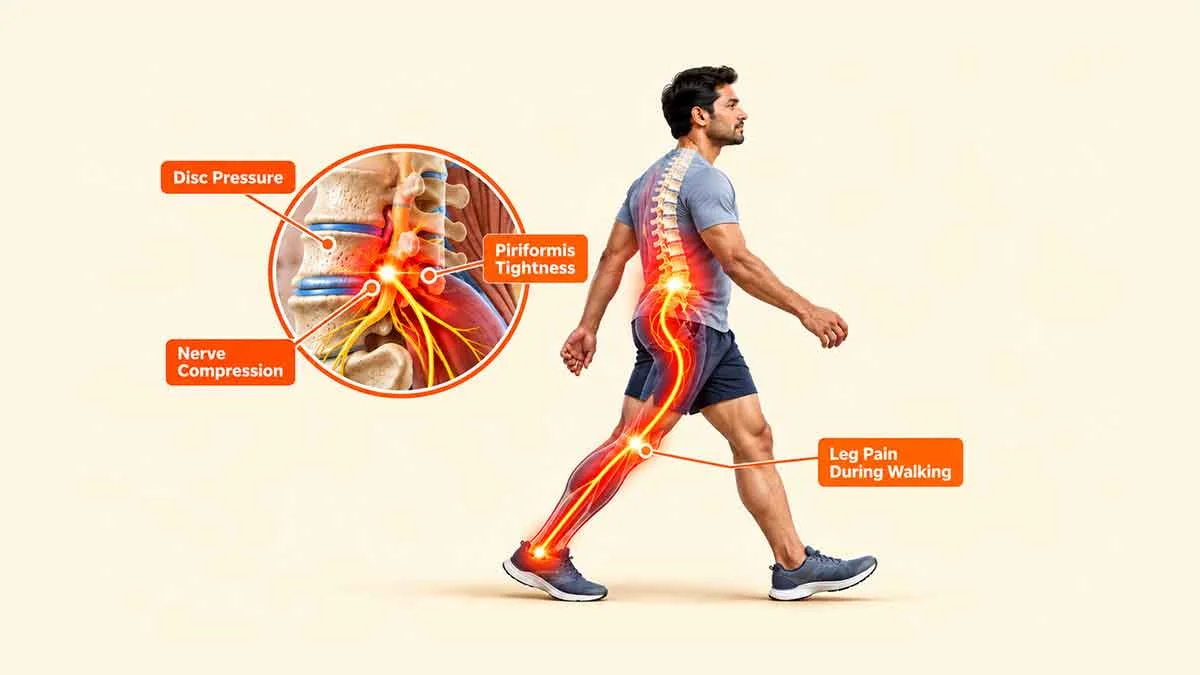
Why The Problem Occurs
Sciatica happens when the main nerve running from your lower back down to your legs gets pinched, squeezed, or irritated. This extra pressure on the nerve acts like a kinked garden hose, which is why you feel that sudden shooting pain or tingling:
- One of the soft, squishy cushions between your spine bones slips out of place and pushes directly against the nerve.
- Normal wear and tear as you get older makes the space inside your lower spine shrink, leaving less room for the nerve.
- Little extra bumps of bone called bone spurs grow on your spine over time and start rubbing on the sciatic nerve.
- A deep muscle in your buttocks gets super tight, trapping the nerve right underneath it.
- Sitting in the same position for too long puts constant, heavy pressure on your lower back and pinches the nerve.
- Lifting something really heavy the wrong way suddenly twists or strains your lower back.
Immediate Practical Modifications
- When sciatica flares up, you don't have to wait for a doctor's appointment to start finding relief. Here are a few quick, easy changes you can make right around the house today to take the pressure off your back:
Take shorter steps: Do not stretch your legs out far. Long steps deeply pull and stretch your sensitive sciatic nerve. Keep your stride very short, easy, and relaxed. - Walk on flat ground: Avoid hills, steep ramps, or uneven dirt paths. Walking on a completely flat, smooth surface like a paved trail protects your back from sudden, painful twinges.
- Wear good shoes: Do not walk in flat sandals or hard dress shoes. Wear thick, supportive sneakers that absorb the impact of your feet hitting the hard pavement.
- Stand up tall: Do not look down at your phone or your feet while you walk. Looking down pulls your neck and your entire lower back forward. Keep your head up high and look straight ahead.
- Slow your pace: This is a gentle healing walk, not a cardio workout. Walk at a very slow speed so your lower back muscles stay warm and do not quickly lock up from exhaustion.
Step-By-Step Safe Routine
Getting back into walking with sciatica doesn't have to be scary if you take it slow and listen to your body. Follow this easy, step-by-step routine to get moving again safely without triggering that familiar nerve pain:
- Warm Up: Long before you step outside, lie down and do a couple of gentle knee-to-chest stretches to loosen up your lower back.
- Posture check: Stand tall, let your shoulders relax, and just pull your belly button in a little to support your spine.
- Start small: Don’t set yourself up for failure by setting a huge daily step goal. Try just a short five- or ten-minute walk down the street.
- Reduce steps: Take smaller, shorter steps than usual so you don't accidentally overstretch that irritated nerve in your leg.
- Stop early: Turn around and head home the very second you feel any numbness or sharp aching starting to creep back in.
- Cool down: Rest comfortably on the couch with a towel wrapped with an ice pack on your lower back for about fifteen minutes as soon as you finish.
Progression And Pacing
When it comes to pacing, less is always more at the beginning. Don't worry about your speed or hitting a certain number of steps on your tracker. Walk at a relaxed, comfortable speed where you can easily hold a conversation. If your nerve pain usually kicks in after ten minutes, plan your walks to be only eight minutes long. The goal is to finish your walk feeling good, not hurting. For progression, take things one slow week at a time. If you successfully walked for ten minutes every day this week without any extra pain, try bumping it up to twelve or fifteen minutes next week. Never increase your speed and your distance on the same day. If your leg starts tingling or aching again, that is just your body telling you to drop back to the shorter time that felt safe.
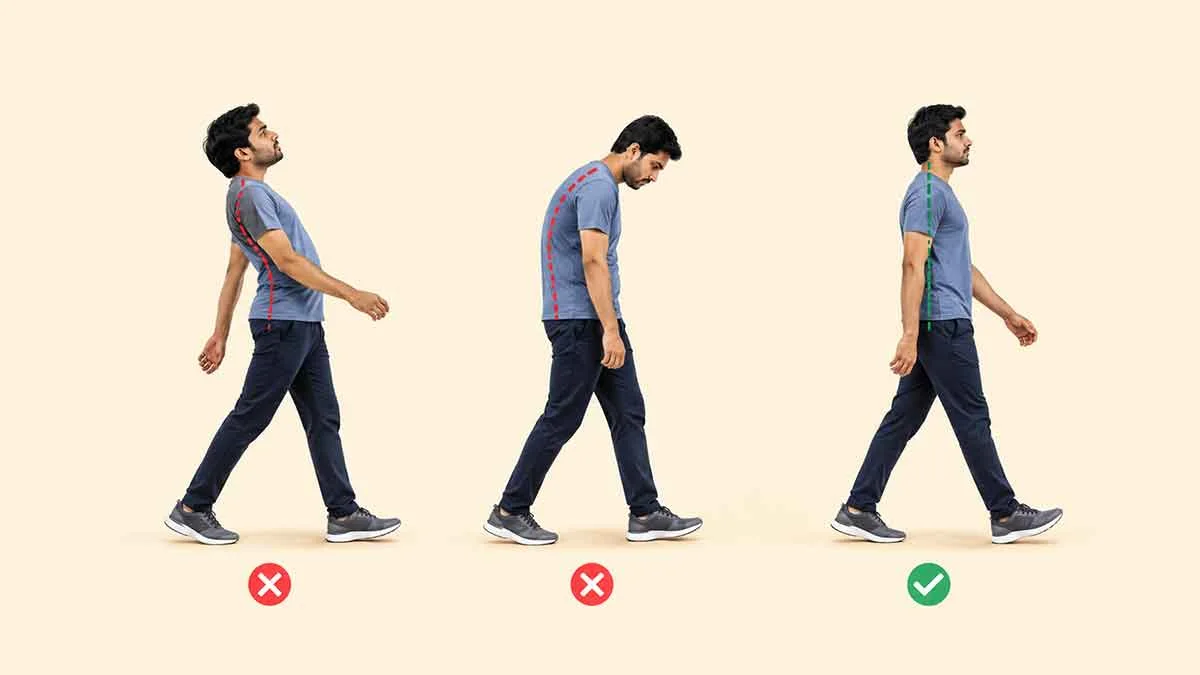
What To Avoid
Walking is great for sciatica, but doing it the wrong way can easily make the pain worse. To keep the pinched nerve calm and avoid another flare-up, here are the most important things to avoid when you head out:
- Long Strides: Avoid taking huge steps; keep your stride short and relaxed so you don't accidentally overstretch the sensitive nerve running down your leg.
- Slouching: Stop looking at your phone or leaning forward while you walk. Slouching puts heavy, direct pressure right on your lower spine.
- Ignoring the pain: Never try to walk off a sharp ache or tingling. If you start to feel your sciatica aching up, stop immediately and head home to rest.
Stop Signs And Medical Review
While walking and gentle movement are absolutely normal for a person going through sciatica pain, but their are certain warning signs that should not be ignored:
- If you experience sudden pain in your leg, hips, or spine.
- If your pain doesn't go away even with proper care and rest.
- If you experience sudden weight loss, fever, or chills.
- If you lose bladder or bowels.
- If your legs feel completely numb.
FAQs
Yes, gentle walking is a powerful natural medicine. It pumps fresh blood, healing oxygen, and deep internal warmth directly into your tight lower back, which helps your crushed nerve heal much faster.
You must walk at a very slow, relaxed speed. This is a gentle healing walk, not an intense cardio workout. Moving too fast forces your tired lower back muscles to lock up from quick exhaustion.
Stick to completely flat, smooth surfaces like a paved sidewalk or an indoor mall. Avoid hills, steep ramps, or uneven dirt paths that force your lower back to twist and bend suddenly.
Stand up perfectly tall and look straight ahead. If you look down at your feet or your phone, you naturally pull your heavy head forward, which adds deep, dangerous stress to your lower spine.
Always wear thick, highly cushioned sneakers. Flat sandals or hard dress shoes cannot absorb the heavy impact of your feet hitting the ground, sending painful physical shocks right up into your injured back.
Start with very short, five-minute walks. It is much safer and much better for your healing nerve to take four or five tiny walks throughout the day rather than forcing one long, painful walk.
Stop walking immediately. Never try to act tough and push through sharp, burning pain. Sit down and rest until that sharp alarm fades completely back into a dull ache before you try moving again.
Consult Experienced Ayurveda Doctors for Walking With Sciatica





















Our Happy Patients
-
 Sunita Malik - Knee Pain
 -
 Abhishek Mal - Diabetes
 -
 Vidit Aggarwal - Psoriasis
 -
 Shanti - Sleeping Disorder
 -
 Ranjana - Arthritis
 -
 Jyoti - Migraine
 -
 Renu Lamba - Diabetes
 -
 Kamla Singh - Bulging Disc
 -
 Rajesh Kumar - Psoriasis
 -
 Dhruv Dutta - Diabetes
 -
 Atharva - Respiratory Disease
 -
 Amey - Skin Problem
 -
 Asha - Joint Problem
 -
 Sanjeeta - Joint Pain
 -
 A B Mukherjee - Acidity
 -
 Deepak Sharma - Lower Back Pain
 -
 Vyjayanti - Pcod
 -
 Sunil Singh - Thyroid
 -
 Sarla Gupta - Post Surgery Challenges
 -
 Syed Masood Ahmed - Osteoarthritis & Bp
Diagnostic Marker
Blogs
- Ayurvedic Diet & Lifestyle Tips to deal with Sciatica
- 3 Yoga Asanas that Help Ease Sciatica Pain & Bring Relief
- Sciatica Pain? Try These 3 Home Remedies
- 5 Powerful Wonder Herbs to Relieve Sciatica Pain
- How to Sleep Peacefully With Sciatica Pain
- सायटिका का इलाज: जानिए कमर और पैरों की झनझनाहट से राहत पाने के आयुर्वेदिक तरीके
- Difference Between Sciatica and General Backache: What to Know
- क्या हीट थेरेपी या मसाज सायटिका में ठीक है? आयुर्वेद बताता है कब करना है और कब नहीं
- क्या स्लिप डिस्क और साइटिका एक जैसे हैं? दोनों में फर्क और आयुर्वेदिक उपचार समझिए
- लंबे समय तक ड्राइविंग या गलत बैठने से साइटिका क्यों ट्रिगर होता है? आयुर्वेद बताता है उपचार का सही मार्ग
Home Remedies
Related Disease
- Ayurvedic Treatment for Ankylosing Spondylitis
- Ayurvedic Treatment For Cervical Spondylosis
- Ayurvedic Treatment For Arthritis
- Ayurvedic Treatment for Osteoarthritis
- Ayurvedic treatment for Gout
- Ayurvedic Treatment for Sciatica
- Ayurvedic Treatment for Rheumatoid Arthritis
- Ayurvedic Treatment for Frozen Shoulder
- Ayurvedic Treatment for Deep Vein Thrombosis (DVT)
- Ayurvedic Treatment for Achilles Tendon Disorders
- Ayurvedic Treatment for Rickets
- Ayurvedic Treatment for Ganglion Cyst
- Ayurvedic Treatment for Osteoporosis
- Get Ayurvedic Treatment for AVN Avascular Necrosis
- Get Ayurvedic Treatment For Osteomyelitis
- Cerebral Palsy Treatment in Ayurveda
Latest Blogs
- Mindful Eating Is Trending—But Ayurveda Has Long Focused on How You Eat
- घर में बार-बार Snacks सामने दिखना बच्चों और Adults दोनों की Eating को कैसे बदलता है?
- गीले बाल बांधकर सोना कितना Harmless है?
- Why Dust Builds Up Faster Around Electronics and Workstations
- The ‘Clean Home’ Myth: When Fragrance Is Mistaken for Fresh Air
- बुजुर्गों का dinner बहुत जल्दी और breakfast बहुत देर से हो तो energy पर क्या असर पड़ सकता है?
- पीरियड्स से पहले Salty Food की Craving क्यों बढ़ सकती है?
- Can Ancient Dinacharya Be Practical For A Desk-Job Lifestyle?
- Why One ‘Perfect Breakfast’ Cannot Work For Every Body
- Mindful Eating नया Wellness Trend है या Ayurveda में यह Idea पहले से मौजूद था?
- Can Too Little Sleep Make Sugar Cravings Feel Stronger
- Seasonal Eating: Where Modern Nutrition And Ayurveda Meet
- हर चीज़ का health data track करना कब useful से obsessive बन सकता है
- Can Sleeping In An Overcooled Room Leave You Feeling Stiff In The Morning?
- Why Hair, Skin and Energy Often React to Aggressive Dieting
- बच्चों में weekend sleep timing बदलना Monday mood को कैसे प्रभावित कर सकता है
- Is Fasted Intense Exercise a Good Idea for Every Woman
- Health Tracking Every Hour: Helpful Awareness Or Another Source Of Stress?
- फोन देखते हुए चलना सिर्फ accident risk नहीं—posture और breathing पर क्या असर पड़ता है
- Bloating Before a Period: Why Lifestyle Can Change How It Feels
Ayurvedic Doctor In Top Cities
- Ayurvedic Doctors in Bangalore
- Ayurvedic Doctors in Pune
- Ayurvedic Doctors in Delhi
- Ayurvedic Doctors in Hyderabad
- Ayurvedic Doctors in Indore
- Ayurvedic Doctors in Mumbai
- Ayurvedic Doctors in Lucknow
- Ayurvedic Doctors in Kolkata
- Ayurvedic Doctors in Patna
- Ayurvedic Doctors in Vadodara
- Ayurvedic Doctors in Ahmedabad
- Ayurvedic Doctors in Chandigarh
- Ayurvedic Doctors in Gurugaon
- Ayurvedic Doctors in Jaipur
- Ayurvedic Doctors in Kanpur
- Ayurvedic Doctors in Noida
- Ayurvedic Doctors in Ranchi
- Ayurvedic Doctors in Bhopal
- Ayurvedic Doctors in Ludhiana
- Ayurvedic Doctors in Dehradun