 Published on
15 Jul, 2026
Published on
15 Jul, 2026 Updated on 15 Jul, 2026
 5097
5097Walk past an office building, a college campus, or a busy intersection today, and the sensory landscape of nicotine is completely unrecognisable from a decade ago. The heavy, acrid smell of burning tobacco is mostly gone. In its place, you walk through thick, sweet-smelling clouds of mango, mint, or blue raspberry.
The tobacco industry has undergone a giant digital transformation. The paper-wrapped cigarette was replaced with sleek, battery-powered vaporisers. The marketing presentation was catchy. Their reliance was on the absence of fire. They said that it was vapor. It sounds harmless. As steam from a kettle. Millions of young adults who would never dream of smoking a traditional cigarette bought into this premise 100%. They vape constantly. They think their lungs and hearts will be 100% protected from the harms of smoking. They are wrong.
Cardiologists and vascular researchers are pulling the fire alarm. While electronic devices eliminate the smoke caused by burning leaf tobacco, they do not eliminate the cardiovascular toll. Your heart does not care how the nicotine arrives. The biological damage happening inside your blood vessels remains remarkably severe. To understand why this modern habit is quietly destroying cardiovascular health, we have to look closely at the mechanical plumbing of the human body.
The Combustion Engine: Traditional Smoking
To grasp why vaping is so deeply misunderstood, you have to look at the established chemistry of a traditional cigarette. Lighting a cigarette initiates a high-temperature combustion process. You are burning a dried plant.
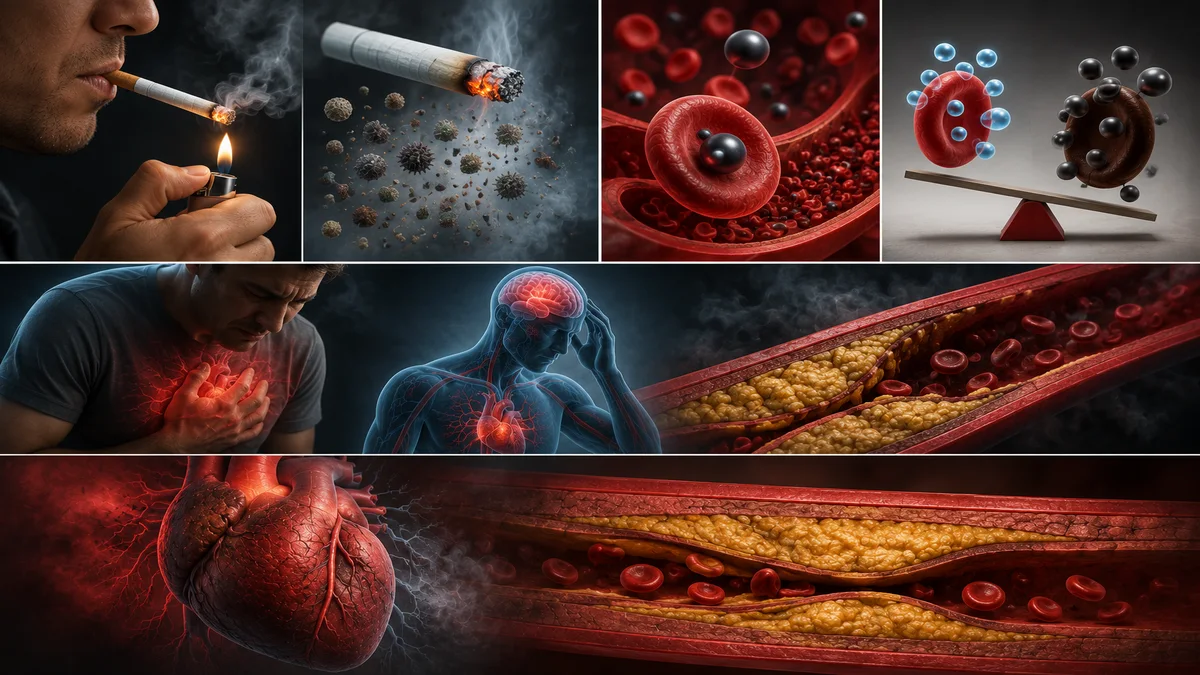
This chemical fire creates a toxic storm of over 7,000 distinct compounds. For your cardiovascular system, the two absolute worst offenders are tar and carbon monoxide. Carbon monoxide is an invisible, insidious gas. When you inhale it, it passes instantly through your lung tissue and into your bloodstream. It seeks out hemoglobin, the specialised protein inside your red blood cells responsible for carrying oxygen to your organs.
Carbon monoxide binds to hemoglobin over 200 times more strongly than oxygen does. By binding to hemoglobin, it reduces the blood's ability to carry oxygen. Your organs suddenly are deprived of the oxygen that they need to live. Your heart reacts panicked to this sudden drop because your body is trying to make up for it. It will have to work out more quickly and harder. The muscle is exhausted, even providing a minimum level of oxygen to your brain and tissues!
Simultaneously, the toxic particulate matter in tobacco smoke triggers a massive, systemic inflammatory response. It destabilises your cholesterol. It makes low-density lipoprotein (LDL) cholesterol highly likely to oxidise and bury itself into the delicate inner lining of your arteries.
This process rapidly accelerates atherosclerosis. The smooth, flexible pathways of your blood vessels turn into rigid, narrowed corridors lined with brittle, fatty plaque. Your heart is now beating faster while trying to push blood through a highly restricted, hardened pipe.
The Vapor Illusion: Heat, Metal, and Aerosols
Vaping devices operate on an entirely different mechanical principle. There is no fire. There is no ash. Instead, a battery-powered metallic heating element warms a liquid solution. This liquid contains concentrated nicotine, artificial chemical flavorings, and a heavy base of propylene glycol or vegetable glycerin.
The device turns this liquid into an aerosol. This is the exact trap the industry uses to claim safety. An aerosol is not harmless water vapor. It is a dense, highly concentrated cloud of ultra-fine chemical particles.
The chemical composition is changed when the liquid solution is passed across the high-temperature metallic coils in the device. Volatile organic compounds, such as formaldehyde and acrolein, are formed during high heat. Acrolein is NOT a harmless flavoring material. A strong chemical that is made for industry. This has a profound effect on the body upon inhalation, reaching the bloodstream and causing severe oxidative stress. It is an active agent that hurts the cells in the inner layer of blood vessels, the layer that is only one cell thick.
Furthermore, the heating elements themselves hide a secondary danger. As the metallic coils repeatedly heat up and cool down with every puff, they physically degrade. Microscopic particles of heavy metals flake off directly into the liquid. Nickel. Chromium. Lead. Manganese.
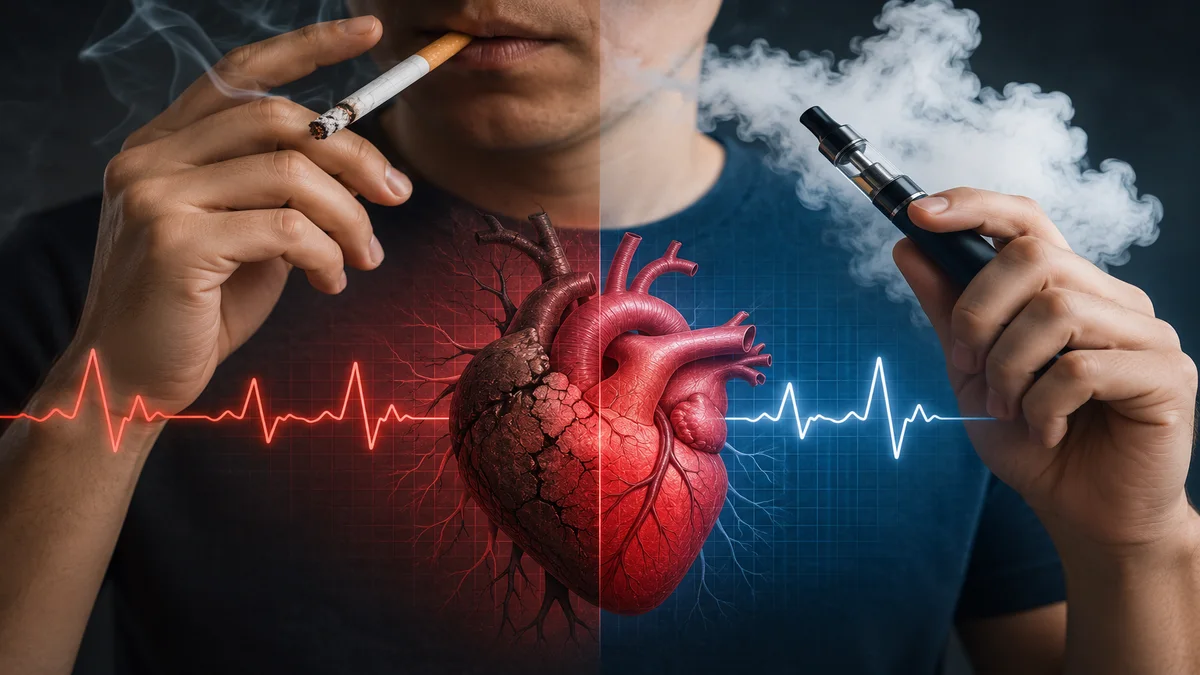
These metals are inhaled deep into the lungs and cross straight into the circulatory network. They act as systemic toxins. They trigger chronic vascular inflammation and severely stiffen the arterial walls. The sweet, candy-like flavors entirely mask the harsh reality of inhaling heavy metals and industrial chemicals. See how the cardiovascular markers change depending on the delivery method.
The Common Enemy: Nicotine's Grip
While the delivery mechanisms look vastly different, traditional smoking and modern vaping share the exact same highly addictive driver. Nicotine.
The moment nicotine hits your brain, it triggers a systemic biological alarm. It stimulates your adrenal glands. They immediately flood your bloodstream with epinephrine. This is adrenaline. It is the primary hormone responsible for your body's survival-driven "fight-or-flight" response.
Your biology reacts exactly as if you are fleeing a physical threat. Your heart rate spikes. Your blood pressure shoots upward. Adrenaline commands the smooth muscle tissues surrounding your blood vessels to constrict tightly. The diameter of your arteries shrinks.
This makes it very dangerous to operate in a very compressed space of your circulatory loop. Heart racing, with thick blood through a constricted network of pipes. This sudden increase in heart rate and blood pressure comes with each inhale and exhale of a vape or cigarette. Chronic, all-day users have this high-stress state as their body's ongoing baseline.
Nicotine also greatly restricts the ability of your blood vessels to relax. It prevents nitric oxide, the important chemical that helps your blood vessels dilate when you need more oxygen, from being produced. The blood vessels become less flexible. They stiffen, grow brittle, and are very prone to small cracks.
The Ayurvedic Approach to Systemic Cleansing
Modern pathology maps these vascular changes with incredible precision. But reversing this deep chemical damage requires looking beyond just the isolated blood vessels. It requires addressing the entire ecosystem of the body.
In the Ayurvedic tradition, the chronic inhalation of toxic smoke or chemically altered vapor is viewed as a severe disruption of Prana Vayu, the vital life-force energy that governs the respiratory and cardiovascular systems. The hot, dry, and sharp qualities of these habits aggravate the Vata and Pitta doshas. This dries out the protective mucous membranes of the lungs and introduces a high load of Ama, the toxic metabolic waste that stagnates inside the circulatory channels (srotas).
An Ayurvedic lifestyle provides a powerful, pragmatic framework for recovering from this specific type of systemic toxicity. Rather than relying on chemical patches to step down the addiction, the focus shifts to Shodhana (purification) and Rasayana (rejuvenation).
To practice the breathing techniques, practitioners use targeted breathing methods, such as Nadi Shodhana (alternate nostril breathing). This stimulates the cleansing action of the respiratory passages, soothes an overstimulated nervous system, and rebalances the erratic Prana. Everyday warm sesame oil massage (abhyanga) helps to settle the overactive and agitated energy caused by the nicotine withdrawal. It encourages the body to release deeply embedded toxins from the peripheral tissues. Simultaneously, incorporating adaptogenic herbs like Ashwagandha and Arjuna helps the body recover from chronic oxidative stress. These herbs actively support the strength of the heart muscle and calm the adrenal glands that have been overworked by years of constant nicotine exposure. It is a comprehensive approach that works to purify the physical terrain, making the body fundamentally resilient.

Expert Doctor's Special Advice
Vaping is not a safe shortcut; both smoking and vaping trigger severe arterial stiffening and extreme cardiovascular strain. If you experience warning signs like sudden chest pain or tightness, unexplained shortness of breath, a racing or irregular heartbeat, or cold sweats, treat it as a medical emergency. Never dismiss these symptoms as temporary stress or anxiety. Consult a doctor or cardiologist immediately to evaluate your heart health before irreversible damage occurs.
The Breaking Point: Clinical Consequences
When you subject your cardiovascular machinery to years of chronic inflammation, elevated blood pressure, and stiffened arteries, the clinical outcomes are brutal and entirely predictable.
The risk of a life-threatening cardiovascular event also rises. With continuous high blood pressure, the plaque in the coronary arteries becomes very unstable. A fatty deposit with a protective fibrous cap over it is vulnerable to tears in the fibrous cap. If this rupture happens, the body hurriedly goes to work to create a clot to heal the wound. The sudden clot can completely close the heart's blood supply when it's already constricted.
That is a myocardial infarction. A heart attack. If that exact same blockage occurs in a vessel leading to the brain, it is an ischemic stroke. Emerging clinical data tracking long-term vapers is showing a highly troubling spike in severe arrhythmias. Specifically, atrial fibrillation. The constant, high-dose pulses of nicotine disrupt the heart's delicate internal electrical grid. The upper chambers of the heart begin to quiver erratically. This drastically increases the long-term risk of blood clots and sudden heart failure, even in young, otherwise healthy adults.
The Biological Bounce Back
The human body is remarkably forgiving. The moment you stop introducing these toxins into your system, your physiology begins a rapid, highly coordinated rescue mission.
The recovery process starts very soon after. Your heart rate returns to a normal, resting level 20 minutes after you have not smoked a cigarette or vaped for the last 20 minutes. Adrenaline surges don't flow anymore. After 12 hours, your blood's carbon monoxide level returns to normal. Your red blood cells can carry oxygen as they did before.
Over the course of the first year of complete cessation, your risk of a heart attack drops by a staggering 50 percent. The endothelial cells lining your blood vessels begin to heal. They slowly regain their ability to produce nitric oxide. The natural, healthy elasticity of your arteries returns.
Breaking a nicotine addiction is undeniably brutal. The physical cravings are intense, and the psychological habits are deeply wired into your daily routine. But understanding the actual science behind the vapor strips away the dangerous illusion of safety. Vaping is not a healthy alternative. It is simply a sleek, modern vehicle for the exact same cardiovascular stress. Protecting your heart requires choosing clean, unadulterated air. Every single day.
References:
https://applications.emro.who.int/docs/Fact_Sheet_TFI_2018_EN_20398.pdf
Cardiovascular risk of smoking and benefits of smoking cessation - PMC
Health Effects of Cigarettes: Cardiovascular Disease | Smoking and Tobacco Use | CDC
The Impacts of Vaping on the Cardiovascular System: A Systematic Review of Case Reports - PMC
Growing scientific evidence links e-cigarette chemicals to heart health risks