 Published on
27 Jul, 2026
Published on
27 Jul, 2026 Updated on 27 Jul, 2026
 5081
5081We all know the feeling. Your clothes start feeling a little tight around the middle, and that stubborn belly fat just refuses to leave, no matter what you do.
While everyone talks about breakfast or skipping dinner, lunch is actually your secret weapon. A good, hearty midday meal keeps your energy steady and stops you from raiding the snack cabinet at four in the afternoon. Dietitians agree that eating a balanced, whole-food lunch is one of the easiest, most natural ways to shrink your waistline without starving yourself.
Understanding Visceral Fat
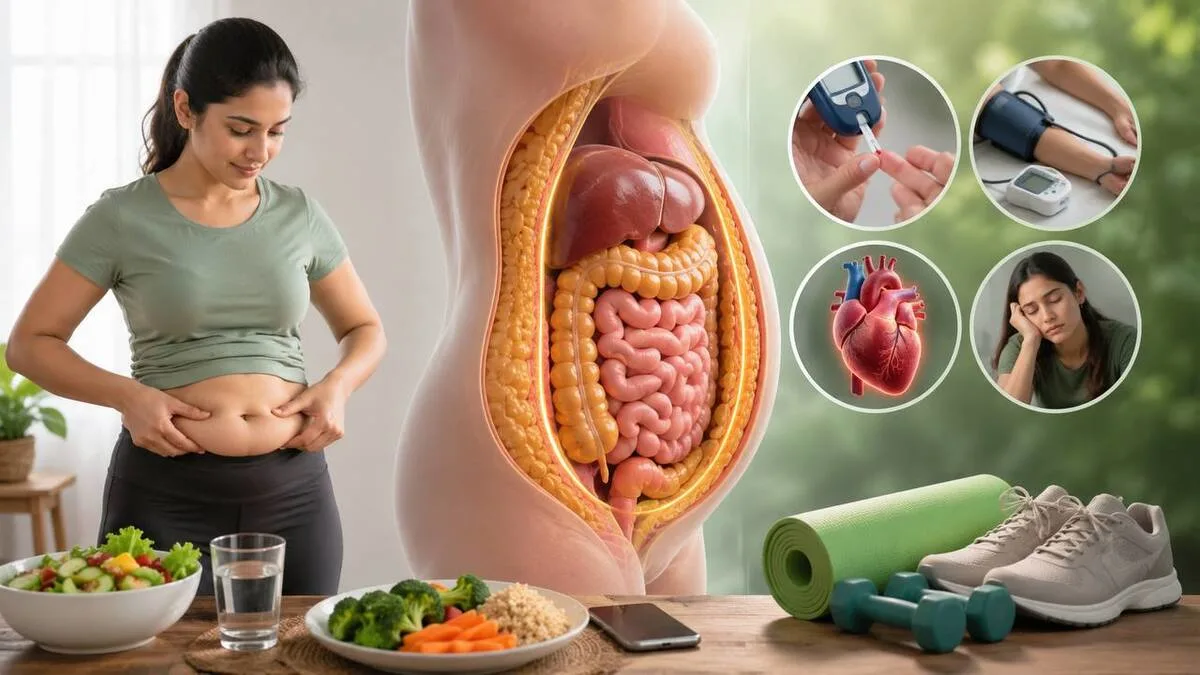
Not all fat is the same. There is the soft fat that sits right under your skin, which you can pinch. Then, there is the deep belly fat, also known as visceral fat.
This deep fat is hidden inside your belly. It wraps tightly around your important organs, like your liver and intestines. Unlike the soft fat on your arms or thighs, this deep fat is active. It releases chemicals into your body that can mess with your health.
Having too much of this deep fat can lead to:
- Blood sugar problems
- High blood pressure
- Heart troubles
- Feeling tired all the time
The good news? This deep fat is the very first type of fat your body burns when you start eating better and moving a little more.
Why Lunch Can Make or Break Your Fat-Loss Journey?
Lunch happens right in the middle of your day when your energy tank is starting to run low.
If you skip lunch or just grab a sugary coffee and a biscuit, your blood sugar will drop. When that happens, your brain goes into panic mode. By the time evening rolls around, you will crave sweets, chips, or heavy junk food. And you will likely overeat at dinner.
A proper lunch gives you a slow, steady stream of energy. It keeps your brain sharp and your tummy perfectly full. When you eat a good lunch, you breeze through the afternoon feeling satisfied and happy.
What Dietitians Look for in a Fat-Loss Lunch?
You do not need fancy or expensive foods to lose deep belly fat. You just need a simple balance on your plate.
Plant-Based Protein: Protein is your best friend when you want to lose belly fat. It takes longer to digest, which means you stay full for hours. It also protects your muscles. Great vegetarian choices include:
- Thick dals (lentils)
- Chickpeas (chole)
- Kidney beans (rajma)
- Paneer (cottage cheese)
- Tofu
- A bowl of fresh curd or yogurt
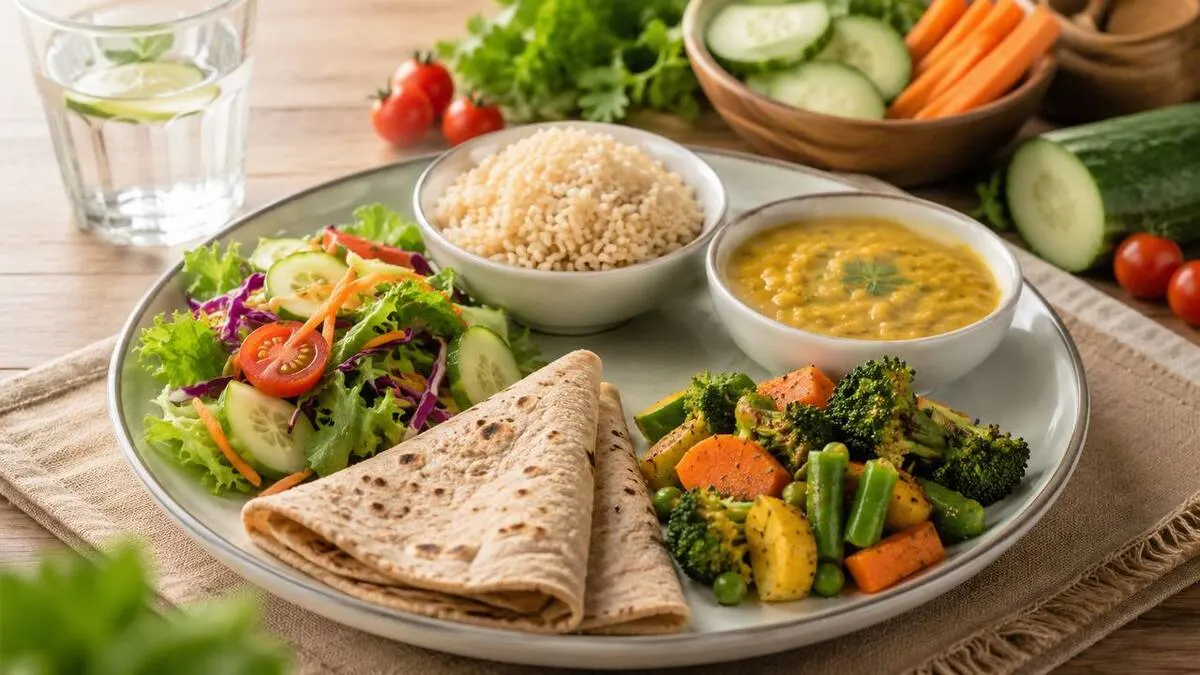
Good Carbohydrates: Carbs give you energy, but you need the right kind. You want carbs that are full of fiber because they break down slowly in your stomach. Try adding:
- Brown rice
- Oats
- Whole wheat roti
- Sweet potatoes
- Millets (like bajra or jowar)
Healthy Fats: Fats don’t really make you fat! In fact, good fats send a signal to your brain that tells it you are feeling satisfied. Try a small amount of:
- Almonds or walnuts
- A teaspoon of real ghee
- Olive oil in your salad
- Flaxseeds or pumpkin seeds
Colorful Veggies: Veggies contain lots of water, fiber, and nutrients, but no additional calories.
The Ideal Lunch Plate for Losing Belly Fat
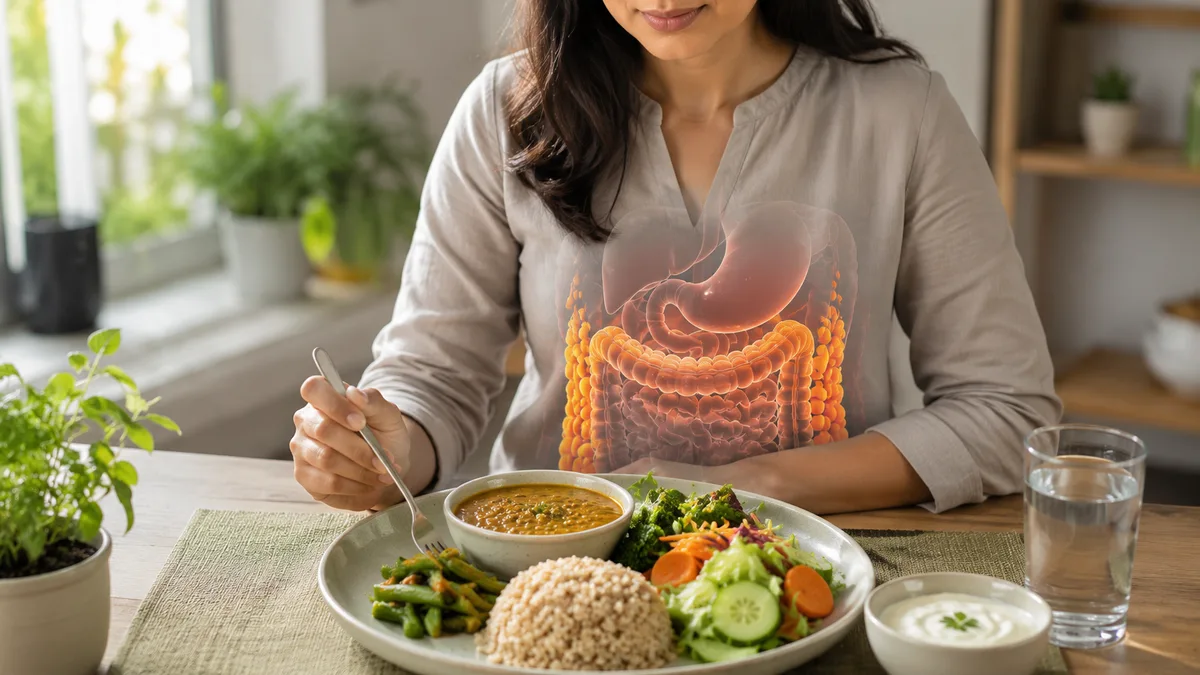
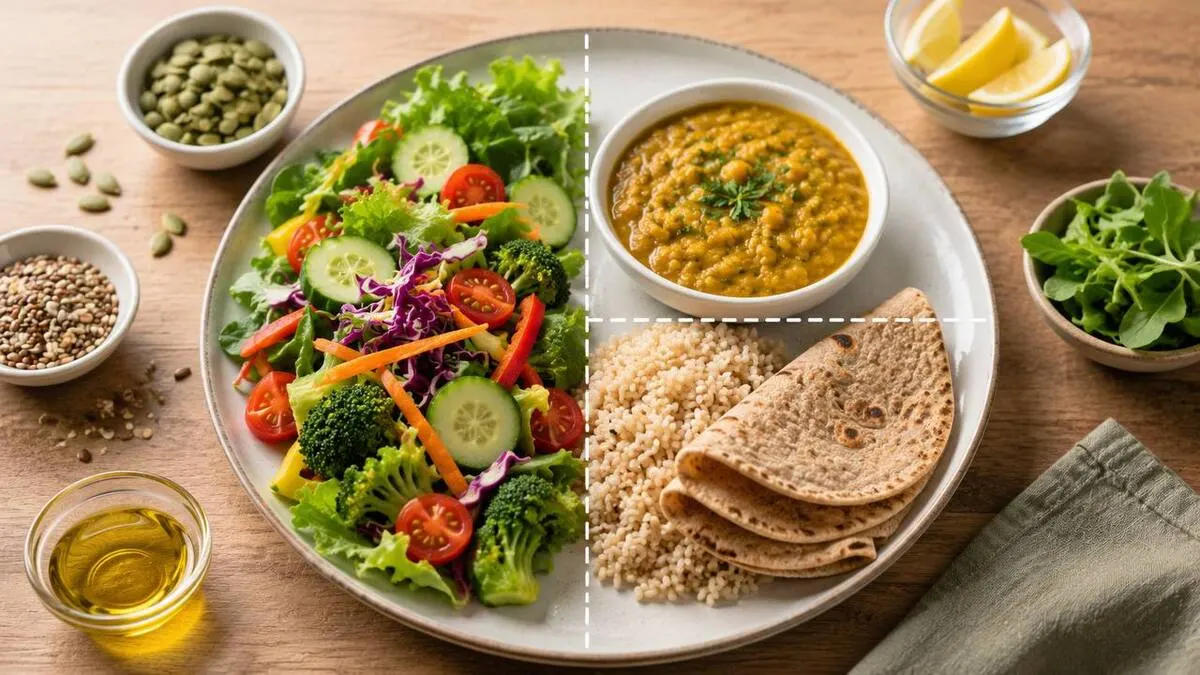
Next time you sit down for lunch, imagine a line dividing your plate into different sections.
- Half of the plate: Fill this with vegetables. It can be either a salad or some steamed veggies, or even a sabzi cooked with minimal use of oil.
- One-fourth of the plate: This needs to be filled with your protein intake, such as a thick dal curry, paneer, or some chickpea salad.
- The last fourth: This will take up your healthy carbs in the form of a couple of whole wheat rotis or some brown rice.
- Finishing touch: You can include healthy fat in a minute amount, such as some seeds or olive oil.
This magical combination keeps your blood sugar perfectly controlled, which stops your body from storing belly fat.
Doctor’s Note
Visceral fat wraps around internal organs but sheds quickly with the right diet. To prevent fat storage, balance your lunch plate: 50% vegetables, 25% protein (dals, paneer, curd), and 25% fiber-rich carbs (millets, brown rice). Avoid refined flour (maida) and sugary drinks. Always chew slowly and take a 10-minute post-meal walk to regulate blood sugar and aid digestion.
Foods That Help Burn Belly Fat Naturally
No single food acts like a magic fat-burning pill. But these everyday foods naturally speed up the process:
- Lentils and Beans: Things like moong dal, chana, and rajma are superpowers. They are packed with both protein and heavy fiber. They sweep through your stomach, clean it out, and keep you full until dinner time.
- Green Leafy Vegetables: Spinach (palak), fenugreek (methi), and mustard greens (sarson) are incredibly light but deeply filling. They give your body the exact nutrients it needs to run a fast, healthy metabolism.
- Curd and Buttermilk: A small bowl of fresh homemade curd or a glass of plain buttermilk (chaas) adds good bacteria to your stomach. A happy, clean stomach digests food better and holds onto less fat.
Foods to Avoid at Lunchtime
Some foods might seem easy to grab when you are busy, but they quietly add layers to your belly.
- Sweet Drinks: Cold drinks, boxed fruit juices, and heavily sweetened iced teas are basically liquid sugar. They shoot your blood sugar up instantly, and your body stores all that extra sugar straight in your belly. Stick to plain water, lemon water, or buttermilk.
- White Flour (Maida): White bread, naan, and bakery items break down way too fast. They leave you feeling hungry and sleepy just an hour after eating.
- Packet Foods: Instant noodles, packaged chips, and ready-to-eat meals are full of bad oils and tons of salt. They cause heavy water retention and make your belly look bloated and puffy.
Lifestyle Habits That Enhance Lunch Benefits
Food is only half the story. How you eat matters just as much.
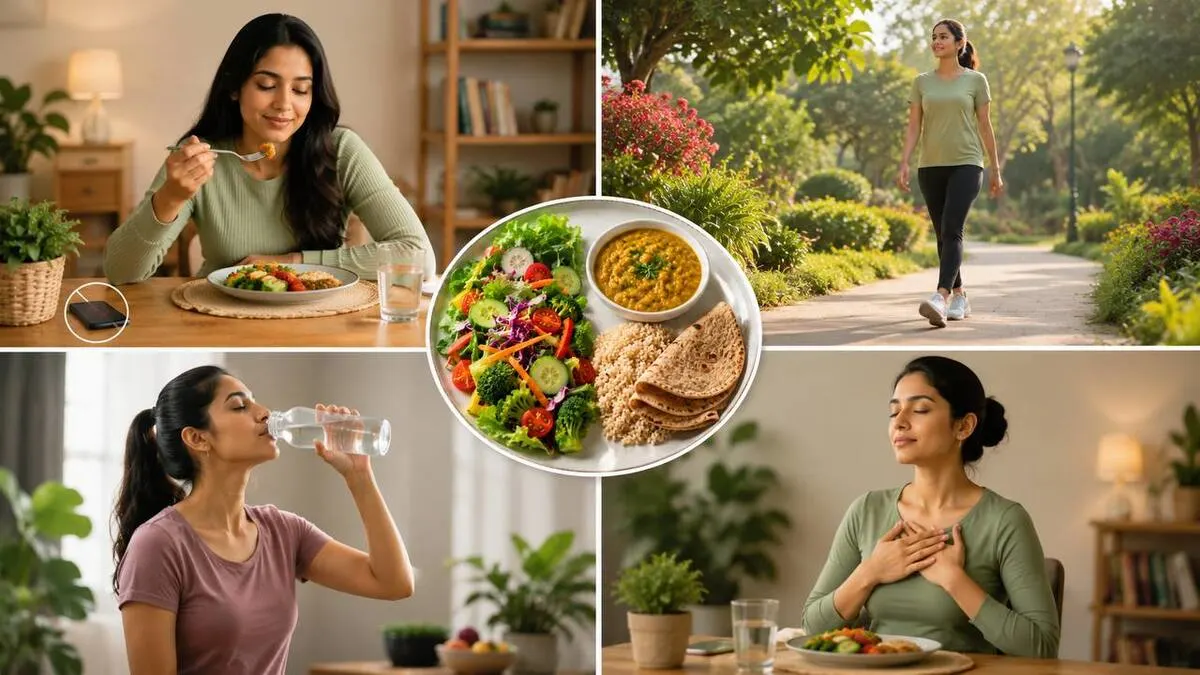
- Chew Your Food Slowly: It takes your brain about 20 minutes to realize your stomach is full. If you swallow your lunch in five minutes while looking at your phone, you will always overeat. Put your phone away, chew slowly, and enjoy the taste.
- Take a Short Walk: Instead of sitting right back down at your desk or lying on the sofa, take a gentle 10-minute walk after eating. This pushes the food down, stops bloating, and keeps your blood sugar flat.
- Drink Enough Water: Sometimes we think we are hungry, but we are actually just thirsty. Keep a water bottle nearby and sip it throughout the day. Just try not to drink a huge glass of water right in the middle of your meal, as it can slow down your digestion.
- Breathe and Relax: When you eat while stressed, your body holds onto fat to protect you. Take three deep breaths before you take your first bite. Eating in a calm mood helps your body digest the food beautifully.
Common Mistakes That Slow Belly Fat Loss
Even when trying hard, people often make these tiny mistakes:
Skipping Lunch Completely: Thinking that starving yourself will shrink your belly is the biggest myth. Skipping lunch slows down your internal engine. You will burn fewer calories and end up binge eating at night.
Eating Huge Portions of Healthy Food: Almonds, ghee, and brown rice are wonderfully healthy. But eating massive bowls of them will still make you gain weight. Keep your portion sizes sensible.
Eating Just a Plain Salad: A bowl of lettuce and cucumbers is great, but it is not a full meal. You will be starving in an hour. You must add some paneer, beans, or nuts to that salad to make it a real fat-burning lunch.
Conclusion
Shrinking that stubborn belly fat does not require you to buy expensive superfoods or eat tasteless meals. The secret to a perfect fat-loss lunch is simply balance.
By filling your plate with fresh vegetables, good plant proteins like lentils or paneer, and wholesome grains, you give your body exactly what it needs to heal and burn fat. Do not look for an overnight miracle. Just focus on eating a warm, balanced lunch every day, chewing your food slowly, and going for a little walk afterward. Small, easy habits always win in the end.
References
The case of visceral fat: argument for the defense - PMC
Pathophysiology of human visceral obesity: an update - PubMed