234
234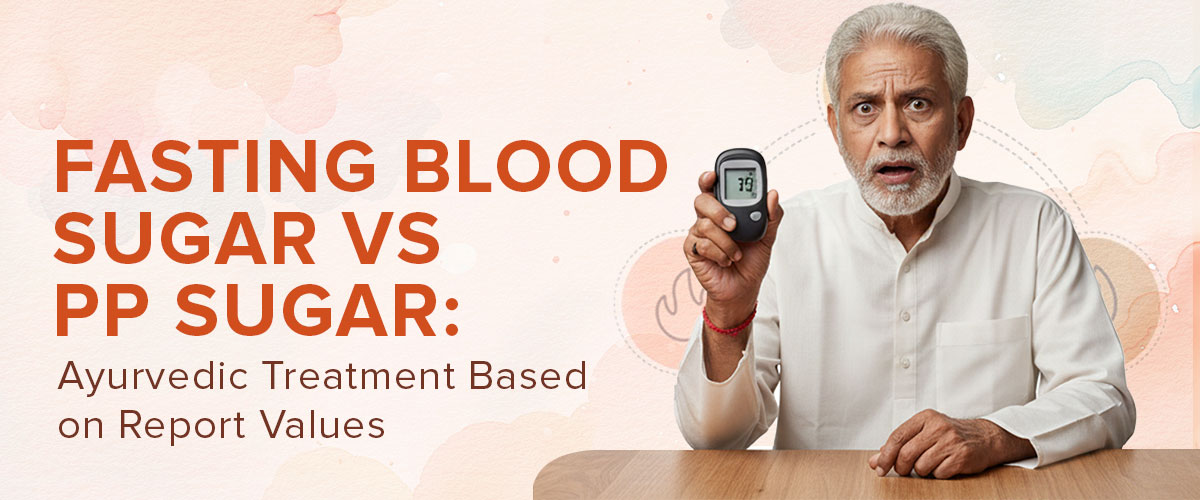
Today, blood sugar issues have swept over every barrier of age and lifestyle; be it the working professional or homemaker, young adults, the number of people seeing abnormal blood sugar levels in reports has increased. Testing regularly, however, most of them stay under a cloud regarding what those numbers really mean when it comes to Fasting Blood Sugar and PP Blood Sugar.
Is one more important than the other? Why is it that in some people, the fasting sugar is high while the PP sugar remains normal, or vice versa? Most importantly, how does Ayurveda help in managing blood sugar naturally based on these report values?
In this blog, we explain in simple terms the difference between fasting and PP sugar, their normal and abnormal ranges, and how Ayurveda, especially Jiva Ayurveda's personalized approach, helps in addressing the root cause of blood sugar imbalance.
What is Fasting Blood Sugar?
Fasting blood sugar refers to the level of glucose present in the blood upon getting up from a night of sleep, generally measured early in the morning, before having breakfast, after 8 to 12 hours of fasting.
Why Fasting Blood Sugar Matters?
Fasting sugar is a measure of how well your body maintains its blood glucose levels when no food has been consumed for several hours. It mainly reflects:
- How much glucose is released overnight by the liver?
- How sensitive is the body to insulin?
- The body's basic metabolic balance
Ayurvedically speaking, fasting blood sugar is closely related to Kapha Dosha, the metabolism of fat, and the general strength of Agni (digestive fire).
If the sugar level is high while fasting, it usually suggests:
- Slow metabolism
- Excess Kapha
- Fat accumulation (Meda Dhatu)
- Decreased insulin sensitivity
What is Post-Prandial blood sugar?
Post-prandial blood sugar is measured two hours after taking any meal. It shows how your body responds to the taken meal.
Why is PP Sugar Important?
PP sugar levels help assess the degree of: -
- How efficiently does digestion take place
- How well insulin is released after meals
- How much glucose effectively enters the cells
In Ayurveda, PP sugar denotes the capacity of digestive fire or Agni, along with the balance of Pitta Dosha. When digestion is poor or uneven, sugar will continue to remain in the bloodstream and fail to be adequately absorbed and put to good use.
Normal, Pre-Diabetic, and Diabetic Blood Sugar Values
As you observe your blood sugar count results, you quite possibly will be perplexed by these figures. However, at Jiva Ayurveda, these values are merely messages coming from your body. They help us comprehend the state of your digestion, metabolism, and lifestyle.
Understanding your report is the first step toward proper management.
Fasting Blood Sugar Levels
|
Category |
Value (mg/dl) |
|
Normal |
Below 100 |
|
Pre- Diabetic |
100-125 |
|
Diabetic |
126 or above |
Post-Prandial Blood Sugar Levels
|
Category |
Value (mg/dl) |
|
Normal |
Below 140 |
|
Pre- Diabetic |
140-199 |
|
Diabetic |
200 or above |
While modern medicine defines diabetes largely through these numbers, Ayurveda looks at these values as signs of deeper internal imbalance rather than the disease itself.
1. Normal blood sugar levels value
- Your digestion (Agni) is working well
- Your body can use glucose efficiently
- There is equilibrium among Kapha, Pitta, and Vata
- Food is being converted to energy appropriately
At this point, the body is in a balanced state, and sugars do not collect in the bloodstream.
Jiva’s Guidance
Even with normal values, Jiva recommends:
- Regular meal timings
- Light, home-cooked food
- Daily Physical Activity
- Stress Management
These practices will maintain balance and help prevent future imbalances.
2. Pre-Diabetic Blood Sugar Values
At this time, the body sends an early warning that:
- Digestion is becoming weak
- Kapha is beginning to build up
- ++ Fat tissue (Meda Dhatu) is accumulating
- Sugar metabolism is slowing down
In Ayurveda medicine, this is not regarded as a disease. Instead, the imbalance can be corrected. The body is still adapting and correcting itself, but needs to be assisted.
Jiva’s Guidance
This is the time to act. Jiva concentrates on:
- Strengthening Digest
- Correcting diet and meal time
- Preparing an Ayurveda diet
- The introduction of natural herbs that facilitate sugar metabolism
With timely Ayurvedic care and lifestyle corrections, most people can normalize their sugar levels at this stage.
3. Diabetic Blood Sugar Values
- Sugar metabolism is significantly disturbed
- Digestive fire has weakened over time
- Imbalance in Kapha and disturbed Vata are affecting the body channels
- The sugar stays in the blood rather than feeding the body tissues
From an Ayurvedic perspective, this phase corresponds to Prameha; when prolonged, it may advance to Madhumeha.
Jiva's Guidance
At this stage, Jiva works on:
- Stabilizing blood sugar levels
- Supporting digestion and metabolism
- Protecting Vital Organs
- Preventing long-term complications
The treatment is individualized, and safe integration with modern medicine is also given if and when required during the treatment process. It’s not just controlling the blood sugar levels that is a concern; overall health and quality of life are also being improved.
Why Do Some Reports Look “Mixed”?
Some persons, for example, may have high levels of fasting sugar and low levels of PP sugar. This is due to the reduction in the body's metabolism at night, which causes the liver to release excessive glucose in the morning. Stress, lack of sleep, and heavy food taken for dinner are some of the causes.
Some persons, for example, may have high levels of fasting sugar and low levels of PP sugar. This is due to the reduction in the body's metabolism at night, which causes the liver to release excessive glucose in the morning. Stress, lack of sleep, and heavy food taken for dinner are some of the causes.
Stress, Sleep, and Blood Sugar
Sleep is another important factor. Staying out late and having an irregular sleep pattern directly affects metabolism. If sleep is disrupted, Kapha is aggravated, and digestion (Agni) is slowed. In such cases, increased blood sugar and poor blood sugar control are common.
According to the theory of Ayurveda, stress affects the Vata Dosha balance of the body; lack of sleep increases Kapha and Pitta Dosha levels. As a result, digestion and glucose metabolism are affected.
Basic recommendations like maintaining sleep times, light dinner habits, breathing exercises, and the importance of relaxing are also emphasized. With the reduction of stress and improvement in sleep, sugar control tends to stabilize.
Ayurvedic View of Blood Sugar Imbalance (Prameha)
In Ayurveda, diabetes is described under a broad group of disorders known as Prameha. These conditions arise due to:
- Excess Kapha Dosha
- Weak or disturbed digestive fire
- Ama-toxic accumulation of waste products
- Imbalance of fat and musculature
When Prameha advances, and urine becomes sweet in nature, the condition is called Madhumeha, which includes diabetes mellitus.
According to Ayurveda, an imbalance of blood sugar does not occur all of a sudden. It develops gradually through unhealthy food habits, lack of physical activity, stress, irregular routines, and poor digestion.
Ayurvedic Understanding of Fasting vs PP Sugar
1. High Fasting Blood Sugar
When blood sugar levels during fasting stay high, particularly in the morning, it typically indicates:
- Dominance of Kapha
- accumulation of fat
- Inadequate sensitivity to insulin
- A glucose imbalance associated with the liver
According to Ayurveda, Kapha slows down metabolism and keeps sugar in the bloodstream by blocking the body's natural channels, or Srotas.
2. High Post-Prandial Blood Sugar
A significant increase in PP sugar following meals suggests:
- Poor digestive fire
- Inappropriate digestion of carbohydrates
- Inadequate insulin reaction
- Unbalanced Pitta
According to Ayurveda, this is caused by incomplete digestion, which results in an excess of glucose in the blood because food is not adequately converted into energy.
Ayurvedic Treatment Based on Blood Sugar Report Values
Ayurvedic treatment is always based on the stage of the condition, body constitution, and digestive strength. Here is how Ayurveda would approach a treatment based on report values.
1. Slightly Raised Blood Sugar-Pre-diabetic stage
Fasting: 100–110 mg/dL
PP: 140–160 mg/dL
This is a stage of early warning and the best time to act.
Ayurvedic Focus:
- Strengthening digestion
- Reducing Kapha
- Preventing disease progression
Lifestyle and Diet Counselling:
- Eat fresh, warm foods that have just been cooked
- Avoid overeating and late dinners.
- Take a walk every day for at least 30 minutes.
- Avoid sleeping during the day.
Commonly Used Herbs:
- Gudmar
- Vijaysar
- Triphala
- Fenugreek (Methi)
At this stage, the blood sugar imbalance is often completely reversible with proper Ayurvedic care.
2. Blood Sugar Levels That Are Moderately High
Fasting: 110–125 mg/dL
PP: 160–199 mg/dL
This is a stage when the organization requires more structured and disciplined management.
Ayurveda Focus:
- Removing Ama end
- Cleansing body channels
- Improving insulin functioning
Suggested Solution:
- Personalized nutrition programs
- Regular meal timing
- Including bitter and astringent tastes
- Panchakarma therapies - if advised by the doctor
At this stage, consistency in diet and lifestyle becomes of utmost importance.
3. High Blood Sugar Level [Diabetic Range]
Fasting: 126 mg/dL and above
PP: 200 mg/dL and above
Long-term management is required at this stage, and the process needs to be carefully monitored.
Ayurvedic Focus:
- Stabilizing the sugar level in the blood
- Organ protection
- It helps in preventing complications.
- It increases digestion and metabolism.
Treatment Approach:
- Personalized herbal medicines
- Continuous follow-up
- The practice of managing stress
- Rejuvenation or Rasayana therapy
Ayurveda does not intend to simply lower sugar numbers; rather, it restores the natural balance of the body.
Ayurvedic Diet Guidelines for Blood Sugar Balance
Foods to Include:
- Barley
- Green gram
- Bitter gourd
- Bottle gourd
- Leafy vegetables
- Turmeric, cinnamon
Foods to avoid:
- Sugar and sweets
- Refined flour products
- Bakery and packaged food
- Fried and oily foods
- Sugar-sweetened beverages
It is equally important to eat at the right time and in the right quantity as it is to select the right foods.
Importance of Lifestyle in Blood Sugar Control
Dinacharya, or daily routine, and Ritucharya, or seasonal routine, form very significant components of Ayurveda.
Salutary life habits include the following:
- To wake up early
- Regular exercise
- Avoid late-night eating.
- Practicing yoga and meditation
- Getting proper sleep
Irregular routines and chronic stress directly disturb blood sugar balance.
Possible Complications of Uncontrolled Blood Sugar
The following factors may lead to high levels of fasting or PP sugar for long periods:
- Nerve damage
- Myopia
- Kidney problems
- Heart disease
- Sexual health issues
Ayurveda is very preventive; it has a strong emphasis on prevention in order to halt the beginning of complications.
Jiva Ayurveda’s Important Points for Blood Sugar Management
Jiva Ayurveda offers fundamentally integrated Diabetes mellitus treatment using evidence-based Ayurveda. These treatment plans are tailored according to the root cause of the disease, rather than merely treating symptoms or focusing on holistic healing, balance, and stability in totality, which has helped in managing Diabetes mellitus.
Root-Cause Based Treatment
Jiva Ayurveda treats blood sugar imbalance by identifying:
- Dosha imbalance
- Digestive strength
- Body constitution
- Disease stage
Personalized Care
Each patient is given:
- Personalized herbal remedies
- Dietary recommendations for individuals
- Plans for changing one's lifestyle
There is no one-size-fits-all approach.
Focus on Early Reversal
Jiva places a strong emphasis on reversing blood sugar imbalance early on by:
- Prompt diagnosis
- Modification of lifestyle
- Ongoing medical advice
Safe Use Alongside Modern Medicine
Jiva physicians advise patients on:
- Safely combining allopathic medications with Ayurveda
- Regularly checking blood sugar levels
- Whenever feasible, reducing reliance on medications
Long-Term Well-Being and Health:
- Temporary sugar control is not the aim, but
- Consistent metabolism
- Healthy digestive system
- Increased vitality
- A higher standard of living
When Is the Right Time to See an Ayurvedic Physician?
Ayurvedic advice should be sought if:
- Blood sugar levels continue to be elevated.
- Sugar fluctuates a lot.
- You're having digestive issues.
- You desire a natural and comprehensive strategy.
Better outcomes are always achieved when action is taken early.
Conclusion
Fasting and blood sugar levels after meals provide valuable insight into your metabolic status. While conventional medicine revolves around controlling figures and numbers, Ayurveda delves into aspects like digestion, lifestyle, stress levels, and the overall balance of your life.
If you are suffering from Fasting blood sugar or PP sugar, you can consult with certified Jiva doctors for personalized treatment and proper guidance. Call today: 0129-4264323.