 Published on
17 Jul, 2026
Published on
17 Jul, 2026 Updated on 17 Jul, 2026
 5101
5101According to the World Health Organization (WHO), prostate cancer is one of the most commonly diagnosed cancers among men worldwide. In India, incidence rates have been increasing, particularly in urban populations. Many men expect serious health problems to arrive with obvious warning signs. But prostate cancer usually does not work that way. In its early stages, it develops very quietly. Some symptoms seem so mild that it is easy to mistake them for normal aging, stress, or a minor bladder issue. As a result, many men delay visiting the doctor until the disease has already grown.
The good news is that recognizing these early clues and getting checked by a doctor can change your health journey. When you know what to look for, you can catch problems early, opening the door to better treatments and better results. Learning to listen to your body is an important step toward protecting your long-term health.
The Prostate: What is It and Why is It Important?
The prostate is a small gland located just underneath the bladder and in front of the rectum. In younger men, the prostate is approximately the size of a walnut. It plays an important role in the male reproductive system because it produces a fluid that enables sperm to move and be protected.
In older men, the prostate is likely to change and increase in size as they age. An enlarged prostate does not necessarily mean one has cancer. It should be noted, however, that any changes in urination or how the pelvic area feels should be discussed with a healthcare professional rather than being dismissed as a normal part of aging.
Why Prostate Cancer Often Goes Unnoticed
One reason prostate cancer often goes unnoticed is that it may not cause obvious symptoms during its early stages. Many early tumors develop in parts of the prostate that do not immediately affect urine flow, allowing the disease to grow silently. As a result, many men feel completely healthy and only learn about the condition during routine health screenings.
Even when symptoms do appear, they often resemble those of common conditions such as benign prostatic hyperplasia (BPH) or urinary tract problems. Because these symptoms can seem mild or age-related, many men delay seeking medical advice.
Early Signs of Prostate Cancer Men Often Ignore
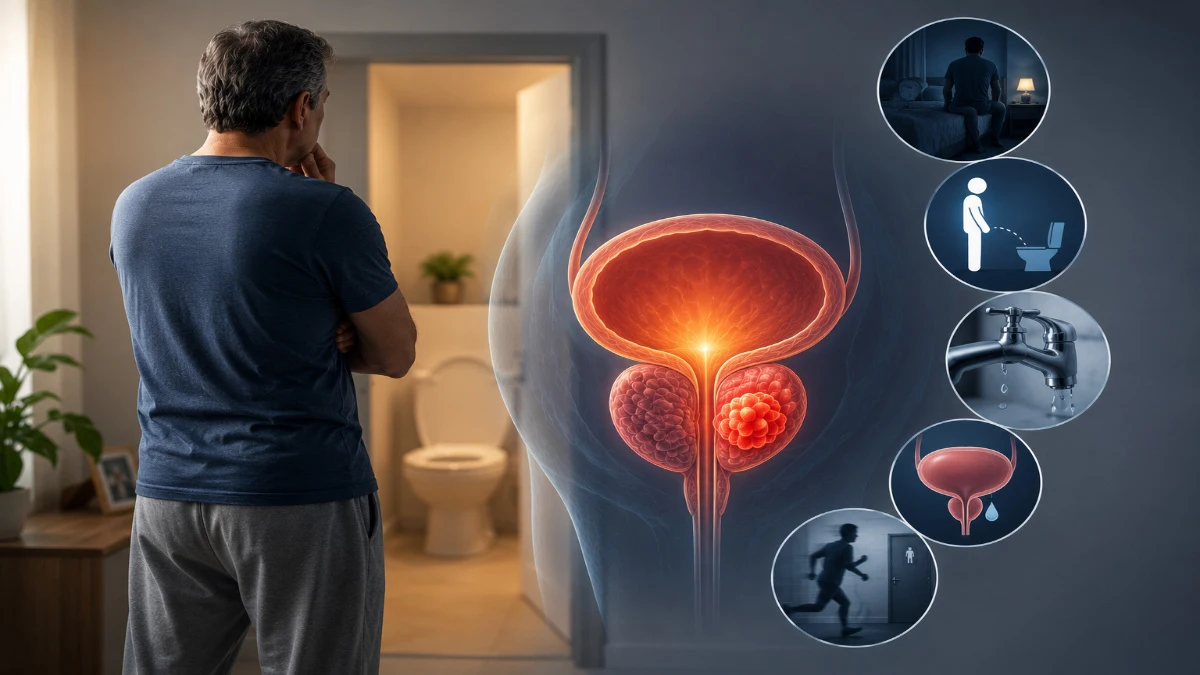
Because the prostate wraps around the urinary tract, early physical hints of trouble usually show up in your bathroom habits. Here are the everyday changes worth talking about with your doctor.
Frequent Urination, Especially at Night
Waking up two, three, or more times during the night to use the bathroom is easy to ignore. While bladder control naturally changes as we age, a steady increase in nighttime bathroom trips that lasts for weeks or months should not be brushed aside.
Difficulty Starting Urination
Do you stand at the toilet, waiting for several seconds or minutes for urine flow to begin? This delay happens when the prostate pushes against the urinary tube. It develops so slowly that men simply adjust their routines around it, ignoring that their body is struggling to start a basic function.
Weak or Interrupted Urine Stream
Think about the force of your urine stream compared to a few years ago. A flow that feels noticeably weaker, lacks pressure, or stops and starts without warning is a classic sign of blockage. While a non-cancerous enlarged prostate is a common cause, cancer can cause the exact same slowdown.
Feeling That the Bladder Never Fully Empties
Sometimes you finish using the bathroom and immediately feel like your bladder is still full. This happens when the bladder cannot push urine past a narrowed pathway, leaving liquid behind. Over time, this leftover urine causes lingering discomfort and irritation.
Urgent Need to Urinate
There is a big difference between needing the restroom and feeling a sudden rush that forces you to drop everything and run to the toilet. An occasional rush can happen from drinking too much coffee, but repeated episodes without a clear cause point to bladder pressure that needs attention.
Warning Signs That Need Prompt Medical Attention

While everyday urinary changes develop slowly, certain warning signs mean you should schedule a doctor's visit right away.
Blood in the Urine
Seeing a pink, red, or brownish tint in your toilet bowl or urine stream can be alarming, and you should never ignore it. While kidney stones, hard exercise, or simple infections can cause bleeding, visible blood always requires a professional check to rule out serious problems like cancer.
Blood in Semen
Noticeable changes in the color of your semen, such as a rust-colored or pinkish tint, can make many men feel embarrassed. Please do not let shyness keep you from seeing a doctor. While it can be caused by simple swelling or minor infection, it is a symptom that always needs a medical review.
Pain or Burning During Urination
Feeling pain or a burning sensation while urinating is usually tied to bacterial infections or gland swelling. However, if burning or sharp pain continues even after you drink plenty of fluids and take standard medicine, your doctor needs to take a closer look.
Symptoms Beyond the Urinary System
Prostate health affects more than just your bladder. When a tumor grows or presses against nearby nerves and tissues, warning signs can spread to other areas of the body.
Persistent Pelvic Discomfort
A dull, ongoing ache in the lower belly, the pelvic area, or the space between the scrotum and rectum is a symptom many men quietly live with for months. Because it rarely starts as sharp pain, it gets written off as muscle soreness. Ongoing pain in this area is not normal.
Erectile Difficulties
Healthy sexual function depends on nerves and blood vessels that run right next to the prostate. If those pathways are disturbed by changes in the gland or pressure from a tumor, it can cause new or worsening erectile problems. Persistent changes should always be discussed with your doctor.
Unexplained Lower Back, Hip, or Bone Pain
When prostate cancer spreads outside the gland, it can cause deep pain in the bones, especially in the lower back, hips, and upper thighs. An aching pain in these areas that does not get better with rest or basic pain relievers should always be checked by a doctor.
Who Is at Higher Risk?
While any man can develop prostate cancer, certain factors increase your chances:
- Being over age 50
- Having a father or brother diagnosed with the disease
- Certain inherited genetic factors
- A diet low in fruits and vegetables, combined with little exercise
Having these risk factors simply means regular health check-ups are very important.
Enlarged Prostate vs Prostate Cancer: Can the Symptoms Be Similar?
| Symptom | Enlarged Prostate (BPH) | Prostate Cancer |
| Frequent urination | Common | Possible |
| Nighttime urination | Common | Possible |
| Weak urine stream | Common | Possible |
| Difficulty starting urination | Common | Possible |
| Blood in urine | Less common | Possible |
| Blood in semen | Uncommon | Possible |
| Pelvic discomfort | Sometimes | Possible |
The Importance of Regular Screening
Because early prostate cancer might not make you feel unwell, regular check-ups are your best defense. Simple tests like a routine blood draw or a basic physical exam help doctors catch problems early when they are easiest to treat. Screening recommendations vary based on age, family history, and individual risk factors. Discussing screening options with a healthcare professional can help determine what is appropriate for you.
Common Tests Used to Evaluate Prostate Health
Doctors may recommend:
- PSA (Prostate-Specific Antigen) blood test
- Digital Rectal Examination (DRE)
- MRI imaging when necessary
- Prostate biopsy if cancer is suspected
Not every man needs the same screening schedule. Recommendations depend on age, family history, symptoms, and overall health.

When Should You See a Doctor?
Consider scheduling a medical evaluation if you experience:
- Frequent nighttime urination
- Difficulty starting urination
- Weak or interrupted urine flow
- Blood in urine or semen
- Persistent pelvic discomfort
- Unexplained lower back, hip, or bone pain
- Urinary symptoms that continue for several weeks
Early evaluation does not necessarily mean cancer will be found, but it can help identify the cause of symptoms and ensure appropriate treatment if needed.
Expert Health Advice
Urinary symptoms are common as men age, but persistent changes should never be ignored. Frequent urination, difficulty starting urination, weak urine flow, blood in urine or semen, and ongoing pelvic discomfort should be evaluated by a healthcare professional. Early assessment can help determine whether symptoms are related to prostate enlargement, infection, or another underlying condition. Timely diagnosis often provides more treatment options and better outcomes.
Conclusion
Prostate cancer often develops quietly, which is why persistent urinary changes should never be ignored. Frequent urination, difficulty passing urine, blood in urine or semen, and ongoing pelvic discomfort deserve medical attention. Seeking timely evaluation can help identify the cause of symptoms and, when necessary, improve the chances of early diagnosis and treatment. When it comes to your health, staying aware and acting early are the best ways to protect your long-term well-being.
References
Prostate Cancer – Early-Stage: Symptoms, Diagnosis & Treatment - Urology Care Foundation
Symptoms of prostate cancer - NHS
Prostate Cancer Statistics in India and Delhi | Dr. Tushar Narain