 Published on
06 Jul, 2026
Published on
06 Jul, 2026 Updated on 06 Jul, 2026
 5100
5100We are all familiar with the everyday aches of living. You push too hard at the gym. You spend three hours assembling flat-pack furniture on the floor. You wake up with a stiff neck after sleeping in a strange position. These are standard physical grievances. We expect them. We stretch, we apply a warm compress, and we move on.
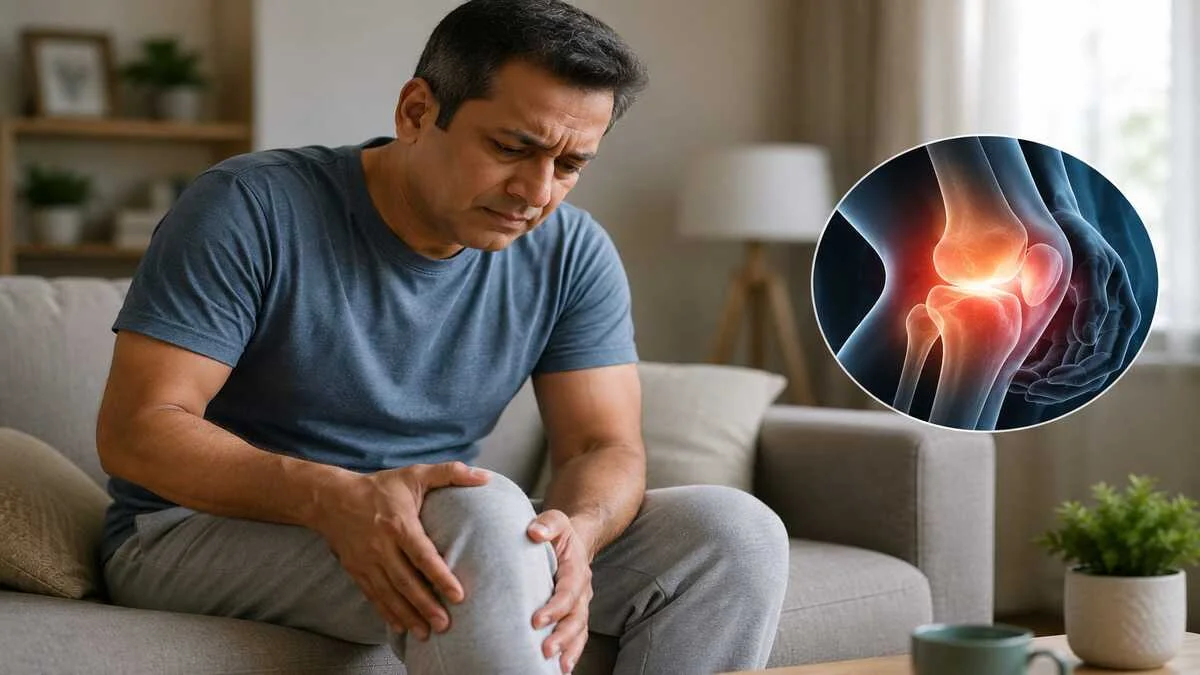
Bone pain is a whole other realm of experience, however. It does not feel like a pulled hamstring or cramped calf. It's a deep, persistent pain. It feels internal. It will not fade after a couple of days of rest. But, surprisingly, many individuals attempt to dismiss it. It's the weather they blame. They blame it on aging. They think it's a minor nuisance that they must deal with. It is an easy mistake to make, but it can be perilous.
Medical science is very clear on this front. While muscle soreness is usually a sign of harmless exertion, persistent bone pain is a highly specific alarm bell. It is your body’s way of signaling that something structural, systemic, or biological requires immediate attention. Ignoring it is never the right protocol.
Decoding the Discomfort: Muscle vs. Bone
To understand when to seek help, you first have to understand what you are actually feeling. Distinguishing between a musculoskeletal ache and true bone pain can be tricky, but there are distinct differences.
A muscle ache is typically confined to a specific area. It's often possible to directly refer to the location that hurts. It is more pronounced when you move a specific muscle and is less when you rest.
Bone pain plays by different rules. It is frequently described as a deep, penetrating ache. It is hard to pinpoint the exact epicenter of the pain. It feels diffuse. More importantly, bone pain rarely vanishes when you sit down or put your feet up. It lingers in the background. It is there when you are walking. It is there when you are sitting perfectly still.
The Undeniable Red Flags
If you are experiencing a lingering ache, doctors and orthopedic specialists look for a specific set of red flags. If your pain is accompanied by any of the following symptoms, it transitions from a "wait and see" situation to a "book an appointment immediately" scenario.
The Night Shift. This is perhaps the most critical red flag in orthopedics. Normal mechanical pain, like a sore knee from walking too much, gets better when you lie down. Bone pain that actively wakes you up from a deep sleep, or consistently worsens in the middle of the night, requires immediate evaluation.
Systemic Symptoms. Bones do not exist in isolation. They are heavily connected to your immune system and your blood. If your deep bone ache is accompanied by unexplained weight loss, chronic fatigue, night sweats, or a recurring low-grade fever, you need to see a physician. These systemic signs indicate your body is actively fighting something significant.
Visible Surface Changes. A bone issue isn't always invisible. If the skin over the painful area becomes red, distinctly warm to the touch, or visibly swollen, this is a major warning sign. It often points toward an acute infection or severe localised inflammation.
The Fragility Fracture. You trip over a rug and bump your hip against a doorframe. It is a minor impact. But a week later, an X-ray reveals a fracture. Breaking a bone from a standing-height fall, or from a force that shouldn't normally cause a break, is a massive red flag. It indicates the structural integrity of the bone has already been severely compromised.
What Medical Science Looks For
When you step into a doctor’s office with persistent bone pain, they are not going to guess. They rely on established diagnostic pathways. The goal is to rule out the severe conditions while identifying the most likely, treatable culprits.
Nutritional Deficiencies and Thinning. One of the most common causes of widespread bone aching is severe Vitamin D deficiency, a condition known in adults as osteomalacia. Without enough Vitamin D, your bones literally soften. They ache. Similarly, osteoporosis, the silent thinning of the bones over time, can cause micro-fractures in the spine or hips that generate persistent, dull pain.
Infections. Osteomyelitis is the medical term for a bone infection. It is rare, but it is incredibly serious. Bacteria can enter the bone tissue through the bloodstream, or directly via a deep puncture wound or recent surgery. It causes severe pain, swelling, and usually requires aggressive antibiotic therapy.
The Cellular Threat. It is the diagnosis everyone fears, but it is exactly why medical evaluation is non-negotiable. Primary bone cancers (like osteosarcoma) or metastatic cancers (cancers that have spread to the bone from the lungs, breast, or prostate) manifest as deep, unyielding bone pain. Early detection in these scenarios changes everything about the treatment trajectory.
Blood Supply Issues. Avascular necrosis occurs when the blood supply to a specific bone is interrupted, causing the bone tissue to slowly die. It most commonly affects the hip. The pain usually starts mild and becomes progressively, intensely worse over a period of months.
Ancient Rhythms: The Ayurvedic Perspective
While modern diagnostics are crucial for identifying severe pathology, maintaining the long-term structural integrity of our bones often requires a broader lifestyle approach. Interestingly, ancient healing traditions offer highly relevant frameworks for skeletal health. The concept of deep nourishment is the absolute foundation of Ayurveda.
Ayurvedic medicine believes that Asthi Dhatu (bone tissue) regulates bone health. It is not as if practitioners have been unaware that skeletal strength is not solely dependent on consuming one mineral. It is related to the efficiency of nutrient digestion and absorption in the body. The air, space, and aging elements are associated with the vata dosha, and when it becomes imbalanced, it shows up physically as dry, brittle, aching bones.
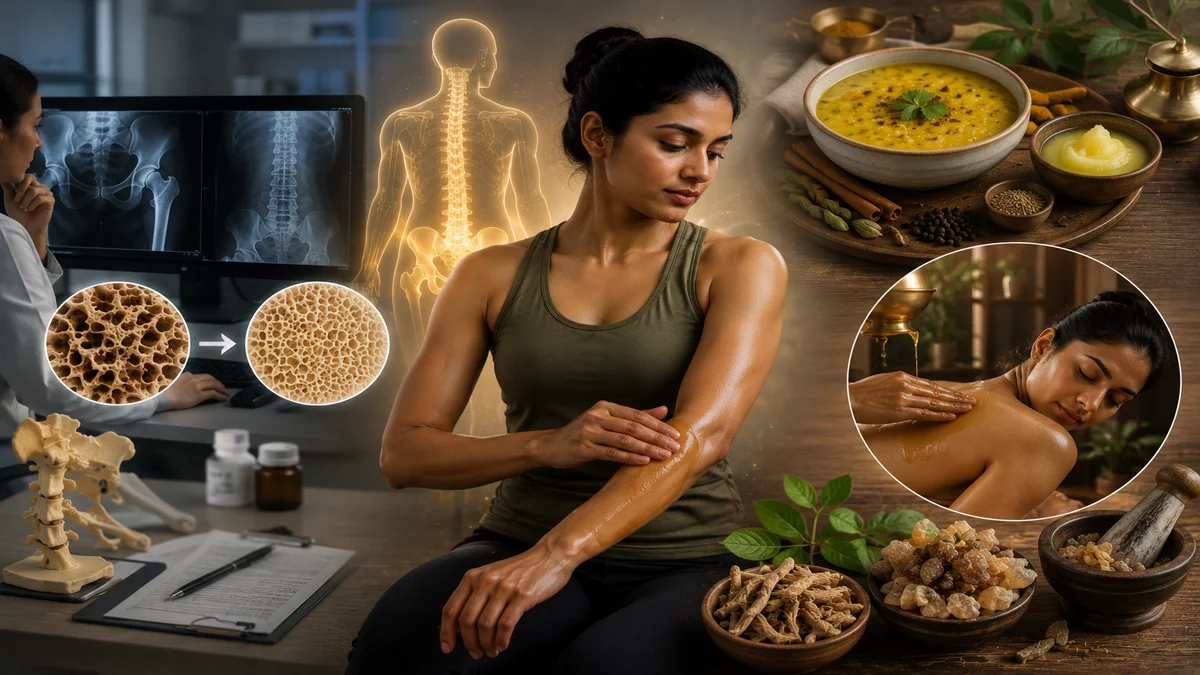
The Ayurvedic lifestyle has a natural solution to this, with its emphasis on internal heat and deep lubrication. It focuses on eating highly digestible cooked food, healthy fats such as ghee, and digestive stimulants such as spices. There is heavy use of routine practices such as Abhyanga (self-massage with warm oils) to nourish and calm the nervous system and pacify Vata, driving the nourishment into the tissues. Additionally, they may also include ancient botanicals such as Ashwagandha (for vitality) and Shallaki (Boswellia), which is well known for its powerful anti-inflammatory activity and is often used for joint and bone comfort. An Ayurvedic approach creates an environment that is warm and supportive to the body as a whole and promotes optimal digestion, serving as an effective complementary measure to modern preventative care to keep the foundation of the body robust.
The Diagnostic Blueprint
If you finally make the decision to get checked out, the medical process is highly structured. It almost always begins with a standard X-ray. It is fast. It is cheap. It clearly shows fractures, obvious tumors, or severe bone degradation. However, X-rays do not show everything.
If the X-ray is clear but the pain persists, physicians will likely order a comprehensive blood panel. They are looking for calcium levels, alkaline phosphatase (an enzyme that spikes when bones are actively growing or actively diseased), and inflammatory markers.
A DEXA scan may be ordered to gain a deeper understanding of your bone density and to determine if you do or don't have osteoporosis. In the most complicated instances, an MRI or CT scan is employed. Doctors can use these advanced imaging techniques to see inside the marrow. They will be able to identify very small infections, early-stage tumours, or subtle stress fractures that conventional X-rays are unable to detect.
The Bottom Line
Your bones are the architectural framework of your entire life. They are designed to be strong. They are designed to operate silently in the background. When they start making noise, you need to listen.
A persistent ache is not a sign of weakness. It is a biological data point. Waiting for it to miraculously disappear is a gamble with incredibly poor odds. If you are waking up in pain, if you are popping over-the-counter painkillers just to get through a normal afternoon, or if you feel a deep ache that simply won't quit, drop the stoicism. Pick up the phone. Schedule the evaluation. In the realm of skeletal health, early information is the ultimate advantage.
References:
Chronic Pain and Bone-Related Pathologies: A Narrative Review - PMC
Mechanisms of bone pain: Progress in research from bench to bedside
An understanding of bone pain: A narrative review - ScienceDirect