 Published on
25 Jun, 2026
Published on
25 Jun, 2026 Updated on 25 Jun, 2026
 5094
5094Getting a Parkinson's disease diagnosis is a profoundly heavy moment. The future suddenly feels incredibly uncertain. You picture the tremors. You think about the stiffness. The slow, creeping loss of mobility. It feels like a one-way street. You assume your body will inevitably slow down. But what if you could actively fight back against that physical decline? What if the best defense isn't just sitting in a doctor's office, but lacing up your sneakers and breaking a serious sweat?
There is some really encouraging news from a recent cross-sectional study. The scientists were interested in seeing whether exercising had any measurable impact during the early stages of Parkinson's disease. They didn't simply ask how people felt, day-to-day. They tested them. They put them to the test. But the results are changing the way the medical community views aerobic exercise, as something more than an off-the-cuff suggestion, but as a key part of medical treatment from early stages.
The Setup: Defining "Highly Active"
To figure out exactly how movement impacts the disease, researchers gathered a very specific group of people. The study included 70 individuals with Parkinson's who were classified as "low-active". They brought in 35 individuals with Parkinson's who were classified as "highly active". To round things out and provide a baseline, they also included 35 healthy controls who did not have the disease.
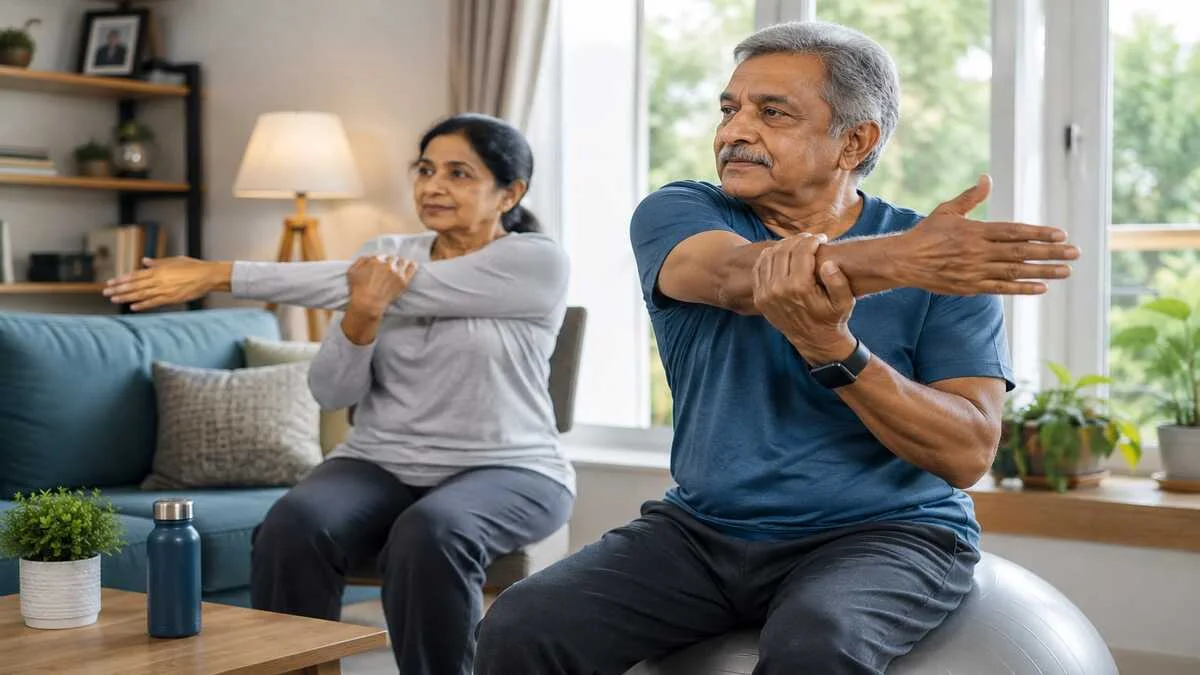
However, what is meant by highly active? It doesn't mean taking a leisurely ten-minute stroll around the block once a week. They considered people to be highly active if they did moderate or vigorous aerobic activity twice or more per week. This had to be carried out for over three months. It required dedication. It needed to be an exercise that increased the heart rate.
By contrast, the low-active participants engaged in that level of exercise no more than twice a week over the same time period. Many did much less. The researchers wanted to see if that specific threshold of sweat and exertion translated to real-world physical capabilities.
The Assessment Gauntlet
The researchers did not take it easy on the participants. They ran them through a rigorous, comprehensive battery of assessments. They wanted a full picture of how these individuals were functioning. They looked at motor skills. They tested physical endurance. They evaluated cognitive sharpness. They even looked at patient-reported outcomes regarding their overall quality of life.
Tests were quite extensive. Participants performed the Timed Up and Go Test (TUG), as the name suggests. It is a test of how fast and safely a person can get up from a chair, walk a short distance, turn around, and then sit back down. It sounds simple. It turns out, it's a great way to tell if someone is balanced or if they are at risk for falling. They also conducted the Six Spot Step Test and the 6-Minute Walk Test to measure aerobic capacity and lower extremity muscle power.
But they didn't stop at physical fitness. The researchers used the Montreal Cognitive Assessment and the Symbol Digit Modalities Test to check processing speed and memory. They evaluated the participants' mental state using the Beck Depression Inventory-II. They tracked symptom severity using the gold-standard Movement Disorders Society-sponsored revision of the Unified Parkinson’s Disease Rating Scale.
They looked at everything. They left no stone unturned.
The Findings: Sweating Out the Symptoms
When the data came back, the researchers found a clear, undeniable divide. The highly active group didn't just do a little bit better. They blew the low-active group out of the water.
Almost every physical measurement showed that high-activity patients with Parkinson's performed better than the low-activity patients. Their motor symptoms were not as severe. They were generally physically more functional. They even had fewer non-motor symptoms, the silent and unheralded symptoms of Parkinson's that people don't often mention.
The most shocking part of the study, however, is to come up with this. The highly active Parkinson's group didn't just outperform the low-active group in several important physical and cognitive tests. They found that their results were identical to the healthy control group.
Let that sink in for a moment. People living with a degenerative neurological disease were moving, balancing, and functioning on par with people who did not have the disease at all. The only major difference was their commitment to moderate and high-intensity aerobic exercise.
The low-active group told a very different story. When compared to the healthy controls, the low-active Parkinson's participants showed significant impairments in several physical functions and activity outcomes. Without the protective barrier of intense regular exercise, the disease was visibly taking its toll on their bodies.
Ancient Wisdom Supporting Modern Science
Interestingly, modern neurology's push for rigorous, disciplined movement aligns beautifully with healing philosophies that are thousands of years old. While Western doctors are prescribing treadmill sessions, there is a massive, growing appreciation for the positive potential of an Ayurvedic lifestyle in helping manage neurodegenerative conditions.
Ayurvedic medicine considers Parkinson's disease to be a very severe aggravation of the Vata dosha. In the human body, the energy responsible for all movement, circulation, and nervous system functions is Vata. If Vata gets aggravated or depleted, there are typically trembling, stiffness, and anxiety.
An Ayurvedic approach doesn't necessarily contradict modern exercise. It provides the ideal foundation for it. Ayurveda focuses heavily on deeply calming the nervous system through daily routines. Practices like Abhyanga (warm oil massage) help soothe erratic nerve impulses. Eating warm, grounding, nutrient-dense foods prevents the body from becoming depleted. Utilising specific adaptogenic herbs can help lower the chronic internal stress that makes Parkinson's symptoms worse. When a patient combines this ancient, deeply nourishing lifestyle with the rigorous, heart-pumping aerobic exercise recommended by modern science, they create an incredibly resilient bodily environment. They quiet the nervous system so the body can actually handle the hard physical work required to keep the muscles strong.
The Cognitive and Emotional Reality Check
While the physical results of the study were overwhelmingly positive, the researchers were careful to provide a realistic picture. Exercise is an incredibly powerful tool. It is not a magic cure-all.
When it came to cognitive function, the results were somewhat mixed. Overall cognitive function was fairly similar across both of the Parkinson's disease groups. The exercise didn't necessarily make the active group significantly smarter or sharper than the low-active group. Furthermore, the healthy controls still performed better in raw processing speed than anyone with Parkinson's, regardless of how much time they spent in the gym.
In addition, the researchers found no significant differences between the groups of people who participated in the study for overall quality of life or depressive symptoms. Having a chronic condition is a big emotional burden. Some people may feel that running on a treadmill keeps their legs strong and helps maintain balance, but it does not remove the emotional weight of the diagnosis. Care and attention are needed for mental health.
Moving Forward with Purpose
So, what is the ultimate takeaway for someone navigating the early stages of this disease?
The researchers noted one important caveat. Because this was a cross-sectional study, it cannot definitively prove causality. That means they cannot say with 100% scientific certainty that the exercise directly caused the better physical function. It is possible that the people who felt better were simply more inclined to exercise in the first place.
But the link is too close to call a fluke. The results were strong evidence that moderate to vigorous aerobic activity provides a physical barrier. It helps to reduce the loss of motor function due to disease. It keeps the muscles active. It helps keep the balance system functioning effectively.
The common prescription for "rest" may be the worst thing for you to do if you are in the early stages of Parkinson's disease. This study confirms the need for early, high-intensity aerobic exercise as an integral component of a comprehensive management strategy.
You cannot stop the diagnosis. But you can absolutely change how your body responds to it. Talk to a neurologist. Find a physical therapist who understands the disease. Build a routine that challenges your cardiovascular system. The treadmill, the stationary bike, or the swimming pool might just be the best medicine you can currently get. It takes effort. It takes sweat. But the chance to maintain your physical independence for years to come is well worth the work.
References:
Could Exercise Preserve Early Parkinson Disease Function?
Exercise | Parkinson's Foundation
What and How Can Physical Activity Prevention Function on Parkinson's Disease? - PMC
Exercise as medicine in Parkinson’s disease | Journal of Neurology, Neurosurgery & Psychiatry
Chasing Protection in Parkinson’s Disease: Does Exercise Reduce Risk and Progression? - PMC