 Published on
01 Aug, 2026
Published on
01 Aug, 2026 Updated on 01 Aug, 2026
 5077
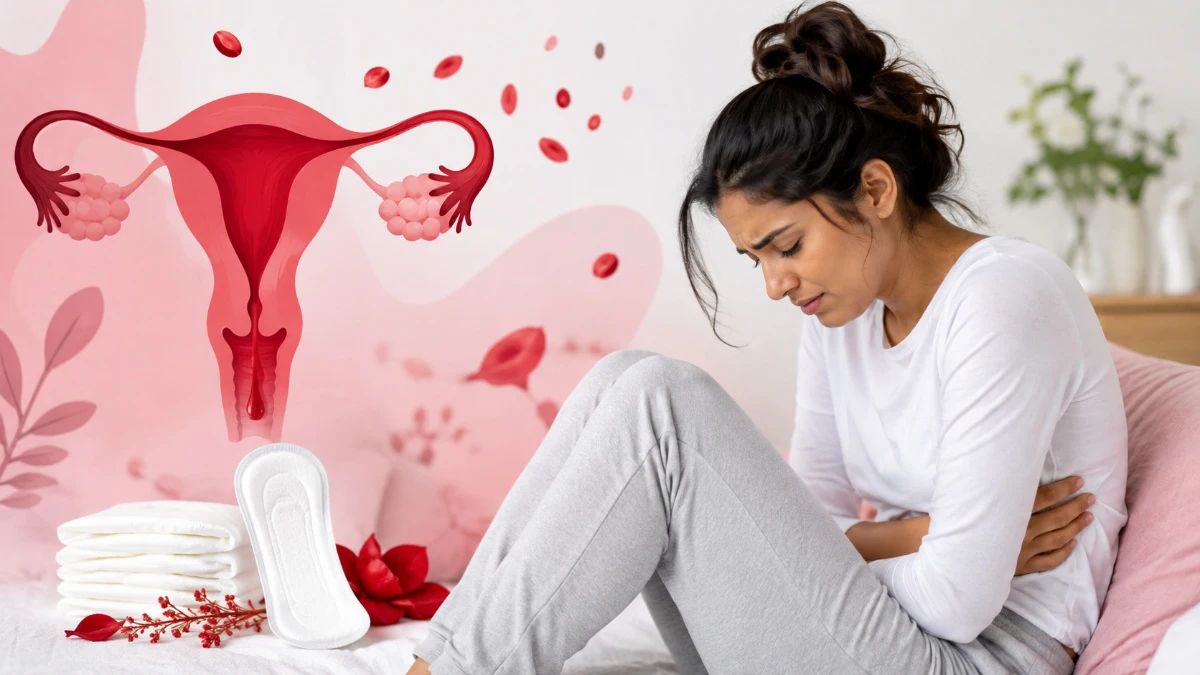
5077Heavy period bleeding, known medically as menorrhagia, is far more than a monthly annoyance. It is a prevalent medical issue affecting roughly one in five women globally. Millions suffer in silence every single month. They assume a heavy flow is just their personal genetic baseline. They attribute chronic, crushing fatigue to a busy schedule.
It is time to reframe that perspective. Abnormally heavy bleeding is a direct signal from your body. Left unchecked, it can trigger severe iron-deficiency anemia, mask structural uterine conditions, and strip away your vitality. Knowing when your flow crosses the red line into dangerous territory is essential for long-term health.
The Benchmark: What Does "Too Heavy" Really Look Like?
Clinical literature defines heavy menstrual bleeding as losing more than 80 milliliters of blood during a single period. That number sounds precise. It is practically useless in daily life. Nobody measures their period in a measuring cup.In the real world, you have to look at practical indicators. A typical period usually requires changing a pad or tampon every three to four hours. The total duration stays within four to seven days.

When bleeding exceeds healthy boundaries, the daily signs are glaring:
- The Two-Hour Rule: You soak through one or more high-absorbency pads or tampons every hour or two for several consecutive hours.
- Double Protection: You layer a tampon with a heavy-duty pad. You do this just to prevent embarrassing leaks.
- Nocturnal Disruptions: You must set an alarm to change sanitary products in the middle of the night.
- Large Blood Clots: You pass thick blood clots the size of a quarter or larger. Occasional tiny clots are common. Frequent, large clots are a distinct warning sign.
- Extended Duration: Bleeding continues past seven full days without any sign of tapering off.
- Social Interference: You cancel plans, avoid light clothing, or miss work. The sheer volume of blood dictates your schedule.
Typical Flow vs. Menorrhagia
| Metric | Typical Menstrual Flow | Heavy Menstrual Bleeding (Menorrhagia) |
| Product Changes | Every 3–4 hours | Every 1–2 hours (or doubling up) |
| Cycle Duration | 4 to 7 days | Greater than 7 consecutive days |
| Blood Clots | Small, coin-sized (infrequent) | Larger than a quarter (frequent) |
| Nighttime Needs | Rarely requires changing | Requires overnight changes regularly |
| Systemic Impact | Mild fatigue or localized cramps | Severe exhaustion, breathlessness, dizziness |
If these heavy scenarios match your monthly experience, your period is too heavy. The body is sounding an alarm.
The Invisible Toll: Red Flags Beyond Blood Loss
Heavy bleeding rarely stays confined to the bathroom. The physical toll of losing significant blood volume month after month cascades across the entire body.
The primary medical complication is iron-deficiency anemia. Red blood cells rely on iron to carry oxygen through the bloodstream. When blood loss outpaces your bone marrow’s ability to rebuild red cells, iron stores plummet.
Anemia does not always appear overnight. It sneaks up on you. A slight heaviness in the legs turns into constant, heavy weakness. Climbing a single flight of stairs leaves you gasping for air.
Watch closely for these systemic red flags:
- Persistent Exhaustion: A deep, physical fatigue that a solid night of sleep fails to fix.
- Dizziness and Lightheadedness: Feeling unsteady when standing up or moving quickly.
- Shortness of Breath: Getting winded during routine, low-effort tasks.
- Physical Paleness: Unusually pale skin, inner lower eyelids, or nail beds.
There are also specific bleeding patterns that require immediate clinical evaluation, regardless of total volume. Spotting between regular periods is not normal. Bleeding after sexual intercourse demands prompt attention. Vaginal bleeding after menopause is a critical red flag. It should be evaluated by a physician without delay.
What Causes Menorrhagia? Decoding the Root Causes
- Abnormally heavy periods are rarely an accident, and it is usually an indication of either structural problems in the uterus, hormonal imbalances, or a whole-body disease condition.
- Abnormal Uterine Structure
- Uterine Fibroids: These are tumors arising in or near the wall of the uterus that cause enlargement of the uterine cavity and increase the overall surface area of the lining, resulting in excessive bleeding.
- Polyps: Small benign growths on the lining of the uterus or cervix that cause not only heavy bleeding but also abnormal spotting.
- Adenomyosis: The cells of the inner lining of the uterus grow within the muscle wall of the uterus. This results in an enlarged and painful uterus with abnormally heavy bleeding.
Endocrine and Hormonal Imbalances
The menstrual cycle relies on a delicate balance between estrogen and progesterone. Estrogen builds the lining. Progesterone stabilizes it. When this balance breaks down, problems follow.
If ovulation does not occur, a common occurrence in Polycystic Ovary Syndrome (PCOS), perimenopause, or thyroid disorders, progesterone drops. Estrogen continues building the uterine lining unchecked. The result is an overly thick lining that sheds unpredictably and heavily.
Additional Medical Factors
- Bleeding Disorders: Problems such as Von Willebrand disease affect the body’s blood-clotting ability, and heavy bleeding becomes a characteristic feature of these disorders.
- IUDs (Intrauterine Device): The non-hormonal copper-based IUDs are associated with increased menstrual flow and cramps, especially during the initial few months after their insertion.
- Drugs: Anti-inflammatory medications and blood thinners can cause problems with clotting, leading to excessive bleeding.

A Grounded Perspective: Where Clinical Care Meets Ayurvedic Support
Treatment of heavy periods depends on proper diagnosis by the health care professional. Nevertheless, there is no need to confine clinical practice to isolated treatment. A lot of women appreciate the approach that combines clinical assistance with lifestyle choices.
According to the principles of Ayurvedic medicine, heavy periods are called Raktapradara. They are usually connected to Pitta (heat) and Vata (wind and movement). However, although Ayurvedic medicine cannot substitute clinical treatments for structural problems like big fibroids, it is quite possible to apply the principles of Ayurvedic lifestyle to restore hormonal and metabolic equilibrium:
Cool Down, Nutrient-Rich Nourishment: Focusing on fresh, natural foods such as sweet fruits, cooked leafy greens, ghee, and whole grains, and avoiding too many spices, caffeine, and processed foods that create inflammation in the digestive tract.
Selected Plant Friends: Ancient herbs like Ashoka (well-known for its effect on the health of the uterus) and Shatavari (famous for its nourishing effect on the reproductive organs) have been used traditionally for ages to create cycles.
Regulation of the Nervous System: Techniques of breath control (Pranayama), restorative yoga, and resting during the heaviest flow days work effectively to bring down the high levels of cortisol that interfere with the production of reproductive hormones.
As an addition to modern diagnostics, these age-old principles of lifestyle will help women regain their physical strength, reduce stress, and become vital.
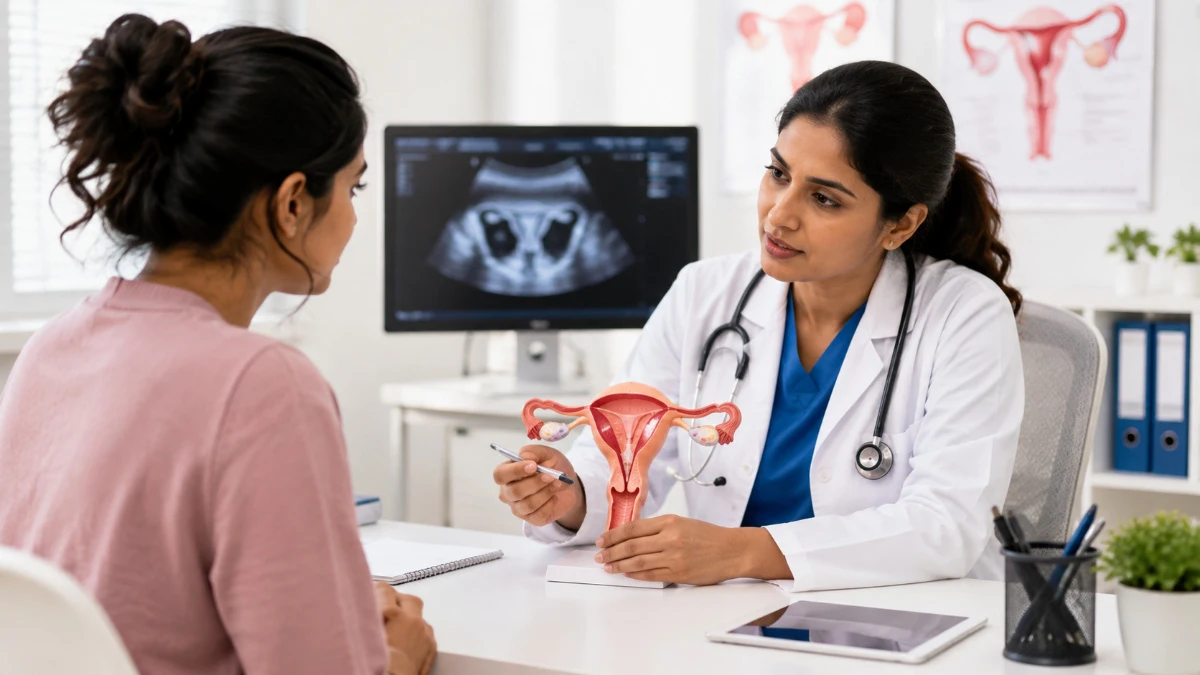 Diagnosis and Taking Action: What Happens at the Doctor's Office?
If your periods fit into the red flags of menorrhagia, then your next move should be making an appointment with your physician. Come prepared for your consultation.
Keep track of your menstrual cycles for two to three months using an application or a journal. Write down the dates of onset, the exact amount of pads/tampons you use daily, their saturation, the sizes of blood clots, and any other symptoms accompanying your periods. Numbers will speak for themselves.
Common Diagnostic Tools
In order to determine the actual underlying cause, your physician may recommend:
Blood panels: Testing for anemia, iron levels, thyroid conditions, and blood-clotting problems.
Pelvic ultrasound: An imaging procedure to visualize the uterus, ovaries, and uterine lining for fibroids or polyps.
Endometrial biopsy: Removal of a small sample of endometrial tissue to analyze any abnormalities.
Hysteroscopy: Using a small illuminated tube inserted into the cervix to visually examine the inside of the uterus.
These treatment methods are extremely efficient and specifically designed to target your particular condition. These include iron therapy and non-hormonal drugs to lower blood flow; hormonal contraception, progesterone-releasing IUDs, or surgical removal of the fibroids and polyps.
The Takeaway
Heavy menstruation bleeding heavily is quite common, but you shouldn’t just have to deal with it because you have no choice. Bleeding through your clothing, having to cancel plans, and feeling completely exhausted are obvious signs that your body is in need of some help.
Recognize those signs. Document your symptoms, see a medical professional, and find ways of living in which your body can receive the help it needs.
References
About Heavy Menstrual Bleeding | Bleeding Disorders in Women | CDC
Medical management of heavy menstrual bleeding - PMC
Heavy menstrual bleeding: assessment and management | Guidance | NICE