 Published on
04 Apr, 2026
Published on
04 Apr, 2026 Updated on 16 Jun, 2026
 5169
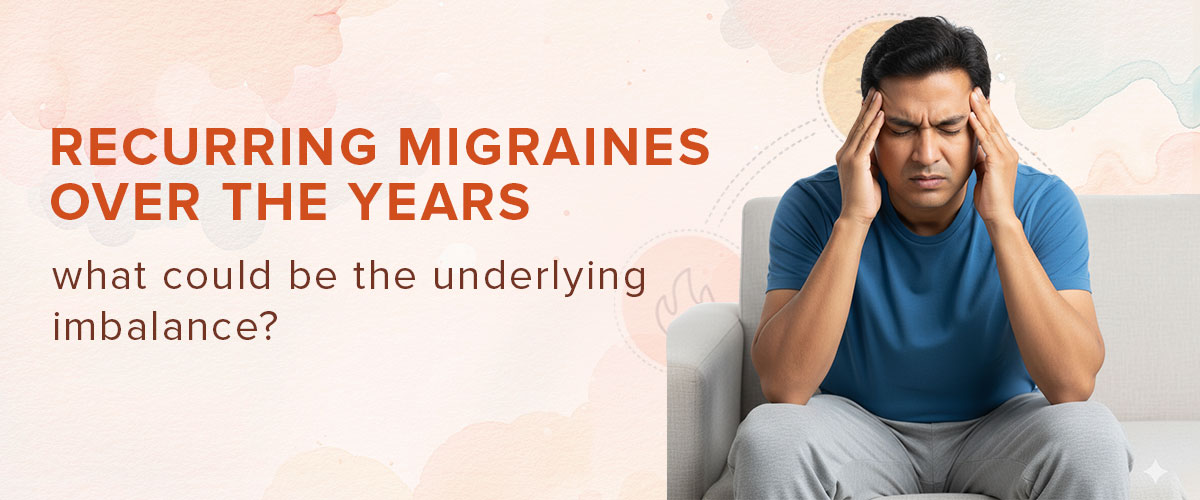
5169Recurring migraines aren’t “normal headaches you have to live with.” If you’ve been dealing with these for years, your body is actually trying to say something’s not right.
These headaches can impact your mood, productivity, sleep, relationships, etc. The best part? Once you get the hang of what’s causing these headaches—lifestyle factors, stress, or imbalances—you can actually manage these much better. Trust me, early intervention is key here.
So, What Exactly is a Migraine?
So, you know how sometimes you get headaches? Well, a migraine is more than just a headache. It’s a neurological condition where your brain is highly sensitive to certain things.
It manifests as a throbbing headache, often on one side of the head. You might also experience nausea or even see things. Your brain is trying to say, “Hey, I’m overwhelmed here. Slow down.”
Different Types of Migraines (Yes, There Are a Few!)
As you might have guessed, not all migraines are created equal. And that’s precisely why it’s essential to know the different types:
- Simple migraine (without aura) - Just a headache, no prior symptoms
- Migraine with aura - You might get flashes, zigzag lights, or blurry vision before a migraine strikes
- Chronic migraine - Headaches occur frequently (15+ days a month)
- Hormonal migraine - Usually associated with menstruation or hormonal changes
- Vestibular migraine - Accompanied by dizziness or balance problems
What Does a Migraine Feel Like?
You already know if you have experienced a migraine. But for those who have not, here are some common symptoms:
- Throbbing or pulsating headache (usually on one side of the head)
- Nausea or vomiting
- Sensitivity to light, sound, or strong odours
- Extreme fatigue or exhaustion
- Difficulty concentrating
- Stiffness in the neck
As a natural healing guide, you might have experienced irritability, heat in your body, or restlessness. These are all subtle signs of imbalance.
Why Do Migraines Happen? (Let’s Get to the Root)
From a modern perspective:
- Stress and mental pressure
- Lack of proper sleep
- Changes in hormones
- Certain food items, like caffeine or processed food
- Too much time in front of screens or in bright light
From a deeper perspective (Ayurveda):
You have natural energies in your body, and migraines happen when these energies are out of sync:
- Vata imbalances: problems with routine, thinking too much, lack of sleep
- Pitta imbalances: too much heat in your body, spicy food, too much anger, too much work
- Weak Agni (digestion): toxins in your body cause migraines
What Increases the Risk (and What Happens If You Ignore It)?
|
What Raises Your Risk |
What Can Happen If Ignored |
|
Family history |
Migraines become more frequent |
|
High stress levels |
Daily life gets disrupted |
|
Irregular sleep |
Anxiety or mood issues |
|
Hormonal fluctuations |
Dependency on painkillers |
|
Poor diet & dehydration |
Stronger, longer attacks |
|
Excess screen time |
Sleep and eye problems |
How Do Doctors Figure It Out?
The good news is that getting clarity on the whole situation is easier than it sounds. The idea is not just to understand the headache but the pattern behind it, too.
The modern approach:
- Understand the details of the headache and the history of the condition
- Conduct a basic neurological exam of the reflexes, vision, and coordination
- Conduct a scan like an MRI or a CT scan
- Understand the pattern with the help of a headache diary
The Ayurvedic approach:
- Prakriti: Understanding the body’s original nature or the dosha that is present
- Vikriti: Understanding the dosha that is currently imbalanced
- Nadi Pariksha: Pulse diagnosis is used to understand the imbalances in the body
- Agni: Understanding the level of digestion and metabolism
- Review of the lifestyle and the diet: Understanding the level of sleep, stress levels, and the routine
- Identifying the triggers in the routine: Irregular meals, late nights, or too much time spent on screens
The difference between the Ayurvedic and the modern approach is that the Ayurvedic approach is not just focused on the migraine but on the imbalance that is causing the migraine.
Migraines in Ayurveda (What’s Happening Inside Your Body?)
In Ayurveda, migraines are described as a condition known as “Ardhavabhedaka,” which literally means pain occurring on half of the head.
Rather than seeing it as a problem related only to the head, Ayurveda considers it a problem related to the entire body:
- Vata Dosha (Movement Energy): Vata is responsible for movement in the body. When Vata is imbalanced because of stress, lack of sleep, or an irregular routine, it can cause headaches.
- Pitta Dosha (Heat Energy): Pitta is responsible for warmth in the body. When Pitta is imbalanced because of excessive intake of spicy foods, exposure to heat, or excessive work or stress, it can cause headaches.
- Ama (Toxins): Poor digestion can cause toxins to build up in the body, which can block the flow and cause migraines.
Ayurvedic Herbs for Migraines
Some commonly used herbs that help manage migraines naturally:
- Brahmi – Calms the mind and reduces stress-related headaches
- Shankhpushpi – Supports brain function and relieves anxiety
- Ashwagandha – Helps manage stress and balance Vata
- Guduchi (Giloy) – Reduces inflammation and supports immunity
- Jatamansi – Helps with sleep and relaxes the nervous system
- Sarpagandha – Useful in calming the nervous system (used under supervision)
These herbs are usually given in combinations, depending on your body type and symptoms.
Ayurvedic Therapies (Healing from the Outside Too)
Along with medicines, certain therapies can deeply relax the system:
- Shirodhara – A gentle stream of medicated oil poured on the forehead; very effective for stress-induced migraines
- Nasya therapy – Herbal oils administered through the nose to clear head channels
- Abhyanga (oil massage) – Helps calm Vata and improve circulation
- Panchakarma detox – In chronic cases, therapies like Virechana (cleansing) may be advised
These therapies help calm the nervous system and restore balance naturally.
Diet for Migraines
What you eat plays a huge role in how often migraines occur.
|
Foods to Include (Helpful) |
Foods to Avoid (Triggering) |
|
Fresh fruits (apple, pomegranate) |
Spicy, oily, and fried foods |
|
Warm, freshly cooked meals |
Processed and packaged foods |
|
Green vegetables |
Excess caffeine (coffee, energy drinks) |
|
Whole grains (rice, oats) |
Chocolate and aged cheese |
|
Herbal teas (like ginger or coriander) |
Cold drinks and ice creams |
|
Plenty of water |
Skipping meals or fasting |
Patient Testimonial - Jai Bhagwan
Modern Treatment vs Ayurvedic Treatment for Migraines
|
Aspect |
Modern Treatment |
Ayurvedic Treatment |
|
Main Focus |
Quick relief from pain |
Finding and fixing the root cause |
|
Approach |
Symptom-based |
Holistic (body + mind + lifestyle) |
|
Medicines |
Painkillers, triptans |
Herbal formulations & natural remedies |
|
Relief |
Fast but temporary |
Gradual but long-lasting |
|
Side Effects |
Possible with long-term use |
Generally minimal (under expert care) |
|
Customization |
Standard protocols |
Highly personalised (Prakriti-based) |
|
Long-Term Benefit |
May need continuous medication |
Aims to reduce recurrence naturally |
When Should You Consult a Doctor?
Don’t ignore your body if you notice any of these warning signs:
- Suddenly, a severe headache unlike anything before
- Migraines are becoming more frequent or intense
- Headache with fever, confusion, or fainting
- Vision problems, numbness, or weakness
- No relief even after taking medicines
These could need immediate medical attention, so it’s always better to be safe.
Conclusion
Recurring migraines can feel exhausting, especially when they keep coming back again and again. But they are not something you have to accept as “normal.”
When you start looking at the deeper causes—like stress, routine, and internal imbalance—you open the door to real, lasting relief.
With the right guidance, a balanced lifestyle, and a holistic approach, it is absolutely possible to reduce migraines and improve your overall well-being.