 Published on
27 Jun, 2026
Published on
27 Jun, 2026 Updated on 27 Jun, 2026
 5101
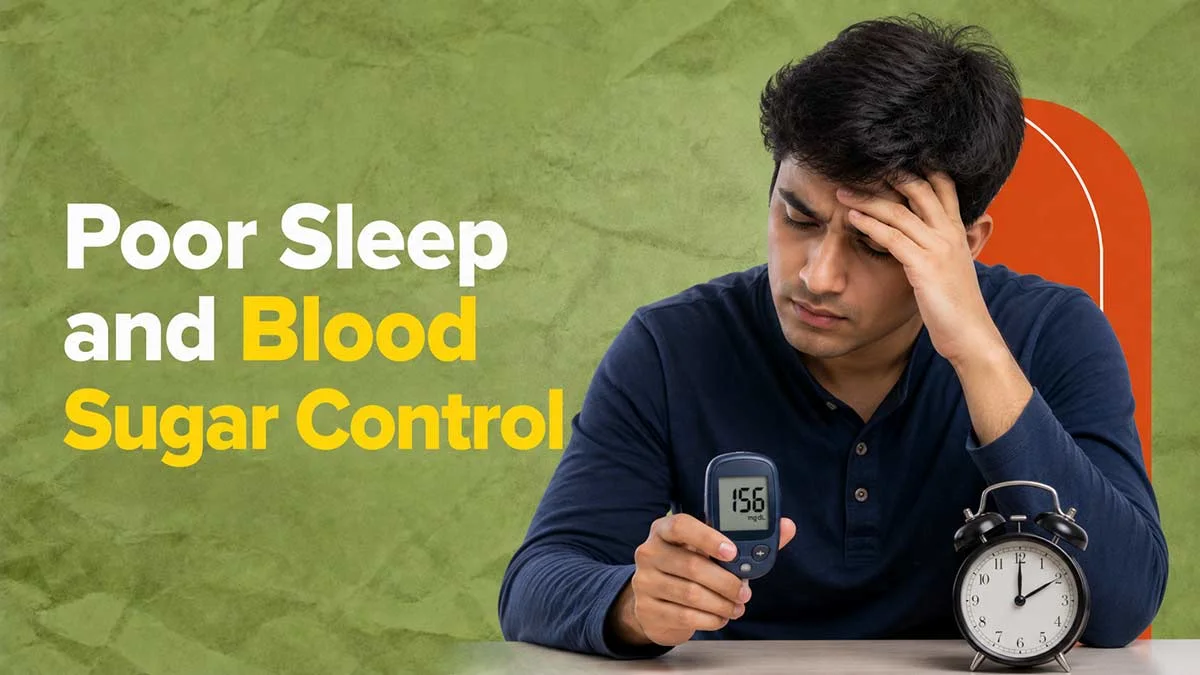
5101Quick question. When you think about managing blood sugar what comes to mind first? Diet probably, maybe exercise and medication if needed. Stress management if you're really on top of things.
Sleep? Probably not.
And that's exactly the problem. Because what happens to your blood sugar while you're lying awake scrolling at midnight or running on five hours because life is just that busy right now is genuinely significant. Most people have absolutely no idea.
Poor sleep and blood sugar are connected in ways that are direct, measurable and honestly a little eye opening once you understand them.
What Sleep Actually Does for Your Metabolism
Sleep is not just rest. It is active essential biological maintenance happening across every system in your body simultaneously.
During deep sleep the body does its most important metabolic work. Cells repair. Inflammation settles. Growth hormone releases. And critically for blood sugar, insulin sensitivity gets restored for the next day.
Think of sleep as the overnight reset your metabolic system runs every single night. Skip the reset or cut it short and you start the next day already running on a compromised system. Do that repeatedly and the compromises stack up into real health problems.
The Direct Connection Between Sleep and Blood Sugar
Here is where it gets very specific and very real.
- Insulin sensitivity drops after poor sleep: Even one night of inadequate sleep reduces insulin sensitivity the following day. Cells become less responsive to insulin's signal to absorb glucose from the blood. The result is higher blood sugar levels even without any change in diet. One bad night is manageable. Chronic poor sleep is a slow moving metabolic problem.
- Cortisol spikes when you're sleep deprived: Poor sleep raises cortisol, your primary stress hormone. Cortisol is directly antagonistic to insulin. When cortisol goes up it signals the liver to release stored glucose into the bloodstream as emergency energy. Great if you need to run from something. Not great when you're just trying to get through a Tuesday.
- Hunger hormones go completely haywire: Sleep deprivation increases ghrelin, the hormone that makes you hungry, and decreases leptin, the hormone that signals fullness. You wake up after a bad night genuinely hungrier than usual with stronger cravings specifically for high carbohydrate and sugary foods. Your body is hunting for quick energy to compensate for the rest it didn't get.
- The liver misbehaves overnight: During normal sleep the liver quietly manages its glucose output to maintain stable overnight blood sugar. Sleep disruption interferes with this. The liver becomes overactive releasing glucose and contributing to the frustrating phenomenon of high fasting blood sugar in the morning despite not eating since dinner.
- Growth hormone disruption affects glucose regulation: Deep slow wave sleep is when growth hormone is primarily released. This hormone plays a role in regulating how the body uses and stores glucose. When deep sleep is consistently inadequate this regulation becomes less efficient over time.
Signs That Poor Sleep Might Be Affecting Your Blood Sugar
These are easy to attribute to other causes. Sound familiar?
- Unusually high morning blood sugar readings: Waking up with higher readings than expected despite eating well the night before. Sleep quality is one of the first things worth examining when this keeps happening.
- Intense carbohydrate cravings through the day: Reaching desperately for biscuits or something sweet by mid morning. Classic sign of the ghrelin and leptin disruption that comes with poor sleep.
- Energy crashes after meals: When insulin sensitivity is reduced blood sugar spikes higher after meals and then drops more dramatically creating those mid afternoon crashes that feel impossible to push through.
- Difficulty losing weight despite eating well: Insulin resistance from chronic poor sleep makes fat loss significantly harder. The body stores fat more readily and burns it less efficiently.
- Brain fog and poor concentration: Blood sugar dysregulation and sleep deprivation independently affect cognitive function. Together they create a fog that no amount of chai is going to fix.
How Much Sleep Does Blood Sugar Management Actually Require
Research is fairly consistent here. Adults need seven to nine hours of quality sleep per night for optimal metabolic function. Less than six hours consistently has been shown to significantly increase the risk of developing Type 2 diabetes over time.
But here's the nuance most people miss. Quality matters as much as quantity. Six hours of deep uninterrupted sleep is metabolically more restorative than eight hours of fragmented light sleep. If you're waking up multiple times or dealing with sleep apnoea your sleep hours on paper may look fine while the actual restorative benefit is significantly lower.
What Ayurveda Says About Sleep and Metabolic Health
Ayurveda calls sleep Nidra and places it alongside food and a balanced lifestyle as one of the three pillars of health, not a nice-to-have but a foundational requirement. Poor sleep aggravates both Vata and Pitta doshas.
- Warm milk with nutmeg before bed: Nutmeg has mild sedative properties and warm milk supports tryptophan production which converts to melatonin. A small cup 30 minutes before bed supports deeper sleep naturally.
- Abhyanga before bed: Massaging feet and scalp with warm sesame oil calms Vata, grounds the nervous system and meaningfully improves sleep quality over time. Even five minutes makes a difference.
- Brahmi and Ashwagandha: Brahmi calms the mind and reduces the mental chatter that keeps people awake. Ashwagandha addresses cortisol dysregulation that both disrupts sleep and raises blood sugar. A genuinely powerful combination for the sleep and blood sugar connection.
- Triphala before bed: Classical digestive and metabolic tonic that supports overnight detoxification and gently aids metabolic restoration while you sleep.
Practical Habits That Improve Both Sleep and Blood Sugar Together
The beautiful thing about this connection is that improving one genuinely helps the other. Better sleep improves insulin sensitivity. Better blood sugar control reduces cortisol spikes that disrupt sleep. It works both ways.
- Set a consistent sleep time and protect it: Your metabolic systems run on circadian rhythms. Going to bed at wildly different times every day gives your metabolism the equivalent of weekly jet lag.
- Eat dinner early and keep it light: A light dinner by 7 or 7:30pm gives digestion time to complete before sleep. Eating heavily at 10pm asks your body to manage blood sugar through the night instead of resting and restoring.
- Move your body during the day: Regular physical activity improves both insulin sensitivity and sleep quality. Even a 30 minute daily walk makes a measurable difference to both. Avoid vigorous exercise close to bedtime as it delays sleep onset.
- Create a genuine wind down routine: Screens off at least an hour before bed. Something calming, reading, light stretching, warm shower. Your nervous system needs a transition from the stimulation of the day to the quiet of sleep.
When Poor Sleep Becomes a Medical Concern
If you are consistently sleeping fewer than six hours despite genuinely trying, if you snore loudly or wake up gasping, or if you have diabetes and your blood sugar control is poor despite dietary effort, please discuss sleep specifically with your doctor.
Sleep apnoea is significantly underdiagnosed in India and has a direct impact on blood sugar regulation. Many people with poorly controlled diabetes see meaningful improvement when underlying sleep apnoea is identified and treated.
Final Thoughts
Sleep is not a lifestyle luxury. It is a metabolic necessity. And for anyone managing blood sugar whether diabetic, prediabetic or simply trying to stay healthy, sleep is as important a lever as diet and exercise.
You cannot out-eat or out-exercise chronically poor sleep when it comes to blood sugar. The body simply does not work that way.
Seven to nine hours of quality consistent sleep is not a goal for when life gets less busy. It is a non-negotiable part of metabolic health. Prioritise it with the same seriousness you give to what you eat. Your blood sugar numbers will reflect that decision clearly.
Reference Links
- National Health Portal of India on Diabetes and Lifestyle https://www.nhp.gov.in/disease/endocrine/diabetes-mellitus
- Ministry of Health and Family Welfare, Government of India on Non Communicable Diseases https://mohfw.gov.in/
- World Health Organization on Sleep and Health https://www.who.int/news-room/fact-sheets/detail/diabetes