 Published on
20 Jun, 2026
Published on
20 Jun, 2026 Updated on 20 Jun, 2026
 5100
5100Managing diabetes does not mean giving up every food you love. That is one of the biggest myths around it. Millions of people living with diabetes believe that the moment they are diagnosed, their relationship with food is over: no more rice, no more rotis, no more anything that actually tastes good. But that is simply not true.
The truth is, diabetes management is less about restriction and more about making smarter choices in what you eat, how much you eat, and even the order in which you eat it. Food is not the enemy. Uninformed food choices are.
What most people don't realise is that two people can eat the exact same meal and have completely different blood sugar responses based on their portion sizes, meal timing, food combinations and even stress levels. This is why a one-size-fits-all approach rarely works with diabetes.
Focus on Food Quality, Not Just Food Restrictions
Most diabetics are advised to avoid rice, roti and sweets altogether. But eliminating one entire food group isn’t practical or necessary for everyone. What is more important is the quality of food you’re eating.
Switching to whole grains such as whole wheat rotis, brown rice, millets, oats and other high-fiber foods will help slow down your body’s absorption rate and prevent a rapid increase in blood glucose levels.
Similarly, opting for fruits and vegetables instead of juices, packaged snacks and highly processed foods will do wonders for your health. The goal is not to fear food, it is to build a better relationship with it.
Why Portion Control Matters
However, even nutritious food can raise your blood sugar levels if consumed in large quantities. One of the best approaches for treating diabetes is managing your portion wisely.
A balanced plate can be a simple guide:
- Half your plate must be filled with non-starchy vegetables.
- A quarter of your plate should have protein sources.
- The remaining quarter should consist of whole grains or carbohydrates.
Moderate eating helps avoid dramatic increases in your blood sugar levels. Moreover, it may be useful in maintaining proper body weight, which is good for many diabetics. Using smaller plates, eating slowly and paying attention to hunger and fullness signals are practical ways to manage portions without feeling deprived.
The Importance of Meal Sequencing
The sequence in which the food is eaten can affect the body’s response to food consumption, especially on blood glucose levels.
This is usually the way that people are advised:
- Begin with salads or vegetables.
- Then, consume protein-rich foods.
- Finish with carbohydrates such as rice, roti, or grains.
Vegetables and protein foods could help in delaying digestion and, therefore, slowing down the rate at which glucose is released into the bloodstream. Other foods like salads, sprouts, pulses, and leafy greens containing high amounts of fiber can be added before consuming a full meal.
A Simple Diabetes-Friendly Daily Eating Pattern
Here is an easy, practical meal plan to give you a starting point:
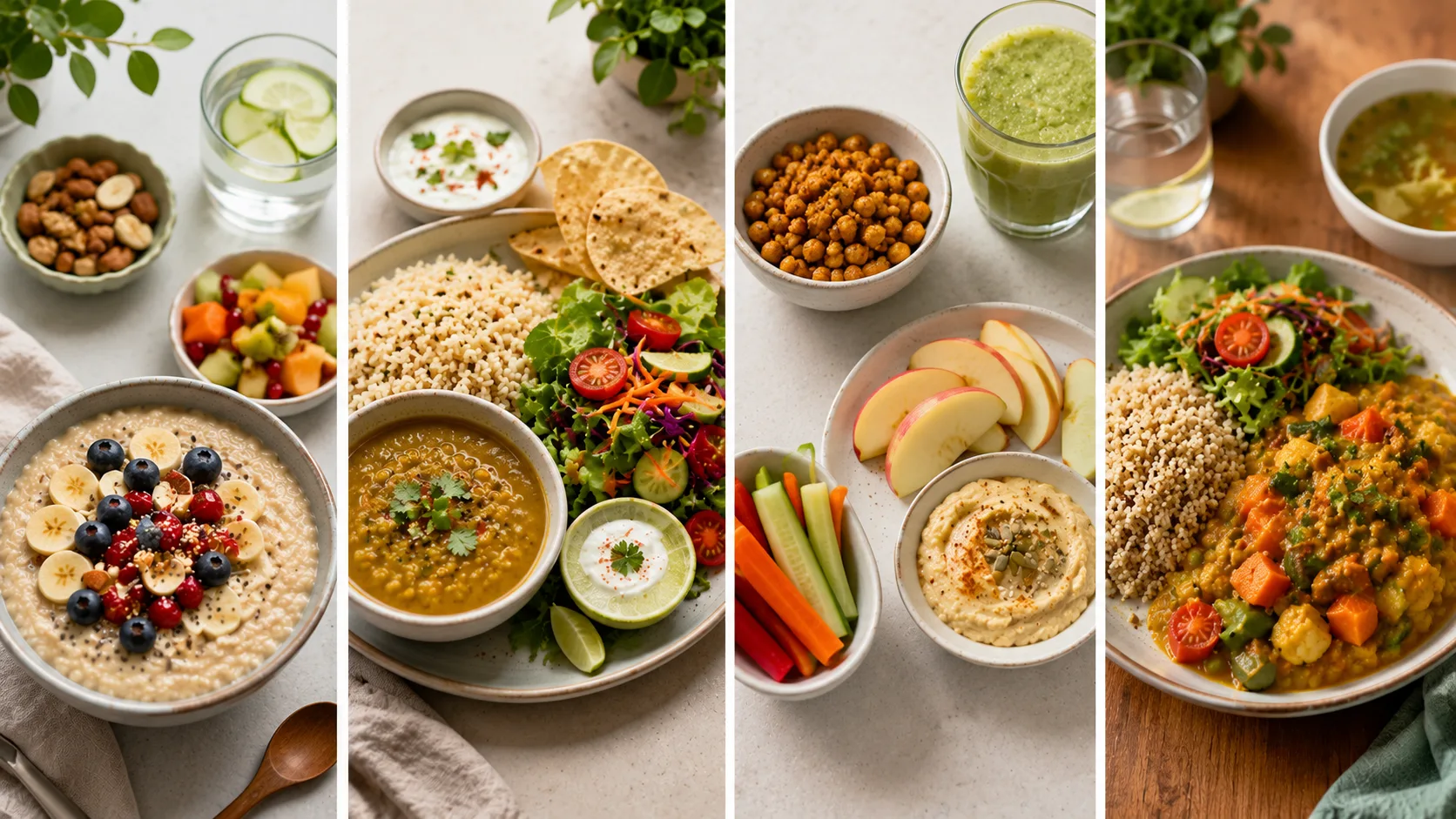
| Meal | What to Eat |
| Breakfast | Vegetable oats or millet porridge, moong dal chilla, whole grain toast with eggs or paneer, fresh fruit in moderation |
| Mid-Morning Snack | A handful of nuts, roasted chana, cucumber or carrot sticks, unsweetened yogurt |
| Lunch | Fresh salad, dal or beans, whole wheat roti or moderate rice, curd or buttermilk |
| Evening Snack | Green tea, roasted seeds, sprouts, or fresh vegetables |
| Dinner | Vegetable soup, stir-fried vegetables, dal or paneer, one or two whole grain rotis |
Lifestyle Habits That Complement Healthy Eating
Food is important, but it is only one part of the picture. A few daily habits can make your eating efforts even more effective.
A short walk after meals, even 10 to 15 minutes, helps the body use glucose more efficiently. Yoga, strength training, or any form of regular movement all contribute to better metabolic health over time. Sleep is another factor that often gets ignored. Poor sleep affects hunger hormones and blood sugar regulation more than most people realise. Aiming for 7 to 8 hours of quality sleep each night is genuinely helpful.
And lastly, stress. Chronic stress quietly raises blood sugar levels and makes diabetes harder to manage. Simple practices like meditation, deep breathing, or even a short daily walk can help keep stress in check.
Final Thoughts
Managing diabetes does not necessarily mean giving up all the foods you enjoy. A sustainable approach focuses on balance rather than restriction. Choosing nutritious foods, controlling portions, eating meals in a thoughtful sequence, and maintaining healthy lifestyle habits can all contribute to better blood sugar management.
Small, consistent changes often create the biggest long-term results. By focusing on smarter eating habits instead of extreme diets, individuals can build a healthier and more enjoyable relationship with food while supporting their overall well-being.
References
https://www.who.int/news-room/fact-sheets/detail/diabetes