 Published on
22 Jun, 2026
Published on
22 Jun, 2026 Updated on 22 Jun, 2026
 5119
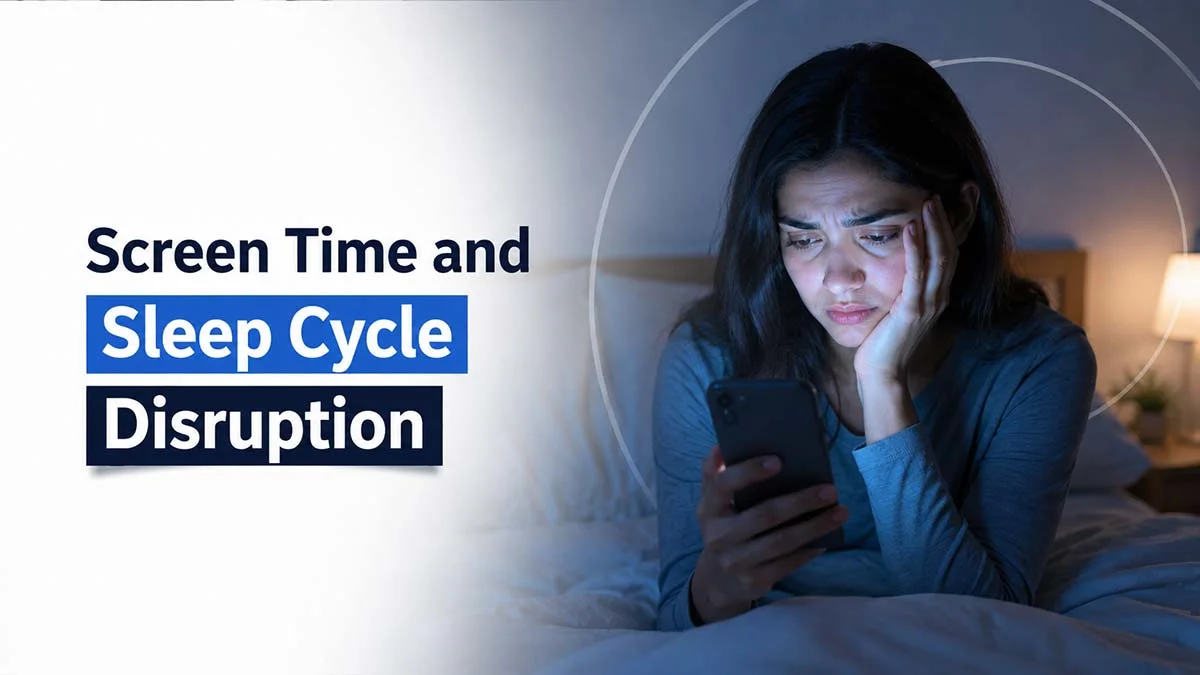
5119Let's be honest. How many of us have told ourselves "okay just five more minutes" while scrolling at midnight, and then suddenly it's 2 am and you have no idea where the time went?
All of us. Pretty much all of us.
And then the alarm goes off at 7am and you feel like you've been hit by a truck. You drag yourself through the day on chai and willpower. By evening you're exhausted. But then night comes and somehow, mysteriously, you're wide awake again. Staring at the ceiling. Or the phone. Probably the phone.
This is not a coincidence. This is your screen doing a very specific thing to your brain. And once you understand what's actually happening inside your body when you scroll at night, you'll look at that bedtime phone habit very differently.
Your Body Has Its Own Clock. Screens Mess With It.
Your body runs on something called a circadian rhythm. Think of it as an internal 24 hour clock that tells your body when to be awake, when to wind down and when to sleep. This clock has been running in humans for thousands of years, synced naturally to sunlight and darkness.
When the sun goes down, your brain gets a signal. Darkness means it's time to produce melatonin. Melatonin is the hormone that makes you feel sleepy. It's basically your body's natural "okay let's wrap up and rest" message.
Here's where screens come in and completely ruin that process.
Phones, tablets, laptops and televisions emit something called blue light. And blue light, at the wavelength our screens produce, tricks your brain into thinking it's still daytime. The brain sees that light and goes "oh it's still bright out, no need for melatonin yet." And just like that, your natural sleep signal gets suppressed.
You're not just staying up late. Your brain is being actively confused about what time of day it is. Every single night.
What Actually Happens to Your Sleep Because of This
This is where it gets a little unsettling. Because the damage isn't just about feeling tired the next morning. It goes deeper than that.
- It takes longer to fall asleep. When melatonin is suppressed, your body doesn't get the wind down signal it needs. So even when you put the phone down and close your eyes, your brain is still buzzing. It can take an hour or more to actually drift off.
- Your sleep quality drops. Even if you do manage to sleep, the quality is affected. You spend less time in deep sleep, which is the stage where your body actually repairs itself. You might sleep 7 or 8 hours and still wake up feeling unrefreshed. That's why.
- You wake up more during the night. Light exposure before bed, especially blue light, has been linked to more frequent waking during the night. Your sleep becomes fragmented without you even realising it.
- Your sleep schedule shifts. Over time, regular late night screen use can push your entire sleep cycle later and later. You start naturally feeling sleepy at 1am instead of 10pm. Waking up early becomes genuinely painful. This is called social jetlag and it's more common than you'd think.
- Your mood and focus suffer the next day. Poor sleep affects concentration, memory, emotional regulation and patience. If you've been snapping at people more than usual or struggling to focus at work, your sleep quality might be the culprit.
It's Not Just Blue Light. The Content Matters Too.
Here's something people don't talk about enough. It's not only the light from your screen that keeps you awake. It's also what you're looking at.
Scrolling through social media, reading the news, watching something intense or even having a long WhatsApp argument at 11pm. All of these keep your nervous system in a state of activation. Your brain is processing, reacting, comparing, worrying. That is the opposite of what it needs to be doing before sleep.
Your brain needs to slow down before sleep. It needs calm, predictability and quiet. Screens, almost by design, give it the opposite of that. They're built to be stimulating. To keep you engaged. Every notification, every scroll, every autoplay video is designed to hold your attention just a little longer.
And your sleep is paying the price for it.
What Ayurveda Says About Sleep and Modern Lifestyle
Ayurveda calls sleep one of the three pillars of life. Alongside food and a balanced lifestyle, good quality sleep is considered non negotiable for health. It's called Nidra and it's taken very seriously.
According to Ayurvedic wisdom, the evening hours, especially after sunset, are governed by Kapha energy. This is naturally a heavy, calm, grounding energy that prepares the body and mind for rest. When you blast your eyes with screens and stimulating content during this time, you're essentially disrupting that natural winding down process and activating Vata and Pitta energies instead. These are energies associated with movement, stimulation and heat. Not exactly sleep friendly.
Ayurveda has always recommended that the hours before sleep should be calm, warm and nourishing. Simple food in the evening, gentle activity, dim lighting, quiet. These aren't just nice ideas. They're practices designed to support your body's natural transition into rest.
Thousands of years before anyone knew what melatonin was, Ayurvedic practitioners were already advising people to wind down with the sun. Turns out they were completely right.
How Much Screen Time Is Too Much Before Bed?
Most sleep researchers suggest avoiding screens for at least 60 to 90 minutes before you want to sleep. That might sound like a lot if you're used to scrolling right until you close your eyes. But even 30 minutes makes a noticeable difference for most people.
The other factor is how bright your screen is. Brighter screens emit more blue light. Many phones now have a night mode or warm display setting that reduces blue light after a certain time. It's not a perfect solution but it does help if going completely screen free feels too hard right now.
What you watch matters as much as how long you watch. Calming content, something slow and quiet, is far less disruptive than action, news or anything emotionally charged.
Practical Things You Can Actually Do Tonight
Here's the honest truth. Nobody is going to completely quit their phone overnight. That's not realistic. But small shifts make a real difference.
- Set a screen off time and stick to it. Even 45 minutes before bed. Put the phone in another room if you need to. Out of sight genuinely helps.
- Switch your phone to night mode from evening. Most phones have this in display settings. It shifts the screen to warmer tones and reduces blue light automatically.
- Replace the scroll with something calming. Reading an actual book, light stretching, a warm shower, journaling. These all help your nervous system shift into rest mode.
- Keep your bedroom a screen free zone. This one is hard but transformative. Your brain starts associating the bedroom with sleep rather than stimulation and it genuinely changes things over time.
- Try warm milk with a pinch of turmeric or nutmeg before bed. This is a classic Ayurvedic recommendation and honestly it works. Nutmeg in particular is known in Ayurveda for its natural sleep supporting properties.
- Avoid checking your phone first thing in the morning too. Starting the day with a screen spikes cortisol early and can affect your entire stress and sleep cycle for the day.
The Bigger Picture Nobody Talks About
Sleep is not laziness. It is when your body heals. Your brain clears out waste products during deep sleep. Your immune system strengthens. Hormones regulate. Memories consolidate. Cells repair.
Every night of poor sleep is a night of missed recovery. And we're living in a time where an entire generation is casually sacrificing their sleep for content that they won't even remember tomorrow.
The phone will be there in the morning. Your health, if you keep neglecting it, might not be so forgiving.
Small changes to your nighttime routine can genuinely shift the quality of your sleep, your mood, your energy and your long term health. It doesn't require a dramatic overhaul. It just requires a little awareness and a willingness to put the phone down a bit earlier than usual.
Your body will thank you. Loudly. In the form of actually waking up feeling human again.
Reference Links
https://www.nhp.gov.in/healthlyliving/sleep
https://www.who.int/news-room/questions-and-answers/item/radiation-electromagnetic-fields