Diseases Search
Close Button


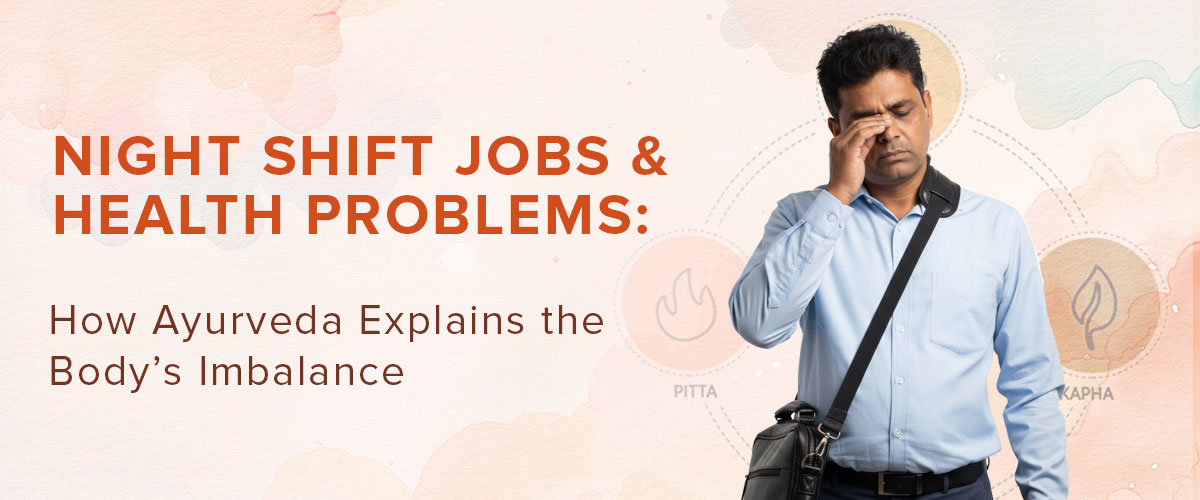
Night Shift Jobs and Health Problems: Ayurveda on Body’s Imbalance?

Information By Dr. Keshav Chauhan

Sleep and nourishment are the most vital pillars of human health. They allow our bodies to be active, grow, and regenerate. But what happens when your job demands that you stay awake while the rest of the world rests? Have you ever wondered why staying up all night leaves you feeling completely drained, even if you sleep for eight hours the next day? Human beings are fundamentally wired to follow the rhythm of the sun. Working during the night and sleeping during the day throws your natural biological clock into complete chaos.

An unregulated schedule of wakefulness and rest can be a glaring sign of a lack of balance in your day-to-day life. This imbalance does not necessarily manifest itself directly right away. It can worsen if it is not attended to. Your internal rhythm is disrupted when you work at unusual hours, eat meals at midnight, or rely on caffeine to stay alert. Digestion becomes completely irregular. The skin responds with breakouts. Sleep becomes uneasy and fragmented. In essence, the body begins communicating through physical signals. It would have you relax and listen.

What Are the Effects of Night Shift Jobs?

Working against the laws of nature has profound consequences on human biology. Modern life has turned our waking hours into a rigid corporate requirement, completely ignoring what the human body actually needs to survive and thrive.

Your body generates heat because it is performing the functions required to support your life. The human body is like a car engine. It needs to rest and cool down properly so your heart and brain can function optimally. Night shifts interfere heavily with this cooling process. Your system is forced to stay highly alert when it desperately wants to shut down and heal. This hasty attempt to process non-regular routines has a huge adverse effect on your well-being.

  • Constant Fatigue: Your body never reaches the deep, restorative phases of rest when you sleep during daylight hours.
  • Metabolic Confusion: Because you are awake, you eat at night. Your stomach is not prepared to process food during these hours, leading to severe heaviness.
  • Mood Swings: A lack of proper darkness during your resting hours prevents the brain from producing enough melatonin, leaving you feeling emotionally fragile.

Common Causes of Imbalance During Night Shifts

Why do shift workers suffer so much despite trying to catch up on rest over the weekend? Many factors in our modern environment encourage us to abandon natural cycles.

Ayurveda says that when your lifestyle or the place you live in gives your body a lot of unnatural energy, your internal heat goes up. Working in artificial environments dramatically alters how your body manages its daily energy.

  • Artificial Lighting: Staring at bright screens all night tricks your brain into thinking it is daytime, which completely halts the production of sleep hormones.
  • Erratic eating schedule: People grab whatever is quick, whenever they have a spare minute. Consuming heavy meals at 2:00 AM forces the digestive system to work when it is supposed to be repairing itself.
  • Social Isolation: Not having a daily routine that aligns with your family or friends can lead to emotional stress. Working too much without taking a break and a lack of proper rest can disrupt your body's natural balance.

Signs and Symptoms of Night Shift Imbalance

When your body gets overworked from poor working and sleeping schedules, it tries to tell you something is wrong. It sends warning signals to parts of your body. Do you really believe your body can be tricked by artificial light forever?

You cannot simply push through the exhaustion without the body fighting back. If you work nights, you might start noticing a sharp decline in your general health, reflecting a deeper systemic protest.

  • Severe insomnia: You might have trouble sleeping when your body is too hot. You could lie awake at night. You might wake up a lot. You might also feel really restless.
  • Poor Cognitive Function: You may struggle with a severe lack of focus. After an irregularly timed shift, you might experience brain fog or extreme lethargy.
  • Skin Degradation: Your skin can also be affected when your body is too hot or stressed. You might suffer from painful acne or rashes. Your skin could get red and sensitive.

How Night Shifts Disrupt Your Vital Systems?

Internal heat and energy are like a fire inside you. Your body must work properly. If it gets too high, it can start to hurt the systems it is supposed to help.

When your natural circadian rhythm is confused by irregular sleeping and working, it affects several main areas of your body, creating long-term health complications.

  • Metabolism: This is the stomach Agni that helps break down food. If it gets confused by late-night eating, it can cause problems like hyperacidity and a burning feeling after you eat.
  • Nervous System: Working against your biological clock places your body in a constant state of "fight or flight," exhausting your adrenal glands and fraying your nerves.
  • Reproductive Health: The unnatural stress of shift work can mess with your hormonal imbalance. For women, this can trigger irregular periods. It can also make you feel stressed, which makes your body even hotter.

Ayurveda’s Perspective on Sleep and Circadian Rhythm

In the ancient science of Ayurveda, sleep (Nidra) is considered one of the three foundational pillars of life, alongside diet and energy management. Ayurveda does not view sleep as just a period of inactivity; it is a highly active phase of cellular repair.

When you stay awake at night, you aggravate Vata Dosha (the energy of movement and air). The dryness and mobility of Vata increase drastically, drying out your bodily tissues and causing anxiety. Furthermore, staying awake offends your internal Pitta Dosha. Pitta Dosha controls our body heat. This force is the one that transforms food into energy in our body and performs all the chemical work. Once Pitta Dosha becomes disbalanced, it produces a lot of heat within us. This combination of high Vata and high Pitta is what causes the classic "tired but wired" feeling shift workers know too well.

The Foundations of a Healthy Routine

To have a healthy system despite working odd hours, you need to deeply understand the concept of balance. You must create artificial anchors in your day to give your body a sense of predictability.

We need to understand the difference between having a fever and having body heat. This heat inside us is not about our body temperature; it is about how our body works, what we eat, and how we feel.

  • Strategic Sleep Environment: Since you must sleep during the day, you have to block out the sun completely. Blackout curtains and a cool room are essential to calm the Vata dosha.
  • Anchoring Meals: Eating at the same time every day trains your digestive fire to be ready and active when food arrives. Always eat your heaviest meal before your shift begins, not in the middle of the night.
  • Mindful Waking: Sitting down peacefully to eat helps the body switch to rest-and-digest mode. Give yourself a gentle, quiet hour when waking up in the late afternoon, rather than rushing straight to work.

The Jiva Ayurveda Approach to Restoring Balance

Excess fatigue and heat are usually a sign that our body's internal balance is entirely compromised. Jiva Ayurveda does not just try to mask the symptoms for a while.

It tries to find out why this heat and exhaustion are building up and fix it from the start. The approach that Jiva Ayurveda uses is very complete and personalised.

  • Personalised Diagnosis: Jiva Ayurveda begins by understanding our body type, which is also called Prakriti, and our internal imbalance, digestion, and daily habits.
  • Root Cause Treatment: Jiva Ayurveda does not just try to manage symptoms like acidity or acne. It tries to fix the issues, such as poor digestion, stress, or diet, that are causing these symptoms.
  • Balancing the Doshas: Jiva Ayurveda uses therapies, cooling foods, and lifestyle changes to calm down the aggravated Doshas. This brings down the heat and restores overall stability in our body.
  • Digestive Correction: Jiva Ayurveda emphasises regulating our digestion so it is balanced, not too sharp or weak. When our digestion is proper, it prevents toxin buildup.

Ayurvedic Herbs Used For Night Shift Recovery

When we talk about managing chronic fatigue and body heat, Jiva Ayurveda uses natural herbal formulations to ground the nervous system. These medicines are made for you, based on your body type, the symptoms you have, and what is causing the problem.

The main goal is to cool down your system, make digestion better, and get your body back in balance without any side effects.

  • Ashwagandha: A powerful adaptogen that specifically targets Vata imbalance. It grounds the nervous system, drastically reduces stress, and helps you achieve deep sleep even during daylight hours.
  • Giloy: Giloy is really good at cooling and cleaning your body. It helps get rid of heat inside you, makes your immune system stronger, and improves digestion.
  • Amla: Amla is a way to calm down Pitta and cool your body naturally. It helps you digest food better, makes your skin healthier, and balances your hormones because it has a lot of antioxidants.
  • Shatavari: Shatavari is especially good for balancing hormones and reducing heat in your body. It helps your tissues support your health and has a calming effect that cools you down.
  • Neem: Neem is often used because it cleans your blood and reduces inflammation. It helps with skin problems like acne and rashes that happen because of excessive body heat.

Ayurvedic Therapies for Night Shift Recovery

To manage the intense toll of night shifts, Jiva Ayurveda uses therapies that cool, detox, and balance the body and mind. These therapies are chosen based on what each person needs and help calm the system.

  • Abhyanga: This is a massage that uses cooling herbal oils. It calms the system, reduces heat, improves blood flow, and balances Pitta. It is exceptionally good for soothing a tired nervous system.
  • Shirodhara: A stream of medicated oil or liquid is poured on the forehead. It reduces stress, calms the mind, improves sleep, and helps with heat caused by emotional factors.
  • Takradhara: This is like Shirodhara. Uses medicated buttermilk. It cools the body. Helps with heat-related issues, like headaches, skin problems, and stress.
  • Virechana: This is a therapy that helps get rid of Pitta. It removes toxins and heat from the body through a controlled detox.

Vata-Pacifying Diet Chart for Shift Workers

Replacing bad habits starts with knowing what to consume. What you put on your plate significantly impacts the healing of your body when working strange hours.

Meal Category Recommended Foods Foods to Avoid
Pre-shift Meals (Breakfast) Warm oatmeal, warm grain bowls, stewed sweet fruits Dry foods, cold foods, highly spicy foods
During Shift Meals (Lunch) Fresh Basmati rice, moong dal, cooling vegetables Heavy meats, deep-fried snacks, heavy spices
During Shift Snacks Soaked peeled almonds, coconut water, warm herbal teas Salty chips, processed snacks, excessive caffeine
Post-shift Meals (Dinner) Light meals like steamed vegetables with ghee, simple vegetable soup Garlic/onion-heavy dishes before sleep
Beverages Fennel water, room temperature CCF tea, plain water Ice-cold water, carbonated energy drinks

How Patients Are Assessed at Jiva Ayurveda?

Our assessment focuses on identifying why your internal thermostat is overactive and restoring your body's natural cooling mechanisms. A complete picture of your daily routine helps our doctors.

  • Detailed analysis of heat patterns, intensity, and times of day when it peaks.
  • Identification of the dominant imbalance, typically Pitta (heat) or Vata (instability).
  • Examination of digestive fire (Agni) and toxin accumulation (Ama) in the blood and tissues.
  • Comprehensive review of sweat patterns, thirst levels, and sleep quality.
  • Evaluation of dietary habits (like spice or caffeine intake), lifestyle pace, and stress levels.

Our Step-by-Step Care Process

At Jiva Ayurveda, every process of the treatment is carried out in an organised and structured manner to give you the best personalised experience of Ayurvedic treatment for thyroid and digestive issues.

  • Share Contact Details: After submitting your details, you can also reach out to us directly at 0129 4264323 to start the consultation process and get your metabolic issues treated.
  • Appointment Confirmation: An appointment with our experienced and well-trained Ayurvedic doctors specialising in thyroid and digestive issues is arranged for you.
  • Clinic: We have over 80 Jiva clinics in different cities, and you can come to the nearest clinic to consult with our doctor face-to-face.
  • Video Consultation (Rs. 49): In case you are not able to locate our clinics in your city, you can also consult with our doctor online, which will be available to you at a discounted price of Rs. 49 (regular price: Rs. 299). Simply give us a call at 0129 4264323 to connect with our experts from home itself.
  • Detailed Diagnosis: Our experienced doctor will consult with you to understand your thyroid issues, digestive problems, and “Agni” (metabolic fire) to diagnose the root cause of the problem in your body.
  • Root Cause-Based Treatment Plan: A personalised treatment plan is designed using herbal medicines and therapies to balance Kapha, regulate Vata, strengthen Agni, and reduce Ama.

Healing Timeline: Restoring Internal Balance

At Jiva Ayurveda, recovery is a process of "cooling the furnace" and restoring your body's natural thermostat. Health does not return overnight. It takes time to rebuild what irregular habits have worn down.

  • Initial Weeks (Cooling the Flame): Acute symptoms like acidity and skin irritability begin to soothe. The digestive fire (Agni) stabilises as cooling diets and Pitta-pacifying herbs clear surface heat from the blood.
  • Months (Systemic Stabilisation): Sleep patterns improve, and irritability lessens. Internal inflammation reduces significantly as Pitta Dosha balances and tissues (Dhatus) are replenished with moisture.
  • Months (Core Resilience): Marked improvement in metabolic resilience. The body no longer overreacts to spicy food or warm weather, and the natural cooling system functions optimally without effort.

What Results Can You Expect?

Ayurvedic treatment focuses on balancing Pitta, clearing toxins (Ama), and nourishing cooling fluids. You will feel the positive changes deeply rooted in your daily vitality.

  • Balanced Digestion: Elimination of acid reflux, burning sensations, and erratic appetite.
  • Clear, Calm Skin: Reduction in inflammatory acne, redness, and heat-related rashes.
  • Restorative Sleep: Falling asleep easily without restlessness or night sweats.
  • Emotional Coolness: Improved patience and a grounded nervous system less prone to "heated" outbursts.
  • Hormonal Harmony: Regularised cycles and a stable metabolism that maintains steady energy levels.

Patient's Testimonial

I had complaints of gas, acidity, weakness, nasal blockage, headache, & thigh pain. I took allopathy for a long time, but did not see any improvement. When I visited the Jiva clinic, the doctor told me that I'm facing all these issues because of weak metabolism. Within 2 months of Ayurvedic treatment, I felt fine. I am so happy that the treatment solved my 99% problem. Thanks, Jiva Ayurveda!

Sushil Sharma

Ahmedabad

Estimated Cost of Treatment at Jiva Ayurveda

Understanding the financial investment required for your health is important. At Jiva Ayurveda, transparency in service costs helps patients choose the most suitable treatment option for their medical needs.

Treatment Cost 

For patients seeking standard, ongoing care, the monthly cost of medicines and consultation typically ranges between Rs. 3,000 and Rs. 3,500. Please note that this is an estimated baseline, and the final cost may vary depending on the nature and severity of the patient’s condition.

Protocol 

For a more comprehensive and structured treatment approach, specialised package protocols are available. These plans focus on managing symptoms while improving lifestyle habits. The package includes:

Therapy The cost for this protocol usually involves a one-time payment ranging from Rs. 15,000 to Rs. 40,000, covering the 3 to 4-month treatment duration.

Jivagram

For patients who require intensive and immersive care, Jivagram offers a holistic healing environment. The program typically includes:

  • Authentic Panchakarma therapies
  • Sattvic meals
  • Modern healing services
  • Comfortable accommodation
  • Various wellness and quality-of-life facilities.

 An immersive wellness stay at Jivagram usually costs around Rs. 1 lakh for a 7-day program, providing continuous personalised care to help reset the body and mind.

Why Patients Trust Jiva Ayurveda?

Our method is centred around personalised, root cause-based treatment that works to heal the body from the inside out. Trust is built on results and a deeply caring methodology.

  • Root Cause-Based Treatment: We will treat the root cause of the imbalance and not only the symptoms.
  • Customised Care Plans: We offer customised care plans that are specific to our patients’ Prakriti (constitution), diet, and lifestyle.
  • Protocol-Based Analysis and Treatment: Our treatment protocols are evidence-based, Ayurvedic approaches to treating hormonal and digestive imbalances.
  • Authentic Medicines: Our Ayurvedic medicines are genuine and made in licensed facilities to ensure safety and efficacy.
  • Proven Scale & Expertise: Our physicians have seen over 8,000 patients daily and have extensive experience in treating complex chronic diseases.
  • High Success Rate: Our patients have seen significant improvements in their health, with over 90% reporting positive changes in their health.
  • Reduced Dependency: 88% of our patients can stop or greatly reduce their dependency on conventional medications.

Modern vs. Ayurvedic Approach to Shift Work Disorders

As far as erratic digestion and its side effects are concerned, various medical directions provide absolutely opposite philosophies. These differences can help you heal, provided you understand them.

  • Primary Focus: Modern medicine tends to focus on the treatment of superficial conditions, such as heartburn with antacids or insomnia with sleeping pills. Ayurveda is aimed at metabolic fire and internal Doshas.
  • Method: The common method could be based on a direct suppression of the symptoms. The Ayurvedic approach is aimed at Ama (toxins) cleansing and Pitta pacifying.
  • Diagnosis: The contemporary clinic is dependent on blood markers and physical tests. Ayurvedic physicians resort to Nadi Pariksha (Pulse) and Prakriti analysis in order to learn about the underlying imbalance.
  • Treatment: Standard care often involves synthetic drugs or quick fixes. Ayurveda uses cooling herbs, Virechana (detox), and strict dietary alignments.
  • Side Effects: Symptom-based drugs may suppress the issue without addressing the cause, leading to recurrences. Ayurveda rebuilds Ojas (vitality) and restores natural digestion safely.
  • Goal: While modern methods seek an immediate reduction of discomfort, Ayurveda strives for permanent restoration of the body's internal balance.

When to Consult a Doctor?

It is necessary to consult a doctor in case your body is experiencing severe signs of distress. Mild indigestion can pass, but persistent issues require the services of a specialist.

  • Persistent Burning: Frequent acidity, heartburn, or a burning sensation in the stomach or chest that lasts for days.
  • Skin Inflammation: The acne breaks out suddenly, in pain, or the rash appears without any reason or excessive sensitivity to sunlight.
  • Chronic Restlessness: The inability to sleep because it feels too hot, with excessive night sweats or mental hyperactivity.
  • Emotional Burnout: Feeling uncharacteristically irritable, angry, or frustrated by minor inconveniences.
  • Systemic Shifts: Internal heat is accompanied by extreme thirst, yellowing of urine, or persistent physical fatigue.

Conclusion

Body heat and stomach upsets are commonly considered to be transient and temporary, but in Ayurveda, these are some of the major indicators of more internal disturbances, particularly Pitta (fire), Ama (toxins), and too much Agni (digestive fire). Your poor sleeping and eating habits are what make this destructive fire continue. Although there are short-term remedies, such as cold drinks, which could be helpful in relieving the condition, the cause of the condition should be treated to ensure that the temperature is maintained at a permanent level to avoid inflammatory conditions. It is high time to have the right to your body and take good care of it. When you experience chronic acidity, when you constantly experience some problems with your skin, when you always feel hot inside, you should visit Jiva Ayurveda doctors to make a certain analysis of the roots. Call: 0129-4264323.

FAQs

Eating consistently trains your internal Agni (digestive fire) to release enzymes at the right moment. When you eat randomly, the fire is either dormant or overwhelmed, creating toxins.

Working against the sun vastly increases Vata Dosha, which governs the nervous system. An aggravated Vata leads directly to severe anxiety, lack of grounding, and emotional instability. Seeking help for mental well-being is crucial for shift workers.

Your body’s metabolism slows down in the evening to prepare for sleep. Heavy meals eaten late sit undigested, turning into Ama (toxins) and disturbing your sleep patterns.

Ayurveda recommends eating your largest meal at noon. This is when the sun is highest in the sky, and mirror-like, your internal digestive fire is at its strongest.

Absolutely. Emotions like anger, frustration, and high-pressure environments trigger the "fight or flight" response, which physically increases heart rate and internal temperature. This shuts down optimal digestion.

Constant grazing does not allow your stomach to fully empty and rest. It confuses the digestive cycle, leading to sluggishness and a buildup of undigested waste.

Actually, Ayurveda suggests avoiding ice-cold water. It "shocks" the digestive fire, causing it to overcompensate and produce more heat. Room-temperature water with cooling herbs like fennel is much more effective.

If you eat healthy foods in a rush, while stressed, or at irregular times, your Agni cannot process them properly. The result is fermentation and bloating, regardless of the food's quality.

Unlike oils, A2 Cow Ghee is uniquely cooling for the body and mind. It helps lubricate the digestive tract and "extinguishes" the burning sensation of excess Pitta without slowing down your digestion.

While you may feel relief from acidity in a few days with diet changes, deep-seated heat in the tissues usually takes 3 to 6 months of consistent Ayurvedic care to fully balance.

Top Ayurveda Doctors

Social Timeline

Our Happy Patients

  • Sunita Malik - Knee Pain
  • Abhishek Mal - Diabetes
  • Vidit Aggarwal - Psoriasis
  • Shanti - Sleeping Disorder
  • Ranjana - Arthritis
  • Jyoti - Migraine
  • Renu Lamba - Diabetes
  • Kamla Singh - Bulging Disc
  • Rajesh Kumar - Psoriasis
  • Dhruv Dutta - Diabetes
  • Atharva - Respiratory Disease
  • Amey - Skin Problem
  • Asha - Joint Problem
  • Sanjeeta - Joint Pain
  • A B Mukherjee - Acidity
  • Deepak Sharma - Lower Back Pain
  • Vyjayanti - Pcod
  • Sunil Singh - Thyroid
  • Sarla Gupta - Post Surgery Challenges
  • Syed Masood Ahmed - Osteoarthritis & Bp
Book Free Consultation Call Us