 Published on
30 Jun, 2026
Published on
30 Jun, 2026 Updated on 30 Jun, 2026
 5083
5083We hear about "inflammation" all the time, but it’s actually a normal part of life. It is just your body’s way of healing a cut or fighting off a bug. The trouble starts when that internal alarm stays on for too long. When you are stressed, not sleeping well, or eating heavy, processed foods, that internal fire never gets a chance to cool down. This is where Ayurveda will tell you that your metabolism is slow, which results in the accumulation of toxins and leaves you feeling lethargic. The best thing is that you do not have to follow any special routine in order to correct it.
Why Should You Care About Inflammation?
Persistent inflammation begins to drain you out, and gradually, it becomes strongly associated with:
- Consumption of too many processed foods
- Being overweight
- Lack of physical activity/exercise
- Stress
- Difficulty sleeping at night
Restoring your body’s balance by making healthy dietary choices is highly effective to help you feel lighter and more energetic throughout the day.
Here are 7 things that you should keep in mind:
1. Eat More Fiber
Think of fiber as your body’s natural broom. It helps everything function seamlessly while nourishing the healthy bacteria in your gut. Fiber is easy to include in your diet; all you have to do is increase the amount of these foods you eat.
- Fruits and vegetables that are fresh
- Whole grains
- Legumes
- Nuts and seeds
Ayurveda loves plant-based foods because they are easy to process and keep your digestion strong and steady.
2. Pick Clean, Light Proteins
Protein is super important for keeping your muscles and body strong. But instead of heavy, hard-to-digest meats, try reaching for lighter options. Great choices include:
- Lentils, chickpeas, and kidney beans
- Soy products
- Nuts and seeds
- Light, fresh dairy
These proteins are much easier on your stomach and give you great energy without making you feel completely sluggish.
3. Reduce Sugary Foods
Consuming excessive amounts of sweetened food and beverages can easily disrupt your body's internal balance and cause unnecessary weight gain. Try to restrict:
- Soda and sweetened beverages
- Prepared cookies and desserts
- Candies and bakery products
According to Ayurveda, it is important to reduce your intake of sugar and consume natural sugars such as fruit and honey.
4. Replace Processed Carbohydrates with Whole Grains
Processed foods such as white bread and ordinary pasta are digested quite quickly and lack fiber. They often make you feel hungry soon after you eat them. Instead, you can opt for whole grains such as:
- Brown rice
- Barley and oats
- Millet and quinoa
Whole grains take a long time to digest and provide you with sustainable energy along with enough fiber.
5. Add in Healthy Fats
You need good fats in order to stay healthy and avoid any joint pain. Good Omega-3 fats can be easily consumed through snacks and meals like:
- Flax seeds
- Chia seeds
- Walnuts
- Hemp seeds
6. Cook with Better Oils
The oil you use to cook your food matters a lot. Heavily processed oils that get heated up over and over again create friction and heat in your body. Try to use healthier, natural options like:
- Cold-pressed oils
- Olive oil
- Mustard oil or sesame oil
7. Load Up on Fruits and Veggies
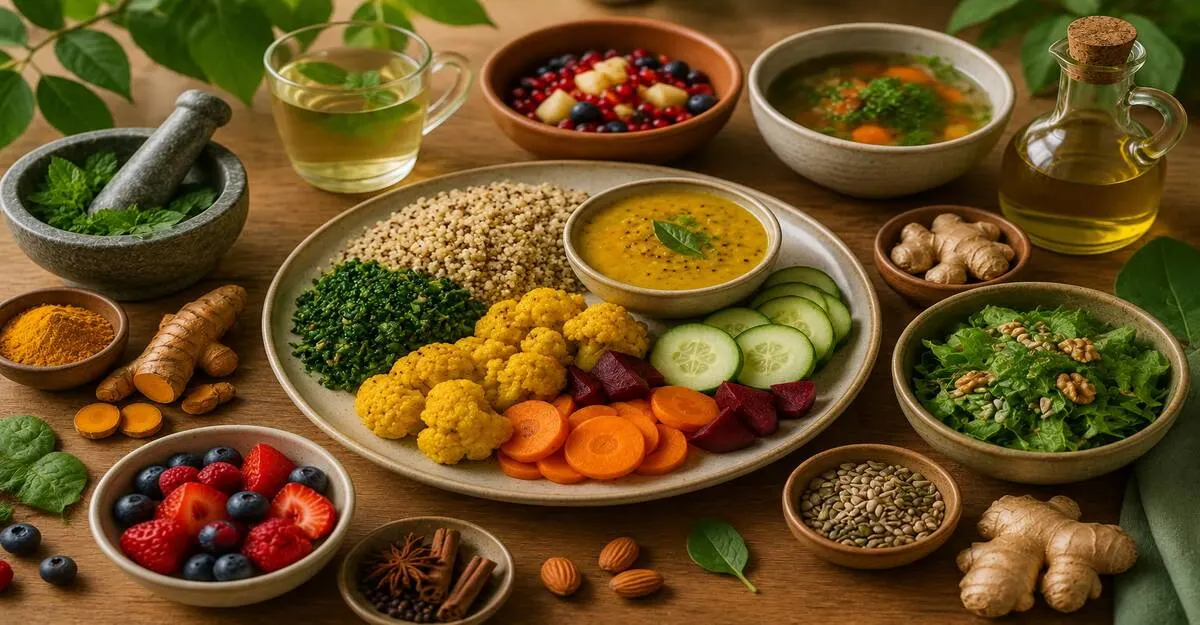
Colorful fruits and vegetables are packed with vitamins, antioxidants, and fiber that naturally fight off swelling and sickness. Try to fill your plate with:
- Leafy greens (like spinach or kale)
- Carrots and beets
- Tomatoes, berries, and citrus fruits
Ayurveda also highly recommends eating whatever is in season. Seasonal foods naturally give your body exactly what it needs to handle the current weather.
The Ayurvedic View: Putting Out the Fire
Modern medicine looks at inflammation one way, but Ayurveda looks at it through the lens of body heat (Pitta) and toxic buildup (Ama).
When your digestive fire (Agni) gets weak, your food doesn't break down properly. Ultimately, this leads to a viscous mucus that forms inside your body, known as Ama, and affects your whole body. For removing this Ama and regaining your balance, Ayurveda recommends that you:
- Eat hot food items instead of eating cold food
- Stop eating when your stomach is not full
- Eat your food at the same time each day
- Take care of your stress management
- Keep yourself active and get adequate sleep
The most important thing here is to maintain your digestive process so that your body can get rid of all impurities.
Easy Daily Habits to Keep You Feeling Great
Small, simple changes add up over time. Try to work a few of these habits into your day:
- Start your morning with a glass of warm water.
- Put your phone away and focus entirely on your food while eating.
- Keep sipping water throughout the day.
- Have a short and relaxing walk immediately after having your food.
- Perform some simple stretches and yoga poses.
- Breathe deeply to relax your mind when you are stressed out.
- Make sure that you have slept well during the night.
Always keep in mind that being consistent is much better than perfectionism!
The Bottom Line
Fighting inflammation isn't about going on a strict, complicated diet or banning your favorite foods forever. It’s really just about making small, gentle choices every day that make life easier for your digestive system. When you eat more fiber, reach for whole foods, keep moving, and nurture that digestive fire, you are giving your body the exact tools it needs to stay balanced, light, and full of energy.
Remember, your body is always listening to how you treat it. You don't need to be perfect from day one. Just focus on being a little kinder to your stomach with each meal. Over time, these small shifts won't just lower inflammation, they will help you feel more connected to your own energy and natural rhythm.
References
Health as Complete Well-Being: The WHO Definition and Beyond - PMC