 Published on
08 Aug, 2026
Published on
08 Aug, 2026 Updated on 08 Aug, 2026
 5065
5065Ayurveda sees the concept of health as not merely being free from illness. It is about ensuring the balance within an individual’s physical and mental systems through food, habits, movement, and other factors. This is why the Ayurvedic practice incorporates treatment, yoga, and food in its care rather than relying solely on one factor.
Each of these activities plays a specific role within the system. Food acts as nutrition for the body, yoga ensures the body moves and relaxes, while Ayurvedic treatments have historically been used to support certain physiological processes.
Ayurveda Focuses on the Whole Person
It is important to note that nowadays, health problems can be linked to several reasons at once. Unbalanced meals, physical inactivity, lack of sleep, stress, and sedentary lifestyle affect the digestion and well-being of people. Ayurveda takes into account such aspects as prakriti, way of life, digestion, sleep, and schedule while developing a treatment program. Rather than focusing on one symptom, the goal is to get a general idea about the health of a patient.
This is one of the reasons why Ayurvedic treatment may contain several elements at once.
The Role of Ayurvedic Therapy
Ayurvedic therapies play a significant role in traditional Ayurvedic treatment. According to a patient’s condition and requirements, an Ayurvedic healer can suggest various treatments, including Abhyanga, Swedana (herbal steam treatment), Shirodhara, or Basti.
Such therapies are not universal and should be used based on a proper evaluation made by an expert healer.
For instance, Abhyanga includes the application of oils on the body with massages. This practice is typically used in daily practices aimed at relaxation, stimulation of blood circulation, and overall well-being.
The critical thing here is that therapy is not seen as a substitution for healthy everyday practices. In most cases, it is considered a component of a more extensive treatment program.
Why Yoga Is Included
Yoga brings movement, breathing and relaxation together. Regular yoga practice can help people become more aware of their body and breathing while encouraging flexibility, strength and relaxation.
Simple practices such as gentle stretching, yoga asanas and breathing exercises can complement other aspects of an Ayurvedic routine.
Yoga may also help people develop a more consistent daily routine. For someone who spends many hours sitting, for example, regular movement can be useful for maintaining mobility and reducing physical stiffness.
However, yoga should also be adapted to the person's age, fitness level and health condition. Some postures may not be appropriate during pregnancy, after certain injuries or with particular medical conditions.
Diet Provides Daily Nourishment
Food is another major part of Ayurvedic care because it is something we interact with every day.
Ayurveda traditionally pays attention not only to what a person eats but also to meal timing, quantity, preparation and digestion. The idea is to choose foods that are appropriate for an individual's needs rather than following the same diet for everyone.
A balanced diet may include vegetables, fruits, whole grains, pulses, nuts and seeds, along with adequate fluids and appropriate sources of protein.
Simple habits can also make a difference:
- Eat meals at reasonably regular times
- Prefer freshly prepared, balanced meals when possible
- Avoid overeating
- Include a variety of seasonal foods
- Drink enough water according to your needs
- Limit excessive highly processed, sugary, or fried foods
Why Combine All Three?
Imagine someone who regularly feels tired, has an irregular routine, and spends most of the day sitting.
Simply changing the diet may improve nutritional quality, but the person may still lack physical activity. Adding yoga introduces regular movement and breathing practices. If an Ayurvedic practitioner considers a traditional therapy appropriate, that therapy may become another supportive part of the routine.
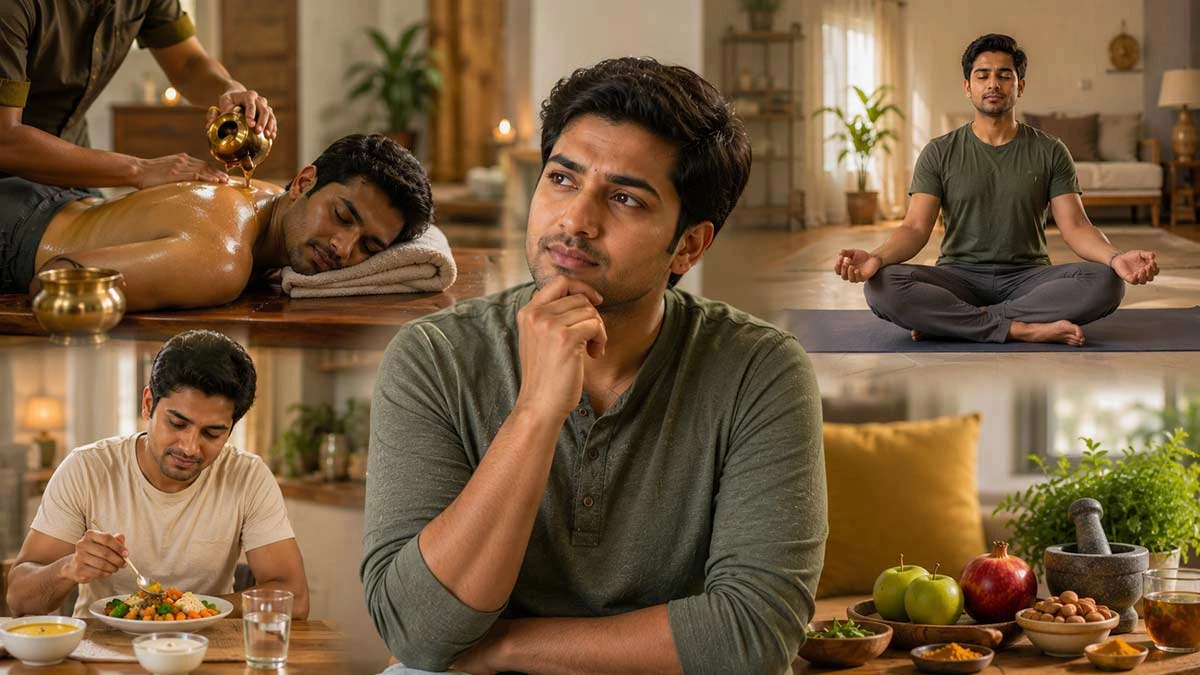
In this manner, the three strategies take care of diverse aspects:
Diet - Nourishment and feeding practices
Yoga - Movements, breathing, and relaxing exercises
Therapy - Traditional support
The combination helps to develop a more comprehensive schedule than using a single solution.
Consistency Matters More Than Doing Everything
Ayurvedic care does not necessarily mean following a complicated routine with numerous therapies, herbs, and restrictions.
In many cases, simple and sustainable habits are easier to maintain. A person might begin with regular meals, adequate sleep, daily walking or gentle yoga, and appropriate professional guidance.
The goal should not be to follow each Ayurvedic practice at once. Instead, it should be tailored according to the person’s needs and health status
Ayurveda and Modern Medical Care Can Coexist
It is also important to understand that Ayurvedic care should not automatically replace medical diagnosis or prescribed treatment.
Persistent symptoms, severe pain, unexplained weight changes, prolonged fever, breathing difficulties, abnormal bleeding, or other concerning symptoms require appropriate medical evaluation.
People who take regular medicines should also tell their healthcare providers before starting Ayurvedic herbs or therapies, because some products may interact with medicines or may not be appropriate for certain conditions.
CONCLUSION
The reason Ayurvedic care often combines therapy, yoga and diet is simple: each addresses a different part of daily health.
Diet supports nourishment, yoga encourages movement and relaxation, and traditional therapies may provide additional supportive care when appropriately selected. Together, they can encourage a more structured approach to wellness.
However, it is necessary to say that Ayurveda becomes highly effective only when it is personal, practical, and safe. There are no particular diets, therapies, or yoga exercises that would work equally well for everyone. A licensed expert can give some suggestions concerning this matter, but modern medicine should also be used when it is needed.
In general, a good holistic approach consists not in the effort to do something, but in the ability to form some balanced habits.