 Published on
28 Jul, 2026
Published on
28 Jul, 2026 Updated on 28 Jul, 2026
 5065
5065Your friend goes on a strict salad-and-smoothie diet and feels amazing, losing weight and glowing. You try the same diet, and within three days, you feel bloated, completely exhausted, and cold. Another friend tries fasting and loves it, while you get a terrible headache and bad acidity.
Why does this happen? If a diet is so "healthy," shouldn't it work for every single human being?
Ayurveda says absolutely not. The secret lies in a very simple, ancient concept: you have a unique body type, and you cannot feed a completely different body type with the same food and expect it to run perfectly. Let us talk about why your body is so wonderfully different.
What Is Prakriti in Ayurveda?
In Ayurveda, your unique body type is called your Prakriti. Think of it like your body’s original factory setting or operating system. You are born with it, and it never changes.
Different human bodies need different foods, sleep schedules, and exercises to actually feel good. Ayurveda believes that true health is not about copying a famous diet. It is about learning exactly what kind of "plant" you are and giving yourself the right soil and water.
How is Prakriti Determined?
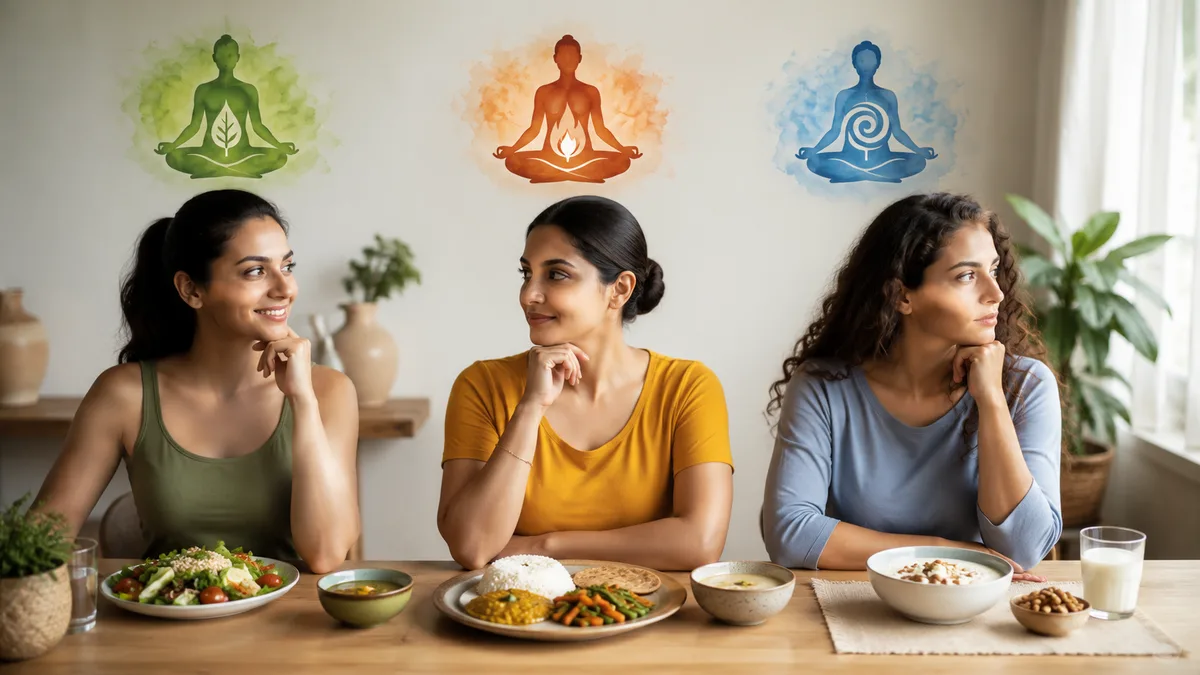
Your body type is built from three main energies, called Doshas. These three energies are Vata, Pitta, and Kapha.
Every single person has a mix of all three inside them, but usually, one or two of these energies are much stronger than the rest. Finding out which energy runs your body is the ultimate cheat code to figuring out what you should be eating.
The Three Doshas Explained
To understand why you react to food the way you do, you need to meet the three energies.
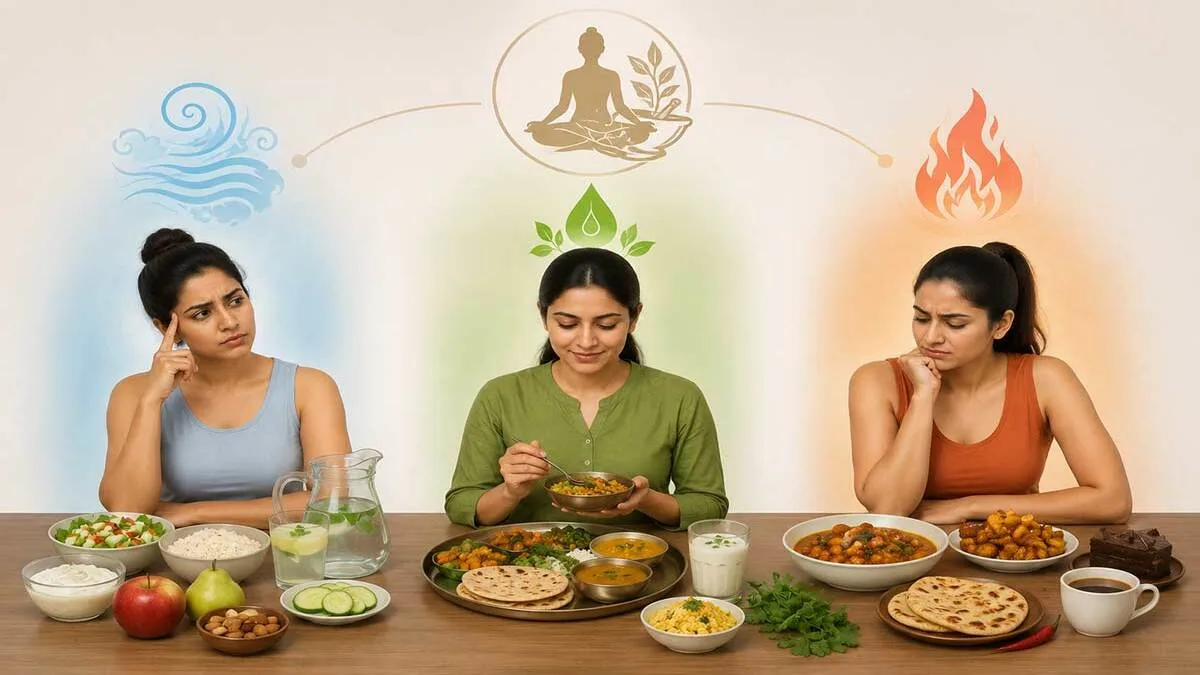
Vata (Air/Movement): Slim by nature, fast, very creative, but with dry skin and cold hands. The digestive capacity is irregular. If not in balance, these individuals suffer from anxiety, gas, a bloated stomach, and constipation.
Pitta (Fire/Heat): Medium body type, very sharp mind, and warm by nature. They have a very good digestive system, and if they miss a meal, they become angry and "hangry". If not in balance, the inner heat makes them angry and makes their body very acidic, giving them heartburn and skin rashes.
Kapha (Earth/Water): Strong and solid, calm and patient, loving personality. Very deliberate in everything they do and have a slow digestive system. If not in balance, they become very lazy and easily gain weight, with chest congestion problems.
Why Two People React Differently to the Same Food?
Now, let us go back to that salad and smoothie diet. Why did it fail for you but work for your friend?
Imagine eating a massive bowl of cold, raw cucumber and lettuce straight from the fridge.
If your friend is a hot, fiery Pitta person, that cold, watery salad feels like a cooling rain shower on a hot summer day. It cools down their stomach acid, and they feel amazing.
But what if you are a Vata person? Your body is already naturally cold, dry, and full of air. Dropping a cold, raw, dry salad into your stomach is like throwing ice water onto a tiny, struggling fire. Your digestion completely freezes. The raw food creates massive amounts of air and gas in your stomach, leaving you bloated and in pain.
Your body is not broken. You were just feeding cold food to a body that desperately needed something warm.
Foods That Generally Support Each Prakriti
When you know your body type, picking your lunch becomes incredibly easy.
Vata-Friendly Foods: Because Vata is cold, dry, and rough, you need foods that are exactly the opposite: warm, wet, and deeply comforting. You should focus on:
- Soups that are warm and thick.
- Vegetables well-cooked and soft (nothing should be eaten raw!).
- Porridge made from oats with warm milk.
- A little pure ghee for stiff joints and skin.
- Tea that is warm and herbal.
- Lentils that are cooked and mild in taste with spices such as cumin and ginger.
Never skip meals if you are Vata, as your nervous system needs steady, grounding fuel.
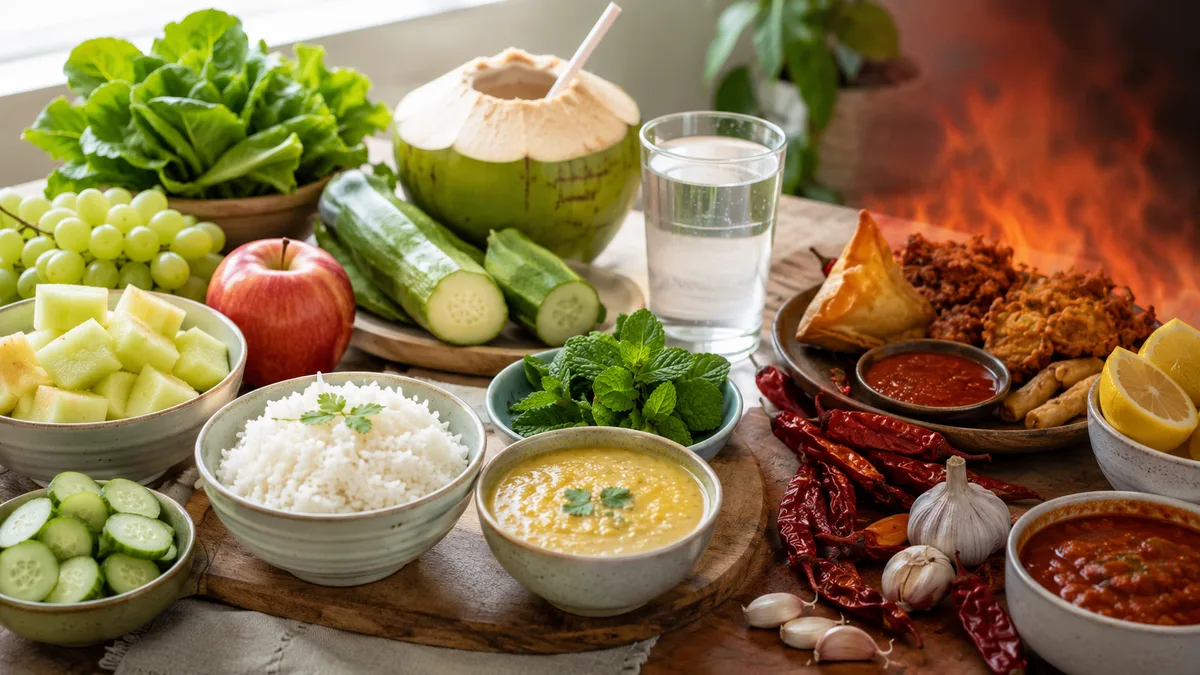
Pitta-Friendly Foods: Because Pitta is hot, sharp, and fiery, you need foods that are cool, sweet, and calming to put out the extra fire. You should focus on:
- Sweet and juicy fruits such as melons, grapes, and apples.
- Cooling vegetables such as cucumber, zucchini, and leafy greens.
- Fresh coconut water and mint.
- Plain rice and basic moong dal. You need to strictly stay away from highly spiced chilies, garlic, fried snacks, and sour food items since they would just add petrol to your burning fire internally.
Kapha-Friendly Foods: Because Kapha is heavy, cold, and slow, you need foods that are light, warm, and a little bit spicy to wake up your system. You should focus on:
- Steam vegetables instead of cooking in oil.
- Light grains such as barley and millets, rather than the heavier wheat and rice.
- Using warming spices like black pepper, ginger, and garlic to increase metabolism rate.
- Drinking plenty of warm water. Kapha types must avoid taking in any dairy products, sweet foods, ice cream, and having afternoon naps after lunch because all this produces additional heavy fat in the body.
Doctor’s Note
Generic diets often fail because they ignore your unique Ayurvedic constitution (Prakriti): Vata needs warm, cooked foods; Pitta needs cooling, mild foods; and Kapha needs light, spicy foods. Choose meals tailored to your specific body type rather than following diet trends that trigger gas, acidity, or post-meal fatigue.
Common Signs That Your Diet Does Not Match Your Prakriti
Your body is actually talking to you all the time. When you eat food that fights against your natural body type, your stomach sets off alarm bells.
You know your diet is wrong for you if you regularly feel:
- Feels like a balloon full of air after eating.
- Feeling so sluggish and drowsy after lunch that you can’t stay awake.
- A painful burning sensation in the upper abdomen.
- Getting hungry within an hour of having a very big meal.
- Cannot have a hassle-free bowel movement each morning.
These are not things you just have to "live with." There are clear signs that you are putting the wrong fuel into your engine.
Can Your Prakriti Change Over Time?
A lot of people ask if they can change their body type. The answer is no. Your basic Prakriti (factory setting) is yours for life. If you were born a Vata, you will always be a Vata.
However, your balance can change. This temporary change is called Vikriti. For example, you might be a calm Kapha person, but because you are going through a deeply stressful time at work, you stop sleeping, your skin gets dry, and you feel anxious. Your Vata has temporarily shot up.
The goal of Ayurvedic eating is not to change who you are. The goal is to look at how you feel today and use food to bring yourself back to your original, happy baseline.

Simple Ways to Identify Your Natural Body Type
To know your body, you have to look at the whole picture. How do you react to the cold winter? Do you sweat a lot in summer? How do you act when you are angry? Are your joints small and clicking, or thick and strong?
The absolute best way to find out your true nature is to sit down with a qualified Ayurvedic doctor. They will check your pulse, look at your tongue, ask about your childhood, and give you a clear, accurate answer that you can use for the rest of your life.
Ayurveda Is More Than Just Food
You could eat the most perfect, Dosha-friendly diet in the world, but if the rest of your life is a mess, you will still feel terrible.
Food is only one piece of the puzzle. Ayurveda cares deeply about your daily habits.
- Are you going to bed at 10 PM, or scrolling on your phone until 2 AM?
- Are you eating your lunch in peace, or swallowing it in five minutes while answering emails?
- Are you taking a walk, or sitting in a chair for ten hours straight?
A perfect meal eaten in a state of deep stress actually turns into mild poison in the stomach. How you live is just as important as what is on your plate.
Common Mistakes People Make While Following Ayurvedic Diets
When people first learn about their body type, they sometimes get too excited and make simple mistakes.
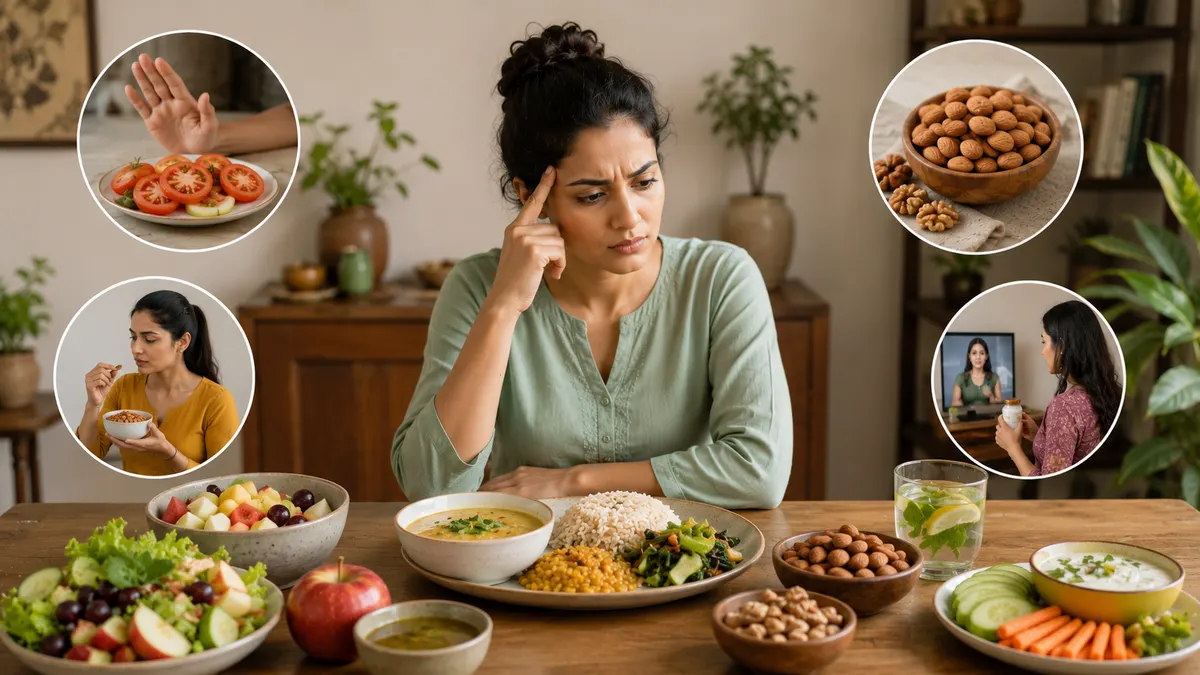
- Becoming too strict: Thinking you can never eat a tomato again just because you are Pitta. Ayurveda is about balance, not punishment. You can eat most things in moderation.
- The "Healthy Food" trap: Thinking that because almonds are healthy, you can eat a whole bowl of them. Too much of a good thing still ruins digestion.
- Copying others: Taking an herbal powder just because your favorite celebrity drinks it every morning.
Final Thoughts
Health is not a competition, and it is definitely not a one-size-fits-all t-shirt.
The meal that makes your best friend feel light and energetic might be the same meal that makes you feel heavy and sick. And that is perfectly okay. We are beautifully different.
Once you understand your own unique body type, you can stop fighting against yourself. You can stop chasing internet trends and stop feeling guilty when a famous diet doesn't work for you. Listen to your stomach, eat warm, fresh food that makes you feel good, and remember the golden rule: the best diet in the world is simply the one that belongs to your body, and nobody else's.